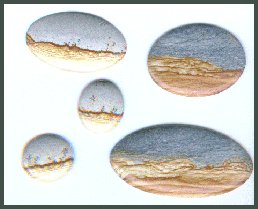
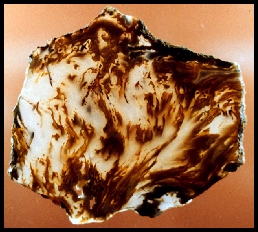
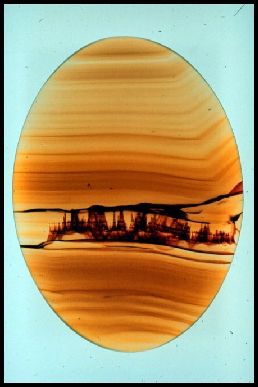
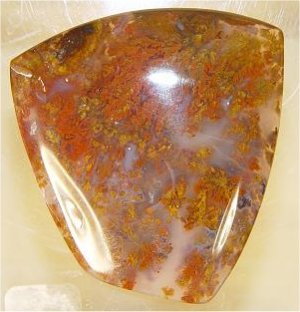
"Chicken Track" Picture Rock
State: Oregon
Country: United States
Continent: North America
Date: 10/26/1998
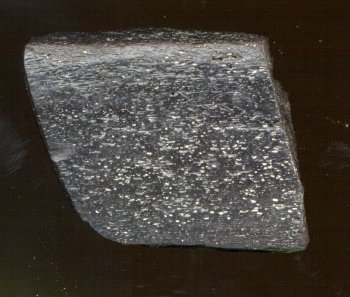
Description: Chicken-track picture rock, Oregon, so called because crystal? casts on tops of slabs resemble chicken tracks. Generally a brown, blue, gray, and white silicified sediment?. See Broughton, P. L., (1974, p. 327-331). ...adv., Murray American Corporation, Lapidary Journal , v. 30, no. 7, p. 1619.
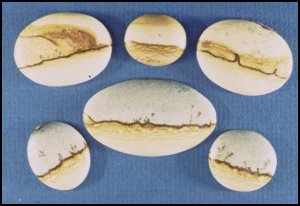
"Chicken Track" Picture Rock
State: Oregon
Country: United States
Continent: North America
Date: 5/28/1999
Description: Chicken-track picture rock, Oregon, so called because crystal? casts on tops of slabs resemble chicken tracks. Generally a brown, blue, gray, and white silicified sediment?. See Broughton, P. L., (1974, p. 327-331). ...adv., Murray American Corporation, Lapidary Journal , v. 30, no. 7, p. 1619.
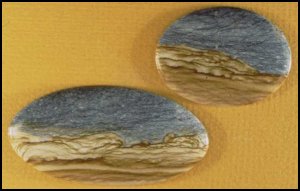
"Chicken Track" Picture Rock
State: Oregon
Country: United States
Continent: North America
Date: 5/28/1999
Description: Chicken-track picture rock, Oregon, so called because crystal? casts on tops of slabs resemble chicken tracks. Generally a brown, blue, gray, and white silicified sediment?. See Broughton, P. L., (1974, p. 327-331). ...adv., Murray American Corporation, Lapidary Journal , v. 30, no. 7, p. 1619.
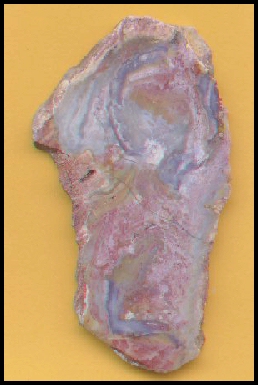
"Mozarkite"
Location: Central Missouri
State: Missouri
Country: United States
Continent: North America
Date: 10/26/1998
Description: "Mozarkite" is the official state gem of Missouri. Speciman courtesy of Walter Bartels.
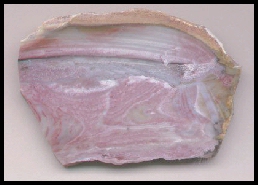
"Mozarkite"
Location: Central Missouri
State: Missouri
Country: United States
Continent: North America
Date: 10/26/1998
Description: "Mozarkite" is the official state gem of Missouri. Speciman courtesy of Walter Bartels.
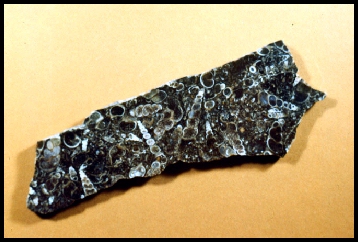
"Turitella" Agate
State: Wyoming
Country: United States
Continent: North America
Date: 10/26/1998
Description: Snails are actually "Goniobasis" or "Oxytrema."
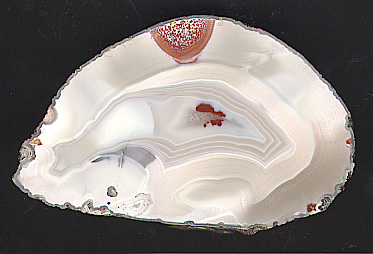
?Autobahnbau? Friesen Agate
Location: Friesen
Country: Germany
Continent: Europe
Date: 11/15/1999
Description: ?Autobahnbau? Friesen Agates, Germany, (tr. lit. freeway construction agate), local name for amygdaloidal agates that were recovered from excavations made during highway construction near Friesen, about 20 miles south of Idar-Oberstein, Germany.
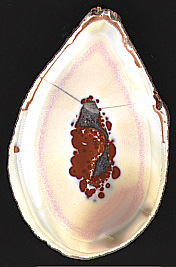
?Autobahnbau? Friesen Agate
Location: Friesen
Country: Germany
Continent: Europe
Date: 11/15/1999
Description: ?Autobahnbau? Friesen Agates, Germany, (tr. lit. freeway construction agate), local name for amygdaloidal agates that were recovered from excavations made during highway construction near Friesen, about 20 miles south of Idar-Oberstein, Germany.
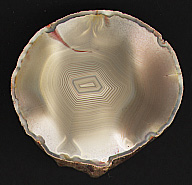
?Autobahnbau? Friesen Agate
Location: Friesen
Country: Germany
Continent: Europe
Date: 11/15/1999
Description: ?Autobahnbau? Friesen Agates, Germany, (tr. lit. freeway construction agate), local name for amygdaloidal agates that were recovered from excavations made during highway construction near Friesen, about 20 miles south of Idar-Oberstein, Germany.
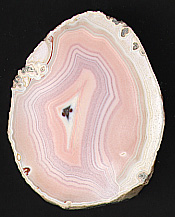
?Autobahnbau? Friesen Agate
Location: Friesen
Country: Germany
Continent: Europe
Date: 11/15/1999
Description: ?Autobahnbau? Friesen Agates, Germany, (tr. lit. freeway construction agate), local name for amygdaloidal agates that were recovered from excavations made during highway construction near Friesen, about 20 miles south of Idar-Oberstein, Germany.
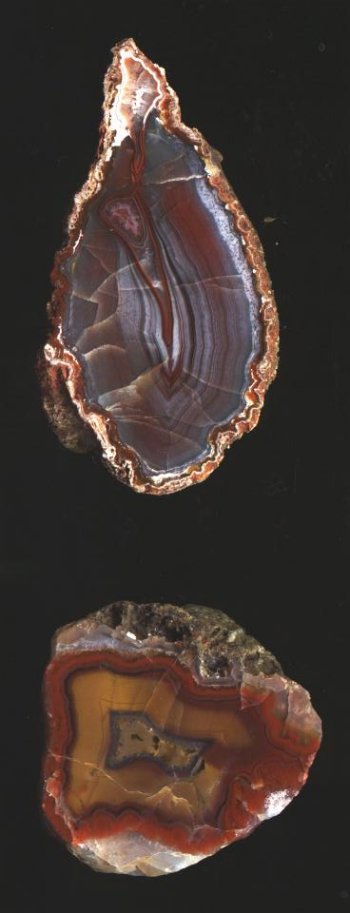
Agate
Location: Bernhard Quarry, Idar-Oberstein
Country: Germany
Continent: Europe
Date: 10/26/1998
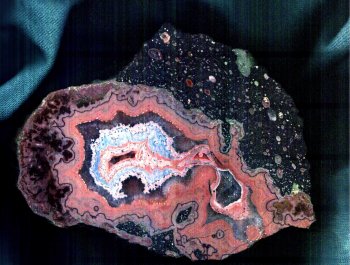
Agate
Location: Bernhard Quarry, Idar-Oberstein
Country: Germany
Continent: Europe
Date: 10/26/1998
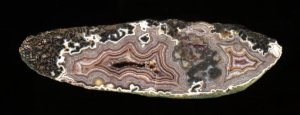
Agate
Location: Juchem Quarry, near Idar-Oberstein
Country: Germany
Continent: Europe
Date: 6/1/1999
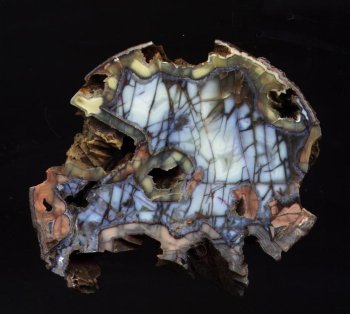
Agate
Location: Juchem Quarry, near Idar-Oberstein
Country: Germany
Continent: Europe
Date: 6/1/1999
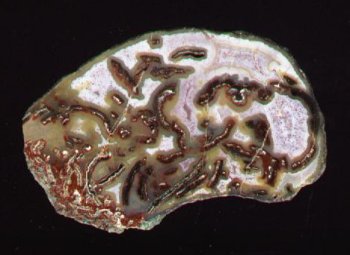
Agate
Location: Juchem Quarry, near Idar-Oberstein
Country: Germany
Continent: Europe
Date: 6/1/1999
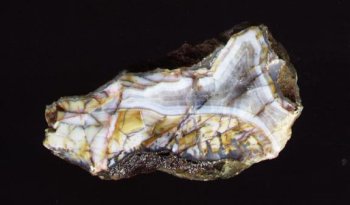
Agate
Location: Juchem Quarry, near Idar-Oberstein
Country: Germany
Continent: Europe
Date: 6/1/1999
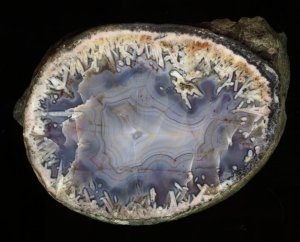
Agate
Location: Juchem Quarry, near Idar-Oberstein
Country: Germany
Continent: Europe
Date: 6/1/1999
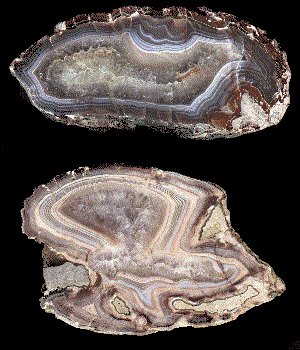
Agate
Location: Bernhard Quarry, Idar-Oberstein
Country: Germany
Continent: Europe
Date: 10/26/1998
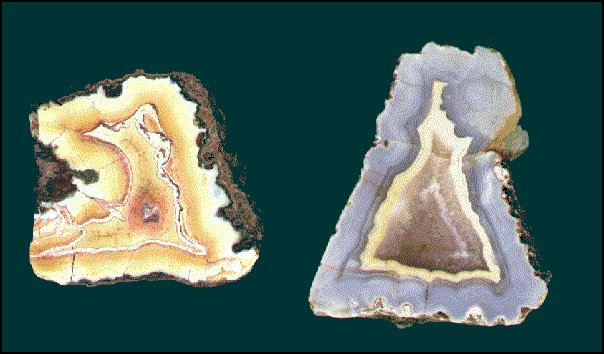
Agate
Location: Bernhard Quarry, Idar-Oberstein
Country: Germany
Continent: Europe
Date: 10/26/1998
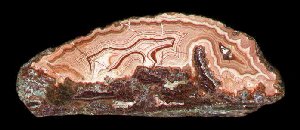
Agate
Location: Bernhard Quarry, Idar-Oberstein
Country: Germany
Continent: Europe
Date: 10/26/1998
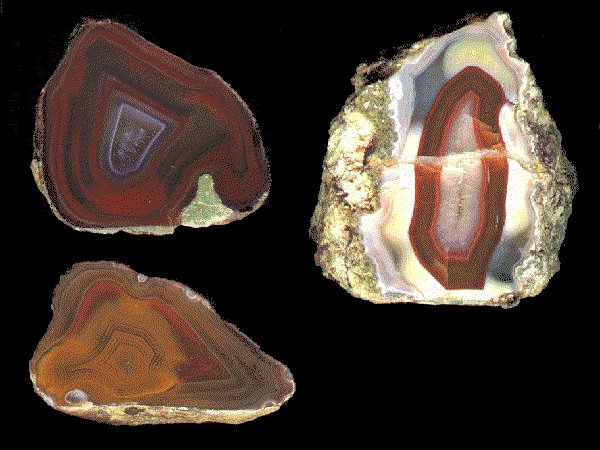
Agate
Location: Nack, near Alzey, Mainz
Country: Germany
Continent: Europe
Date: 10/26/1998
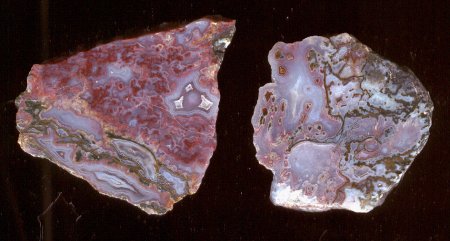
Agate
Location: Gyongyos, in Matra Mountains
Country: Hungary
Continent: Europe
Date: 7/8/2003
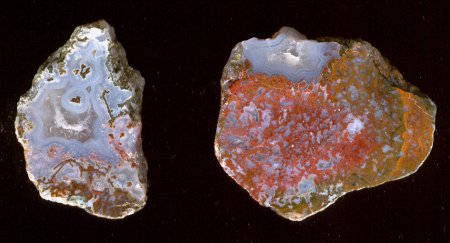
Agate
Location: Gyongyos, in Matra Mountains
Country: Hungary
Continent: Europe
Date: 7/8/2003
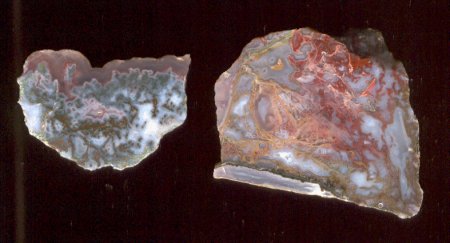
Agate
Location: Gyongyos, in Matra Mountains
Country: Hungary
Continent: Europe
Date: 7/8/2003
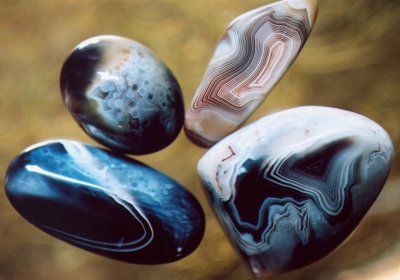
Agate
Country: Botswana
Continent: Africa
Date: 12/11/2001
Description: Agate, Botswana, Africa, generally small, amygdaloidal agates in shades of gray, lavender, purple, carnelian, from Karoo Series dolerites, Permo-Triassic to Jurassic, Botswana, Africa.
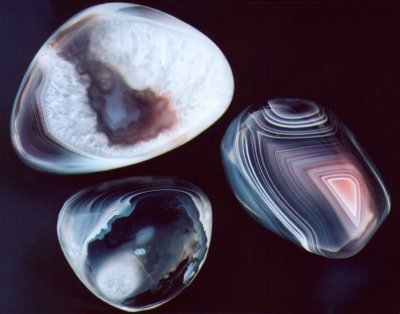
Agate
Country: Botswana
Continent: Africa
Date: 12/11/2001
Description: Agate, Botswana, Africa, generally small, amygdaloidal agates in shades of gray, lavender, purple, carnelian, from Karoo Series dolerites, Permo-Triassic to Jurassic, Botswana, Africa. The agate in the upper left has a floating center. The floating center is composed of layers of banded chalcedony that are are suspended in a pod of euhedral quartz. The chalcedony crystallizes when the silica is very highly saturated and the quartz crystallized when the silica is of low saturation. Such floating centers suggest that the silica saturation changed twice during the formation of this particular agate. Size range: 1.2" to 2.2".
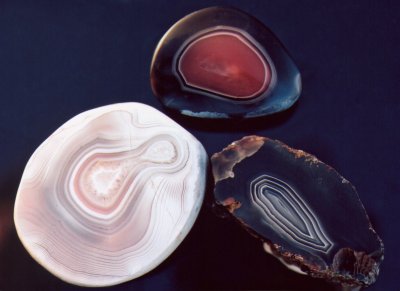
Agate
Country: Botswana
Continent: Africa
Date: 12/11/2001
Description: Agate, Botswana, Africa, generally small, amygdaloidal agates in shades of gray, lavender, purple, carnelian, from Karoo Series dolerites, Permo-Triassic to Jurassic, Botswana, Africa. The light pink agate in the lower left shows flow structures and a dilation extending to the upper right toward the center of the picture. These features suggest that the agate was in a soft state at the time the dilation and flow structure formed.
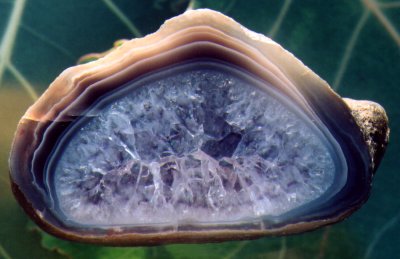
Agate
Country: Botswana
Continent: Africa
Date: 12/11/2001
Description: Agate, Botswana, Africa, generally small, amygdaloidal agates in shades of gray, lavender, purple, carnelian, from Karoo Series dolerites, Permo-Triassic to Jurassic, Botswana, Africa. This example contains a euhedral amethystine quartz center. Size: 1.4" x 2.2".
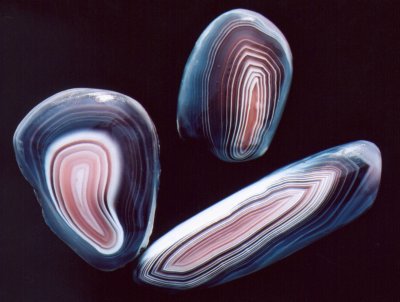
Agate
Country: Botswana
Continent: Africa
Date: 12/11/2001
Description: Agate, Botswana, Africa, generally small, amygdaloidal agates in shades of gray, lavender, purple, carnelian, from Karoo Series dolerites, Permo-Triassic to Jurassic, Botswana, Africa. These specimens represent one of the most common color combinations to be observed in Botswana Agates. Size range: 1.2" to 3.1".
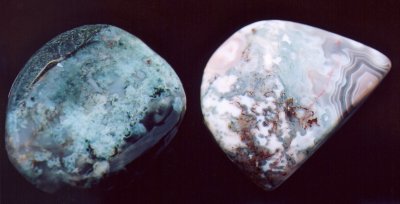
Agate
Country: Botswana
Continent: Africa
Date: 12/11/2001
Description: Agate, Botswana, Africa, generally small, amygdaloidal agates in shades of gray, lavender, purple, carnelian, from Karoo Series dolerites, Permo-Triassic to Jurassic, Botswana, Africa.
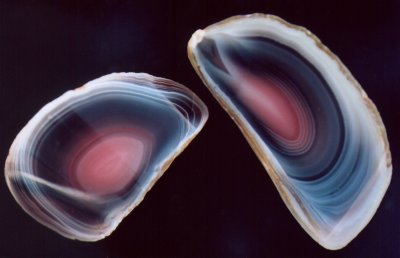
Agate
Country: Botswana
Continent: Africa
Date: 12/11/2001
Description: Agate, Botswana, Africa, generally small, amygdaloidal agates in shades of gray, lavender, purple, carnelian, from Karoo Series dolerites, Permo-Triassic to Jurassic, Botswana, Africa. These specimens represent one of the most common color combinations to be observed in Botswana Agates. Size Range: 1.5" to 2.9".
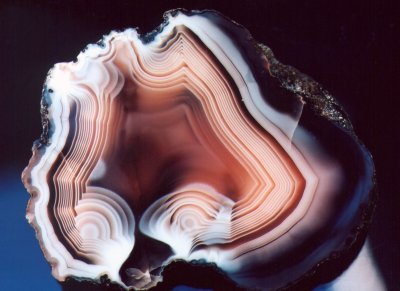
Agate
Country: Botswana
Continent: Africa
Date: 12/11/2001
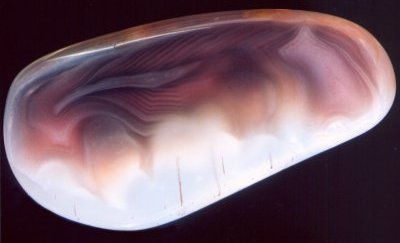
Description: Agate, Botswana, Africa, generally small, amygdaloidal agates in shades of gray, lavender, purple, carnelian, from Karoo Series dolerites, Permo-Triassic to Jurassic, Botswana, Africa. This specimen shows one of the less common color combinations to be observed in Botswana Agates. Size: 2.5" x 2.8".
Agate
Country: Botswana
Continent: Africa
Date: 12/11/2001
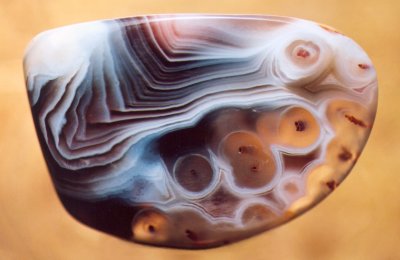
Description: Agate, Botswana, Africa, generally small, amygdaloidal agates in shades of gray, lavender, purple, carnelian, from Karoo Series dolerites, Permo-Triassic to Jurassic, Botswana, Africa. Light pink to light lavender agates are among the least common colors to be observed in Botswana Agates. The delicate needle-like structures are probably goethite crystals. Perspective is important in what effect one will see in the finished agate. A slice at right angles to the needles would yield tube-like structures. Size: 0.9" x 1.8".
Agate
Country: Botswana
Continent: Africa
Date: 12/11/2001
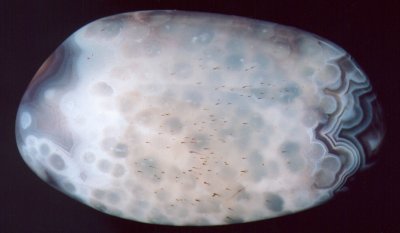
Description: Agate, Botswana, Africa, generally small, amygdaloidal agates in shades of gray, lavender, purple, carnelian, from Karoo Series dolerites, Permo-Triassic to Jurassic, Botswana, Africa. The tube-like structures observed here are again a case of perspective. A cut at right angles to this orientation would yield needles as seen in the previous image. Size: 1.7" x 2.8".
Agate
Country: Botswana
Continent: Africa
Date: 12/11/2001
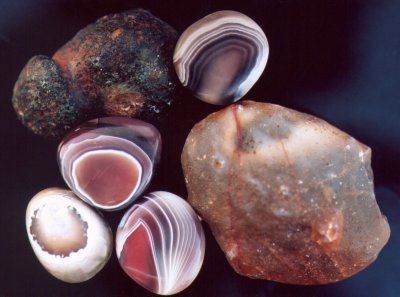
Description: Agate, Botswana, Africa, generally small, amygdaloidal agates in shades of gray, lavender, purple, carnelian, from Karoo Series dolerites, Permo-Triassic to Jurassic, Botswana, Africa. The orientation of the goethite needles is at about 45 degrees to the cut shown on this specimen; compare this perspective to that shown on the previous two images. Size: 1.6" x 2.5". Reverse image of specimen following.
Agate
Country: Botswana
Continent: Africa
Date: 12/11/2001
Description: Agate, Botswana, Africa, generally small, amygdaloidal agates in shades of gray, lavender, purple, carnelian, from Karoo Series dolerites, Permo-Triassic to Jurassic, Botswana, Africa. This specimen provides an outstanding example of diapiric deformation of the bands. This kind of deformation results when higher pressure within the silica causes the already formed bands to move toward the outside of the nodule where pressures are slightly lower. Size: 1.6" x 2.5". Reverse image of previous specimen.
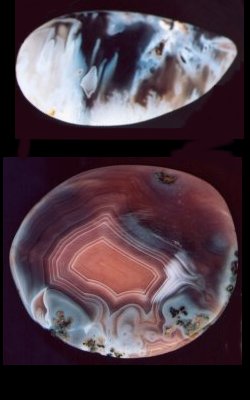
Agate
Country: Botswana
Continent: Africa
Date: 12/11/2001
Description: Agate, Botswana, Africa, generally small, amygdaloidal agates in shades of gray, lavender, purple, carnelian, from Karoo Series dolerites, Permo-Triassic to Jurassic, Botswana, Africa. The greenish mineral on the surface of the unpolished agate in the upper left is celadonite. This mineral is often referred to as the "skin" of an agate, a term that was coined by the Scotish mineralogist Matthew Forster Heddle in 1901. Size: 1.0" to 2.2".
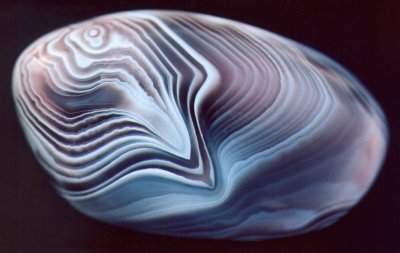
Agate
Country: Botswana
Continent: Africa
Date: 12/11/2001
Description: Agate, Botswana, Africa, generally small, amygdaloidal agates in shades of gray, lavender, purple, carnelian, from Karoo Series dolerites, Permo-Triassic to Jurassic, Botswana, Africa. The specimen to the left contains structures that were called "stalk aggregates" by the Russian geologist Lev Lebedev. Stalk aggregates from when a particle or droplet of lower density material rises upward through viscous medium such as orthosilicic acid. Size range: 1.4" to 2.6".
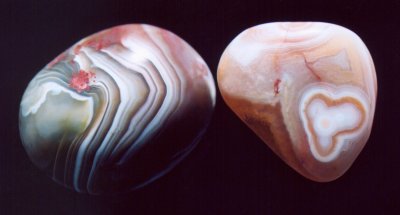
Agate
Location: Sijing River, near Shanghai
Country: China
Continent: Asia
Date: 11/27/2001
Description: Size range: 1.4" to 2.0"
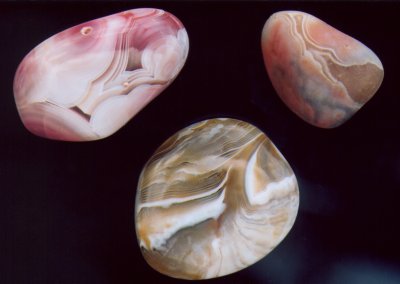
Agate
Location: Sijing River, near Shanghai
Country: China
Continent: Asia
Date: 11/27/2001
Description: Size range: 0.4" to 1.5"
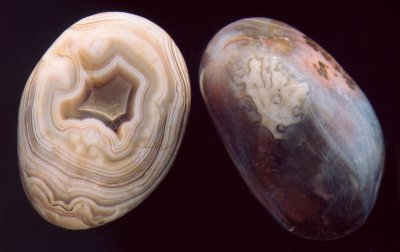
Agate
Location: Sijing River, near Shanghai
Country: China
Continent: Asia
Date: 11/27/2001
Description: Size range: 1.2" to 1.7"
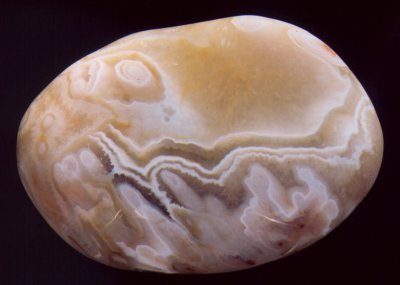
Agate
Location: Sijing River, near Shanghai
Country: China
Continent: Asia
Date: 11/27/2001
Description: Size range: 1.8" to 2.4"
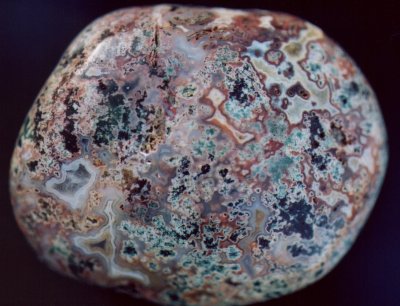
Agate
Location: Sijing River, near Shanghai
Country: China
Continent: Asia
Date: 11/27/2001
Description: Size range: 2.6" to 2.9"
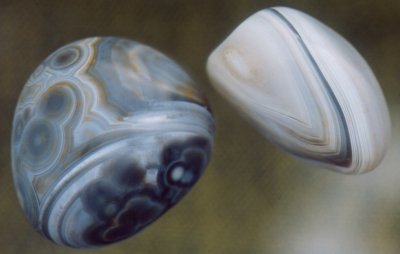
Agate
Location: Sijing River, near Shanghai
Country: China
Continent: Asia
Date: 11/27/2001
Description: Size range: 1.1" to 1.7"
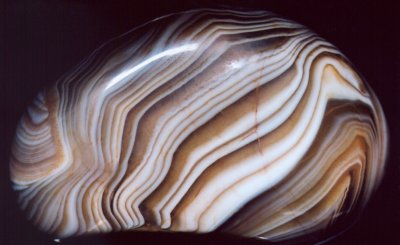
Agate
Location: Sijing River, near Shanghai
Country: China
Continent: Asia
Date: 11/27/2001
Description: Size range: 1.9" to 3.2"
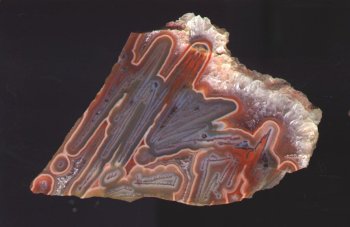
Agate
Location: Horni Hale, Bohemia region, near Praque
Country: Czech Republic
Continent: Europe
Date: 5/13/1999
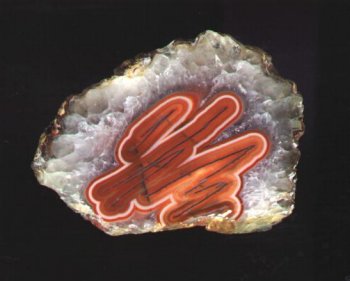
Agate
Location: Horni Hale, Bohemia region, near Praque
Country: Czech Republic
Continent: Europe
Date: 5/13/1999
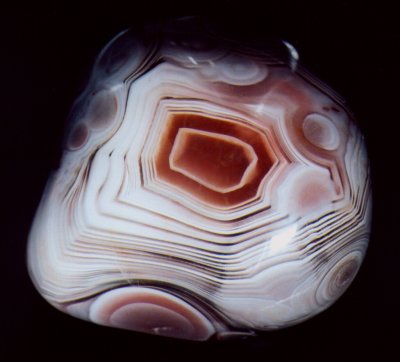
Agate
Location: Sijing River, near Shanghai
Country: China
Continent: Asia
Date: 11/27/2001
Description: Size range: 1.5" to 1.6"
Agate
Location: Allier River, central France
Country: France
Continent: Europe
Date: 3/28/2001
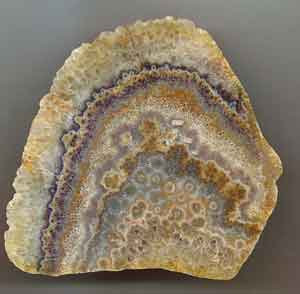
Description: Allier River, Central France. These agates were found among gravel deposits in the Allier River, a tributary stream of the Loire. The age or source of these agates have not yet been determined. The agates are similar in color and structure to agates that have been found associated with volcanic rocks of Precambrian age that crop out in St. Francis County, Missouri.
Agate
Location: Allier River, central France
Country: France
Continent: Europe
Date: 3/28/2001
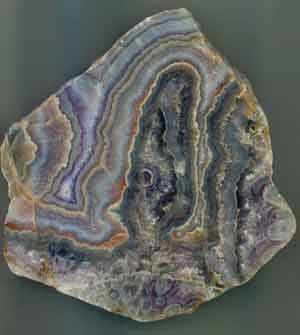
Description: Allier River, Central France. These agates were found among gravel deposits in the Allier River, a tributary stream of the Loire. The age or source of these agates have not yet been determined. The agates are similar in color and structure to agates that have been found associated with volcanic rocks of Precambrian age that crop out in St. Francis County, Missouri.
Agate
Location: McMurdo Sound
Country: Antarctica
Continent: Antarctica
Date: 8/12/2002
Agate
Location: Rio Grande Do Sul
Country: Brazil
Continent: South America
Date: 10/26/1998
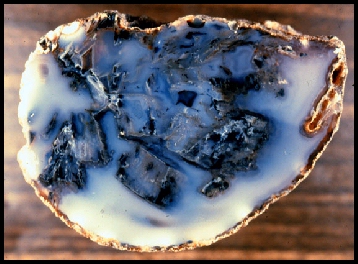
Description: Note large zeolite (chabazite?) inclusions.
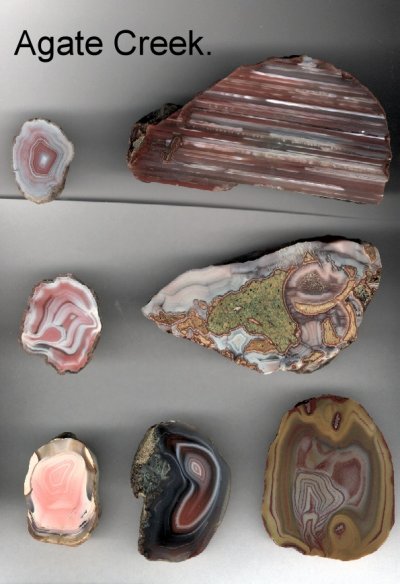
Agate
Location: Agate Creek
State: Queensland
Country: Australia
Continent: Australia
Date: 1/6/2003
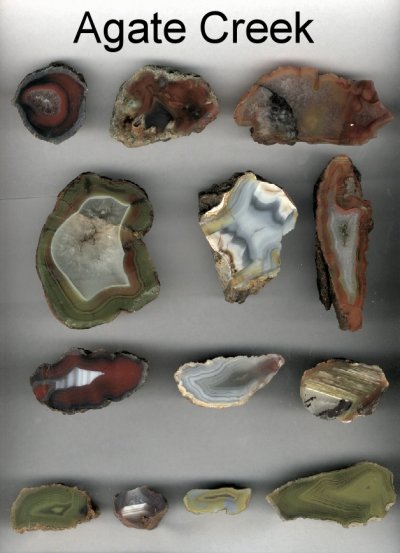
Agate
Location: Agate Creek
State: Queensland
Country: Australia
Continent: Australia
Date: 1/6/2003
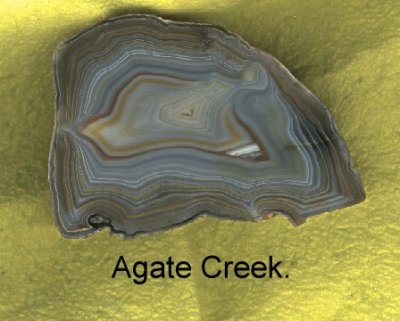
Agate
Location: Agate Creek
State: Queensland
Country: Australia
Continent: Australia
Date: 1/6/2003
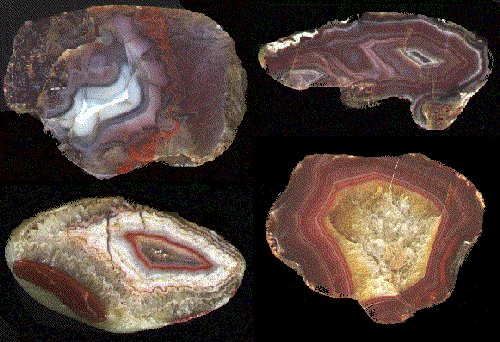
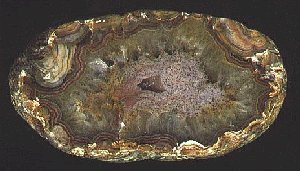
Agate
Location: Lathum, near Arnheim
Country: Netherlands
Continent: Europe
Date: 11/20/1998
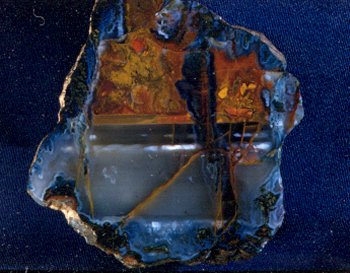
Agate
Location: Lathum, near Arnheim
Country: Netherlands
Continent: Europe
Date: 11/20/1998
Description: Contains floating center.
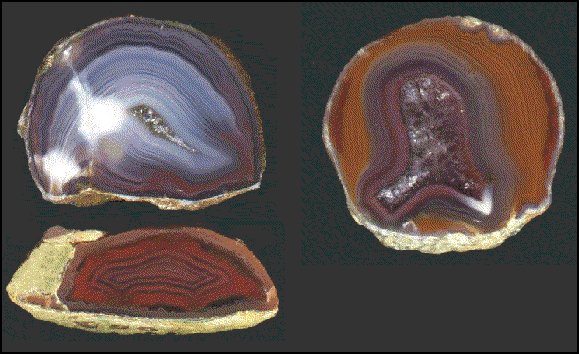
Agate
Location: Challis
State: Idaho
Country: United States
Continent: North America
Date: 5/10/2003
Description: Image courtesy of Lizzadro Museum of Lapidary Art, Elmhurst, Illinois.
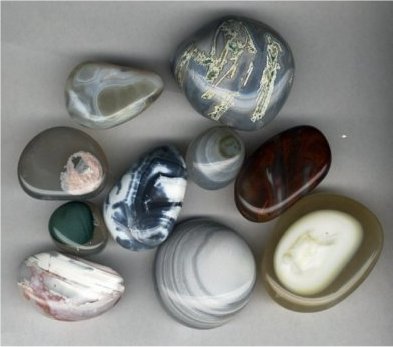
Agate
Location: Nack, near Alzey, Mainz
Country: Germany
Continent: Europe
Date: 10/26/1998
Agate
Location: Birdlings Flat, Banks Peninsula, Southeast of Christchurch
Country: New Zealand
Continent: Australia
Date: 8/12/2002
Description: South Island
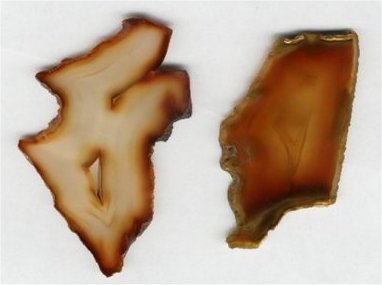
Agate
Location: Carnelian, Tapu River, Cordmandel Peninsula, Northeast of Auckland
Country: New Zealand
Continent: Australia
Date: 8/12/2002
Description: North Island
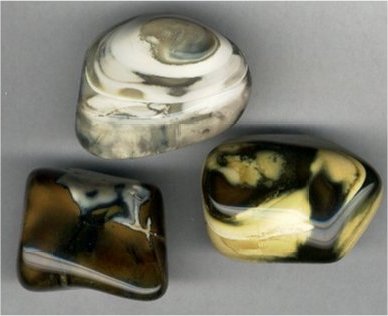
Agate
Location: Gallagher's, Mount Sommers, Canterbury
Country: New Zealand
Continent: Australia
Date: 8/12/2002
Description: South Island
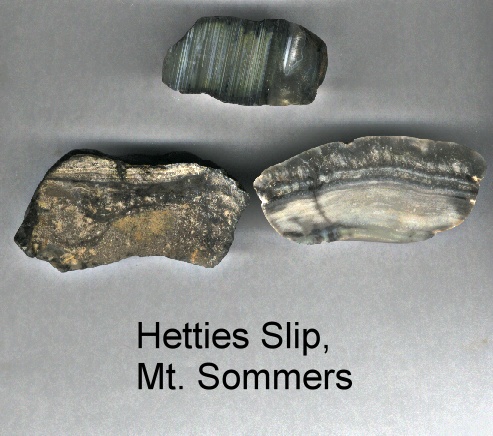
Agate
Location: Hetties Slip, Mount Sommers, Southwest of Canterbury
Country: New Zealand
Continent: Australia
Date: 1/24/2003
Description: South Island
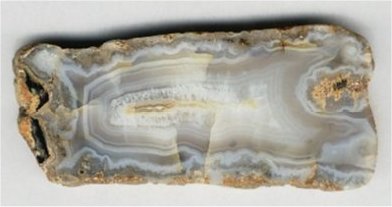
Agate
Location: Hinds River, Canterbury
Country: New Zealand
Continent: Australia
Date: 8/12/2002
Description: South Island
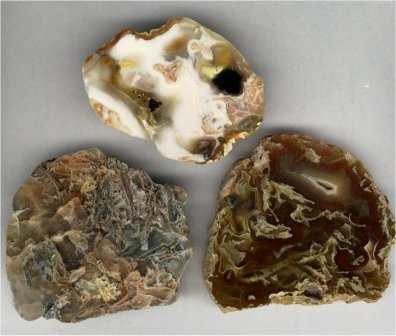
Agate
Location: Mount Sommers, Southwest of Canterbury
Country: New Zealand
Continent: Australia
Date: 8/12/2002
Description: South Island
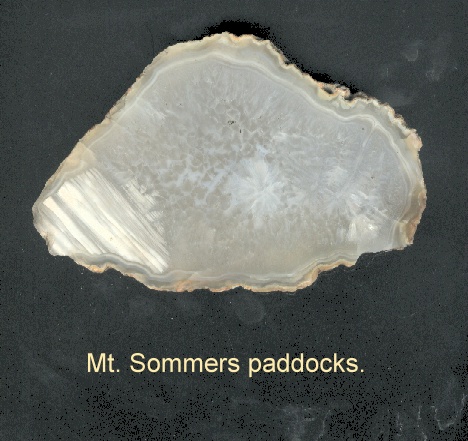
Agate
Location: Mount Sommers, Southwest of Canterbury
Country: New Zealand
Continent: Australia
Date: 1/24/2003
Description: South Island
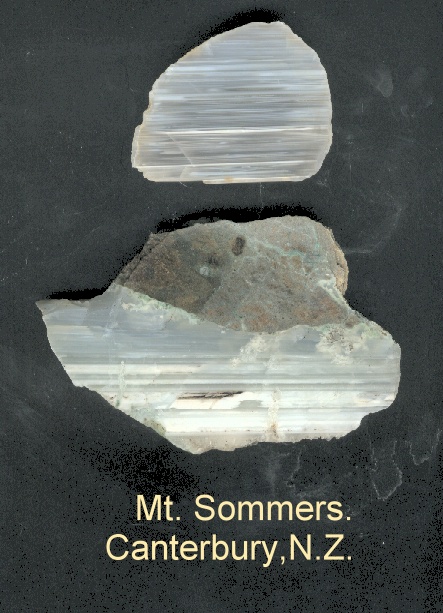
Agate
Location: Mount Sommers, Southwest of Canterbury
Country: New Zealand
Continent: Australia
Date: 1/24/2003
Description: South Island
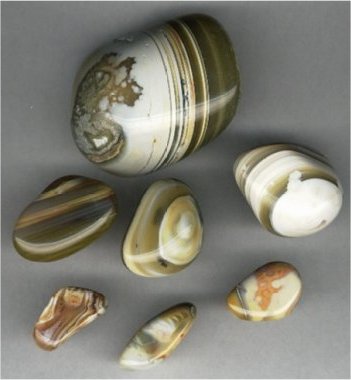
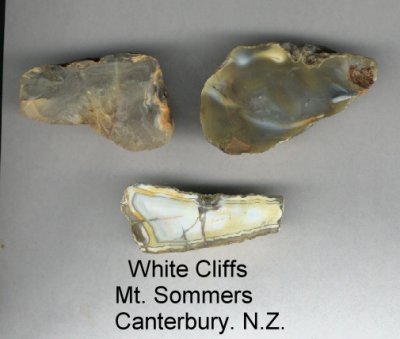
Agate
Location: White Cliffs, Mount Sommers, Canterbury
Country: New Zealand
Continent: Australia
Date: 8/12/2002
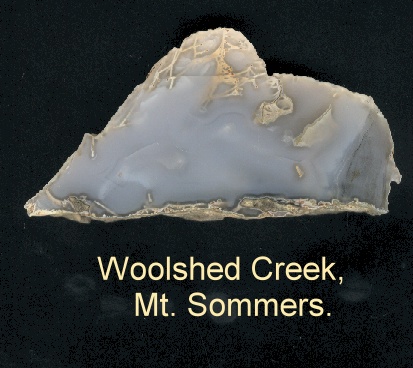
Agate
Location: White Cliffs, Mount Sommers, Canterbury
Country: New Zealand
Continent: Australia
Date: 1/24/2003
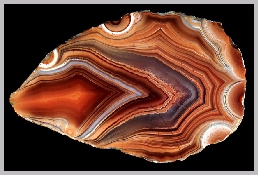
Agate
Location: Woolshed Creek, Mount Sommers, Southwest of Canterbury
Country: New Zealand
Continent: Australia
Date: 1/24/2003
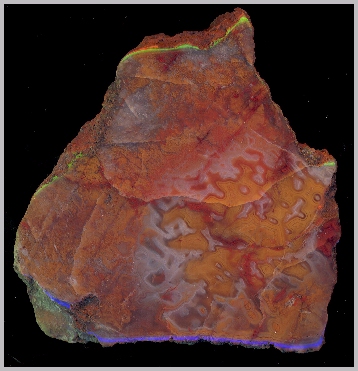
Agate
Location: Balmerino, Fife
Country: Scotland
Continent: Europe
Date: 10/26/1998
Description: Balmerino, Scotland, historic locality in Fifeshire that has also produced agates from early Devonian lavas of the Old Red Sandstone. Heddle (1901, p. 76) suggested that they were gray and had natrolite brushes near their surfaces. Rodgers (1975, p. 47) suggested that this is one of Scotland's most important agate sources. Macpherson (1989, p. 45, figs. 96, 97) illustrated a moss agate from this area. Note hemiagates on periphery of stone.
Agate
Location: BurnAnne, near Galston, Ayrshire
Country: Scotland
Continent: Europe
Date: 10/26/1998
Description: Burn Anne, Ayrshire, Scotland, historic agate producing site in lavas of Old Red Sandstone of early Devonian Age (Fallick et al, 1985, p. 672-674). Heddle (1901, p. 76) suggested that agates were rare there but Macpherson (1989, p. 19, 46, 47, figs. 100-103) illustrated nodular agates and mossy vein agates from the area. Rodgers (1976d) dealt with the site in some detail.
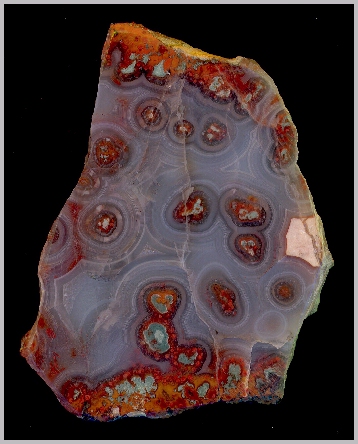
Agate
Location: BurnAnne, near Galston, Ayrshire
Country: Scotland
Continent: Europe
Date: 10/26/1998
Description: Burn Anne, Ayrshire, Scotland, historic agate producing site in lavas of Old Red Sandstone of early Devonian Age (Fallick et al, 1985, p. 672-674). Heddle (1901, p. 76) suggested that agates were rare there but Macpherson (1989, p. 19, 46, 47, figs. 100-103) illustrated nodular agates and mossy vein agates from the area. Rodgers (1976d) dealt with the site in some detail.
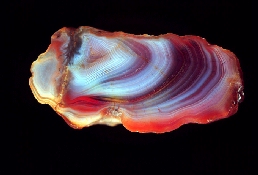
Agate
Location: Dunure, Ayrshire
Country: Scotland
Continent: Europe
Date: 10/26/1998
Description: Dunure, Scotland, historic locality in Ayrshire, that Heddle (1901, p. 76) recorded as producing agates ...along the coast at Dunure. Rodgers (1975, p. 24, 25) illustrated a fine example of a faulted agate from here and (p. 85) suggested agates also came a railway cutting in the area. Fallick et al (1985, p. 672-674) stated that the agates came from lavas of the lower Old Red Sandstone of Early Devonian Age. Macpherson (1989, p. 19, 48, figs. 106, 107) suggested these agates came from several sites to the South. Photo courtesy of Robin Field, taken by Danny McClure.
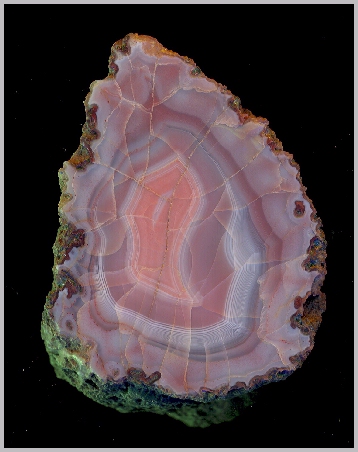
Agate
Location: Dunure, Ayrshire
Country: Scotland
Continent: Europe
Date: 10/26/1998
Description: Dunure, Scotland, historic locality in Ayrshire, that Heddle (1901, p. 76) recorded as producing agates ...along the coast at Dunure. Rodgers (1975, p. 24, 25) illustrated a fine example of a faulted agate from here and (p. 85) suggested agates also came a railway cutting in the area. Fallick et al (1985, p. 672-674) stated that the agates came from lavas of the lower Old Red Sandstone of Early Devonian Age. Macpherson (1989, p. 19, 48, figs. 106, 107) suggested these agates came from several sites to the South.
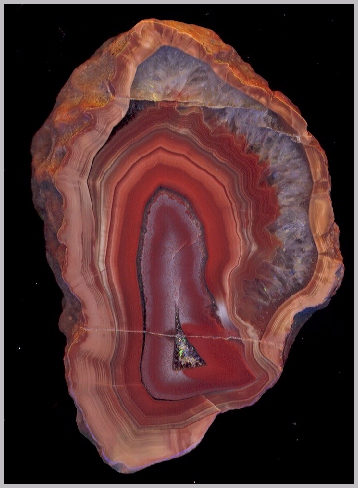
Agate
Location: Dunure, Ayrshire
Country: Scotland
Continent: Europe
Date: 10/26/1998
Description: Dunure, Scotland, historic locality in Ayrshire, that Heddle (1901, p. 76) recorded as producing agates ...along the coast at Dunure. Rodgers (1975, p. 24, 25) illustrated a fine example of a faulted agate from here and (p. 85) suggested agates also came a railway cutting in the area. Fallick et al (1985, p. 672-674) stated that the agates came from lavas of the lower Old Red Sandstone of Early Devonian Age. Macpherson (1989, p. 19, 48, figs. 106, 107) suggested these agates came from several sites to the South.
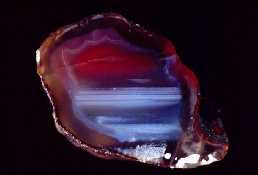
Agate
Location: Dunure, Ayrshire
Country: Scotland
Continent: Europe
Date: 10/26/1998
Description: Dunure, Scotland, historic locality in Ayrshire, that Heddle (1901, p. 76) recorded as producing agates …along the coast at Dunure. Rodgers (1975, p. 24, 25) illustrated a fine example of a faulted agate from here and (p. 85) suggested agates also came a railway cutting in the area. Fallick et al (1985, p. 672-674) stated that the agates came from lavas of the lower Old Red Sandstone of Early Devonian Age. Macpherson (1989, p. 19, 48, figs. 106, 107) suggested these agates came from several sites to the South. Photo courtesy of Robin Field, taken by Danny McClure.
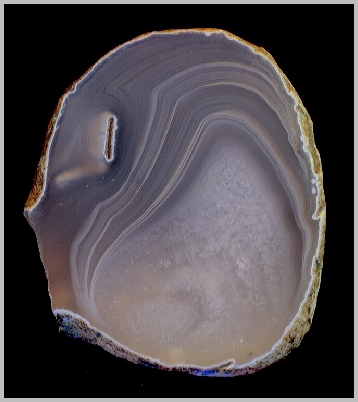
Agate
Location: Port Bunessan, Isle of Mull, Argyll
Country: Scotland
Continent: Europe
Date: 10/26/1998
Description: Beach Agate chiselled out of rocks at Port Bunessan on the Isle of Mull. Isle of Mull, Scotland, Argyll, Scotland, an historic site that has yielded mostly blue-gray agates from basalts of Tertiary Age (Macpherson, 1989, p. 19, 49, figs. 108, 109). Rodgers (1975, p. 85) listed sites at Scobul and Scour and Macpherson (1989) called the site Ross of Mull, which is a westward extending peninsula along the south shore of the island. Fallick et al (1985, p. 622-624) studied oxygen isotope ratios in some of these agates and Field (1989, p. 16) illustrated and excellent example from here.
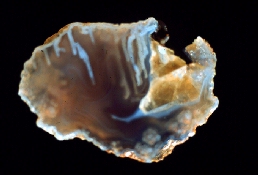
Agate
Location: Isle of Mull, Hebrides
Country: Scotland
Continent: Europe
Date: 10/26/1998
Description: Isle of Mull, Scotland, Argyll, Scotland, an historic site that has yielded mostly blue-gray agates from basalts of Tertiary Age (Macpherson, 1989, p. 19, 49, figs. 108, 109). Rodgers (1975, p. 85) listed sites at Scobul and Scour and Macpherson (1989) called the site Ross of Mull, which is a westward extending peninsula along the south shore of the island. Fallick et al (1985, p. 622-624) studied oxygen isotope ratios in some of these agates and Field (1989, p. 16) illustrated and excellent example from here. Photo courtesy of Robin Field, taken by Danny McClure.
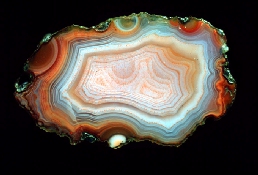
Agate
Location: Kinnoul Hill, Perthshire
Country: Scotland
Continent: Europe
Date: 10/26/1998
Description: Isle of Mull, Scotland, Argyll, Scotland, an historic site that has yielded mostly blue-gray agates from basalts of Tertiary Age (Macpherson, 1989, p. 19, 49, figs. 108, 109). Rodgers (1975, p. 85) listed sites at Scobul and Scour and Macpherson (1989) called the site Ross of Mull, which is a westward extending peninsula along the south shore of the island. Fallick et al (1985, p. 622-624) studied oxygen isotope ratios in some of these agates and Field (1989, p. 16) illustrated and excellent example from here. Photo courtesy of Robin Field, taken by Danny McClure.
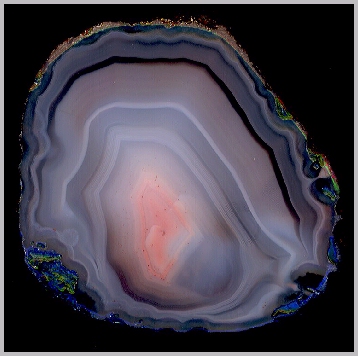
Agate
Location: Monifieth, near Dundee
Country: Scotland
Continent: Europe
Date: 10/26/1998
Description: Monifieth, near Dundee, Scotland, source for amygdaloidal agates from lavas in Old Red Sandstone of early Devonian age.
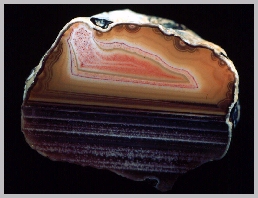
Agate
Location: Angusshire
Country: Scotland
Continent: Europe
Date: 10/26/1998
Description: Scurdie Ness, Scotland, pink or rich brown agates with colored bands from historic locality in Angusshire. The name was originally listed as Scurdy Ness by Heddle (1901, p. 75) but Rodgers (1975) and Macpherson (1989) used the spelling Scurdie Ness. See also Field (1989, p. 16).
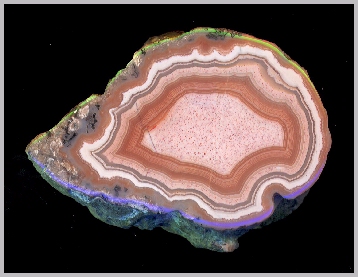
Agate
Location: Turberry Beach
Country: Scotland
Continent: Europe
Date: 10/26/1998
Description: Turnberry (Beach), Scotland, site in the Old Red Sandstone of early Devonian age that yeleded one of the agates used by Fallick et al (1985, p. 672-674) in oxygen isotope studies used to determine temperatures of agate formation.
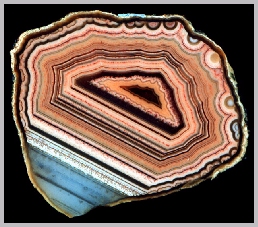
Agate
Location: Usan House, Angusshire
Country: Scotland
Continent: Europe
Date: 10/26/1998
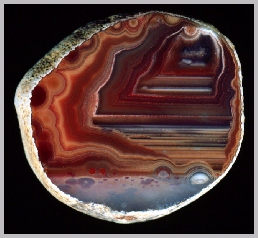
Description: Usan, Scotland, for Usan House, Angusshire. Most are blue, banded agates but some white or pink are known - brilliant inky blue and white colors; also wax yellow---Cerachates. Centres often hollow and lined with quartz or amethyst (Heddle, 1901, p. 75, 76) would have called this area Blue Hole, which see. Agates are from lavas in the lower Old Red Sandstone of early Devonian age. The site is well described and several fine agates are illistrated by Rodgers (1975, p. 37-40, figs. 31, 32) and Macpherson (1989, p. 19, 24-27, figs. 51-55) described and illustrated materials from the collections of M. F. Heddle and R. Miln that are now in the collections of the National Museum of Scotland. Fallick and others (1985, p. 672-674) used agates from this site in oxygen isotope studies to determine temperatures under which agate formation took place. Also, called Blue Hole Agate, Forfarshire, near Montrose, Scotland, locality described by Heddle (1901, p. 75, 76) and said to contain inky blue agates with white colors. Macpherson (1989, p. 19, 24-27, figs. 51-58) included these with agates from lavas of the Old Red Sandstone of early Devonian age. They are mostly blue, pink, or white banded agates. Rodgers (1975, p. 35, 36, fig. 32) stated that the exact location of the Blue Hole is now unknown and gave some interesting history of this observation.
Agate
Location: Usan House, Angusshire
Country: Scotland
Continent: Europe
Date: 10/26/1998
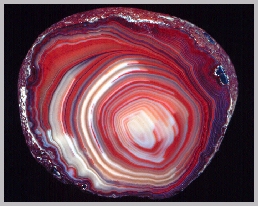
Description: Usan, Scotland, for Usan House, Angusshire. Most are blue, banded agates but some white or pink are known - brilliant inky blue and white colors; also wax yellow---Cerachates. Centres often hollow and lined with quartz or amethyst (Heddle, 1901, p. 75, 76) would have called this area Blue Hole, which see. Agates are from lavas in the lower Old Red Sandstone of early Devonian age. The site is well described and several fine agates are illistrated by Rodgers (1975, p. 37-40, figs. 31, 32) and Macpherson (1989, p. 19, 24-27, figs. 51-55) described and illustrated materials from the collections of M. F. Heddle and R. Miln that are now in the collections of the National Museum of Scotland. Fallick and others (1985, p. 672-674) used agates from this site in oxygen isotope studies to determine temperatures under which agate formation took place. Also, called Blue Hole Agate, Forfarshire, near Montrose, Scotland, locality described by Heddle (1901, p. 75, 76) and said to contain inky blue agates with white colors. Macpherson (1989, p. 19, 24-27, figs. 51-58) included these with agates from lavas of the Old Red Sandstone of early Devonian age. They are mostly blue, pink, or white banded agates. Rodgers (1975, p. 35, 36, fig. 32) stated that the exact location of the Blue Hole is now unknown and gave some interesting history of this observation.
Agate
Location: Wester Kinsleith, Fife
Country: Scotland
Continent: Europe
Date: 10/26/1998
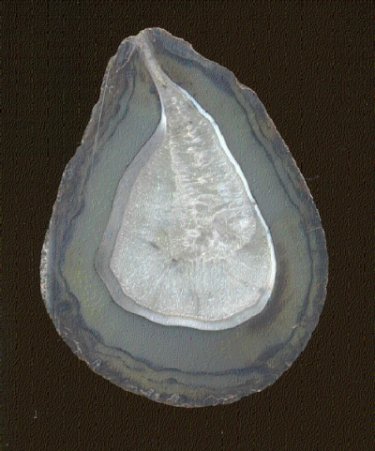
Description: Wester Kinsleith, Fife, Scotland, probably an amygdaloidal agate from basalt flows associated with the Old Red Sandstone of Devonian age. No further details available.
Agate
Location: Bantom
Country: South Africa
Continent: Africa
Date: 8/15/2001
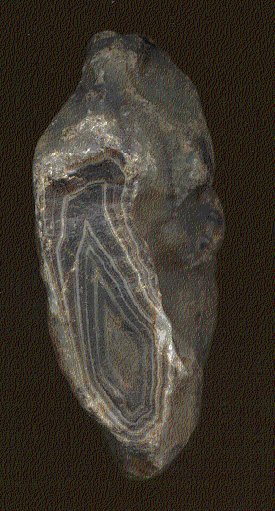
Description: Bantom, ...description of agate nodules recovered from exhausted alluvial diamond deposits in South Africa. The term refers to a band around the stone (VanAardt, 1965, p. 949). These are essentially fortification agates from alluvial gravel from exhausted diamond fields around Wolmeranstad, Bloemkof, Schweizer Reinecke, situated in the northwest provinces of South Africa. The specimens were collected by Eileen Bruigom.
Agate
Location: Bantom
Country: South Africa
Continent: Africa
Date: 8/15/2001
Description: Bantom, ...description of agate nodules recovered from exhausted alluvial diamond deposits in South Africa. The term refers to a band around the stone (VanAardt, 1965, p. 949). These are essentially fortification agates from alluvial gravel from exhausted diamond fields around Wolmeranstad, Bloemkof, Schweizer Reinecke, situated in the northwest provinces of South Africa. The specimens were collected by Eileen Bruigom.
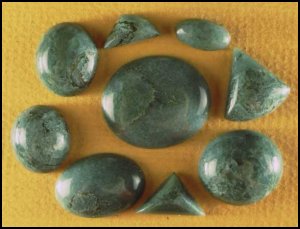
Agate
Location: Buddstone
Country: South Africa
Continent: Africa
Date: 5/27/1999
Description: Buddstone, South Africa, name first appeared without description, adv., Agatique Shop, Lapidary Journal, v. 8, no. 3, p. 251. This term is used to describe a partially agatized serpentine with a strong Nickel green body. See Parsons (1967).
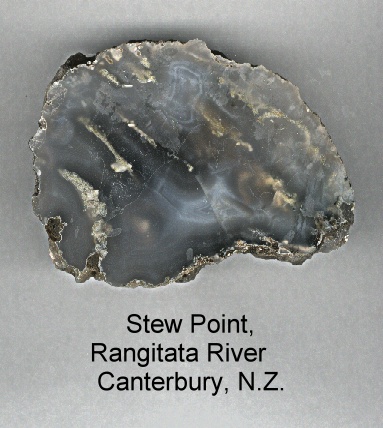
Agate
Location: Stew Point, Rangitata River, Canterbury
Country: New Zealand
Continent: Australia
Date: 1/24/2003
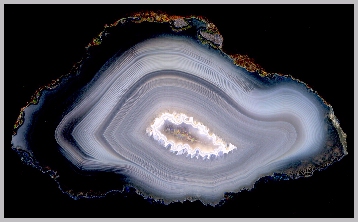
Agate
Location: Ardownie Quarry, at Monifieth, near Dundee
Country: Scotland
Continent: Europe
Date: 10/26/1998
Description: Ardownie Quarry Agates, Scotland, amygdaloidal agates from andesites in the Ochil Volcanic Formation of Early Devonian age. They were first discovered in about 1992 and reported upon by Ingram (1994, p. 17-20) who compared the agates in quality to those from the historic Blue Hole of Usan but stated that the specimens from Ardownie Quarry could be much larger (up to 600 mm x 300 mm). Gotze, Plotze, Fuchs and Habermann (1999, p. 152, 153) suggested that agates from this site formed in an andesite and examined them by electron paramagnetic resonance, cathodoluminescence and trace element content.
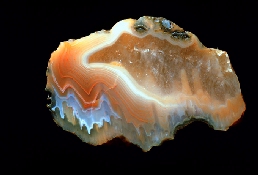
Agate
Location: Ballindean, North Perthshire
Country: Scotland
Continent: Europe
Date: 10/26/1998
Description: Ballindean, Scotland, is a historic locality in Perthshire, first noted by Heddle (1901, p. 76) and said to have yielded agates of delicate lilac, red, and rose colors from rocks of the Old Red Sandstone of Devonian age. Macpherson (1989, p. 33, 34, 71) used the term Ballindean to describe and illustrate agates from several localities localities including Agate Knowe, Ballindean Farm, Tinkletop, and Inchture, that are situated .about 22 km east of Perth. Photo courtesy of Robin Field, taken by Danny McClure.
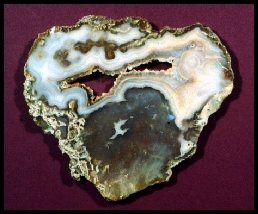
Agate
Location: Antelope
State: Oregon
Country: United States
Continent: North America
Date: 10/26/1998
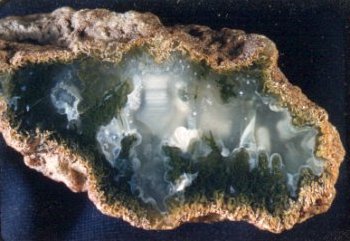
Agate
Location: Antelope
State: Oregon
Country: United States
Continent: North America
Date: 5/10/2000
Description: Agate with green chlorite inclusions and stalk aggregates. Image courtesy of Lizzadro Museum of Lapidary Art, Elmhurst, Illinois.
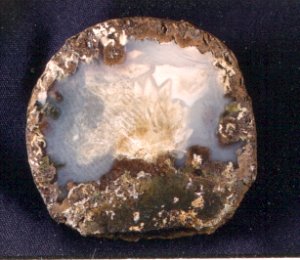
Agate
Location: Antelope
State: Oregon
Country: United States
Continent: North America
Date: 4/27/2000
Description: Agate with calcite pseudomorph inclusions. Image courtesy of Lizzadro Museum
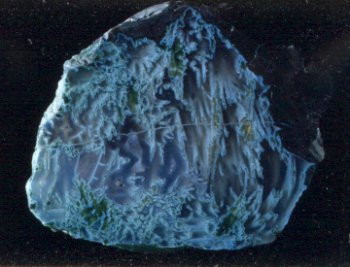
Agate
Location: Deschutes River
State: Oregon
Country: United States
Continent: North America
Date: 5/10/2000
Description: Agate with cholorite inclusions. Image courtesy of Lizzadro Museum
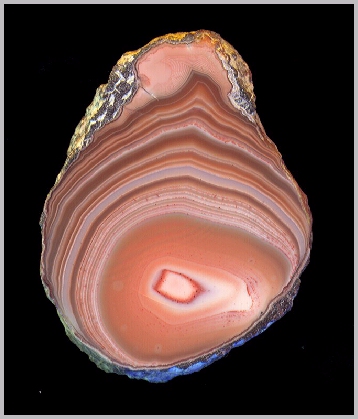
Agate Amygdale
Location: Ferryden Beach, near Montrose, Angus
Country: Scotland
Continent: Europe
Date: 10/26/1998
Description: Dunure, Scotland, historic locality in Ayrshire, that Heddle (1901, p. 76) recorded as producing agates ...along the coast at Dunure. Rodgers (1975, p. 24, 25) illustrated a fine example of a faulted agate from here and (p. 85) suggested agates also came a railway cutting in the area. Fallick et al (1985, p. 672-674) stated that the agates came from lavas of the lower Old Red Sandstone of Early Devonian Age. Macpherson (1989, p. 19, 48, figs. 106, 107) suggested these agates came from several sites to the South.
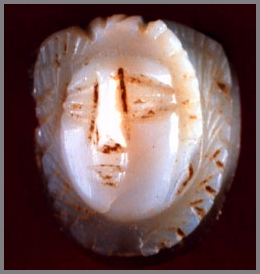
Agate Cameo
Location: Dirillo River, Sicily
Country: Italy
Continent: Europe
Date: 10/26/1998
Description: Agate Cameo, Roman, 2nd-3rd Century C.E. Agate is probably from Dirillo River, Sicily. Dirillo is the modern name for the river Achates, type area for agates.
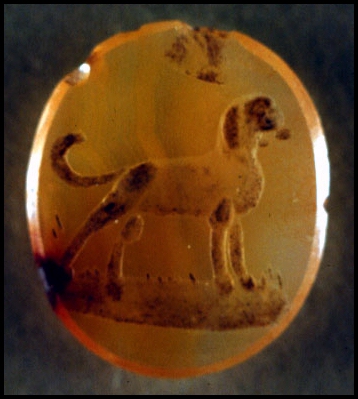
Agate Intaglio
Location: Dirillo River, Sicily
Country: Italy
Continent: Europe
Date: 10/26/1998
Description: Agate Intaglio, Roman, 2nd-3rd Century, C.E. Agate is probably from Dirillo River, Sicily. Dirillo is the modern name for the river Achates, type area for agates.
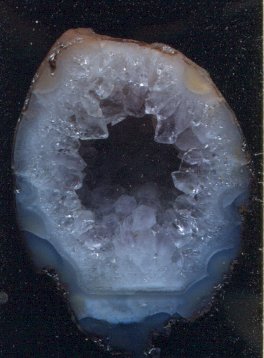
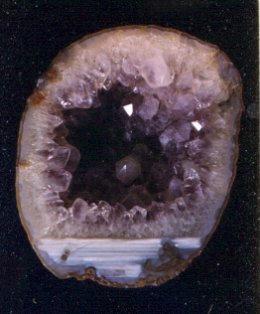
Agate-shelled Geode
Location: Mill Creek, near Prineville
State: Oregon
Country: United States
Continent: North America
Date: 5/10/2000
Description: Agate-shelled geode with rock crystal interior. Image courtesy of Lizzadro Museum
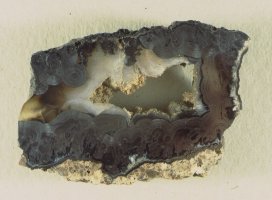
Agate-shelled Geode
Location: Mill Creek, near Prineville
State: Oregon
Country: United States
Continent: North America
Date: 5/10/2000
Description: Agate-shell geode with amethyst lining. Image courtesy of Lizzadro Museum
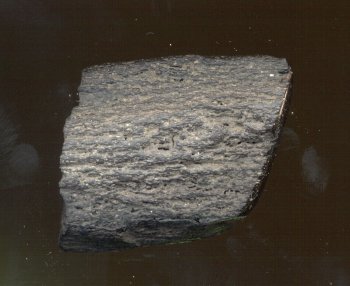
Agatized Psilomelane
State: Arizona
Country: United States
Continent: North America
Date: 6/28/1999
Agatized Whale Bone
Location: Calvert Cliffs
State: Maryland
Country: United States
Continent: North America
Date: 5/22/2001
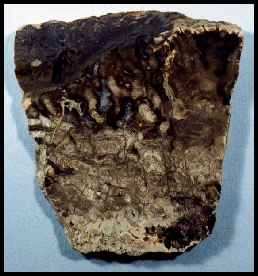
Description: The Calvert Cliffs of Maryland are a well known area that has produced many fine examples of fossil shark teeth and other vertebrate and invertebrate that have been collected from the Choptank and St. Mary's formations of Miocene age. The image shows the outer bone with small cells and the interior bone with large cells. Some of the whale bone is agatized.
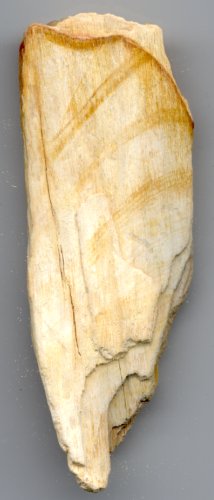
Agatized Wood
Location: Camden County
State: New Jersey
Country: United States
Continent: North America
Date: 2/12/2001
Agitized Whale Bone
Location: Calvert Cliffs
State: Maryland
Country: United States
Continent: North America
Date: 5/22/2001
Description: The Calvert Cliffs of Maryland are a well known area that has produced many fine examples of fossil shark teeth and other vertebrate and invertebrate that have been collected from the Choptank and St. Mary's formations of Miocene age. The image shows the outer bone with small cells and the interior bone with large cells. Some of the whale bone is agatized.
Algae Agate
State: Wyoming
Country: United States
Continent: North America
Date: 10/26/1998
Amygdaloidal Agate
Location: Schmissberg, near Idar-Oberstein
Country: Germany
Continent: Europe
Date: 10/28/1998
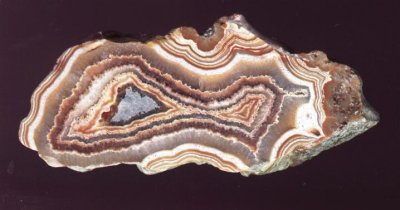
Amygdaloidal Agates
Location: Waldhambach, near Frankfurt
Country: Germany
Continent: Europe
Date: 3/27/2000
Description: Amygdaloidal Agates, Waldhambach, Germany. These are amygdaloidal agates that have been found at Waldhambach, near Frankfurt, Germany. They are from basaltic or andesitic rocks of Permian age. It is of interest that other agates of Permian age from the Black Forest area in southwestern Germany, are thunder eggs that formed in rhyolitic rocks. Size - 8.3 cm x 4.5 cm
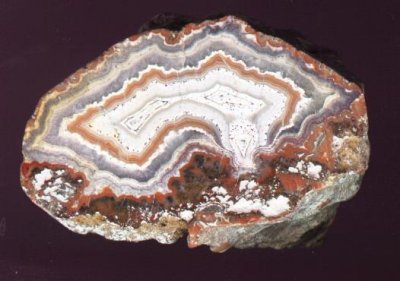
Amygdaloidal Agates
Location: Waldhambach, near Frankfurt
Country: Germany
Continent: Europe
Date: 3/27/2000
Description: Amygdaloidal Agates, Waldhambach, Germany. These are amygdaloidal agates that have been found at Waldhambach, near Frankfurt, Germany. They are from basaltic or andesitic rocks of Permian age. It is of interest that other agates of Permian age from the Black Forest area in southwestern Germany, are thunder eggs that formed in rhyolitic rocks. Size - 8.8 cm x 4.0 cm
Amygdaloidal Agates
Location: Waldhambach, near Frankfurt
Country: Germany
Continent: Europe
Date: 3/27/2000
Description: Amygdaloidal Agates, Waldhambach, Germany. These are amygdaloidal agates that have been found at Waldhambach, near Frankfurt, Germany. They are from basaltic or andesitic rocks of Permian age. It is of interest that other agates of Permian age from the Black Forest area in southwestern Germany, are thunder eggs that formed in rhyolitic rocks. Size - 6.5 cm x 4.2 cm
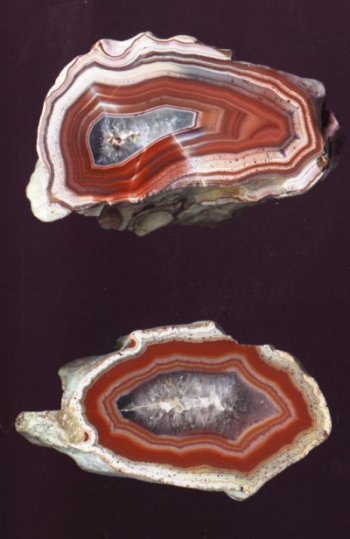
Amygdaloidal Agates
Location: Waldhambach, near Frankfurt
Country: Germany
Continent: Europe
Date: 3/27/2000
Description: Amygdaloidal Agates, Waldhambach, Germany. These are amygdaloidal agates that have been found at Waldhambach, near Frankfurt, Germany. They are from basaltic or andesitic rocks of Permian age. It is of interest that other agates of Permian age from the Black Forest area in southwestern Germany, are thunder eggs that formed in rhyolitic rocks. Size: Upper agate - 5.6 cm x 3.2 cm, Lower agate - 5.1 cm x 3.2 cm.
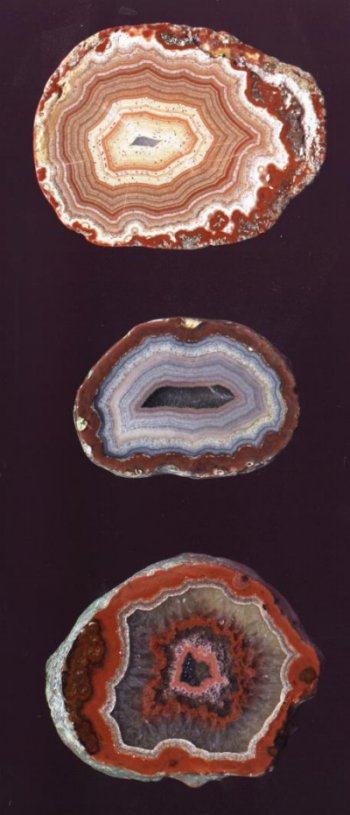
Amygdaloidal Agates
Location: Waldhambach, near Frankfurt
Country: Germany
Continent: Europe
Date: 3/27/2000
Description: Amygdaloidal Agates, Waldhambach, Germany. These are amygdaloidal agates that have been found at Waldhambach, near Frankfurt, Germany. They are from basaltic or andesitic rocks of Permian age. It is of interest that other agates of Permian age from the Black Forest area in southwestern Germany, are thunder eggs that formed in rhyolitic rocks. Size: Upper agate - 5.4 cm x 4.2 cm, Middle agate - 4.2 cm x 3.0 cm, Lower agate - 4.9 cm x 3.9 cm.
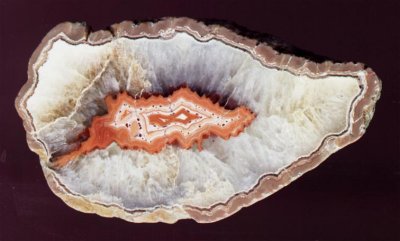
Amygdaloidal Agates
Location: Waldhambach, near Frankfurt
Country: Germany
Continent: Europe
Date: 3/27/2000
Description: Amygdaloidal Agates, Waldhambach, Germany. These are amygdaloidal agates that have been found at Waldhambach, near Frankfurt, Germany. They are from basaltic or andesitic rocks of Permian age. It is of interest that other agates of Permian age from the Black Forest area in southwestern Germany, are thunder eggs that formed in rhyolitic rocks. Size - 9.8 cm x 5.5 cm
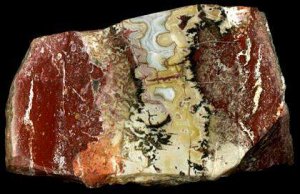
an
Location: Centreville
State: Nova Scotia
Country: Canada
Continent: North America
Date: 6/17/1999
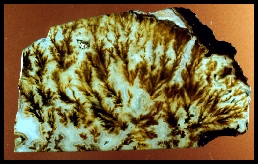
Angel Wing Agate
State: Oregon
Country: United States
Continent: North America
Date: 10/26/1998
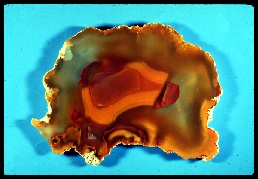
Apache Agate
State: Chihuahua
Country: Mexico
Continent: North America
Date: 10/26/1998
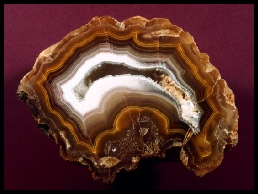
Aparejos Agate
State: Chihuahua
Country: Mexico
Continent: North America
Date: 10/28/1998
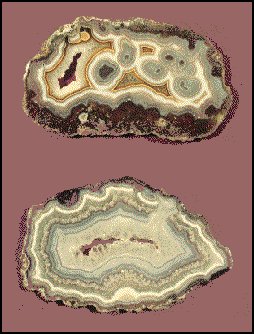
Aqua Nueva Agate
State: Chihuahua
Country: Mexico
Continent: North America
Date: 10/26/1998
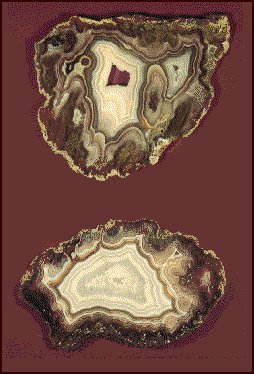
Aqua Nueva Agate
State: Chihuahua
Country: Mexico
Continent: North America
Date: 10/26/1998
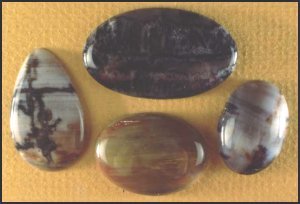
Araucarian Picture Wood
State: Arizona
Country: United States
Continent: North America
Date: 5/28/1999
Description: Araucarian Picture Wood, Arizona, various colors, a generic name ("Araucaria") used as an adjective for a kind of fossilized wood that is commonly used for jewelry and ornamental purposes. Araucaria is one of the common woods from the Chinle Formation of Triassic Age of Arizona and Utah and is common in the Petrified Forest National Monument and outlying areas. See Smith, 1963, p. 435.
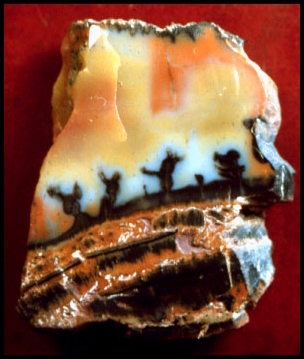
Arizona Picture Wood
State: Arizona
Country: United States
Continent: North America
Date: 10/26/1998
Description: Arizona Picture Wood, Arizona. The name may have first appeared in an advertisement, Rock Hobby Shop, Rocks and Minerals, v. 36, no. 3,4, p. 204. The example in the image is in the collection of the late A. N. Goddard of Detroit, Michigan, and was so labeled at the time the slide was made. The Goddard collection is housed in the geological collections of Wayne State University, Detroit, Michigan.
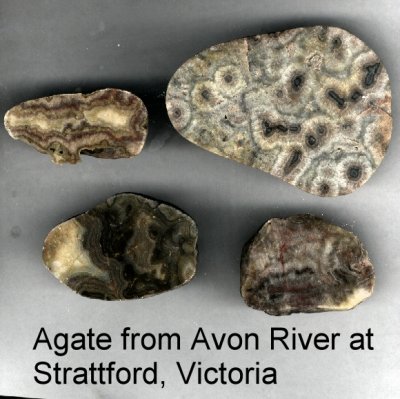
Avon River Agate
Location: Avon River at Strattford
State: Victoria
Country: Australia
Continent: Australia
Date: 1/6/2003
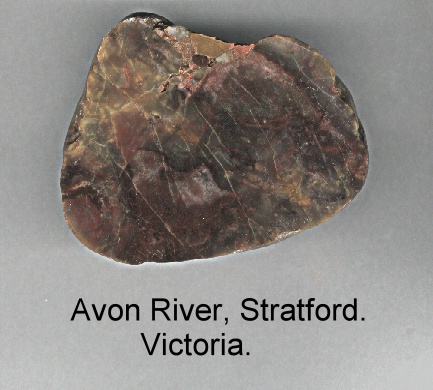
Avon River Agate
Location: Avon River at Strattford
State: Victoria
Country: Australia
Continent: Australia
Date: 1/24/2003
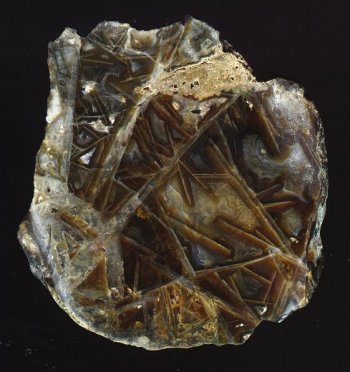
Baden-Baden Thunder Egg
Location: Baden-Baden
Country: Germany
Continent: Europe
Date: 9/12/2000
Description: Baden-Baden Thunder Egg, with lattice work, was found in a gravel pit along the Rhine River, near Baden-Baden, which lies near Karsruhe in the Black Forrest, Germany.
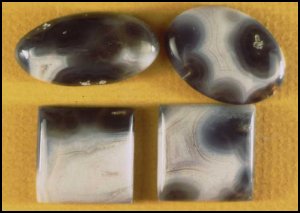
Balmorhea Blue Agate
State: Texas
Country: United States
Continent: North America
Date: 5/29/1999
Description: Balmorhea Blue Agate, Texas, for Lake Balmorhea, Texas, ...blue, lavender, and white agate (Slack,1966, p. 85, 86; Cole, 1970, p. 396-397).
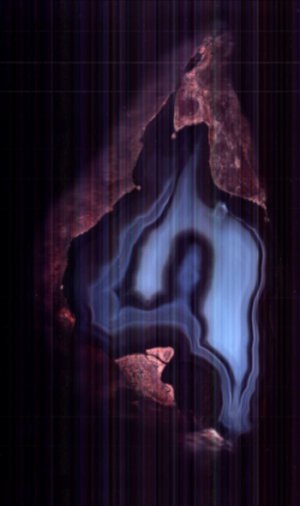
Balmorhea Blue Agate
State: Texas
Country: United States
Continent: North America
Date: 8/17/1999
Description: Balmorhea Blue Agate, Texas, for Lake Balmorhea, Texas.
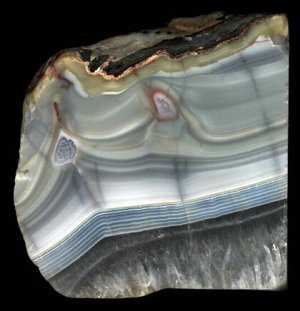
Banded Agate
Location: Scots Bay
State: Nova Scotia
Country: Canada
Continent: North America
Date: 6/17/1999
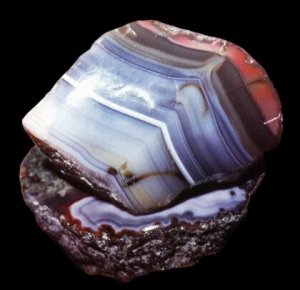
Banded Agate
Location: Scots Bay
State: Nova Scotia
Country: Canada
Continent: North America
Date: 6/17/1999
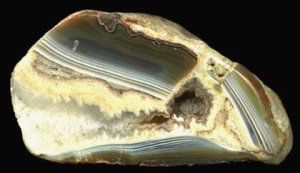
Banded Agate
Location: Scots Bay
State: Nova Scotia
Country: Canada
Continent: North America
Date: 6/17/1999
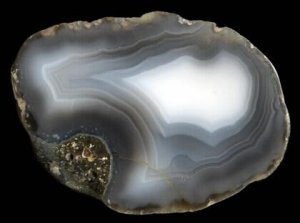
Banded Agate
Location: Morden
State: Nova Scotia
Country: Canada
Continent: North America
Date: 6/17/1999
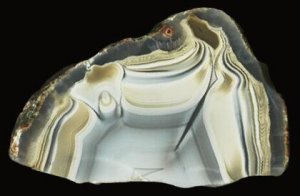
Banded Agate
Location: Morden
State: Nova Scotia
Country: Canada
Continent: North America
Date: 6/17/1999
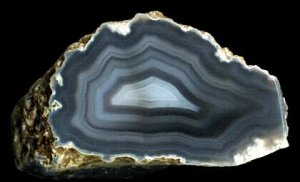
Banded Agate
Location: Morden
State: Nova Scotia
Country: Canada
Continent: North America
Date: 6/17/1999
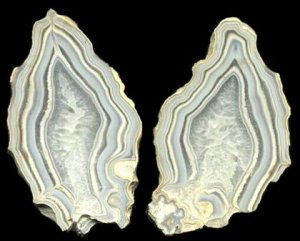
Banded Agate
Location: Morden
State: Nova Scotia
Country: Canada
Continent: North America
Date: 6/17/1999
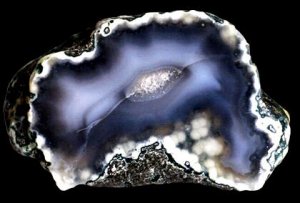
Banded Agate
Location: Morden
State: Nova Scotia
Country: Canada
Continent: North America
Date: 6/17/1999
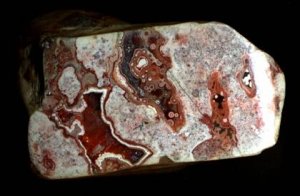
Banded Agate
Location: Ross Creek
State: Nova Scotia
Country: Canada
Continent: North America
Date: 6/17/1999
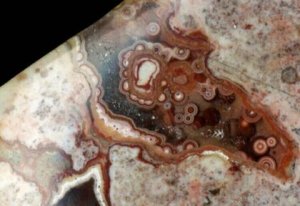
Banded Agate
Location: Ross Creek
State: Nova Scotia
Country: Canada
Continent: North America
Date: 6/17/1999
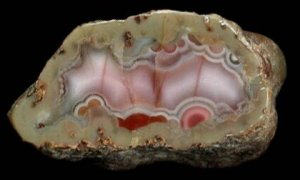
Banded and Moss Agate
Location: Scots Bay
State: Nova Scotia
Country: Canada
Continent: North America
Date: 6/17/1999
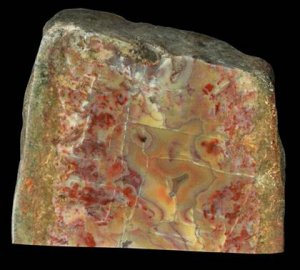
Banded and Moss Agate
Location: Scots Bay
State: Nova Scotia
Country: Canada
Continent: North America
Date: 6/17/1999
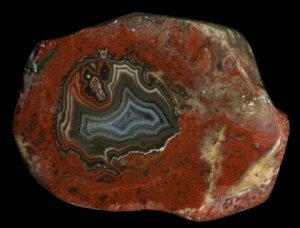
Banded and Plume Agate
Location: Ross Creek
State: Nova Scotia
Country: Canada
Continent: North America
Date: 6/17/1999
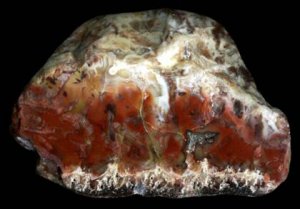
Banded and Plume Agate
Location: Ross Creek
State: Nova Scotia
Country: Canada
Continent: North America
Date: 6/17/1999
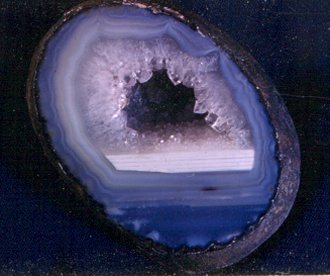
Beacon Hill Agate
Location: Beacon Hill, Washington County
State: Idaho
Country: United States
Continent: North America
Date: 5/10/2000
Description: Image courtesy of Lizzadro Museum of Lapidary Art, Elmhurst, Illinois.
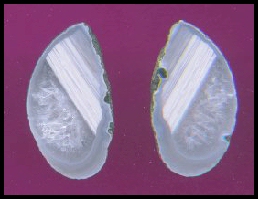
Beacon Hill Agate
Location: Beacon Hill, Washington County
State: Idaho
Country: United States
Continent: North America
Date: 10/26/1998
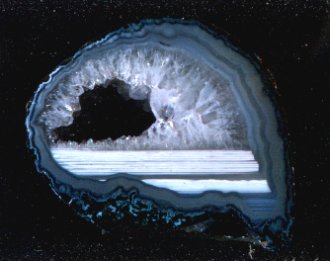
Beacon Hill Agate
Location: Beacon Hill, Washington County
State: Idaho
Country: United States
Continent: North America
Date: 5/10/2000
Description: Image courtesy of Lizzadro Museum of Lapidary Art, Elmhurst, Illinois.
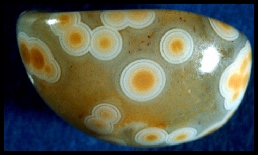
Bean Agate
State: Chihuahua
Country: Mexico
Continent: North America
Date: 10/28/1998
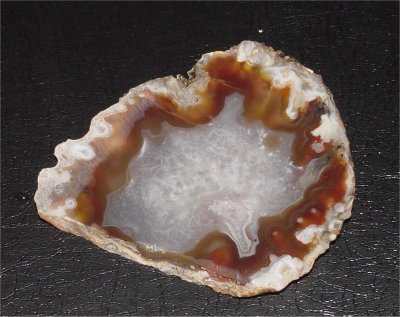
Beaver Agate
State: Utah
Country: United States
Continent: North America
Date: 10/1/2002
Description: With rare crystal center.
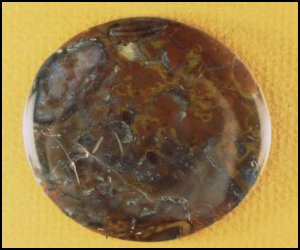
Belvedere Jasper
Location: Belvedere
State: California
Country: United States
Continent: North America
Date: 5/29/1999
Description: Belvedere Jasper, probably locally named for Belvedere, California, in San Francisco Golden Gate Bridge area. May be synonym of Golden Gate Jasper.
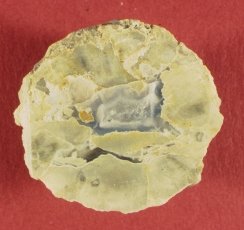
Berkeley Thunder Egg
State: California
Country: United States
Continent: North America
Date: 6/28/1999
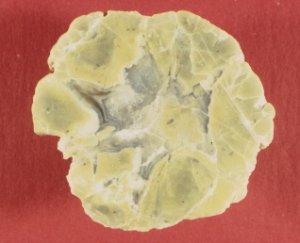
Berkeley Thunder Egg
State: California
Country: United States
Continent: North America
Date: 6/28/1999
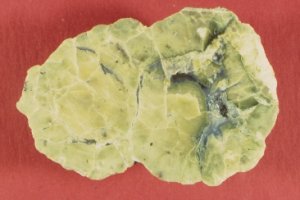
Berkeley Thunder Egg
State: California
Country: United States
Continent: North America
Date: 6/28/1999
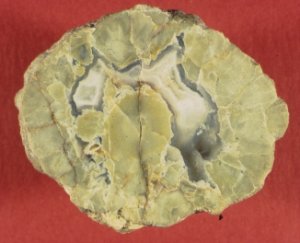
Berkeley Thunder Egg
State: California
Country: United States
Continent: North America
Date: 6/28/1999
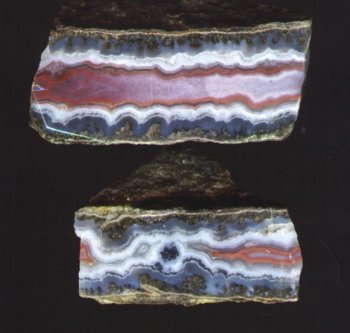
Bernhard Quarry Agate
Location: Bernnard Quarry
Country: Germany
Continent: Europe
Date: 1/18/2000
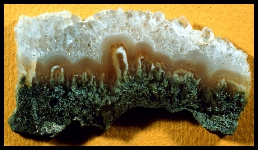
Bicycle Lake Agate
State: California
Country: United States
Continent: North America
Date: 10/26/1998
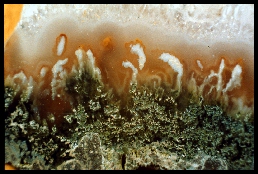
Bicycle Lake Agate
State: California
Country: United States
Continent: North America
Date: 10/26/1998
Description: Close-up of previous image.
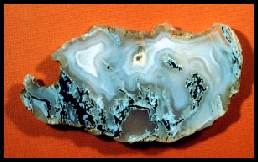
Big Muddy Ranch Agate
State: Oregon
Country: United States
Continent: North America
Date: 10/26/1998
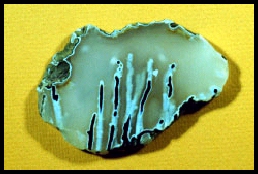
Big Muddy Ranch Agate
State: Oregon
Country: United States
Continent: North America
Date: 10/26/1998
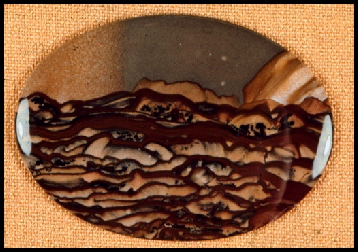
Biggs Jasper
Location: Sherman County
State: Oregon
Country: United States
Continent: North America
Date: 10/26/1998
Description: Biggs Jasper, for Biggs, Sherman, County, Oregon. Silicified volcanic ash first found in highway cuts between Biggs and Wasco, Oregon. Jasper is situated in volcanic ash flow immediately overlying a basalt currently mapped as part of the John Day Formation of Miocene Age. Generally a brown jasper with darker brown, yellow, tan, blue, or gray-brown lines, bands, arcs, etc. (Sinkankas, 1976, p. 234).
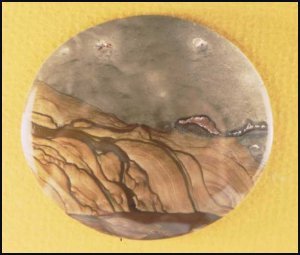
Biggs Jasper
Location: Sherman County
State: Oregon
Country: United States
Continent: North America
Date: 5/28/1999
Description: Biggs Jasper, for Biggs, Sherman, County, Oregon. Silicified volcanic ash first found in highway cuts between Biggs and Wasco, Oregon. Jasper is situated in volcanic ash flow immediately overlying a basalt currently mapped as part of the John Day Formation of Miocene Age. Generally a brown jasper with darker brown, yellow, tan, blue, or gray-brown lines, bands, arcs, etc. (Sinkankas, 1976, p. 234).
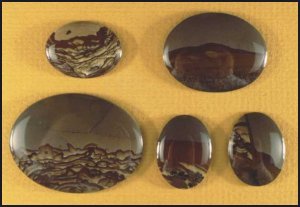
Biggs Jasper
Location: Sherman County
State: Oregon
Country: United States
Continent: North America
Date: 5/28/1999
Description: Biggs Jasper, for Biggs, Sherman, County, Oregon. Silicified volcanic ash first found in highway cuts between Biggs and Wasco, Oregon. Jasper is situated in volcanic ash flow immediately overlying a basalt currently mapped as part of the John Day Formation of Miocene Age. Generally a brown jasper with darker brown, yellow, tan, blue, or gray-brown lines, bands, arcs, etc. (Sinkankas, 1976, p. 234).
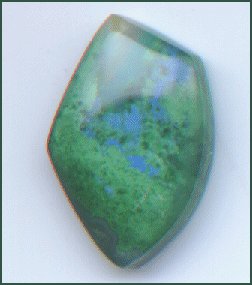
Bill White
Location: Chrysocolla
State: Arizona
Country: United States
Continent: North America
Date: 10/28/1998
Description: Chrysocolla is made up of soft copper silicates that are included in a hard chalcedony matrix.
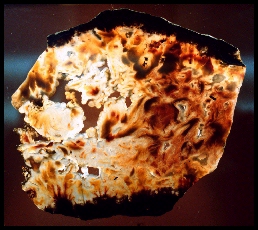
Bird of Paradise Agate
State: Chihuahua
Country: Mexico
Continent: North America
Date: 10/28/1998
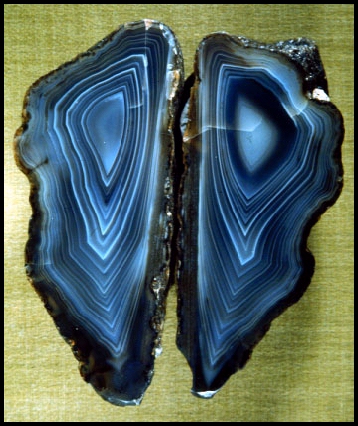
Black Skin Agate
Location: Deccan Plateau
Country: India
Continent: Asia
Date: 10/26/1998
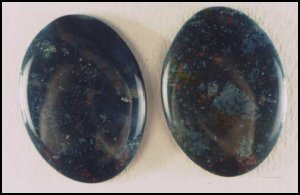
Bloodstone
Country: India
Continent: Asia
Date: 5/28/1999
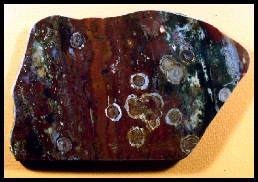
Bloodstone
Location: Rajpipla State
Country: India
Continent: Asia
Date: 10/26/1998
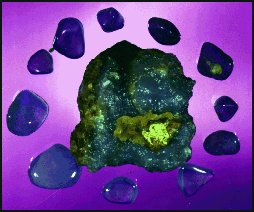
Blue Agate
State: Chihuahua
Country: Mexico
Continent: North America
Date: 10/28/1998
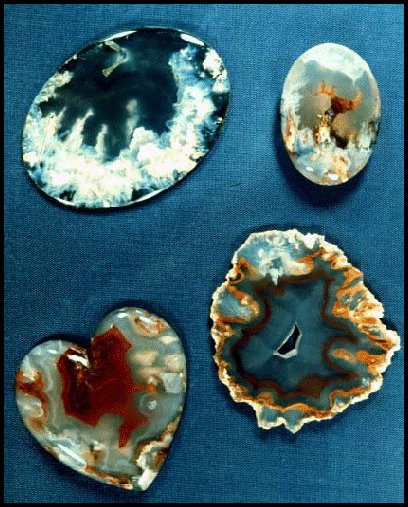
Blue Agate
State: Nebraska
Country: United States
Continent: North America
Date: 10/29/1998
Description: Blue Agate, the Nebraska State Gem, has been found in place in wind-deposited claystones in the Chadron Formation of Oligocene Age in Sioux and Dawes counties. These gems have been found in colors other than blue and the large oval stone is a doublet with a blackened back to highlight the plumes in this material. The chalcedony probably originated from silica that was freed when devitrification (changing from a glassy to a crystalline state) of wind-blown volcanic ash took place. The chalcedony appears to have formed in or near sources of alkaline water.
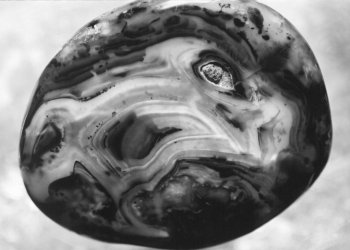
Blue Agate Nodule
Country: Madagascar
Continent: Africa
Date: 4/26/2002
Description: Inside pattern of next nodule. Size range: 5.6" x 5.4".
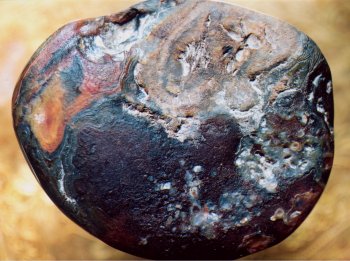
Blue Agate Nodule
Country: Madagascar
Continent: Africa
Date: 4/26/2002
Description: Outer surface of previous nodule. Size range: 5.6" x 5.4".
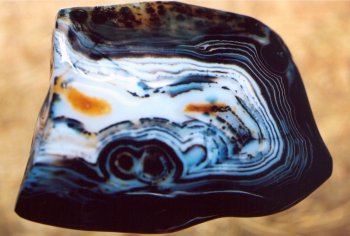
Blue Agate Nodule
Country: Madagascar
Continent: Africa
Date: 4/26/2002
Description: Polished surface. Size range: 5.0" x 5.4".
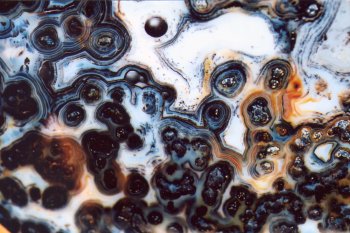
Blue Agate Nodule
Country: Madagascar
Continent: Africa
Date: 4/26/2002
Description: Detail of tube structure around geothite? Needles, oriented nearly perpendicular to the needle axes. Size range: 6.4" x 8.0".
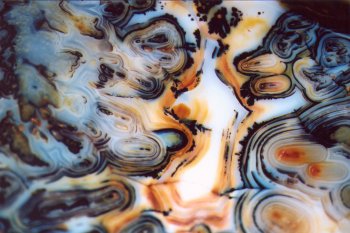
Blue Agate Nodule
Country: Madagascar
Continent: Africa
Date: 4/26/2002
Description: Detail of tube structure around geothite? Needles, oriented at about 30 degrees to the needle axes. Size range: 4.0" x 8.3".
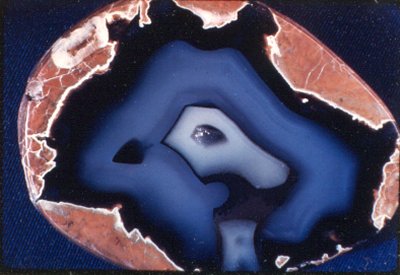
Blue Bed Thunder Egg Agate
Location: Madras area
State: Oregon
Country: United States
Continent: North America
Date: 5/10/2000
Description: Blue Bed Thunder Eggs have sometimes been referred to as Pony Butte Thunder Egg. Browning (1961) suggested that Pony Butte Thunder Eggs were synonymous with Priday Blue Bed Thunder Eggs and preferred the name Blue Bed. Image courtesy of Lizzadro Museum.
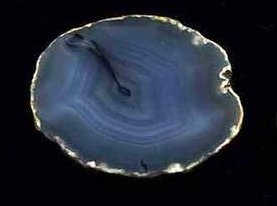
Blue Fortification Agate
Location: Khur Agate Field
Country: Iran
Continent: Asia
Date: 4/20/2001
Description: The Khur agate and geode fields are situated at 55o 17' 45" E and 33o 39' 25" N, approximately 25 km (15.5 miles) southeast of the city of Khur, between Tehran and Yazd. This locality is in Iran. The agate nodules and geodes have formed in altered tuffs of lower to middle Eocene age. In some places the tuffaceous layers are completely altered to the clay mineral montmorillonite (bentonite).
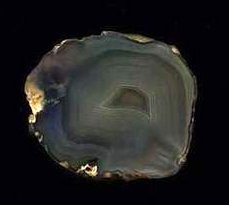
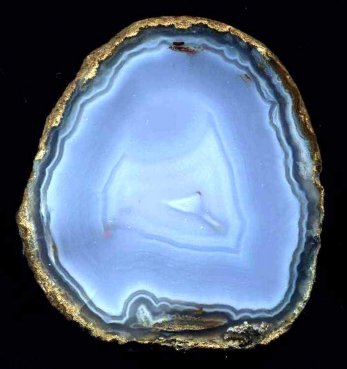
Blue Fortification Agate
Location: Khur Agate Field
Country: Iran
Continent: Asia
Date: 4/20/2001
Description: The Khur agate and geode fields are situated at 55o 17' 45" E and 33o 39' 25" N, approximately 25 km (15.5 miles) southeast of the city of Khur, between Tehran and Yazd. This locality is in Iran. The agate nodules and geodes have formed in altered tuffs of lower to middle Eocene age. In some places the tuffaceous layers are completely altered to the clay mineral montmorillonite (bentonite).
Blue Fortification Agate
Location: Khur Agate Field
Country: Iran
Continent: Asia
Date: 4/20/2001
Description: The Khur agate and geode fields are situated at 55o 17' 45" E and 33o 39' 25" N, approximately 25 km (15.5 miles) southeast of the city of Khur, between Tehran and Yazd. This locality is in Iran. The agate nodules and geodes have formed in altered tuffs of lower to middle Eocene age. In some places the tuffaceous layers are completely altered to the clay mineral montmorillonite (bentonite).
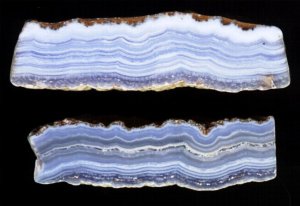
Blue Lace Agate
Country: Namibia
Continent: Africa
Date: 1/13/2003
Description: Blue Lace Agate, Namibia, (formerly Southwest Africa), the material first appeared on the market in the middle to late 1970's and was advertised as being from South Africa (Rocks & Minerals, v. 47, no. 6, p. 383; Lapidary Journal, v. 32, no 3, p. 678-679). In the late 1980's, advertisements suggested Southwest Africa as a source (Lapidary Journal, v. 41, no 10, p. 111. The material may have been originally offered as Blue Lace Chalcedony (Rocks and Minerals, v. 45, no. 7/8, p. 464; Lapidary Journal, v. 30, no. 1, p. 39), in which case the name Blue Lace Chalcedony should have precedence. Frazier and Frazier (1988, p. 69) used the name African Blue Lace Agate and gave Namibia as a source. They suggested that South Africa, Southwest Africa, and the Kalahari Desert as sources. Dave Glenister (personal communications, 2000) has indicated that these agates are vein deposits with dolomite in dolerite at farm Ysterputs 254, district of Karasburg, Namibia.
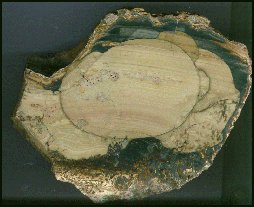
Blue Mountain Jasper
State: Oregon
Country: United States
Continent: North America
Date: 10/26/1998
Boley Agate
State: Oklahoma
Country: United States
Continent: North America
Date: 1/18/2000
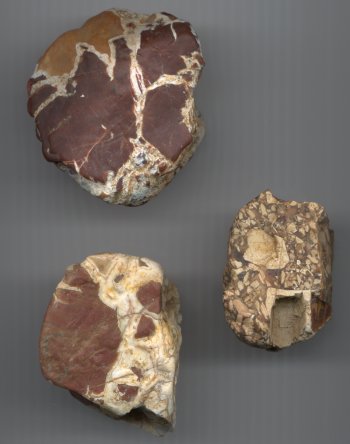
Description: Boley Agate, Oklahoma, actually a brecciated chert or jasper with clear, red, black or brown chalcedony cement around green, olive, black, white, tan, carnelian or red fragments Murphy, 1963, p. 114-115). Named for Boley, Okfuskee County, Oklahoma. Three of the examples here appear to be agatized conglomerate or breccia. The brecciated example has angular fragments and many of the clasts appear to be feldspar cleavages. The conglomerates have fairly well rounded clasts. Three of the examples appear to be fragments of small septarian nodules. The diversity in mineralogy and structure of these agates suggests they have a complex history and have been derived from several different sources.
Boley Agate
State: Oklahoma
Country: United States
Continent: North America
Date: 1/18/2000
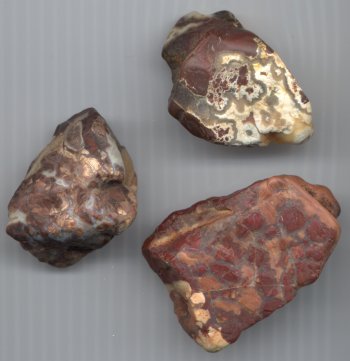
Description: Boley Agate, Oklahoma, actually a brecciated chert or jasper with clear, red, black or brown chalcedony cement around green, olive, black, white, tan, carnelian or red fragments Murphy, 1963, p. 114-115). Named for Boley, Okfuskee County, Oklahoma. Three of the examples here appear to be agatized conglomerate or breccia. The brecciated example has angular fragments and many of the clasts appear to be feldspar cleavages. The conglomerates have fairly well rounded clasts. Three of the examples appear to be fragments of small septarian nodules. The diversity in mineralogy and structure of these agates suggests they have a complex history and have been derived from several different sources.
Botswana Agate
Country: Botswana
Continent: Africa
Date: 10/26/1998
Botswana Agate
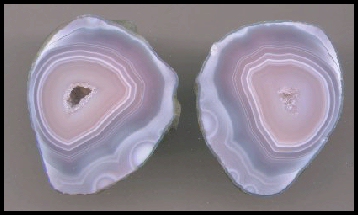
Country: Botswana
Continent: Africa
Date: 12/11/2001
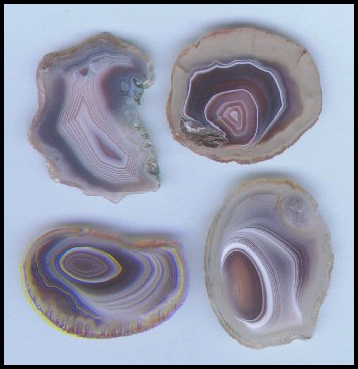
Description: Note stalk aggregates in speciman in lower left.
Botswana Agate
Country: Botswana
Continent: Africa
Date: 10/26/1998
Description: Note hemiagates on periphers.
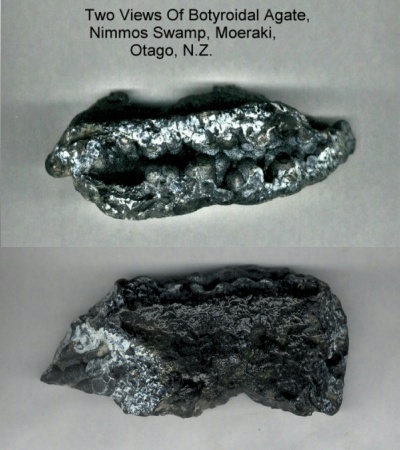
Botyroidal Agate
Location: Nimmos Swamp, Moeraki, Otago
Country: New Zealand
Continent: Australia
Date: 1/24/2003
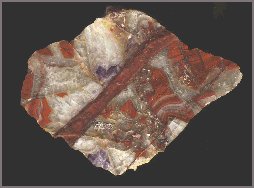
Brecciated Agate
Location: Schlottwitz (near Dresden)
Country: Germany
Continent: Europe
Date: 10/26/1998
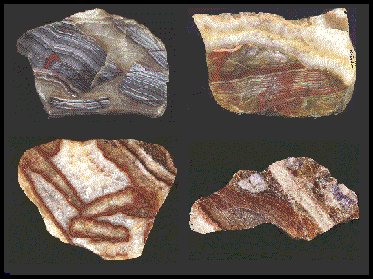
Brecciated Agate
Location: Schlottwitz (near Dresden)
Country: Germany
Continent: Europe
Date: 10/26/1998
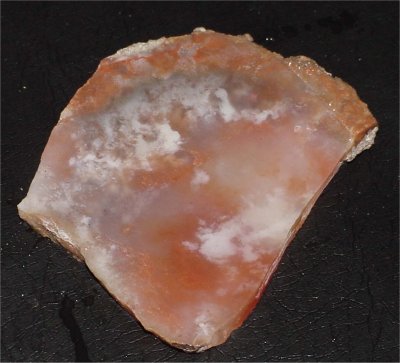
Brian Head Agate
State: Utah
Country: United States
Continent: North America
Date: 10/1/2002
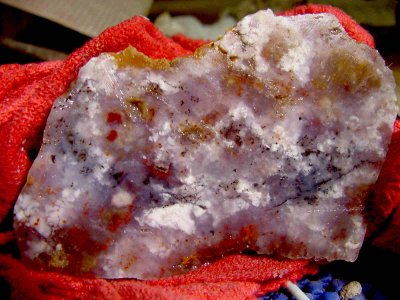
Brian Head Moss Agate
State: Utah
Country: United States
Continent: North America
Date: 10/1/2002
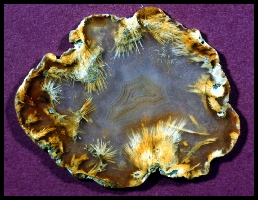
Brownsville Sagenitic Agate
State: Oregon
Country: United States
Continent: North America
Date: 10/26/1998
Description: Reflected light.
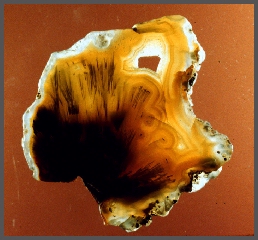
Brownsville Sagenitic Agate
State: Oregon
Country: United States
Continent: North America
Date: 10/26/1998
Description: Transmitted light.
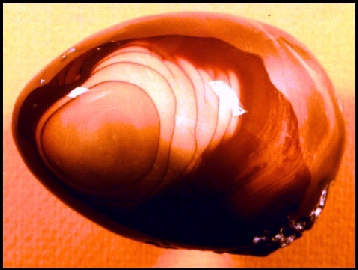
Bruneau Jasper
State: Idaho
Country: United States
Continent: North America
Date: 10/26/1998
Description: Bruneau Jasper, Idaho, (=Bruneau Canyon Jasper) adv., Stewarts Gem Shop, Earth Science, v. 15, no. 6, p. 277. See "Snake River Pete" (1960, p. 250-253). Highly prized jasper which has formed in some gas cavities in a welded ash flow tuffs and rhyolites that are mapped as Miocene or Pliocene age by Ross and Forrester (1947) and are found in southwestern Idaho in the Bruneau River Canyon. The jaspers are ...brown with cream colored moons or egg patterns, adv., C. R. Kaye & Sons, Lapidary Journal, v. 12, no. 4, p. 555. Name derived from outcrops along Bruneau River Canyon, extending from secs. 36, 25, 24, 13, T. 13 S., R. 6 E., into secs. 18, 7, 8, 5, T. 13 S., R. 7 E., into secs. 32, 33, 18, T. 12 S., R. 7 E., Indian Hot Springs Quadrangle, Owyhee County, Idaho, U. S. Geological Survey, 7.5 Minute Series, Topographic, and Geologic Map of the State of Idaho, U. S. Geological Survey, 1:1,000,000 scale. An advertizement by Stewart's Gem Shop, Lapidary Journal, v. 27, no.11, p.1705, lists this material as being from Oregon; this is erroneous.
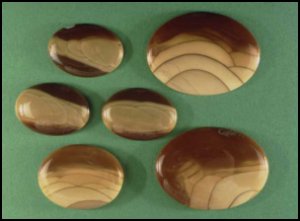
Bruneau Jasper
State: Idaho
Country: United States
Continent: North America
Date: 1/13/2003
Description: Bruneau Jasper, Idaho, (=Bruneau Canyon Jasper) adv., Stewarts Gem Shop, Earth Science, v. 15, no. 6, p. 277. See "Snake River Pete" (1960, p. 250-253). Highly prized jasper which has formed in some gas cavities in a welded ash flow tuffs and rhyolites that are mapped as Miocene or Pliocene age by Ross and Forrester (1947) and are found in southwestern Idaho in the Bruneau River Canyon. The jaspers are ...brown with cream colored moons or egg patterns, adv., C. R. Kaye & Sons, Lapidary Journal, v. 12, no. 4, p. 555. Name derived from outcrops along Bruneau River Canyon, extending from secs. 36, 25, 24, 13, T. 13 S., R. 6 E., into secs. 18, 7, 8, 5, T. 13 S., R. 7 E., into secs. 32, 33, 18, T. 12 S., R. 7 E., Indian Hot Springs Quadrangle, Owyhee County, Idaho, U. S. Geological Survey, 7.5 Minute Series, Topographic, and Geologic Map of the State of Idaho, U. S. Geological Survey, 1:1,000,000 scale. An advertizement by Stewart's Gem Shop, Lapidary Journal, v. 27, no.11, p.1705, lists this material as being from Oregon; this is erroneous.
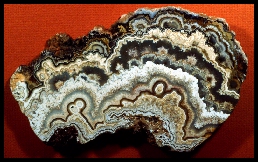
Bubble Lace Agate
State: Chihuahua
Country: Mexico
Continent: North America
Date: 10/28/1998
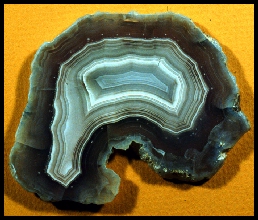
Buena Vista Agate
State: Chihuahua
Country: Mexico
Continent: North America
Date: 10/28/1998
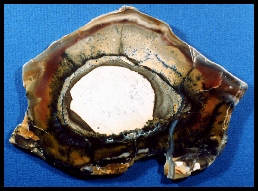
Bull Canyon Agate
State: Nevada
Country: United States
Continent: North America
Date: 10/26/1998
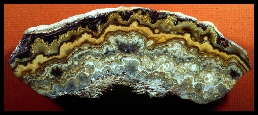
Burrow Creek Agate
Location: Burro Creek
State: Arizona
Country: United States
Continent: North America
Date: 10/26/1998
Description: Burro Creek, agate, jasper, Arizona, for Burro Creek about 45-50 miles northwest of Congress Junction, Arizona, where U. S. Highway 93 crosses Burro Creek. Burro Creek begins in about T. 15 N., R. 10 E., and flows westward through T. 14 N., Rs. 11, 12, 13, W., Yavapai and Mohave Counties, Arizona, Gray Back Mountains (1980), Kaiser Spring (1980), and Greenwood Peak (1967) quadrangles, U. S. Geological Survey, 7.5 minute series (topographic). Generally, a multicolored, dendritic jasp-agate or jasper with shades of red, pink, yellow, with white to tan background. Sinkankas (1959, p. 372) used the term amethystine chalcedony for some of this material, and Blair (1970, p. 1090-1095) suggested these are nodular agates of gray, white, black and brown, some with dendrites, A sagenitic agate has also been recorded from this site. Most of the rocks in the area are currently mapped as volcanics.
Cactus Lace Agate
State: Chihuahua
Country: Mexico
Continent: North America
Date: 10/28/1998
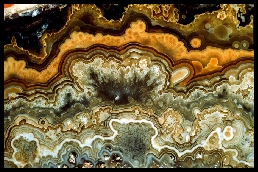
Cactus Lace Agate (close-up)
State: Chihuahua
Country: Mexico
Continent: North America
Date: 10/28/1998
Description: Close-up of previous image (ID 345).
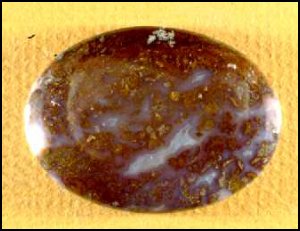
Cady Mountains (agate, japser)
Location: Cady Mountains, San Bernadino County
State: California
Country: United States
Continent: North America
Date: 5/20/1999
Description: Cady Mountains (agate, jasper), for Cady Mountains, approximately S 1/2, secs. 25, 26, 27, T. 8 N., R. 7 E., San Bernardino County, California, Broadwell Lake and Ludlow Quadrangles, U. S. Geological Survey, 7.5 minute series (Topographic). Mitchell (1986, p. 50, 51). ...sagenitic agate, Perry (1961, p. 310).
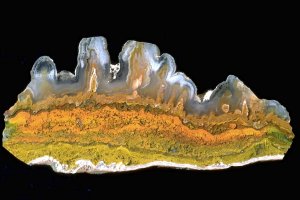
Cady Mountains (agate, japser)
Location: Cady Mountains, San Bernadino County
State: California
Country: United States
Continent: North America
Date: 5/20/1999
Description: Cady Mountains (agate, jasper), for Cady Mountains, approximately S 1/2, secs. 25, 26, 27, T. 8 N., R. 7 E., San Bernardino County, California, Broadwell Lake and Ludlow Quadrangles, U. S. Geological Survey, 7.5 minute series (Topographic). Mitchell (1986, p. 50, 51). ...sagenitic agate, Perry (1961, p. 310).
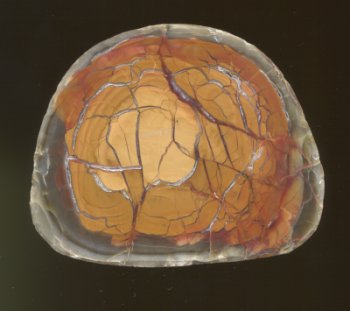
Camp Irwin Chapinite
Location: Camp Irwin Military Reservation
State: California
Country: United States
Continent: North America
Date: 5/25/2001
Description: Camp Irwin Chapinite, California, Camp Irwin Military Reservation, California. Term used by Berkhozl (1962b, locality 17; 1971, p. 38) for red, yellow and brown, brecciated nodular agate. This area is now on Fort Irwin, an area closed to collecting. Fort Irwin is situated at 35o 15' 46" N and 116o 41' 02" W, San Bernardino County, California, Fort Irwin Quadrangle, U. S. Geological Survey, 7.5' x 7.5' map.
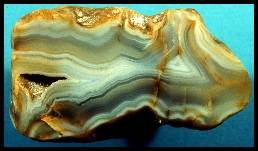
Canal Zone Agate
Location: Canal Zone
Country: Panama
Continent: North America
Date: 10/26/1998
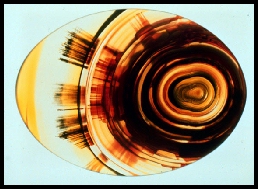
Carazinho Agate
Country: Brazil
Continent: South America
Date: 10/26/1998
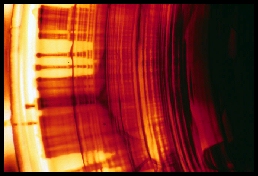
Carazinho Agate
Country: Brazil
Continent: South America
Date: 10/26/1998
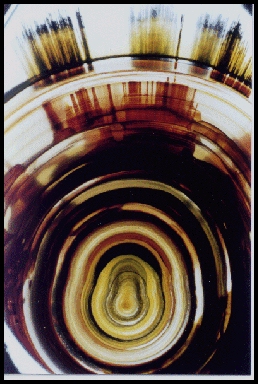
Carazinho Agate
Country: Brazil
Continent: South America
Date: 10/26/1998
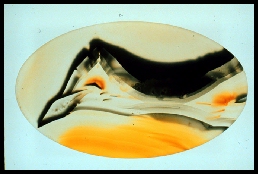
Carazinho Agate
Country: Brazil
Continent: South America
Date: 10/26/1998
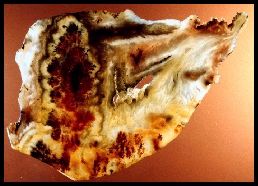
Carazinho Agate
Country: Brazil
Continent: South America
Date: 10/26/1998
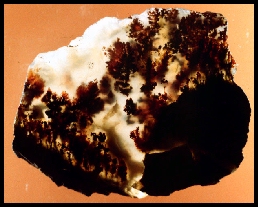
Carey Ranch Plume Agate
State: Oregon
Country: United States
Continent: North America
Date: 10/26/1998
Description: Transmitted light.
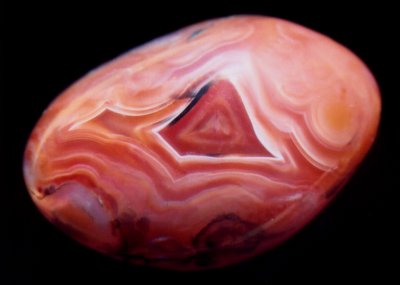
Carey Ranch Plume Agate
State: Oregon
Country: United States
Continent: North America
Date: 10/26/1998
Description: Transmitted light.
Carnelian Agate
Country: Botswana
Continent: Africa
Date: 12/11/2001
Description: Carnelian Agate, Botswana, Africa. These agates have been called either Botswana Banded Carnelian Agates or Botswana Carnelian Banded Agates. They are generally small, amygdaloidal agates that formed in the Karoo Series dolerites of Permo-Triassic to Jurassic age in Botswana, South Africa. Size: 1.0 x 1.4 inches.
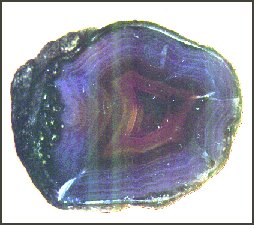
Carneros Agate
State: Chihuahua
Country: Mexico
Continent: North America
Date: 10/28/1998
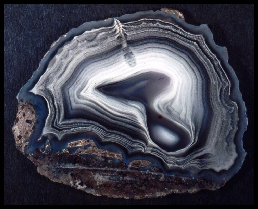
Casas Grande Agate
State: Chihuahua
Country: Mexico
Continent: North America
Date: 10/28/1998
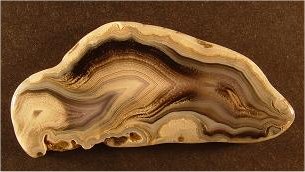
Casas Grande Agate
State: Chihuahua
Country: Mexico
Continent: North America
Date: 10/28/1998
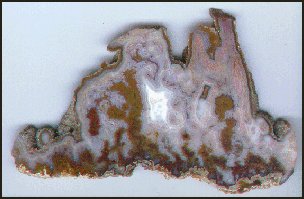
Cathedral Agate
Location: Brewster County
State: Texas
Country: United States
Continent: North America
Date: 12/10/1998
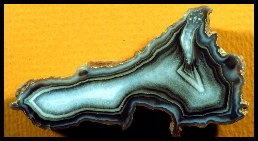
Cerro de Mercado Agate
State: Durango
Country: Mexico
Continent: North America
Date: 10/26/1998
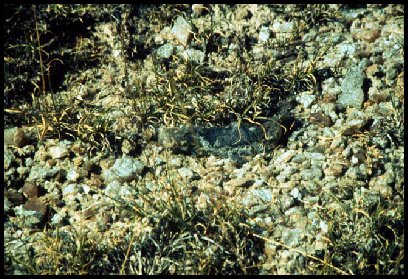
Chalcedony
State: Nebraska
Country: United States
Continent: North America
Date: 10/29/1998
Description: In many areas, the ground is literally covered with chalcedony but little of it is large, gemmy pieces such as the ones near the center of the picture.
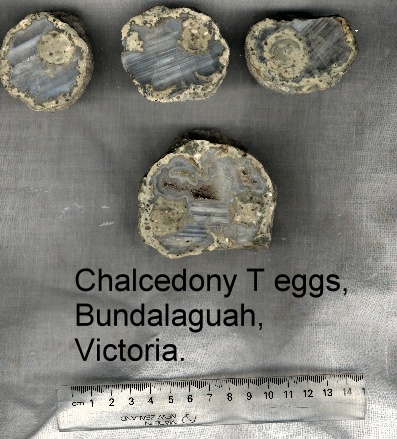
Chalcedony Thunder Eggs
Location: Bundalaguah
State: Victoria
Country: Australia
Continent: Australia
Date: 1/6/2003
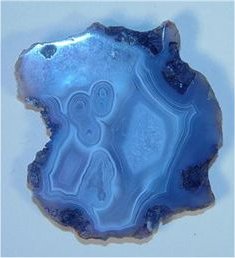
Chile Agate
Country: Chile
Continent: South America
Date: 12/9/2003
Chile Agate
Country: Chile
Continent: South America
Date: 12/9/2003
China Lake Plume Agate
State: California
Country: United States
Continent: North America
Date: 10/26/1998
Chinese Jasper
State: Oregon
Country: United States
Continent: North America
Date: 5/5/1999
Description: This name has been used to describe a jasper as well as a porphyritic basalt.
Chlorite in Agate
Location: Brewster County
State: Texas
Country: United States
Continent: North America
Date: 12/10/1998
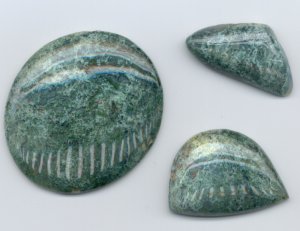
Chrome Chalcedony
Country: Zimbabwe
Continent: Africa
Date: 1/28/2000
Description: Chrome Chalcedony, Zimbabwe, (formerly Rhodesia) ...a translucent chalcedony with green, gray green and light gray inclusions that are probably a weathered serpentine. Name first appeared in advertisements, Lapidary Journal, v. 23, no. 5, p. 710. Similar material has often been offered under the trade name JDX.
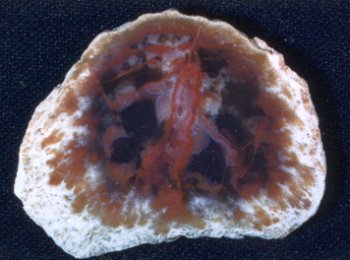
Cisco Agate
State: Utah
Country: United States
Continent: North America
Date: 5/10/2000
Description: Image courtesy of Lizzadro Museum of Lapidary Art, Elmhurst, Illinois.
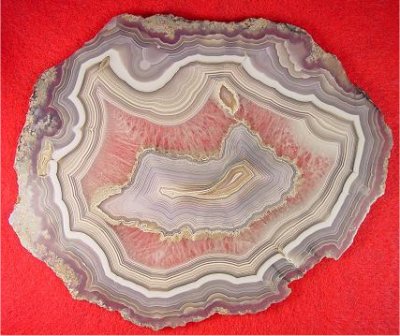
Clifton Agate
Location: Clifton, Greenlee County
State: Arizona
Country: United States
Continent: North America
Date: 12/13/2002
Description: These agates were first recorded by Hunter, R., (1977, p. 2834-2839).
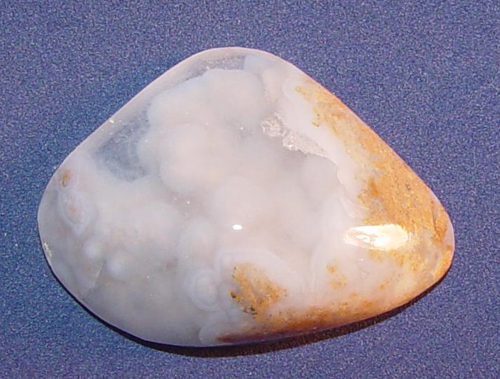
Cloud Agate
Location: northwest of Shelburn, Sullivan County
State: Indiana
Country: United States
Continent: North America
Date: 9/14/2010
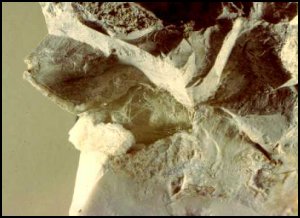
Cold Water Agate
Location: Vinton
State: Iowa
Country: United States
Continent: North America
Date: 5/6/1999
Description: Cold Water Agate, Vinton, Iowa, Gems and Minerals, no. 374, p. 25-27. Menzel and Pratt (1962, p. 532, 533) suggested they are of neutral colors of blues, grays, or grayish blues to white or whitish creams. It is a marine sedimentary agate found in Black Hawk, Bremer, and Benton Counties, Iowa, mostly formed in limestones of Devonian Age. Hair-like crystal inclusions are the mineral millerite, NiS.
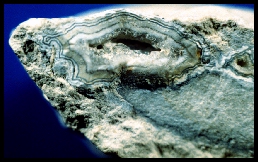
Cold Water Agate
State: Iowa
Country: United States
Continent: North America
Date: 10/26/1998
Description: Cold Water Agate, Vinton, Iowa, Gems and Minerals, no. 374, p. 25-27. Menzel and Pratt (1962, p. 532, 533) suggested they are of neutral colors of blues, grays, or grayish blues to white or whitish creams. It is a marine sedimentary agate found in Black Hawk, Bremer, and Benton Counties, Iowa, mostly formed in limestones of Devonian Age.
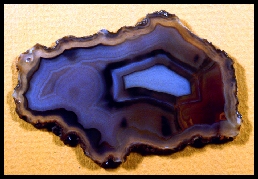
Condor Agate
Country: Argentina
Continent: South America
Date: 10/26/1998
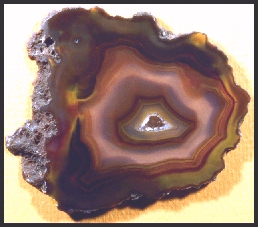
Condor Agate
Country: Argentina
Continent: South America
Date: 10/26/1998
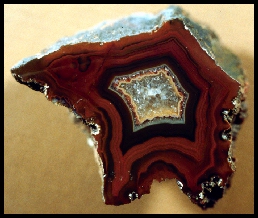
Condor Agate
Country: Argentina
Continent: South America
Date: 10/26/1998
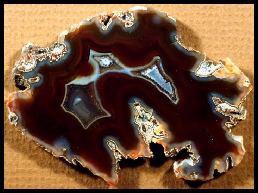
Condor Agate
Country: Argentina
Continent: South America
Date: 10/26/1998
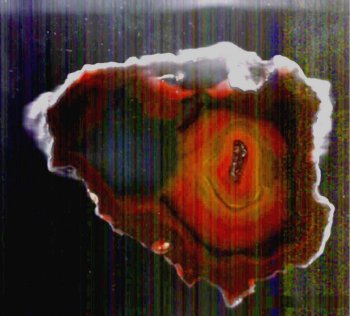
Condor Agate
Country: Argentina
Continent: South America
Date: 7/7/1999
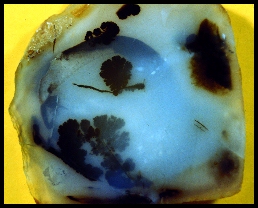
Copco Dendritic Agate
Location: Oregon/California border
State: Oregon
Country: United States
Continent: North America
Date: 10/26/1998
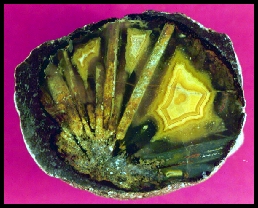
Coyamito Agate
State: Chihuahua
Country: Mexico
Continent: North America
Date: 10/26/1998
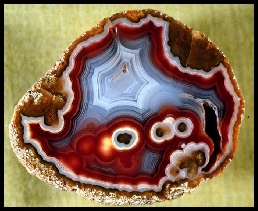
Coyamito Agate
State: Chihuahua
Country: Mexico
Continent: North America
Date: 10/26/1998
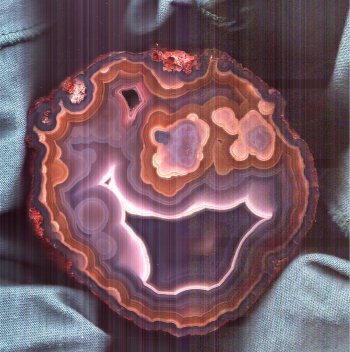
Coyamito Agate
State: Chihuahua
Country: Mexico
Continent: North America
Date: 8/11/2000
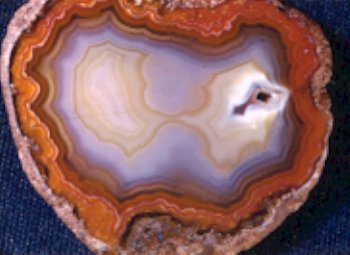
Coyamito Agate
State: Chihuahua
Country: Mexico
Continent: North America
Date: 8/11/2000
Description: Image courtesy of Lizzadro Museum of Lapidary Art, Elmhurst, Illinois.
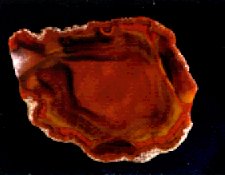
Coyamito Agate
State: Chihuahua
Country: Mexico
Continent: North America
Date: 8/11/2000
Description: Image courtesy of Lizzadro Museum of Lapidary Art, Elmhurst, Illinois.
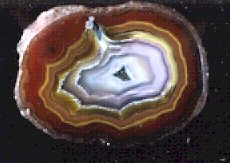
Coyamito Agate
State: Chihuahua
Country: Mexico
Continent: North America
Date: 8/11/2000
Description: Image courtesy of Lizzadro Museum of Lapidary Art, Elmhurst, Illinois.
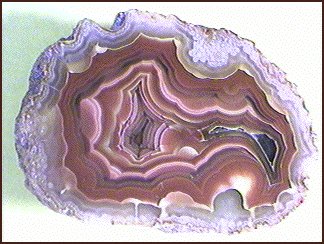
Coyamito Agate
State: Chihuahua
Country: Mexico
Continent: North America
Date: 4/5/2001
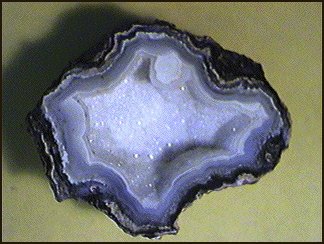
Coyamito Agate
State: Chihuahua
Country: Mexico
Continent: North America
Date: 4/5/2001
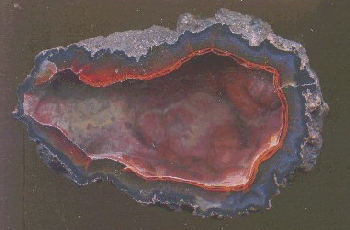
Crater Agate
Location: Andes Mountains, Patagonia
Country: Argentina
Continent: South America
Date: 1/13/2003
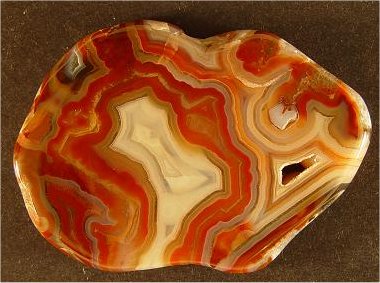
Crazy Lace Agate
State: Chihuahua
Country: Mexico
Continent: North America
Date: 10/26/1998
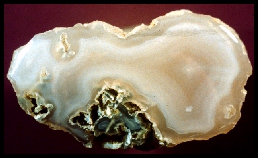
Crooked River Agatized Limb Cast
State: Oregon
Country: United States
Continent: North America
Date: 10/26/1998
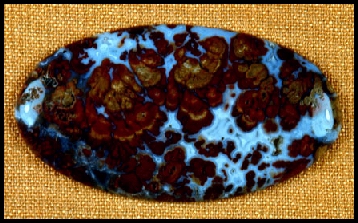
Death Valley Plume Agate
State: California
Country: United States
Continent: North America
Date: 10/26/1998
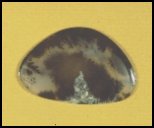
Del Norte Plume Agate
State: Colorado
Country: United States
Continent: North America
Date: 10/26/1998
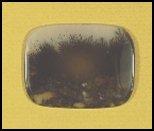
Dendritic Agate
Country: Kazakstan
Continent: Asia
Date: 6/18/1999
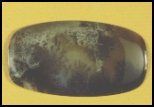
Dendritic Agate
Country: Kazakstan
Continent: Asia
Date: 6/18/1999
Dendritic Agate
Country: Kazakstan
Continent: Asia
Date: 6/18/1999
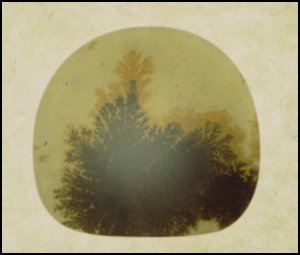
Dendritic Agate
Country: Kazakstan
Continent: Asia
Date: 6/18/1999
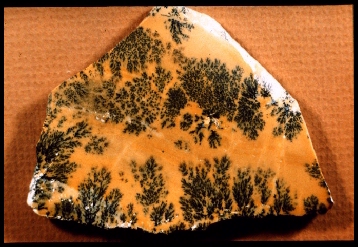
Dendritic Opal
Location: Pine Ridge
State: Wyoming
Country: United States
Continent: North America
Date: 10/26/1998
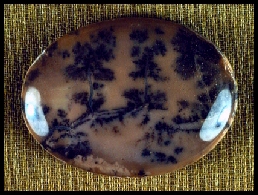
Dendritic Opal
Location: Pine Ridge
State: Wyoming
Country: United States
Continent: North America
Date: 10/26/1998
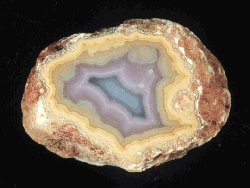
Derramadero Agate
State: Chihuahua
Country: Mexico
Continent: North America
Date: 10/26/1998
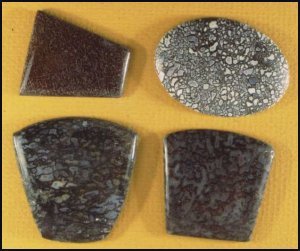
Dinny Bone
State: Colorado
Country: United States
Continent: North America
Date: 5/28/1999
Description: Dinny Bone, Colorado, Utah, Zeitner (1964, p. 345) used this term for agatized dinosaur bone, mostly from the Morrison Formation of Jurassic Age, from outcrops extending from eastern Colorado to eastern Utah, with principal sites being in Moffatt County, Colorado, and Uinta, Grand, and Emery counties, Utah. Zeitner also suggested that the most appealing material has cells filled with banded and fortification agate, and that bone of whale and other large vertebrates may become agatized. See also Talbot, v., 1978, p. 1260-1262.
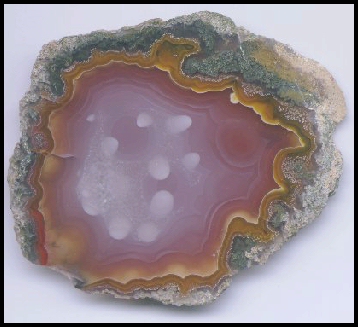
Disk-Bearing Agate
Location: Rancho Aqua Nueva
State: Chihuahua
Country: Mexico
Continent: North America
Date: 10/26/1998
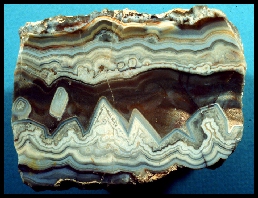
Dog Tooth Lace Agate
State: Chihuahua
Country: Mexico
Continent: North America
Date: 10/26/1998
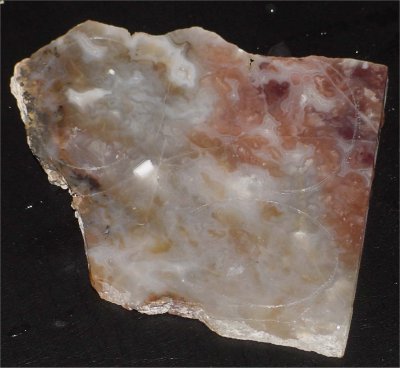
Drum Mountain
State: Utah
Country: United States
Continent: North America
Date: 10/1/2002
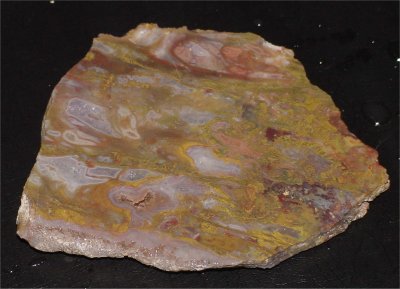
Drum Mountain Jasp-Agate
State: Utah
Country: United States
Continent: North America
Date: 10/1/2002
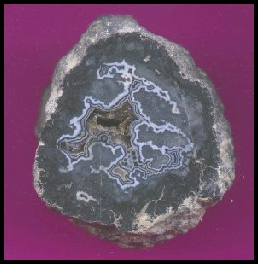
Dryhead Agate
Location: Dryhead Creek, Pryor Mountains
State: Wyoming
Country: United States
Continent: North America
Date: 10/26/1998
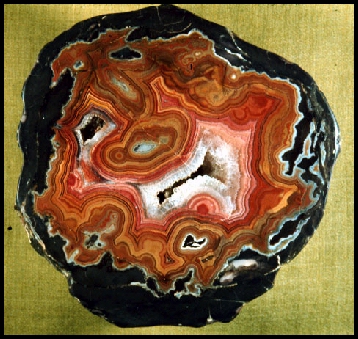
Dryhead Agate
Location: Montana/Wyoming Border
State: Montana
Country: United States
Continent: North America
Date: 10/26/1998
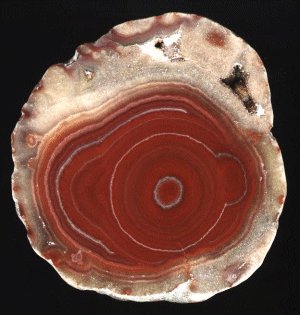
Dulcote Agate (Potato Stone)
Location: Mendip Hills, Somerset
Country: England
Continent: Europe
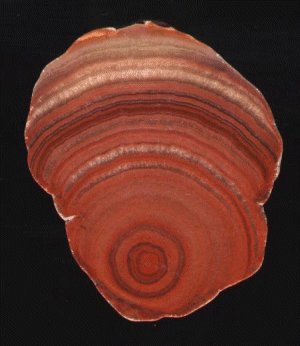
Date: 3/8/1999
Dulcote Agate (Potato Stone)
Location: Mendip Hills, Somerset
Country: England
Continent: Europe
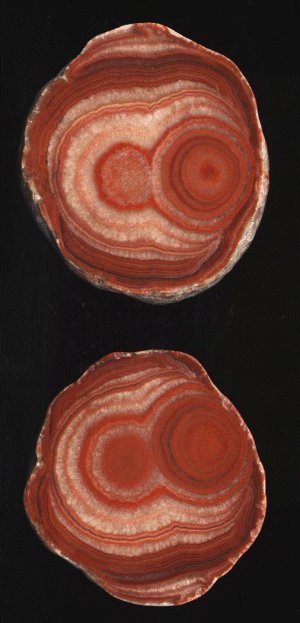
Date: 3/8/1999
Dulcote Agate (Potato Stone)
Location: Mendip Hills, Somerset
Country: England
Continent: Europe
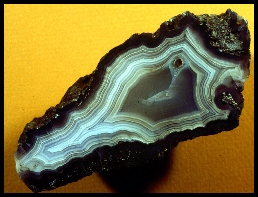
Date: 3/8/1999
Durango Purple Agate
State: Durango
Country: Mexico
Continent: North America
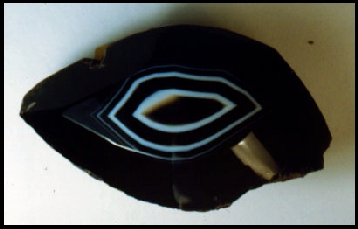
Date: 10/26/1998
Dyed Agate
Location: Rio Grande Do Sul
Country: Brazil
Continent: South America
Date: 10/26/1998
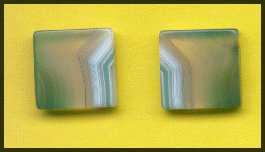
Dyed Brazilian Agate
Country: Brazil
Continent: South America
Date: 10/26/1998
Description: Often erroneously called banded green agate from Africa.
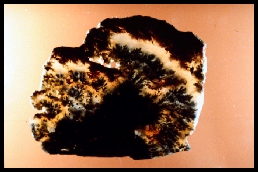
Eagle Rock Plume Agate
State: Oregon
Country: United States
Continent: North America
Date: 10/26/1998
Description: Transmitted light.
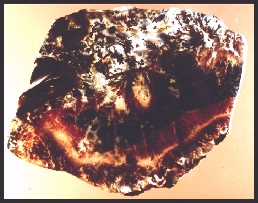
Eagle Rock Plume Agate
State: Oregon
Country: United States
Continent: North America
Date: 10/26/1998
Description: Transmitted light.
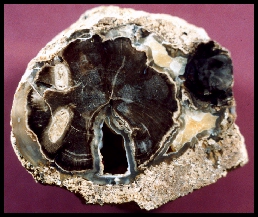
Eden Valley Agatized Wood
State: Wyoming
Country: United States
Continent: North America
Date: 10/26/1998
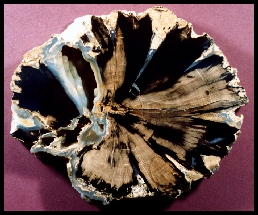
Eden Valley Agatized Wood
State: Wyoming
Country: United States
Continent: North America
Date: 10/26/1998
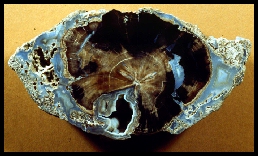
Eden Valley Agatized Wood
State: Wyoming
Country: United States
Continent: North America
Date: 10/26/1998
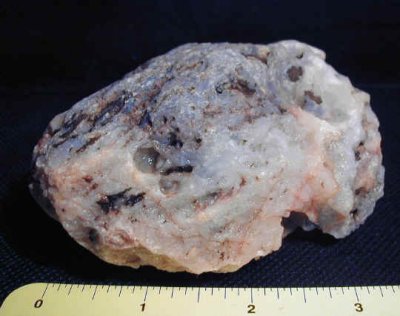
Ellensburg Blue Agate
State: Washington
Country: United States
Continent: North America
Date: 11/14/2001
Description: Ellensburg Blue Agate, named for Ellensburg, Washington. Type locality is Red Top Mountain, Kittitas County, Washington, where light blue gray to fine dark blue agates have been found in the Teanaway Basalt of Eocene age. The earliest use of the name Ellensburg Blue Agate appears to have been by Dake (1941, p. 49, 50) who (1950, p. 61) suggested none of the agates were found in place. The material was known as early as 1922 and a 20 x 16 x 6 mm cabochon (no. 1526, cut from specimen no. 87414) was recorded in the collections of the U. S. National Museum by Merrill, Moody, and Wherry (p. 122). Zeitner (1964, p. 348) stated that Red Top Mountain and Crystal Mountain, near Cle Elum, Kittitas County, were the only two sources of Ellensburg Blue Agate. Glover (1949, p. 24, 25) listed five localities: Virden, Liberty, Roundtop---Cle Elum Lake, Squaw Creek and Ellesnburg as productive sites. Glover further stated that the Red Top site produced from the Teanaway Basalt and the Liberty site payed from the Yakima Basalt of Miocene age and that the Red Top site yielded thunder eggs from an unnamed rhyolite. See also Thomson (1963) and Nuckles (1984).
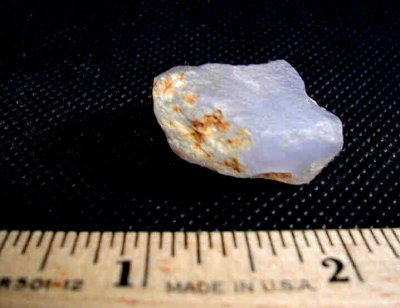
Ellensburg Blue Agate
State: Washington
Country: United States
Continent: North America
Date: 11/14/2001
Description: Ellensburg Blue Agate, named for Ellensburg, Washington. Type locality is Red Top Mountain, Kittitas County, Washington, where light blue gray to fine dark blue agates have been found in the Teanaway Basalt of Eocene age. The earliest use of the name Ellensburg Blue Agate appears to have been by Dake (1941, p. 49, 50) who (1950, p. 61) suggested none of the agates were found in place. The material was known as early as 1922 and a 20 x 16 x 6 mm cabochon (no. 1526, cut from specimen no. 87414) was recorded in the collections of the U. S. National Museum by Merrill, Moody, and Wherry (p. 122). Zeitner (1964, p. 348) stated that Red Top Mountain and Crystal Mountain, near Cle Elum, Kittitas County, were the only two sources of Ellensburg Blue Agate. Glover (1949, p. 24, 25) listed five localities: Virden, Liberty, Roundtop---Cle Elum Lake, Squaw Creek and Ellesnburg as productive sites. Glover further stated that the Red Top site produced from the Teanaway Basalt and the Liberty site payed from the Yakima Basalt of Miocene age and that the Red Top site yielded thunder eggs from an unnamed rhyolite. See also Thomson (1963) and Nuckles (1984).
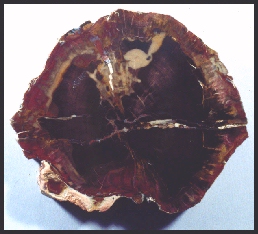
Escalante Agatized Wood
State: Utah
Country: United States
Continent: North America
Date: 10/26/1998
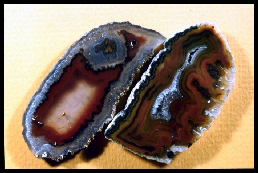
Espina Agate (Lake of Fire Agate)
State: Sonora
Country: Mexico
Continent: North America
Date: 10/26/1998
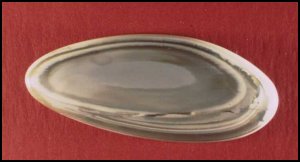
Eucha Chert
Location: near Eucha
State: Oklahoma
Country: United States
Continent: North America
Date: 5/29/1999
Description: Eucha Chert, ...a name that is used locally by lapidaries and collectors in northeastern Oklahoma generally a white, gray and yellowish, banded chert that formed in yet to be determined sedimentary rocks that are exposed in the vicinity of Spavinaw Reservoir and the village of Eucha, 36o 23' 31" N and 94o 52' 58" W, Delaware County, Oklahoma, Choleta Map, U. S. Geological Survey, 7.5' x 7.5'. This material appears to be the same as Spavinaw Chert which see.
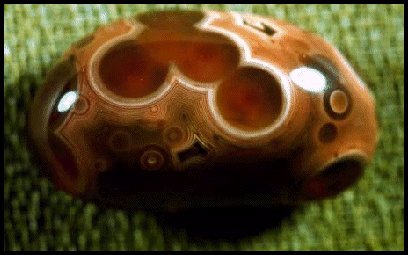
Eye Agate
State: Nebraska
Country: United States
Continent: North America
Date: 10/29/1998
Description: This very fine eye agate was collected near Table Rock in Pawnee County. The eyes are thought to have formed as a result of a self organizational chemical reaction called a Belousov-Zhabotinski reaction that causes concentric wave fronts in the reaction medium.
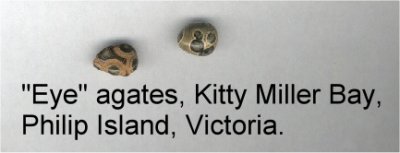
Eye Agates
Location: Kitty Miller Bay, Philip Island
State: Victoria
Country: Australia
Continent: Australia
Date: 1/6/2003
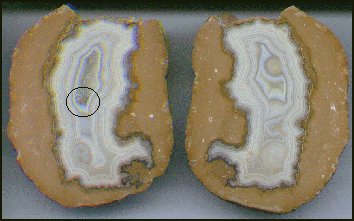
Fairburn (Fortification) Agate
State: Nebraska
Country: United States
Continent: North America
Date: 10/28/1998
Description: Note the gold flake (black circle), located within a quartz center.
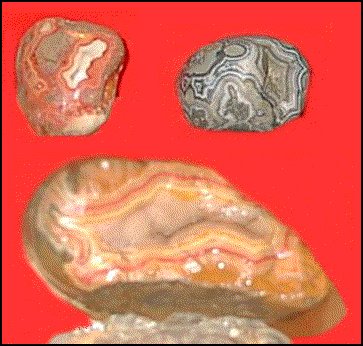
Fairburn Agates
State: South Dakota
Country: United States
Continent: North America
Date: 11/11/1998
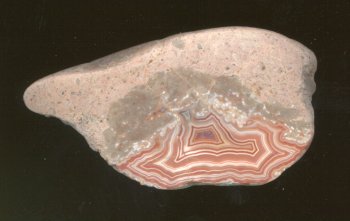
Fairhills Agate
State: South Dakota
Country: United States
Continent: North America
Date: 8/4/2000
Description: Fairhills Agate, South Dakota, term coined by Zeinter (1962a) for what is a marine sedimentary agate that has formed in limestone of the Minnelusa Formation of Pennsylvanian age. These agates are apparently part of the large variety of parent materials from a large population of marine sedimentary agates that have formed in parts of Colorado, Wyoming, Montana, and South Dakota and which provided material that make up what collectors commonly call Fairburn Agates. The Fairhills Agates were originally recorded from weathered limestone in the Pringle, South Dakota, area and they often have a weathered, white, limy matrix. The agates some changes due to diagenesis and weathering and are in an intermediate state between being a relatively unaltered marine sedimentary agate and a highly altered orphan. For further reading, see: Clark, R., 1998. South Dakota's Fairburn Agate. Photography by Mary Jane Clark. Condra, G. E., E. C. Reed, and O. J. Scherer, 1940, 1950. Harper, J. L., 1960. Harvey, C. H., 1960. Luebke, L. O., 1964. Vondra, C. F., 1958.
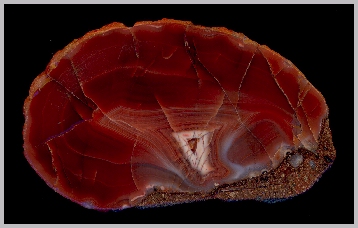
Farm
Location: Balmeadowside Farm, Fife
Country: Scotland
Continent: Europe
Date: 10/26/1998
Description: Balmeadowside, Scotland, historic locality in Fifeshire that has produced agates from rocks of the Old Red Sandstone of Early Devonian Age (Fallick et al, 1985, p. 672-674). Heddle (1901, p. 76) recorded brown, rose blush, and translucent gray agates; Rodgers (1975, p. 46) suggested a great color variety here, but that onyx agates were few; and Macpherson (1989, p. 40) suggested that many were blue gray and illustrated several such specimens.
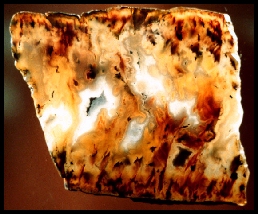
Flame Agate
State: Chihuahua
Country: Mexico
Continent: North America
Date: 10/26/1998
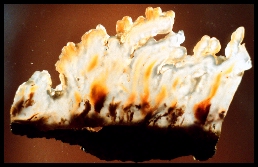
Flame Agate
State: Chihuahua
Country: Mexico
Continent: North America
Date: 10/26/1998
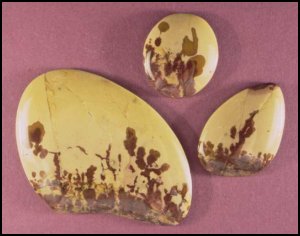
Flower Rim Jasper
State: Oregon
Country: United States
Continent: North America
Date: 5/28/1999
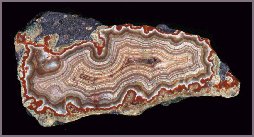
Fortification Agate
Location: Waldhambach (near Frankfurt)
Country: Germany
Continent: Europe
Date: 10/26/1998
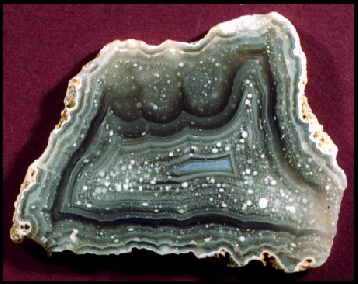
Fourth of July Agate
State: Arizona
Country: United States
Continent: North America
Date: 10/26/1998
Description: Fourth of July Agate, Arizona, for Fourth of July Butte, 113o 07' 30" W, 33o 22' N, Maricopa County, Arizona. The agates probably formed in volcanic rocks that have been mapped by Darton and others (1924) as Tertiary or Cretaceous age. See Simpson & Mitchell, 1989.
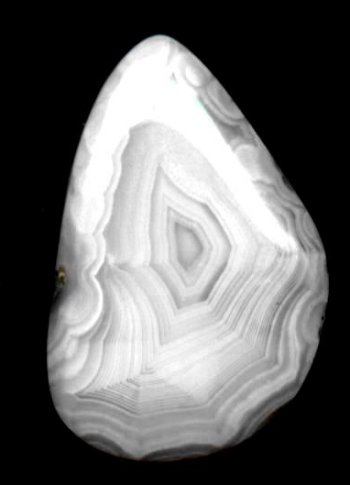
Fourth of July Agate
State: Arizona
Country: United States
Continent: North America
Date: 12/11/2001
Description: Chimney Beds, near Fourth of July Butte, 113o 07' 30" W, 33o 22' N, Maricopa County, Arizona. The area known as the Chimney beds start in about secs. 25 and 36, T. 1 S., R. 8 W., and extend along Agua Caliente Road west, about 6 miles to 4th of July Peak (Butte), Fourth of July Butte Quadrangle, U. S. Geological Survey, 7.5 Minuter Series (Topographic). The agates probably formed in volcanic rocks that have been mapped by Darton and others (1924) as Tertiary or Cretaceous age. See Simpson & Mitchell, 1989.
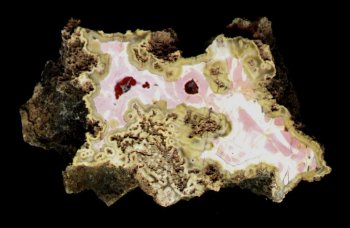
Freisen Quarry Agate
Location: Freisen Quarry
Country: Germany
Continent: Europe
Date: 1/18/2000
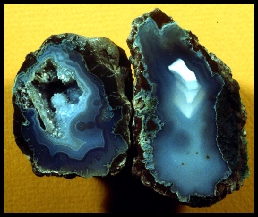
Frieda Thunder Egg
Location: Frieda Ranch
State: Oregon
Country: United States
Continent: North America
Date: 10/26/1998
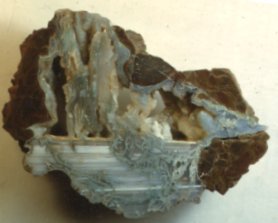
Frieda Thunder Egg
Location: Frieda Ranch
State: Oregon
Country: United States
Continent: North America
Date: 4/27/2000
Description: This example was original in the collection of Archibald N. Goddard, a Detroit industrialist. It was probably cut by Fred Young of Portland, Oregon, in about 1935. Goddard's collection is now housed at Wayne State University, Detroit, Michigan.
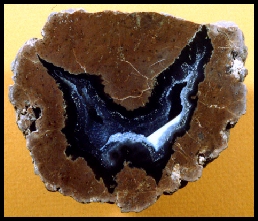
Frieda Thunder Egg
Location: Frieda Ranch
State: Oregon
Country: United States
Continent: North America
Date: 10/26/1998
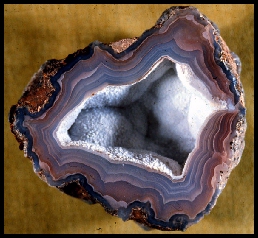
Gallegos Agate
State: Chihuahua
Country: Mexico
Continent: North America
Date: 10/26/1998
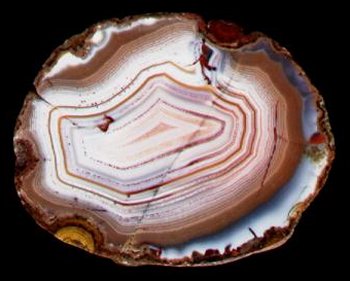
Gottschied Agate
Country: Germany
Continent: Europe
Date: 1/18/2000
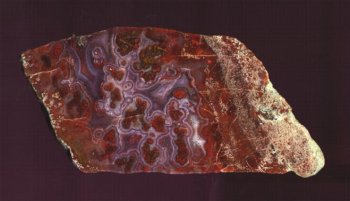
Gottschied Jasp Agate
Country: Germany
Continent: Europe
Date: 1/18/2000
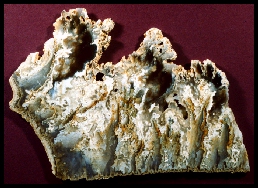
Graveyard Point Plume Agate
State: Idaho
Country: United States
Continent: North America
Date: 10/26/1998
Description: Transmitted light.
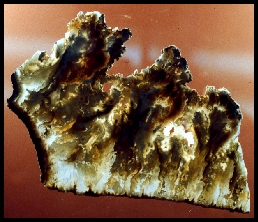
Graveyard Point Plume Agate
State: Idaho
Country: United States
Continent: North America
Date: 10/26/1998
Description: Reflected light.
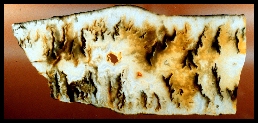
Graveyard Point Plume Agate
State: Idaho
Country: United States
Continent: North America
Date: 10/26/1998
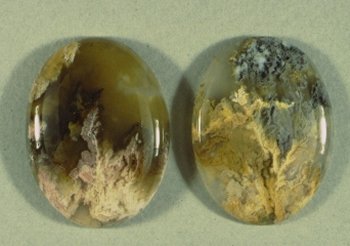
Graveyard Point Plume Agate
State: Idaho
Country: United States
Continent: North America
Date: 6/18/1999
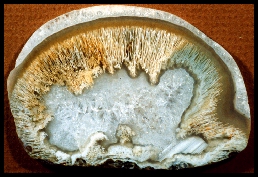
Graveyard Point Sagenitic Agate
State: Idaho
Country: United States
Continent: North America
Date: 10/26/1998
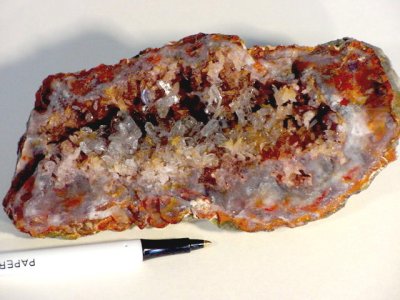
Greasewood Draw Agate
State: Utah
Country: United States
Continent: North America
Date: 11/19/2002
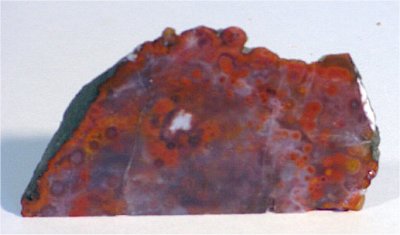
Greasewood Draw Agate
State: Utah
Country: United States
Continent: North America
Date: 11/19/2002
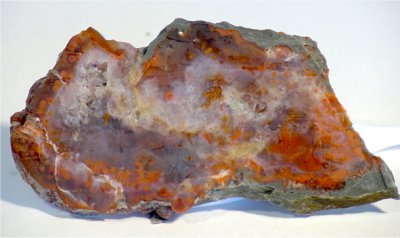
Greasewood Draw Agate
State: Utah
Country: United States
Continent: North America
Date: 11/19/2002
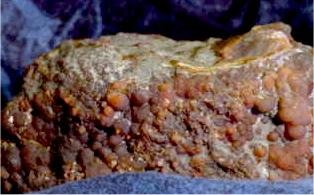
Greasewood Draw Agate
Location: Greasewood Draw, near Govlin Valley, Emery County
State: Utah
Country: United States
Continent: North America
Date: 12/13/2002
Description: The botryoidal surface is sometimes referred to as “grape agate”. This example contains amethyst crystals on the interior.
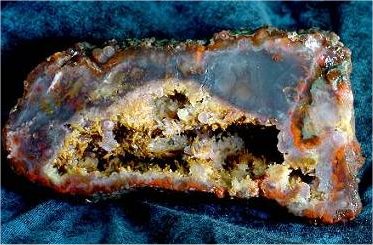
Greasewood Draw Agate
Location: Greasewood Draw, near Govlin Valley, Emery County
State: Utah
Country: United States
Continent: North America
Date: 12/13/2002
Description: This is the interior of the “grape agate” above. The crystal inclusions are comprised of barite, celestite, and amethyst.
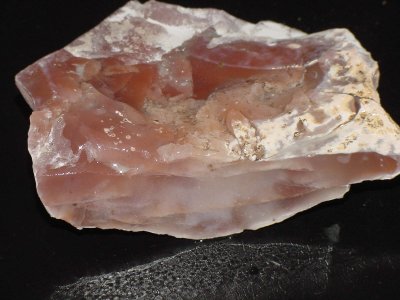
Green River Orchid Agate
State: Utah
Country: United States
Continent: North America
Date: 10/1/2002
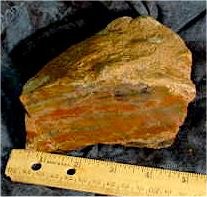
Green River Petrified Wood
Location: Emery County
State: Utah
Country: United States
Continent: North America
Date: 12/13/2002
Description: Green River Petrified Wood, from about 15 miles southeast of Green River, Emery County.
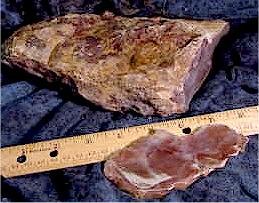
Green River Pigeon Blood Agate
Location: Emery County
State: Utah
Country: United States
Continent: North America
Date: 12/13/2002
Description: Green River Pigeon Blood Agate, from area about 15 miles southeast of Green River, Emery County, Iowa.
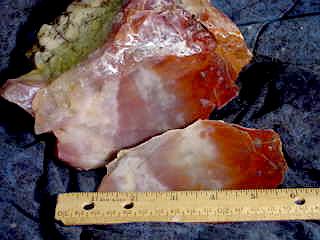
Green River Red and White Agate
Location: Emery County
State: Utah
Country: United States
Continent: North America
Date: 12/13/2002
Description: Green River Red and White Agate, from about 10 miles south east of Green River, Emery County, Utah.
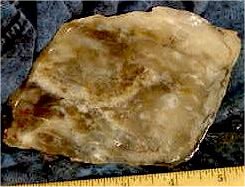
Green River Root Beer Agate
Location: Emery County
State: Utah
Country: United States
Continent: North America
Date: 12/13/2002
Description: Green River Root Beer Agate, from area about 15 miles southeast of Green River, Emery County, Utah.
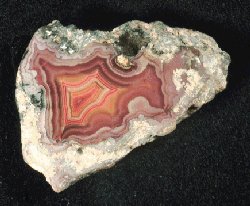
Gregoria Agate
State: Chihuahua
Country: Mexico
Continent: North America
Date: 10/26/1998
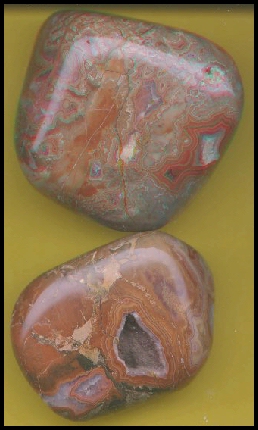
Guernsey Lake Agates
Location: Guernsey Lake, Platte County
State: Wyoming
Country: United States
Continent: North America
Date: 10/26/1998
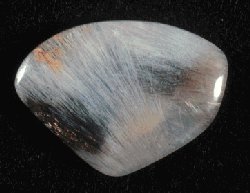
Guzman Sagenitic Agate
State: Chihuahua
Country: Mexico
Continent: North America
Date: 10/26/1998
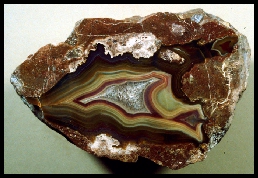
Hi Fi Agate
State: Sonora
Country: Mexico
Continent: North America
Date: 10/26/1998
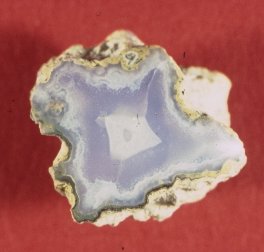
Holly Blue Agate
State: Oregon
Country: United States
Continent: North America
Date: 6/28/1999
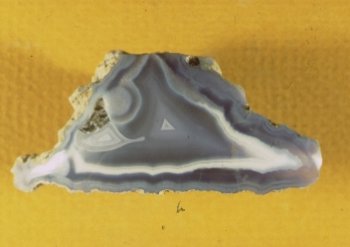
Holly Blue Agate
State: Oregon
Country: United States
Continent: North America
Date: 6/28/1999
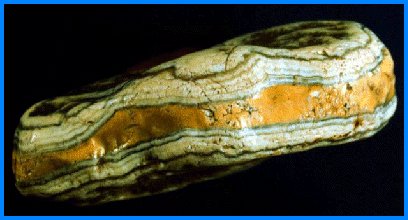
Honey Agate
State: Nebraska
Country: United States
Continent: North America
Date: 10/28/1998
Description: A popular kind of agate is called "honey agate" for its color. These are thought to have originated in sedimentary rocks of Devonian age that are exposed on the west shore of Lake Winnipeg in Manitoba, Canada. Many honey agates have nice moss or dendrites. Many have a white exterior as a result of deep weathering.
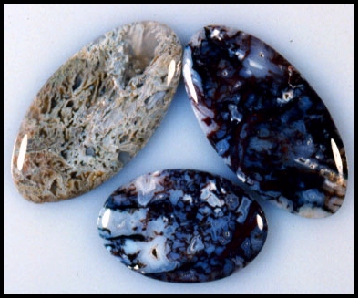
Horse Canyon Agate
Location: Kern County
State: California
Country: United States
Continent: North America
Date: 10/26/1998
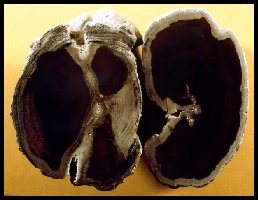
Hubbard Basin Petrified Wood
State: Nevada
Country: United States
Continent: North America
Date: 10/28/1998
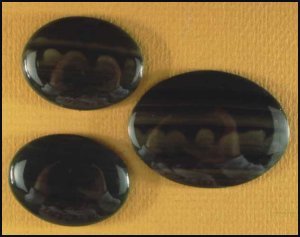
Imperial Jaspser
State: Zacatecas
Country: Mexico
Continent: North America
Date: 5/28/1999
Description: Imperial Jasper, Mexico, ...trade name, attractive green, pastels, adv., Goodnow Gems, U.S.A., 3415 Hayden Street, Ama-rillo, Texas 79109, Rock & Gem, v. 4, no. 6, p. 3. Fraser and Fraser (1989) stated it came in red and green varieties and both have been for sale at shows and in trade stock. An advertizement by Rivera & Sons, (Lapidary Journal, v. 30, no. 12, p. 2816) suggests this material is from the state of Zacatecas.
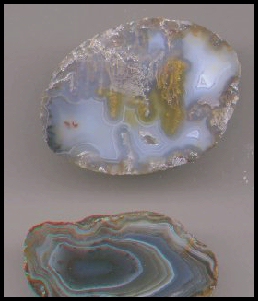
India Blackskin Agate
Location: Deccan Plateau
Country: India
Continent: Asia
Date: 10/26/1998
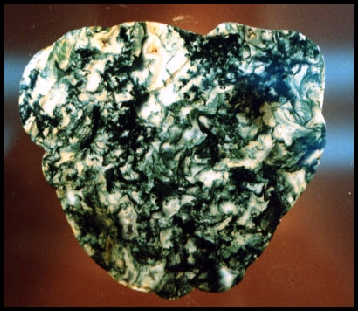
India Moss Agate
Location: Deccan Plateau
Country: India
Continent: Asia
Date: 10/26/1998
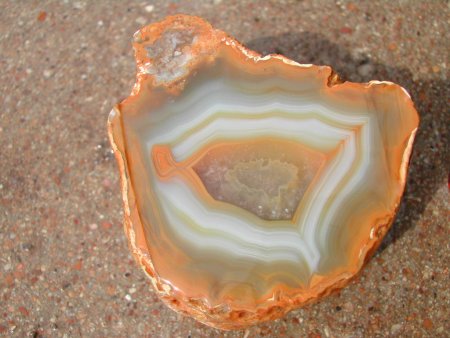
Indonesian Agate
Country: Indonesia
Continent: Asia
Date: 6/6/2007
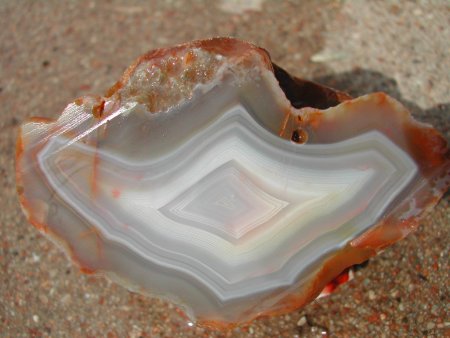
Indonesian Agate
Country: Indonesia
Continent: Asia
Date: 6/6/2007
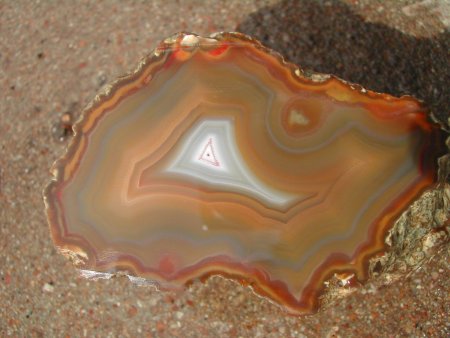
Indonesian Agate
Country: Indonesia
Continent: Asia
Date: 6/6/2007
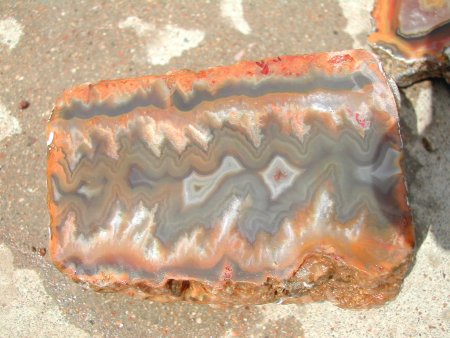
Indonesian Agate
Country: Indonesia
Continent: Asia
Date: 6/6/2007
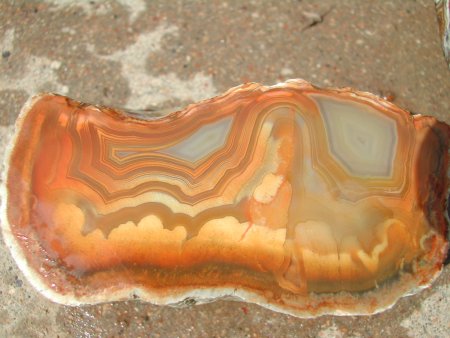
Indonesian Agate
Country: Indonesia
Continent: Asia
Date: 6/6/2007
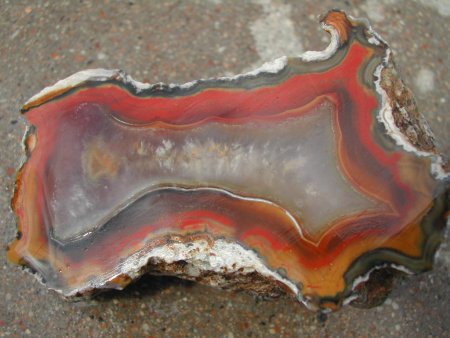
Indonesian Agate
Country: Indonesia
Continent: Asia
Date: 6/6/2007
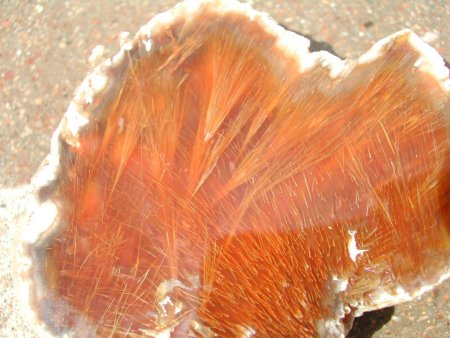
Indonesian Agate
Country: Indonesia
Continent: Asia
Date: 6/6/2007
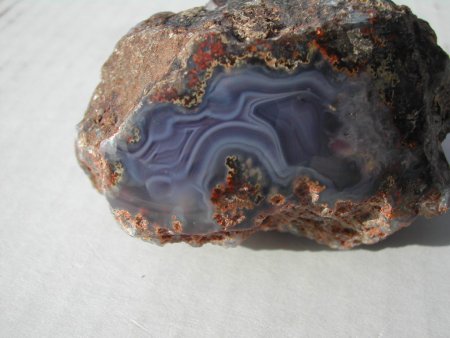
Indonesian Banded Agate
Country: Indonesia
Continent: Asia
Date: 6/6/2007
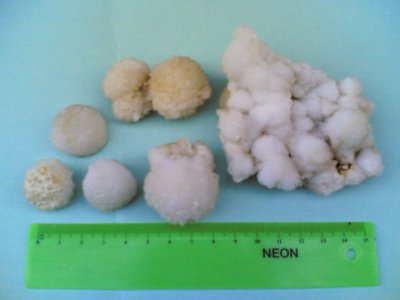
Iraq-Jordan border
Country: Iraq-Jordan border
Continent: Asia
Date: 8/28/2007
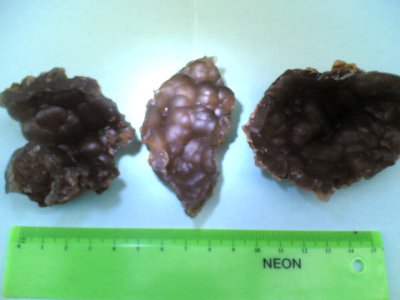
Iraq-Jordan border
Country: Iraq-Jordan border
Continent: Asia
Date: 8/28/2007
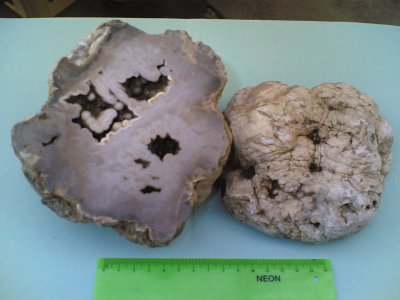
Iraq-Jordan border
Country: Iraq-Jordan border
Continent: Asia
Date: 8/28/2007
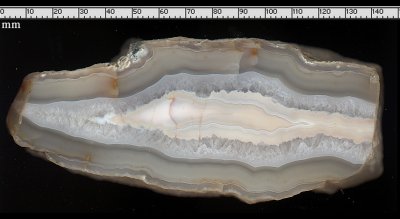
Japanese Agate
Location: Hanaishi
Country: Japan
Continent: Asia
Date: 10/8/2003
Description: Agates have historically been produced from Hanaishi, Imakane, Setana, Hokkaido, Japan. Hanaishi, in Japanese, means "Flower Stone". Hokkaido is the northernmost large Island in the Japanese Archipelago. The town site was first developed in the 19th Century for its gold and manganese deposits. The agates from here were discovered around 1880, and were originally recovered as a byproduct from the mining operations. The agates were used domestically, and some were even exported to lapidaries in other countries in the early 20th Century. As the agate sources became depleted, Japanese lapidaries began importing agates from Brazil because of lower costs. Mining ceased in this area around 1970, and collecting is no longer permitted in the abandoned mining sites. Text and image from Hideharu Yamada.
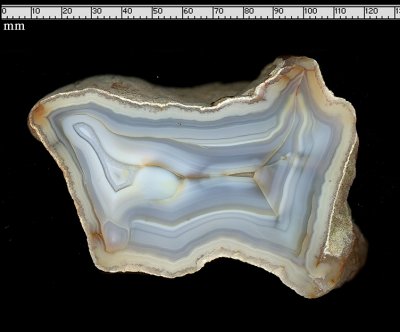
Japanese Agate
Location: Hanaishi
Country: Japan
Continent: Asia
Date: 10/8/2003
Description: Agates have historically been produced from Hanaishi, Imakane, Setana, Hokkaido, Japan. Hanaishi, in Japanese, means "Flower Stone". Hokkaido is the northernmost large Island in the Japanese Archipelago. The town site was first developed in the 19th Century for its gold and manganese deposits. The agates from here were discovered around 1880, and were originally recovered as a byproduct from the mining operations. The agates were used domestically, and some were even exported to lapidaries in other countries in the early 20th Century. As the agate sources became depleted, Japanese lapidaries began importing agates from Brazil because of lower costs. Mining ceased in this area around 1970, and collecting is no longer permitted in the abandoned mining sites. Text and image from Hideharu Yamada.
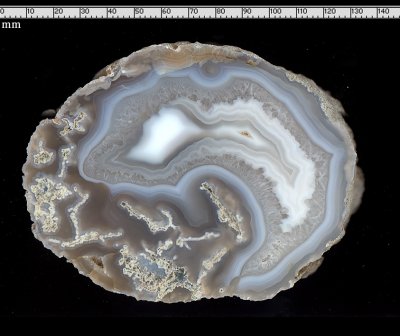
Japanese Agate
Location: Hanaishi
Country: Japan
Continent: Asia
Date: 10/8/2003
Description: Agates have historically been produced from Hanaishi, Imakane, Setana, Hokkaido, Japan. Hanaishi, in Japanese, means "Flower Stone". Hokkaido is the northernmost large Island in the Japanese Archipelago. The town site was first developed in the 19th Century for its gold and manganese deposits. The agates from here were discovered around 1880, and were originally recovered as a byproduct from the mining operations. The agates were used domestically, and some were even exported to lapidaries in other countries in the early 20th Century. As the agate sources became depleted, Japanese lapidaries began importing agates from Brazil because of lower costs. Mining ceased in this area around 1970, and collecting is no longer permitted in the abandoned mining sites. Text and image from Hideharu Yamada.
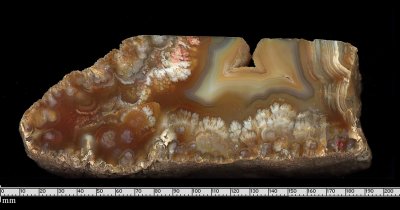
Japanese Agate
Location: Hanaishi
Country: Japan
Continent: Asia
Date: 10/8/2003
Description: Agates have historically been produced from Hanaishi, Imakane, Setana, Hokkaido, Japan. Hanaishi, in Japanese, means "Flower Stone". Hokkaido is the northernmost large Island in the Japanese Archipelago. The town site was first developed in the 19th Century for its gold and manganese deposits. The agates from here were discovered around 1880, and were originally recovered as a byproduct from the mining operations. The agates were used domestically, and some were even exported to lapidaries in other countries in the early 20th Century. As the agate sources became depleted, Japanese lapidaries began importing agates from Brazil because of lower costs. Mining ceased in this area around 1970, and collecting is no longer permitted in the abandoned mining sites. Text and image from Hideharu Yamada.
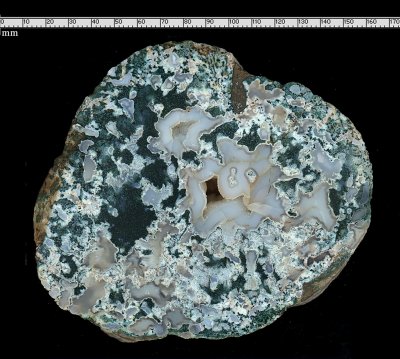
Japanese Agate
Location: Hanaishi
Country: Japan
Continent: Asia
Date: 10/8/2003
Description: Agates have historically been produced from Hanaishi, Imakane, Setana, Hokkaido, Japan. Hanaishi, in Japanese, means "Flower Stone". Hokkaido is the northernmost large Island in the Japanese Archipelago. The town site was first developed in the 19th Century for its gold and manganese deposits. The agates from here were discovered around 1880, and were originally recovered as a byproduct from the mining operations. The agates were used domestically, and some were even exported to lapidaries in other countries in the early 20th Century. As the agate sources became depleted, Japanese lapidaries began importing agates from Brazil because of lower costs. Mining ceased in this area around 1970, and collecting is no longer permitted in the abandoned mining sites. Text and image from Hideharu Yamada.
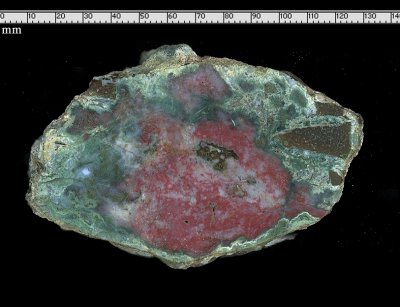
Japanese Agate
Location: Hanaishi
Country: Japan
Continent: Asia
Date: 10/8/2003
Description: Agates have historically been produced from Hanaishi, Imakane, Setana, Hokkaido, Japan. Hanaishi, in Japanese, means "Flower Stone". Hokkaido is the northernmost large Island in the Japanese Archipelago. The town site was first developed in the 19th Century for its gold and manganese deposits. The agates from here were discovered around 1880, and were originally recovered as a byproduct from the mining operations. The agates were used domestically, and some were even exported to lapidaries in other countries in the early 20th Century. As the agate sources became depleted, Japanese lapidaries began importing agates from Brazil because of lower costs. Mining ceased in this area around 1970, and collecting is no longer permitted in the abandoned mining sites. Text and image from Hideharu Yamada.
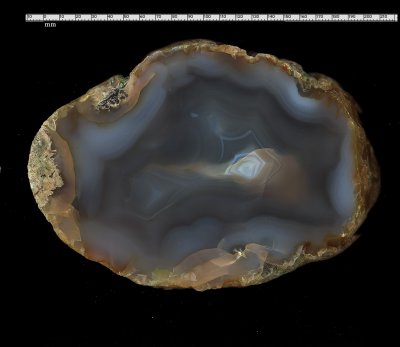
Japanese Agate
Location: Hanaishi
Country: Japan
Continent: Asia
Date: 10/8/2003
Description: Agates have historically been produced from Hanaishi, Imakane, Setana, Hokkaido, Japan. Hanaishi, in Japanese, means "Flower Stone". Hokkaido is the northernmost large Island in the Japanese Archipelago. The town site was first developed in the 19th Century for its gold and manganese deposits. The agates from here were discovered around 1880, and were originally recovered as a byproduct from the mining operations. The agates were used domestically, and some were even exported to lapidaries in other countries in the early 20th Century. As the agate sources became depleted, Japanese lapidaries began importing agates from Brazil because of lower costs. Mining ceased in this area around 1970, and collecting is no longer permitted in the abandoned mining sites. Text and image from Hideharu Yamada.
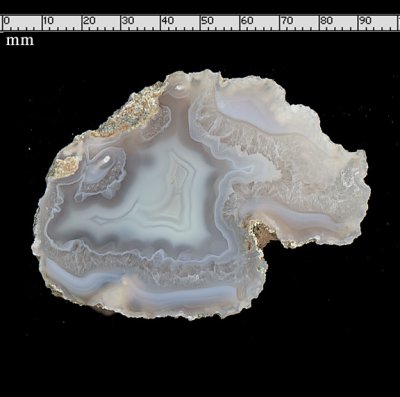
Japanese Agate
Location: Hanaishi
Country: Japan
Continent: Asia
Date: 10/8/2003
Description: Agates have historically been produced from Hanaishi, Imakane, Setana, Hokkaido, Japan. Hanaishi, in Japanese, means "Flower Stone". Hokkaido is the northernmost large Island in the Japanese Archipelago. The town site was first developed in the 19th Century for its gold and manganese deposits. The agates from here were discovered around 1880, and were originally recovered as a byproduct from the mining operations. The agates were used domestically, and some were even exported to lapidaries in other countries in the early 20th Century. As the agate sources became depleted, Japanese lapidaries began importing agates from Brazil because of lower costs. Mining ceased in this area around 1970, and collecting is no longer permitted in the abandoned mining sites. Text and image from Hideharu Yamada.
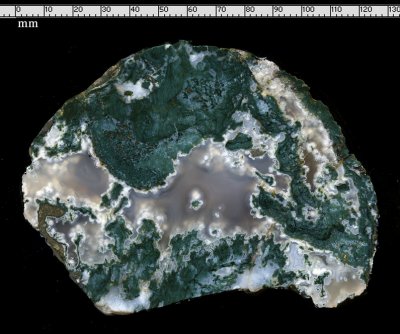
Japanese Agate
Location: Hanaishi
Country: Japan
Continent: Asia
Date: 10/8/2003
Description: Agates have historically been produced from Hanaishi, Imakane, Setana, Hokkaido, Japan. Hanaishi, in Japanese, means "Flower Stone". Hokkaido is the northernmost large Island in the Japanese Archipelago. The town site was first developed in the 19th Century for its gold and manganese deposits. The agates from here were discovered around 1880, and were originally recovered as a byproduct from the mining operations. The agates were used domestically, and some were even exported to lapidaries in other countries in the early 20th Century. As the agate sources became depleted, Japanese lapidaries began importing agates from Brazil because of lower costs. Mining ceased in this area around 1970, and collecting is no longer permitted in the abandoned mining sites. Text and image from Hideharu Yamada.
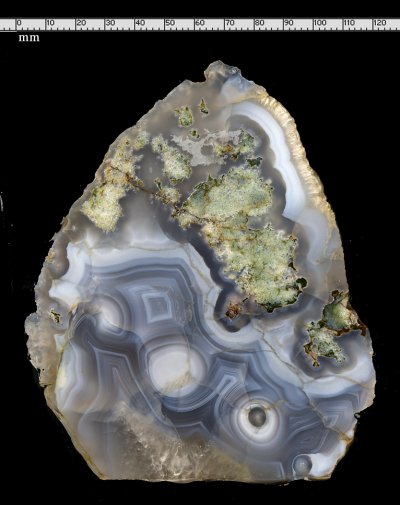
Japanese Agate
Location: Hanaishi
Country: Japan
Continent: Asia
Date: 10/8/2003
Description: Agates have historically been produced from Hanaishi, Imakane, Setana, Hokkaido, Japan. Hanaishi, in Japanese, means "Flower Stone". Hokkaido is the northernmost large Island in the Japanese Archipelago. The town site was first developed in the 19th Century for its gold and manganese deposits. The agates from here were discovered around 1880, and were originally recovered as a byproduct from the mining operations. The agates were used domestically, and some were even exported to lapidaries in other countries in the early 20th Century. As the agate sources became depleted, Japanese lapidaries began importing agates from Brazil because of lower costs. Mining ceased in this area around 1970, and collecting is no longer permitted in the abandoned mining sites. Text and image from Hideharu Yamada.
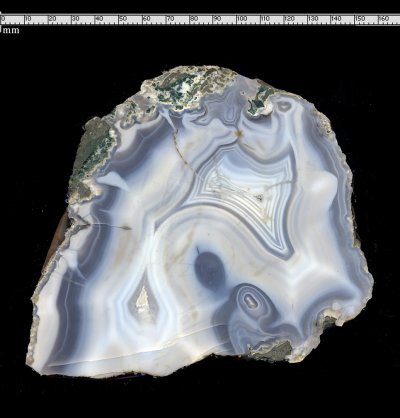
Japanese Agate
Location: Hanaishi
Country: Japan
Continent: Asia
Date: 10/8/2003
Description: Agates have historically been produced from Hanaishi, Imakane, Setana, Hokkaido, Japan. Hanaishi, in Japanese, means "Flower Stone". Hokkaido is the northernmost large Island in the Japanese Archipelago. The town site was first developed in the 19th Century for its gold and manganese deposits. The agates from here were discovered around 1880, and were originally recovered as a byproduct from the mining operations. The agates were used domestically, and some were even exported to lapidaries in other countries in the early 20th Century. As the agate sources became depleted, Japanese lapidaries began importing agates from Brazil because of lower costs. Mining ceased in this area around 1970, and collecting is no longer permitted in the abandoned mining sites. Text and image from Hideharu Yamada.
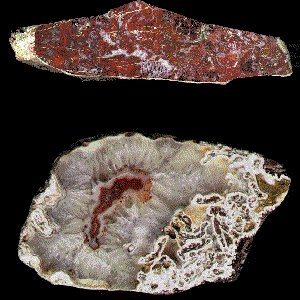
Jasp-Agate
Location: Bernhard Quarry, Idar-Oberstein
Country: Germany
Continent: Europe
Date: 10/26/1998
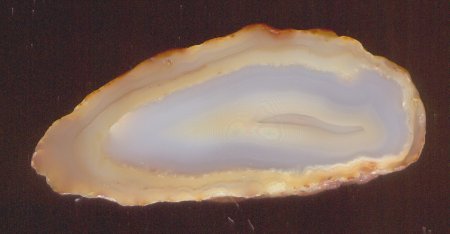
Java Agate
Location: Java
Country: Indonesia
Continent: Asia
Date: 7/8/2003
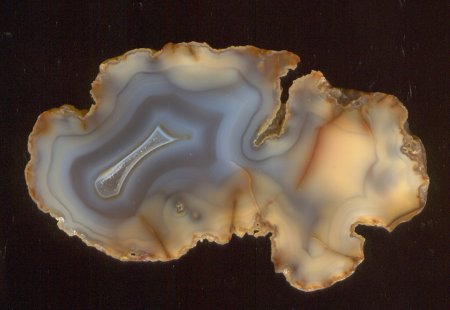
Java Agate
Location: Java
Country: Indonesia
Continent: Asia
Date: 7/8/2003
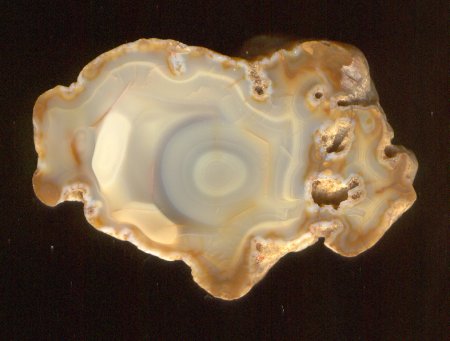
Java Agate
Location: Java
Country: Indonesia
Continent: Asia
Date: 7/8/2003
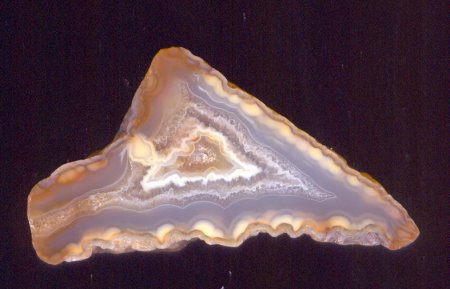
Java Agate
Location: Java
Country: Indonesia
Continent: Asia
Date: 7/8/2003
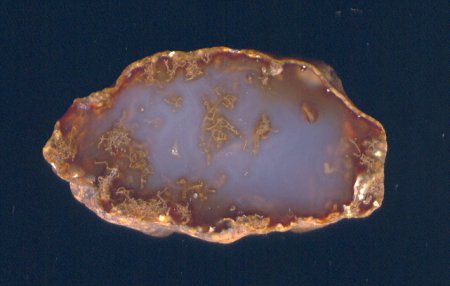
Java Agate
Location: Java
Country: Indonesia
Continent: Asia
Date: 7/8/2003
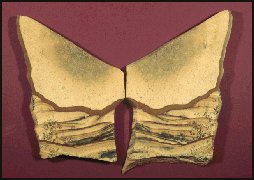
Kalahari Picture Jasper
Country: South Africa
Continent: Africa
Date: 10/26/1998
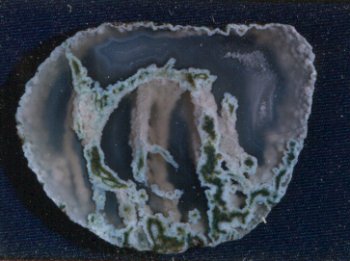
Kalama Agate
Location: Kalama
State: Washington
Country: United States
Continent: North America
Date: 4/12/2000
Description: Image courtesy of Lizzadro Museum of Lapidary Art, Elmhurst, Illinois.
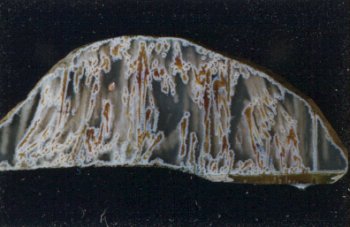
Kalama Agate
Location: Kalama
State: Washington
Country: United States
Continent: North America
Date: 4/12/2000
Description: Image courtesy of Lizzadro Museum of Lapidary Art, Elmhurst, Illinois.
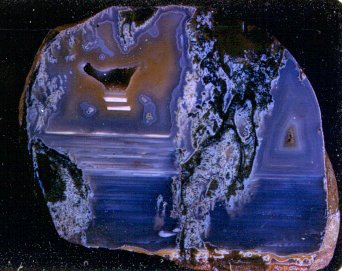
Kalama Agate
Location: Kalama
State: Washington
Country: United States
Continent: North America
Date: 4/12/2000
Description: Image courtesy of Lizzadro Museum of Lapidary Art, Elmhurst, Illinois.
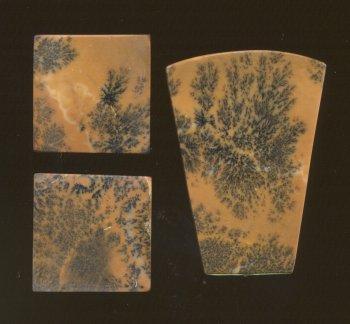
Kansas Moss Agate
State: Kansas
Country: United States
Continent: North America
Date: 5/25/2001
Description: Kansas Moss Agate. George Frederick Kunz (1885) was probably the first worker to record moss agates from west of Graham, Graham County, Kansas, where these stones have formed in place in continental sedimentary siltstones and claystones assigned to the Ogallala Formation of Pliocene age. These stones were offered for sale as Kansas Dendritic Opal in advertizements in The Mineralogist magazine (v. 9, no. 11, p. 434) and Carpenter (1963, p. 117) referred to these stones as Kansas Moss Agate. Carpenter described his as dendritic material collected from the Ogallala Formation of Pliocene age in Trego County. Carpenter's locality is south of Kunz's locality. These stones are commonly seen offered for sale in shops and shows as being from Quinter, Gove County, Kansas. The groundmass of these stones ranges from grayish yellow to moderate yellow to yellow-brown and the texture may range from chalky to glassy or opaline to flint-like. Similar stones have been recorded by Pabian (1971) from several exposures of the Ogallala Formation in Deuel, Banner and Cherry counties, Nebraska. Unconfirmed reports of these stones suggest that similar material has been found in the Ogallala Formation near Wray, Colorado and Pine Bluffs, Wyoming.
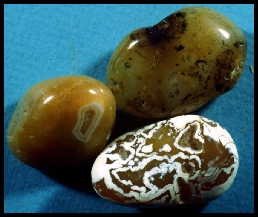
Kenai Peninsula Agate
Location: Kenai Peninsula
State: Alaska
Country: United States
Continent: North America
Date: 1/13/2003
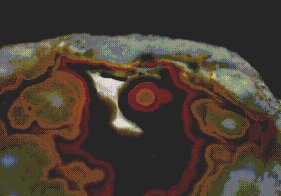
Kentucky Agate
State: Kentucky
Country: United States
Continent: North America
Date: 10/26/1998
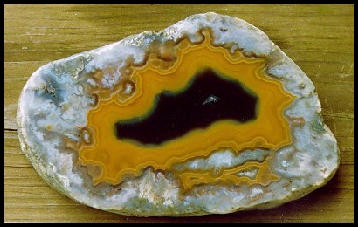
Kentucky Agate
State: Kentucky
Country: United States
Continent: North America
Date: 10/26/1998
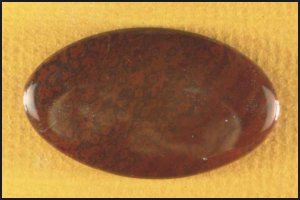
Kinradite
State: California
Country: United States
Continent: North America
Date: 5/29/1999
Description: Kinradite, California, Oregon, (synonym: orbicular jasper), for J. J. Kinrade, operator of lapidary shop in Montgomery Building, San Francisco, California, from 1906 to about 1936. Kinrade developed early lapidary equipment. Anon, 1937. Old Collection Sold. The Mineralogist, v. 5, no. 4, p. 24. Originally a local trade name for jasper containing colorless to nearly colorless quartz, Shipley, 1971. Dictionary of Gems and Gemology, p. 109. Ulke, 1940, called it a spotted, porphyritic jasper. The name kinradite was used as early as 1922 (Merrill, Moodey, and Wherry, p.122); the U. S. National Museum catalogue lists gems with catalogue numbers 1534 (12 stones) and 1535 (1 stone), cut from specimen no. 87422. This name may be used for similar material from numerous locality and now has little if any implication as to source. Sperisen (1938, p. 49) stated that the material is found in the Franciscan Series of Jurassic age in the California sources.
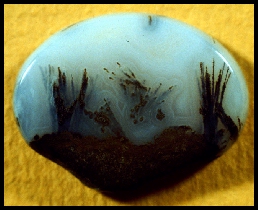
Kramer Hills Sagenitic Agate
State: California
Country: United States
Continent: North America
Date: 10/26/1998
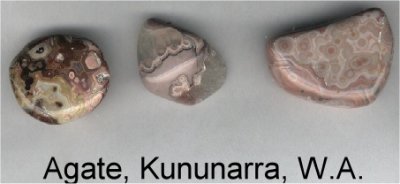
Kununarra Agate
Location: Kununarra
State: Western Australia
Country: Australia
Continent: Australia
Date: 1/6/2003
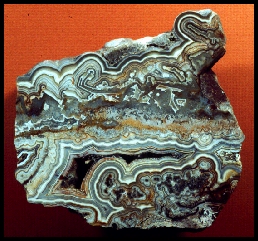
Lace Agate
State: Chihuahua
Country: Mexico
Continent: North America
Date: 10/26/1998
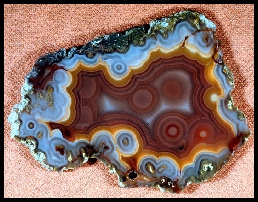
Laguna Agate
State: Chihuahua
Country: Mexico
Continent: North America
Date: 10/26/1998
Description: Laguna Agate, from Rancho Borunda and for Ojo de la Laguna, Chihuahua, Mexico. Sanchez-Mejorada (1960) shows volcanic rocks of Miocene age in the area from which these agates originated. See Keller, P. C., 1978 and Shaub (1979b, p. 2548-2566). Cross (1996, p. 49-56) stated that these are amygdaloidal agates taken from mines in the vicinity of 29o 28' 49" N and 106o 15" 58" W, Chihuahua, Mexico, and that they are extracted from the Rancho El Agate Andesite of Keller (1978). These are probably the most popular of all agates from Northern Mexico.
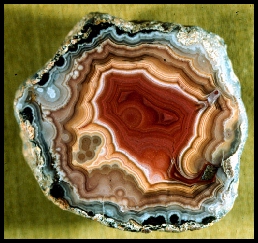
Laguna Agate
State: Chihuahua
Country: Mexico
Continent: North America
Date: 10/26/1998
Description: Laguna Agate, from Rancho Borunda and for Ojo de la Laguna, Chihuahua, Mexico. Sanchez-Mejorada (1960) shows volcanic rocks of Miocene age in the area from which these agates originated. See Keller, P. C., 1978 and Shaub (1979b, p. 2548-2566). Cross (1996, p. 49-56) stated that these are amygdaloidal agates taken from mines in the vicinity of 29o 28' 49" N and 106o 15" 58" W, Chihuahua, Mexico, and that they are extracted from the Rancho El Agate Andesite of Keller (1978). These are probably the most popular of all agates from Northern Mexico.
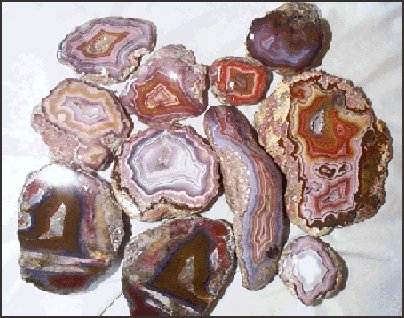
Laguna Agate
State: Chihuahua
Country: Mexico
Continent: North America
Date: 10/26/1998
Description: Laguna Agate, from Rancho Borunda and for Ojo de la Laguna, Chihuahua, Mexico. Sanchez-Mejorada (1960) shows volcanic rocks of Miocene age in the area from which these agates originated. See Keller, P. C., 1978 and Shaub (1979b, p. 2548-2566). Cross (1996, p. 49-56) stated that these are amygdaloidal agates taken from mines in the vicinity of 29o 28' 49" N and 106o 15" 58" W, Chihuahua, Mexico, and that they are extracted from the Rancho El Agate Andesite of Keller (1978). These are probably the most popular of all agates from Northern Mexico.
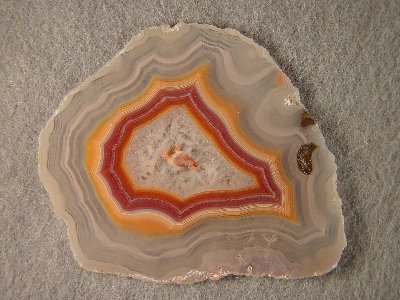
Laguna Agate
State: Chihuahua
Country: Mexico
Continent: North America
Date: 10/26/1998
Description: Laguna Agate, from Rancho Borunda and for Ojo de la Laguna, Chihuahua, Mexico. Sanchez-Mejorada (1960) shows volcanic rocks of Miocene age in the area from which these agates originated. See Keller, P. C., 1978 and Shaub (1979b, p. 2548-2566). Cross (1996, p. 49-56) stated that these are amygdaloidal agates taken from mines in the vicinity of 29o 28' 49" N and 106o 15" 58" W, Chihuahua, Mexico, and that they are extracted from the Rancho El Agate Andesite of Keller (1978). These are probably the most popular of all agates from Northern Mexico.
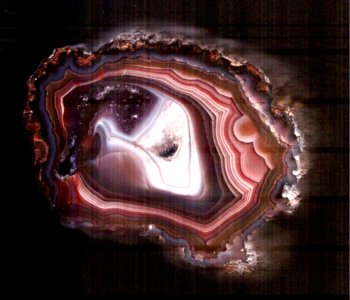
Laguna Agate
Location: Ojo De Laguna
State: Chihuahua
Country: Mexico
Continent: North America
Date: 7/7/1999
Description: Laguna Agate, from Rancho Borunda and for Ojo de la Laguna, Chihuahua, Mexico. Sanchez-Mejorada (1960) shows volcanic rocks of Miocene age in the area from which these agates originated. See Keller, P. C., 1978 and Shaub (1979b, p. 2548-2566). Cross (1996, p. 49-56) stated that these are amygdaloidal agates taken from mines in the vicinity of 29o 28' 49" N and 106o 15" 58" W, Chihuahua, Mexico, and that they are extracted from the Rancho El Agate Andesite of Keller (1978). These are probably the most popular of all agates from Northern Mexico.
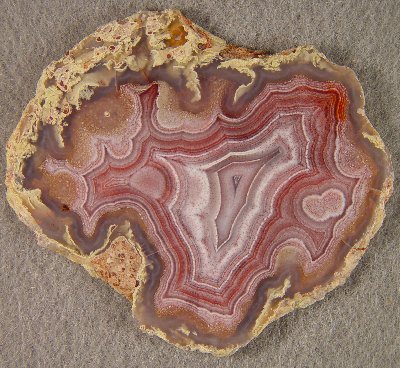
Laguna Agate
State: Chihuahua
Country: Mexico
Continent: North America
Date: 1/25/2002
Description: Laguna Agate, from Rancho Borunda and for Ojo de la Laguna, Chihuahua, Mexico. Sanchez-Mejorada (1960) shows volcanic rocks of Miocene age in the area from which these agates originated. See Keller, P. C., 1978 and Shaub (1979b, p. 2548-2566). Cross (1996, p. 49-56) stated that these are amygdaloidal agates taken from mines in the vicinity of 29o 28' 49" N and 106o 15" 58" W, Chihuahua, Mexico, and that they are extracted from the Rancho El Agate Andesite of Keller (1978). These are probably the most popular of all agates from Northern Mexico.
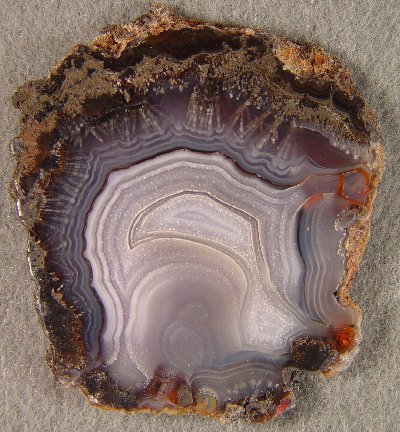
Laguna Agate
State: Chihuahua
Country: Mexico
Continent: North America
Date: 1/25/2002
Description: Laguna Agate, from Rancho Borunda and for Ojo de la Laguna, Chihuahua, Mexico. Sanchez-Mejorada (1960) shows volcanic rocks of Miocene age in the area from which these agates originated. See Keller, P. C., 1978 and Shaub (1979b, p. 2548-2566). Cross (1996, p. 49-56) stated that these are amygdaloidal agates taken from mines in the vicinity of 29o 28' 49" N and 106o 15" 58" W, Chihuahua, Mexico, and that they are extracted from the Rancho El Agate Andesite of Keller (1978). These are probably the most popular of all agates from Northern Mexico.
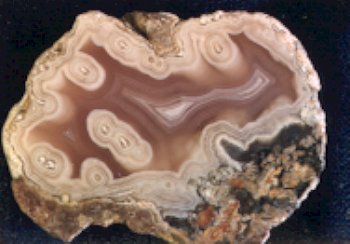
Laguna Agate
State: Chihuahua
Country: Mexico
Continent: North America
Date: 8/11/2000
Description: Image courtesy of Lizzadro Museum of Lapidary Art, Elmhurst, Illinois. Laguna Agate, from Rancho Borunda and for Ojo de la Laguna, Chihuahua, Mexico. Sanchez-Mejorada (1960) shows volcanic rocks of Miocene age in the area from which these agates originated. See Keller, P. C., 1978 and Shaub (1979b, p. 2548-2566). Cross (1996, p. 49-56) stated that these are amygdaloidal agates taken from mines in the vicinity of 29o 28' 49" N and 106o 15" 58" W, Chihuahua, Mexico, and that they are extracted from the Rancho El Agate Andesite of Keller (1978). These are probably the most popular of all agates from Northern Mexico.
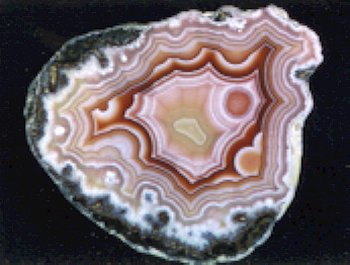
Laguna Agate
State: Chihuahua
Country: Mexico
Continent: North America
Date: 8/11/2000
Description: Image courtesy of Lizzadro Museum of Lapidary Art, Elmhurst, Illinois. Laguna Agate, from Rancho Borunda and for Ojo de la Laguna, Chihuahua, Mexico. Sanchez-Mejorada (1960) shows volcanic rocks of Miocene age in the area from which these agates originated. See Keller, P. C., 1978 and Shaub (1979b, p. 2548-2566). Cross (1996, p. 49-56) stated that these are amygdaloidal agates taken from mines in the vicinity of 29o 28' 49" N and 106o 15" 58" W, Chihuahua, Mexico, and that they are extracted from the Rancho El Agate Andesite of Keller (1978). These are probably the most popular of all agates from Northern Mexico.
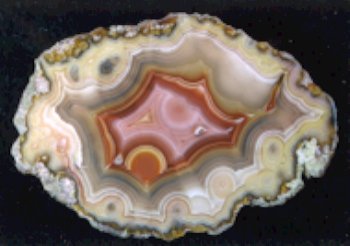
Laguna Agate
State: Chihuahua
Country: Mexico
Continent: North America
Date: 8/11/2000
Description: Image courtesy of Lizzadro Museum of Lapidary Art, Elmhurst, Illinois. Laguna Agate, from Rancho Borunda and for Ojo de la Laguna, Chihuahua, Mexico. Sanchez-Mejorada (1960) shows volcanic rocks of Miocene age in the area from which these agates originated. See Keller, P. C., 1978 and Shaub (1979b, p. 2548-2566). Cross (1996, p. 49-56) stated that these are amygdaloidal agates taken from mines in the vicinity of 29o 28' 49" N and 106o 15" 58" W, Chihuahua, Mexico, and that they are extracted from the Rancho El Agate Andesite of Keller (1978). These are probably the most popular of all agates from Northern Mexico.
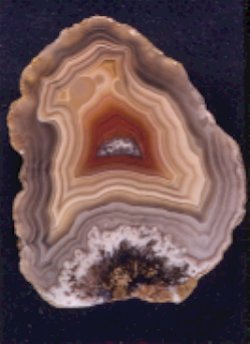
Laguna Agate
State: Chihuahua
Country: Mexico
Continent: North America
Date: 8/11/2000
Description: Image courtesy of Lizzadro Museum of Lapidary Art, Elmhurst, Illinois. Laguna Agate, from Rancho Borunda and for Ojo de la Laguna, Chihuahua, Mexico. Sanchez-Mejorada (1960) shows volcanic rocks of Miocene age in the area from which these agates originated. See Keller, P. C., 1978 and Shaub (1979b, p. 2548-2566). Cross (1996, p. 49-56) stated that these are amygdaloidal agates taken from mines in the vicinity of 29o 28' 49" N and 106o 15" 58" W, Chihuahua, Mexico, and that they are extracted from the Rancho El Agate Andesite of Keller (1978). These are probably the most popular of all agates from Northern Mexico.
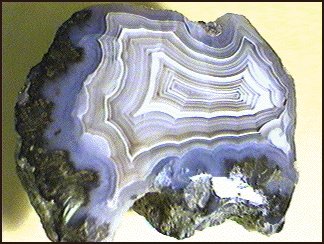
Laguna Agate
State: Chihuahua
Country: Mexico
Continent: North America
Date: 4/5/2001
Description: Laguna Agate, from Rancho Borunda and for Ojo de la Laguna, Chihuahua, Mexico. Sanchez-Mejorada (1960) shows volcanic rocks of Miocene age in the area from which these agates originated. See Keller, P. C., 1978 and Shaub (1979b, p. 2548-2566). Cross (1996, p. 49-56) stated that these are amygdaloidal agates taken from mines in the vicinity of 29o 28' 49" N and 106o 15" 58" W, Chihuahua, Mexico, and that they are extracted from the Rancho El Agate Andesite of Keller (1978). These are probably the most popular of all agates from Northern Mexico.
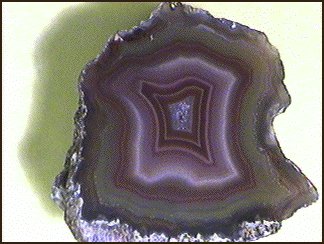
Laguna Agate
State: Chihuahua
Country: Mexico
Continent: North America
Date: 4/5/2001
Description: Laguna Agate, from Rancho Borunda and for Ojo de la Laguna, Chihuahua, Mexico. Sanchez-Mejorada (1960) shows volcanic rocks of Miocene age in the area from which these agates originated. See Keller, P. C., 1978 and Shaub (1979b, p. 2548-2566). Cross (1996, p. 49-56) stated that these are amygdaloidal agates taken from mines in the vicinity of 29o 28' 49" N and 106o 15" 58" W, Chihuahua, Mexico, and that they are extracted from the Rancho El Agate Andesite of Keller (1978). These are probably the most popular of all agates from Northern Mexico.
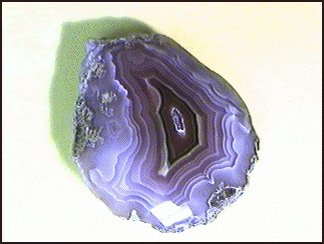
Laguna Agate
State: Chihuahua
Country: Mexico
Continent: North America
Date: 4/5/2001
Description: Laguna Agate, from Rancho Borunda and for Ojo de la Laguna, Chihuahua, Mexico. Sanchez-Mejorada (1960) shows volcanic rocks of Miocene age in the area from which these agates originated. See Keller, P. C., 1978 and Shaub (1979b, p. 2548-2566). Cross (1996, p. 49-56) stated that these are amygdaloidal agates taken from mines in the vicinity of 29o 28' 49" N and 106o 15" 58" W, Chihuahua, Mexico, and that they are extracted from the Rancho El Agate Andesite of Keller (1978). These are probably the most popular of all agates from Northern Mexico.
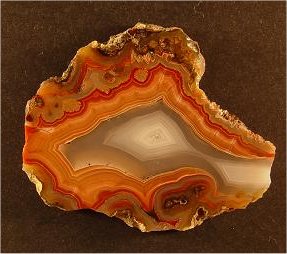
Laguna Agate
State: Chihuahua
Country: Mexico
Continent: North America
Date: 2/7/2003
Description: Laguna Agate, from Rancho Borunda and for Ojo de la Laguna, Chihuahua, Mexico. Sanchez-Mejorada (1960) shows volcanic rocks of Miocene age in the area from which these agates originated. See Keller, P. C., 1978 and Shaub (1979b, p. 2548-2566). Cross (1996, p. 49-56) stated that these are amygdaloidal agates taken from mines in the vicinity of 29o 28' 49" N and 106o 15" 58" W, Chihuahua, Mexico, and that they are extracted from the Rancho El Agate Andesite of Keller (1978). These are probably the most popular of all agates from Northern Mexico.
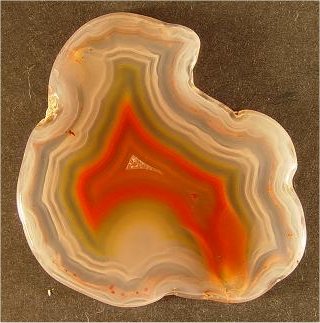
Laguna Agate
State: Chihuahua
Country: Mexico
Continent: North America
Date: 2/7/2003
Description: Laguna Agate, from Rancho Borunda and for Ojo de la Laguna, Chihuahua, Mexico. Sanchez-Mejorada (1960) shows volcanic rocks of Miocene age in the area from which these agates originated. See Keller, P. C., 1978 and Shaub (1979b, p. 2548-2566). Cross (1996, p. 49-56) stated that these are amygdaloidal agates taken from mines in the vicinity of 29o 28' 49" N and 106o 15" 58" W, Chihuahua, Mexico, and that they are extracted from the Rancho El Agate Andesite of Keller (1978). These are probably the most popular of all agates from Northern Mexico.
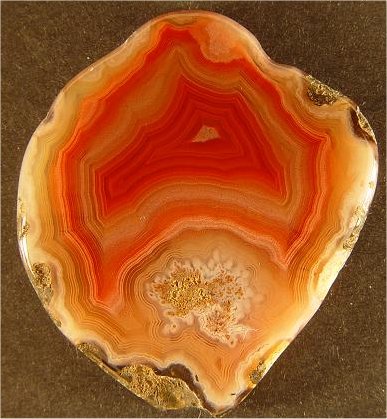
Laguna Agate
State: Chihuahua
Country: Mexico
Continent: North America
Date: 2/7/2003
Description: Laguna Agate, from Rancho Borunda and for Ojo de la Laguna, Chihuahua, Mexico. Sanchez-Mejorada (1960) shows volcanic rocks of Miocene age in the area from which these agates originated. See Keller, P. C., 1978 and Shaub (1979b, p. 2548-2566). Cross (1996, p. 49-56) stated that these are amygdaloidal agates taken from mines in the vicinity of 29o 28' 49" N and 106o 15" 58" W, Chihuahua, Mexico, and that they are extracted from the Rancho El Agate Andesite of Keller (1978). These are probably the most popular of all agates from Northern Mexico.
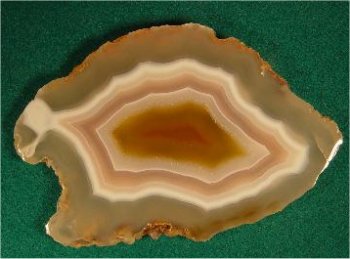
Laguna Agate
State: Chihuahua
Country: Mexico
Continent: North America
Date: 6/12/2003
Description: Laguna Agate, from Rancho Borunda and for Ojo de la Laguna, Chihuahua, Mexico. Sanchez-Mejorada (1960) shows volcanic rocks of Miocene age in the area from which these agates originated. See Keller, P. C., 1978 and Shaub (1979b, p. 2548-2566). Cross (1996, p. 49-56) stated that these are amygdaloidal agates taken from mines in the vicinity of 29o 28' 49" N and 106o 15" 58" W, Chihuahua, Mexico, and that they are extracted from the Rancho El Agate Andesite of Keller (1978). These are probably the most popular of all agates from Northern Mexico.
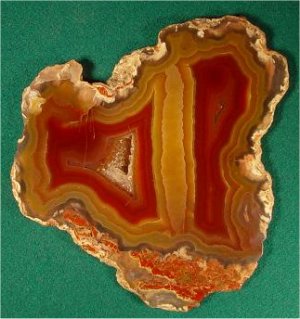
Laguna Agate
State: Chihuahua
Country: Mexico
Continent: North America
Date: 6/12/2003
Description: Laguna Agate, from Rancho Borunda and for Ojo de la Laguna, Chihuahua, Mexico. Sanchez-Mejorada (1960) shows volcanic rocks of Miocene age in the area from which these agates originated. See Keller, P. C., 1978 and Shaub (1979b, p. 2548-2566). Cross (1996, p. 49-56) stated that these are amygdaloidal agates taken from mines in the vicinity of 29o 28' 49" N and 106o 15" 58" W, Chihuahua, Mexico, and that they are extracted from the Rancho El Agate Andesite of Keller (1978). These are probably the most popular of all agates from Northern Mexico.
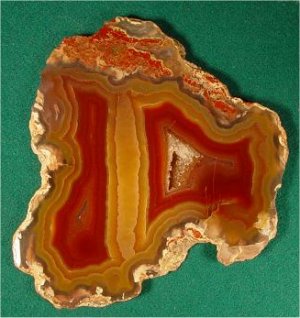
Laguna Agate
State: Chihuahua
Country: Mexico
Continent: North America
Date: 6/12/2003
Description: Laguna Agate, from Rancho Borunda and for Ojo de la Laguna, Chihuahua, Mexico. Sanchez-Mejorada (1960) shows volcanic rocks of Miocene age in the area from which these agates originated. See Keller, P. C., 1978 and Shaub (1979b, p. 2548-2566). Cross (1996, p. 49-56) stated that these are amygdaloidal agates taken from mines in the vicinity of 29o 28' 49" N and 106o 15" 58" W, Chihuahua, Mexico, and that they are extracted from the Rancho El Agate Andesite of Keller (1978). These are probably the most popular of all agates from Northern Mexico.
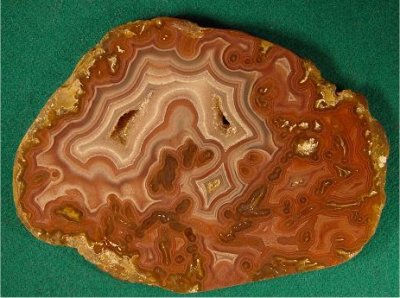
Laguna Agate
State: Chihuahua
Country: Mexico
Continent: North America
Date: 6/12/2003
Description: Laguna Agate, from Rancho Borunda and for Ojo de la Laguna, Chihuahua, Mexico. Sanchez-Mejorada (1960) shows volcanic rocks of Miocene age in the area from which these agates originated. See Keller, P. C., 1978 and Shaub (1979b, p. 2548-2566). Cross (1996, p. 49-56) stated that these are amygdaloidal agates taken from mines in the vicinity of 29o 28' 49" N and 106o 15" 58" W, Chihuahua, Mexico, and that they are extracted from the Rancho El Agate Andesite of Keller (1978). These are probably the most popular of all agates from Northern Mexico.
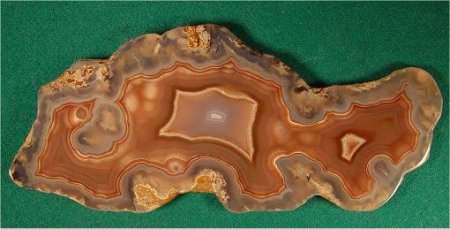
Laguna Agate
State: Chihuahua
Country: Mexico
Continent: North America
Date: 6/12/2003
Description: Laguna Agate, from Rancho Borunda and for Ojo de la Laguna, Chihuahua, Mexico. Sanchez-Mejorada (1960) shows volcanic rocks of Miocene age in the area from which these agates originated. See Keller, P. C., 1978 and Shaub (1979b, p. 2548-2566). Cross (1996, p. 49-56) stated that these are amygdaloidal agates taken from mines in the vicinity of 29o 28' 49" N and 106o 15" 58" W, Chihuahua, Mexico, and that they are extracted from the Rancho El Agate Andesite of Keller (1978). These are probably the most popular of all agates from Northern Mexico.
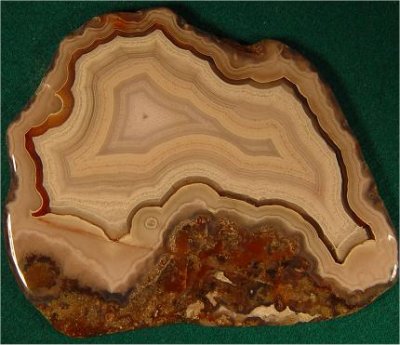
Laguna Agate
State: Chihuahua
Country: Mexico
Continent: North America
Date: 6/12/2003
Description: Laguna Agate, from Rancho Borunda and for Ojo de la Laguna, Chihuahua, Mexico. Sanchez-Mejorada (1960) shows volcanic rocks of Miocene age in the area from which these agates originated. See Keller, P. C., 1978 and Shaub (1979b, p. 2548-2566). Cross (1996, p. 49-56) stated that these are amygdaloidal agates taken from mines in the vicinity of 29o 28' 49" N and 106o 15" 58" W, Chihuahua, Mexico, and that they are extracted from the Rancho El Agate Andesite of Keller (1978). These are probably the most popular of all agates from Northern Mexico.
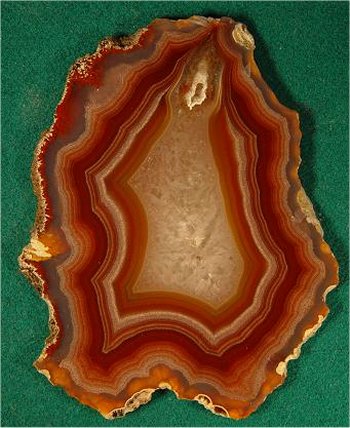
Laguna Agate
State: Chihuahua
Country: Mexico
Continent: North America
Date: 6/12/2003
Description: Laguna Agate, from Rancho Borunda and for Ojo de la Laguna, Chihuahua, Mexico. Sanchez-Mejorada (1960) shows volcanic rocks of Miocene age in the area from which these agates originated. See Keller, P. C., 1978 and Shaub (1979b, p. 2548-2566). Cross (1996, p. 49-56) stated that these are amygdaloidal agates taken from mines in the vicinity of 29o 28' 49" N and 106o 15" 58" W, Chihuahua, Mexico, and that they are extracted from the Rancho El Agate Andesite of Keller (1978). These are probably the most popular of all agates from Northern Mexico.
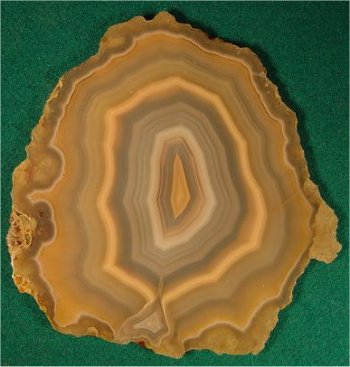
Laguna Agate
State: Chihuahua
Country: Mexico
Continent: North America
Date: 6/12/2003
Description: Laguna Agate, from Rancho Borunda and for Ojo de la Laguna, Chihuahua, Mexico. Sanchez-Mejorada (1960) shows volcanic rocks of Miocene age in the area from which these agates originated. See Keller, P. C., 1978 and Shaub (1979b, p. 2548-2566). Cross (1996, p. 49-56) stated that these are amygdaloidal agates taken from mines in the vicinity of 29o 28' 49" N and 106o 15" 58" W, Chihuahua, Mexico, and that they are extracted from the Rancho El Agate Andesite of Keller (1978). These are probably the most popular of all agates from Northern Mexico.
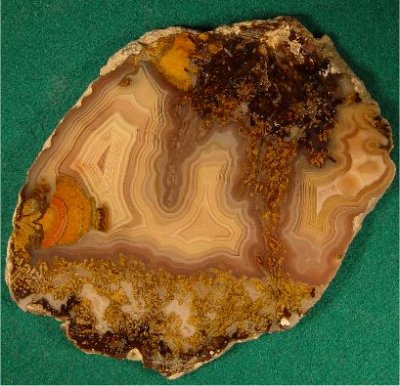
Laguna Agate
State: Chihuahua
Country: Mexico
Continent: North America
Date: 6/12/2003
Description: Laguna Agate, from Rancho Borunda and for Ojo de la Laguna, Chihuahua, Mexico. Sanchez-Mejorada (1960) shows volcanic rocks of Miocene age in the area from which these agates originated. See Keller, P. C., 1978 and Shaub (1979b, p. 2548-2566). Cross (1996, p. 49-56) stated that these are amygdaloidal agates taken from mines in the vicinity of 29o 28' 49" N and 106o 15" 58" W, Chihuahua, Mexico, and that they are extracted from the Rancho El Agate Andesite of Keller (1978). These are probably the most popular of all agates from Northern Mexico.
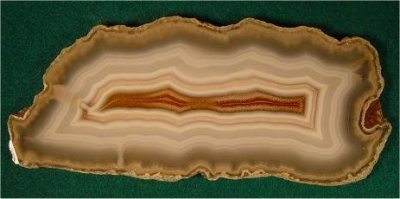
Laguna Agate
State: Chihuahua
Country: Mexico
Continent: North America
Date: 6/12/2003
Description: Laguna Agate, from Rancho Borunda and for Ojo de la Laguna, Chihuahua, Mexico. Sanchez-Mejorada (1960) shows volcanic rocks of Miocene age in the area from which these agates originated. See Keller, P. C., 1978 and Shaub (1979b, p. 2548-2566). Cross (1996, p. 49-56) stated that these are amygdaloidal agates taken from mines in the vicinity of 29o 28' 49" N and 106o 15" 58" W, Chihuahua, Mexico, and that they are extracted from the Rancho El Agate Andesite of Keller (1978). These are probably the most popular of all agates from Northern Mexico.
Laguna Agate
Location: Ojo De Laguna
State: Chihuahua
Country: Mexico
Continent: North America
Date: 7/7/1999
Description: Laguna Agate, from Rancho Borunda and for Ojo de la Laguna, Chihuahua, Mexico. Sanchez-Mejorada (1960) shows volcanic rocks of Miocene age in the area from which these agates originated. See Keller, P. C., 1978 and Shaub (1979b, p. 2548-2566). Cross (1996, p. 49-56) stated that these are amygdaloidal agates taken from mines in the vicinity of 29o 28' 49" N and 106o 15" 58" W, Chihuahua, Mexico, and that they are extracted from the Rancho El Agate Andesite of Keller (1978). These are probably the most popular of all agates from Northern Mexico. Note deeply weathered white exterior bands.
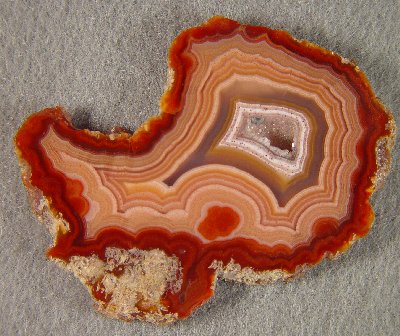
Laguna Agate
State: Chihuahua
Country: Mexico
Continent: North America
Date: 1/25/2002
Description: Laguna Agate, from Rancho Borunda and for Ojo de la Laguna, Chihuahua, Mexico. Sanchez-Mejorada (1960) shows volcanic rocks of Miocene age in the area from which these agates originated. See Keller, P. C., 1978 and Shaub (1979b, p. 2548-2566). Cross (1996, p. 49-56) stated that these are amygdaloidal agates taken from mines in the vicinity of 29o 28' 49" N and 106o 15" 58" W, Chihuahua, Mexico, and that they are extracted from the Rancho El Agate Andesite of Keller (1978). These are probably the most popular of all agates from Northern Mexico.
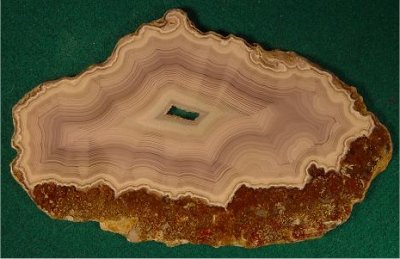
Laguna Agate
State: Chihuahua
Country: Mexico
Continent: North America
Date: 6/12/2003
Description: Laguna Agate, from Rancho Borunda and for Ojo de la Laguna, Chihuahua, Mexico. Sanchez-Mejorada (1960) shows volcanic rocks of Miocene age in the area from which these agates originated. See Keller, P. C., 1978 and Shaub (1979b, p. 2548-2566). Cross (1996, p. 49-56) stated that these are amygdaloidal agates taken from mines in the vicinity of 29o 28' 49" N and 106o 15" 58" W, Chihuahua, Mexico, and that they are extracted from the Rancho El Agate Andesite of Keller (1978). These are probably the most popular of all agates from Northern Mexico.
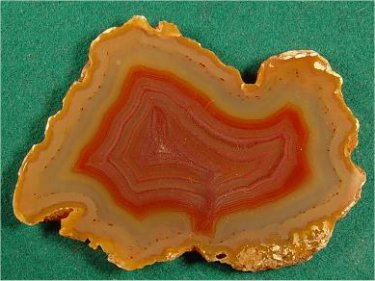
Laguna Agate
State: Chihuahua
Country: Mexico
Continent: North America
Date: 6/12/2003
Description: Laguna Agate, from Rancho Borunda and for Ojo de la Laguna, Chihuahua, Mexico. Sanchez-Mejorada (1960) shows volcanic rocks of Miocene age in the area from which these agates originated. See Keller, P. C., 1978 and Shaub (1979b, p. 2548-2566). Cross (1996, p. 49-56) stated that these are amygdaloidal agates taken from mines in the vicinity of 29o 28' 49" N and 106o 15" 58" W, Chihuahua, Mexico, and that they are extracted from the Rancho El Agate Andesite of Keller (1978). These are probably the most popular of all agates from Northern Mexico.
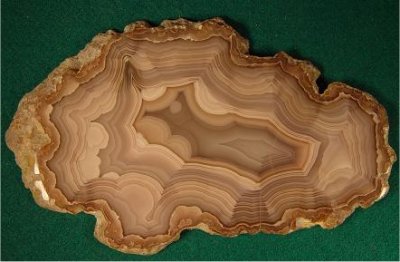
Laguna Agate
State: Chihuahua
Country: Mexico
Continent: North America
Date: 6/12/2003
Description: Laguna Agate, from Rancho Borunda and for Ojo de la Laguna, Chihuahua, Mexico. Sanchez-Mejorada (1960) shows volcanic rocks of Miocene age in the area from which these agates originated. See Keller, P. C., 1978 and Shaub (1979b, p. 2548-2566). Cross (1996, p. 49-56) stated that these are amygdaloidal agates taken from mines in the vicinity of 29o 28' 49" N and 106o 15" 58" W, Chihuahua, Mexico, and that they are extracted from the Rancho El Agate Andesite of Keller (1978). These are probably the most popular of all agates from Northern Mexico.
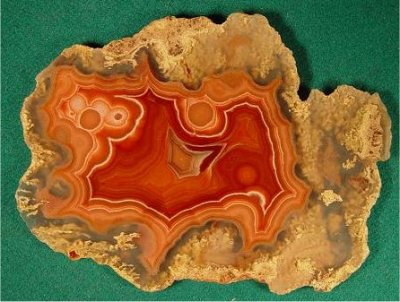
Laguna Agate
State: Chihuahua
Country: Mexico
Continent: North America
Date: 6/12/2003
Description: Laguna Agate, from Rancho Borunda and for Ojo de la Laguna, Chihuahua, Mexico. Sanchez-Mejorada (1960) shows volcanic rocks of Miocene age in the area from which these agates originated. See Keller, P. C., 1978 and Shaub (1979b, p. 2548-2566). Cross (1996, p. 49-56) stated that these are amygdaloidal agates taken from mines in the vicinity of 29o 28' 49" N and 106o 15" 58" W, Chihuahua, Mexico, and that they are extracted from the Rancho El Agate Andesite of Keller (1978). These are probably the most popular of all agates from Northern Mexico.
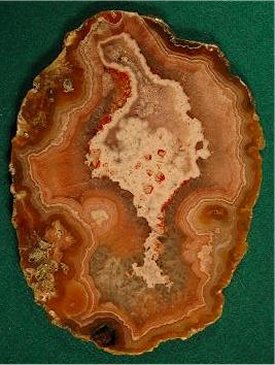
Laguna Agate
State: Chihuahua
Country: Mexico
Continent: North America
Date: 6/12/2003
Description: Laguna Agate, from Rancho Borunda and for Ojo de la Laguna, Chihuahua, Mexico. Sanchez-Mejorada (1960) shows volcanic rocks of Miocene age in the area from which these agates originated. See Keller, P. C., 1978 and Shaub (1979b, p. 2548-2566). Cross (1996, p. 49-56) stated that these are amygdaloidal agates taken from mines in the vicinity of 29o 28' 49" N and 106o 15" 58" W, Chihuahua, Mexico, and that they are extracted from the Rancho El Agate Andesite of Keller (1978). These are probably the most popular of all agates from Northern Mexico.
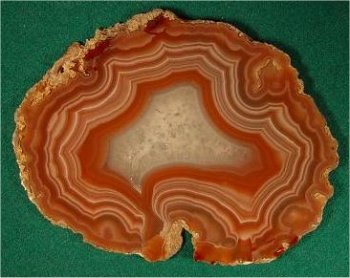
Laguna Agate
State: Chihuahua
Country: Mexico
Continent: North America
Date: 6/12/2003
Description: Laguna Agate, from Rancho Borunda and for Ojo de la Laguna, Chihuahua, Mexico. Sanchez-Mejorada (1960) shows volcanic rocks of Miocene age in the area from which these agates originated. See Keller, P. C., 1978 and Shaub (1979b, p. 2548-2566). Cross (1996, p. 49-56) stated that these are amygdaloidal agates taken from mines in the vicinity of 29o 28' 49" N and 106o 15" 58" W, Chihuahua, Mexico, and that they are extracted from the Rancho El Agate Andesite of Keller (1978). These are probably the most popular of all agates from Northern Mexico.
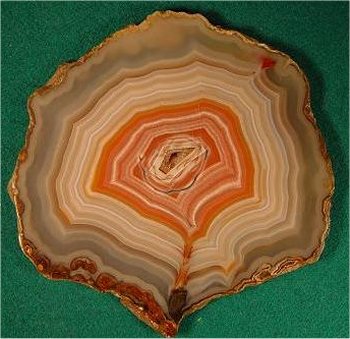
Laguna Agate
State: Chihuahua
Country: Mexico
Continent: North America
Date: 6/12/2003
Description: Laguna Agate, from Rancho Borunda and for Ojo de la Laguna, Chihuahua, Mexico. Sanchez-Mejorada (1960) shows volcanic rocks of Miocene age in the area from which these agates originated. See Keller, P. C., 1978 and Shaub (1979b, p. 2548-2566). Cross (1996, p. 49-56) stated that these are amygdaloidal agates taken from mines in the vicinity of 29o 28' 49" N and 106o 15" 58" W, Chihuahua, Mexico, and that they are extracted from the Rancho El Agate Andesite of Keller (1978). These are probably the most popular of all agates from Northern Mexico.
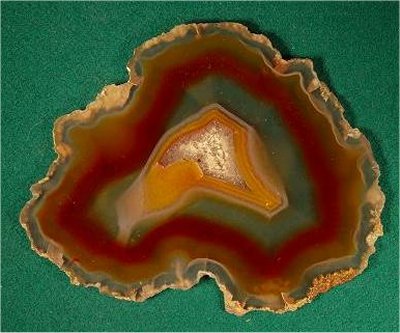
Laguna Agate
State: Chihuahua
Country: Mexico
Continent: North America
Date: 6/12/2003
Description: Laguna Agate, from Rancho Borunda and for Ojo de la Laguna, Chihuahua, Mexico. Sanchez-Mejorada (1960) shows volcanic rocks of Miocene age in the area from which these agates originated. See Keller, P. C., 1978 and Shaub (1979b, p. 2548-2566). Cross (1996, p. 49-56) stated that these are amygdaloidal agates taken from mines in the vicinity of 29o 28' 49" N and 106o 15" 58" W, Chihuahua, Mexico, and that they are extracted from the Rancho El Agate Andesite of Keller (1978). These are probably the most popular of all agates from Northern Mexico.
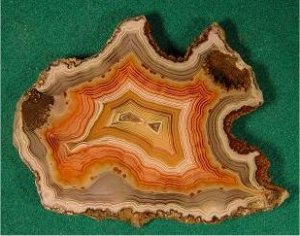
Laguna Agate
State: Chihuahua
Country: Mexico
Continent: North America
Date: 6/12/2003
Description: Laguna Agate, from Rancho Borunda and for Ojo de la Laguna, Chihuahua, Mexico. Sanchez-Mejorada (1960) shows volcanic rocks of Miocene age in the area from which these agates originated. See Keller, P. C., 1978 and Shaub (1979b, p. 2548-2566). Cross (1996, p. 49-56) stated that these are amygdaloidal agates taken from mines in the vicinity of 29o 28' 49" N and 106o 15" 58" W, Chihuahua, Mexico, and that they are extracted from the Rancho El Agate Andesite of Keller (1978). These are probably the most popular of all agates from Northern Mexico.
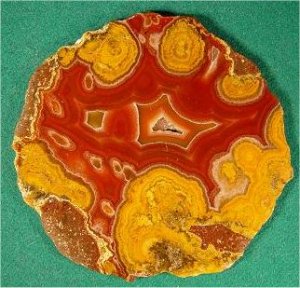
Laguna Agate
State: Chihuahua
Country: Mexico
Continent: North America
Date: 6/12/2003
Description: Laguna Agate, from Rancho Borunda and for Ojo de la Laguna, Chihuahua, Mexico. Sanchez-Mejorada (1960) shows volcanic rocks of Miocene age in the area from which these agates originated. See Keller, P. C., 1978 and Shaub (1979b, p. 2548-2566). Cross (1996, p. 49-56) stated that these are amygdaloidal agates taken from mines in the vicinity of 29o 28' 49" N and 106o 15" 58" W, Chihuahua, Mexico, and that they are extracted from the Rancho El Agate Andesite of Keller (1978). These are probably the most popular of all agates from Northern Mexico.
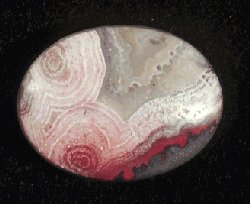
Laguna Lace Agate
State: Chihuahua
Country: Mexico
Continent: North America
Date: 10/26/1998
Description: Laguna Agate, from Rancho Borunda and for Ojo de la Laguna, Chihuahua, Mexico. Sanchez-Mejorada (1960) shows volcanic rocks of Miocene age in the area from which these agates originated. See Keller, P. C., 1978 and Shaub (1979b, p. 2548-2566). Cross (1996, p. 49-56) stated that these are amygdaloidal agates taken from mines in the vicinity of 29o 28' 49" N and 106o 15" 58" W, Chihuahua, Mexico, and that they are extracted from the Rancho El Agate Andesite of Keller (1978). These are probably the most popular of all agates from Northern Mexico.
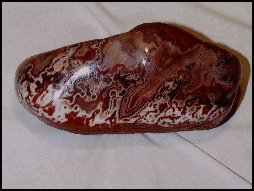
Lake Superior Agate
State: Minnesota
Country: United States
Continent: North America
Date: 10/26/1998
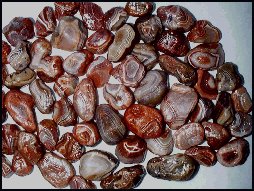
Lake Superior Agate
State: Minnesota
Country: United States
Continent: North America
Date: 10/26/1998
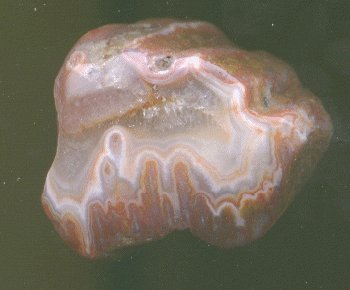
Lake Superior Agate
Location: Southeastern Nebraska
State: Nebraska
Country: United States
Continent: North America
Date: 10/28/1999
Description: From glacial deposits, Southeastern Nebraska.
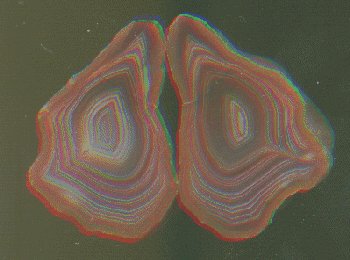
Lake Superior Agate
Location: Southeastern Nebraska
State: Nebraska
Country: United States
Continent: North America
Date: 10/28/1999
Description: From glacial deposits, Southeastern Nebraska.
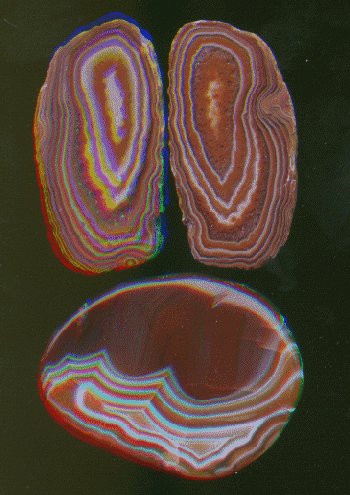
Lake Superior Agate
Location: Southeastern Nebraska
State: Nebraska
Country: United States
Continent: North America
Date: 10/28/1999
Description: From glacial deposits, Southeastern Nebraska.
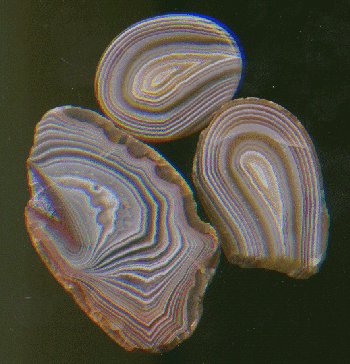
Lake Superior Agate
Location: Southeastern Nebraska
State: Nebraska
Country: United States
Continent: North America
Date: 10/28/1999
Description: From glacial deposits, Southeastern Nebraska.
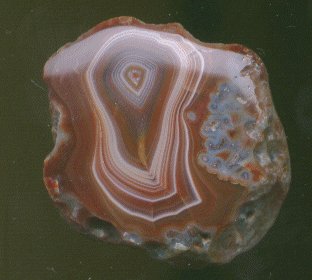
Lake Superior Agate
Location: Southeastern Nebraska
State: Nebraska
Country: United States
Continent: North America
Date: 10/28/1999
Description: From glacial deposits, Southeastern Nebraska.
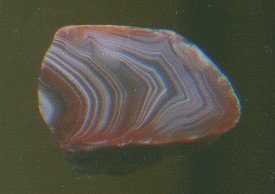
Lake Superior Agate
Location: Southeastern Nebraska
State: Nebraska
Country: United States
Continent: North America
Date: 10/28/1999
Description: From glacial deposits, Southeastern Nebraska.
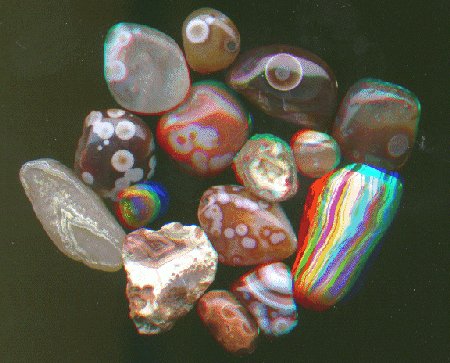
Lake Superior Eye Agates
Location: Southeastern Nebraska
State: Nebraska
Country: United States
Continent: North America
Date: 10/28/1999
Description: From glacial deposits, Southeastern Nebraska.
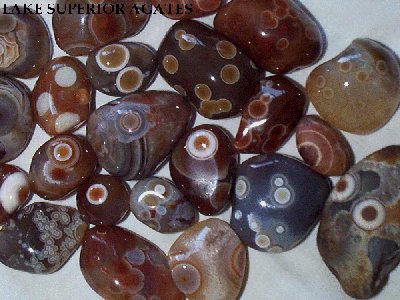
Lake Superior Eye Agates
State: Minnesota
Country: United States
Continent: North America
Date: 10/26/1998
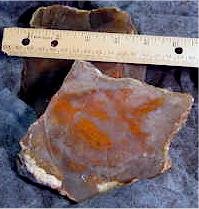
Last Chance Pigeon Blood Agate
Location: Grand County
State: Utah
Country: United States
Continent: North America
Date: 12/13/2002
Description: Last Chance Pigeon Blood Agate, from area about 10 miles south of Last Chance area, Grand County, Utah.
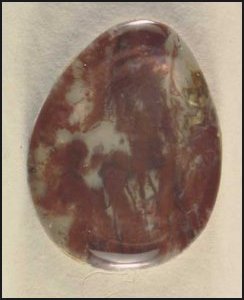
Lavic Jasper
Location: near Barstow
State: California
Country: United States
Continent: North America
Date: 5/29/1999
Description: Lavic Jasper, for Lavic siding, AT&SF Railway, near Barstow, California, for Lavic siding, AT&SF railway, 34o 43' 40" N and 116o 18' 45" W, Lavic Lake Quadrangle, USGS 7.5' x 7.5' map. See Lewis (1942, p. 116, 117) and Hagar, D., (1946 p. 8-9) for early reports. Jasper from scattered outcrops in secs 13, 14, 23, 24, T. 8 N., R. 5 E., and secs. 10, 11, 12, 13, T. 7 N., R. 6 E., San Bernardino County, California. Hector and Lavic Lake Quadrangles, U. S. Geological Survey, 7.5 minute series (Topographic). The agates and jaspers are from rocks mapped as undivided volcanics of Tertiary Age by Jenkins (1938). See also Schweitzer (1944, p. 80-82), Strong (1971, p. 53) and Mitchell (1986, p. 54). McMackin (1981, p. 1868-1876) suggested it is red, green, brown, and white.
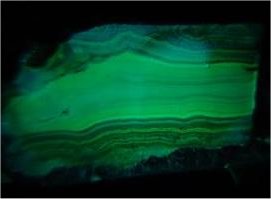
Levan Rose Agate
Location: Juab County
State: Utah
Country: United States
Continent: North America
Date: 12/13/2002
Description: Levan Agate, Utah, or Levan Rose Agate, probably first recorded by Hubert (1953, p. 36, 38, 40, 42), and named for Levan, Juab County, Utah. The green body is due to the fact that this specimen is being shown under long-wave ultraviolet light.
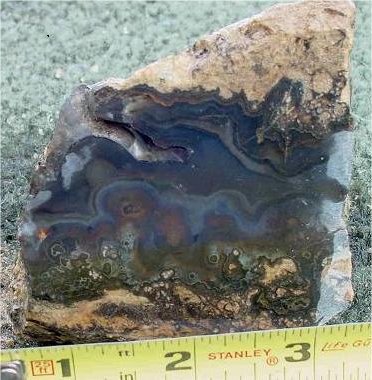
Levan Rose Agate
Location: Juab County
State: Utah
Country: United States
Continent: North America
Date: 12/13/2002
Description: Levan Agate, Utah, or Levan Rose Agate, probably first recorded by Hubert (1953, p. 36, 38, 40, 42), and named for Levan, Juab County, Utah.
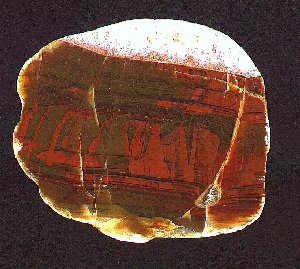
Liesegang Phenomena in Agate
Location: Lathum, near Arnheim
Country: Netherlands
Continent: Europe
Date: 11/20/1998
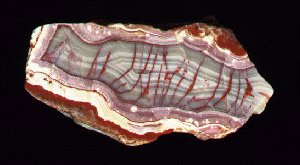
Liesegang Phenomena in Agate
Location: Waldhambach, near Frankfurt
Country: Germany
Continent: Europe
Date: 11/20/1998
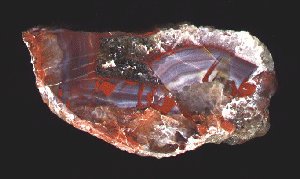
Liesegang Phenomena in Agate
Location: Waldhambach, near Frankfurt
Country: Germany
Continent: Europe
Date: 11/20/1998
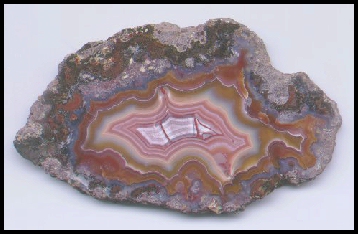
Liesegang Phenomena in Laguna Agate
Location: Ojo De Laguna
State: Chihuahua
Country: Mexico
Continent: North America
Date: 10/26/1998
Description: Liesegang Phenomena in Laguna Agate, Ojo De Laguna, Chihuahua, Mexico (red lines in white area)
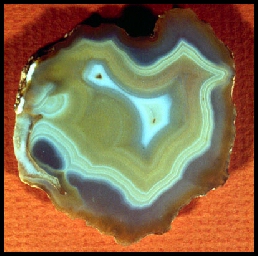
Loma Pinta Agate
State: Chihuahua
Country: Mexico
Continent: North America
Date: 10/26/1998
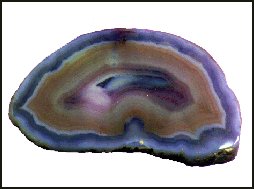
Loma Pinta Agate
State: Chihuahua
Country: Mexico
Continent: North America
Date: 10/26/1998
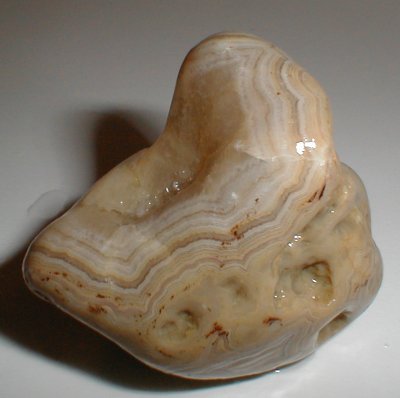
Louisiana Banded Agate
State: Louisiana
Country: United States
Continent: North America
Date: 1/8/2001
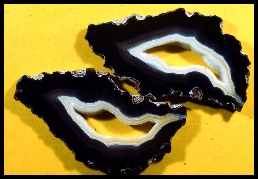
Lucero Agate
State: Durango
Country: Mexico
Continent: North America
Date: 10/26/1998
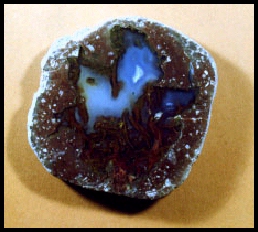
Lucky Strike Thunder Egg
Location: Ochoco Mountains
State: Oregon
Country: United States
Continent: North America
Date: 10/26/1998
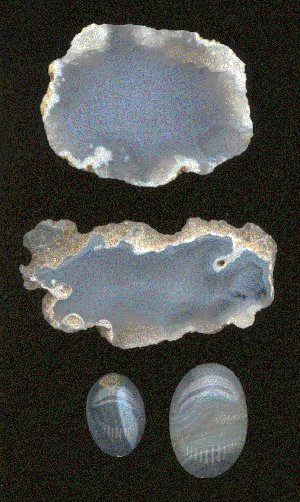
Luna Agate
State: New Mexico
Country: United States
Continent: North America
Date: 9/14/2001
Description: Luna agate, New Mexico. Probably named for Luna County, New Mexico. See Dickerson, B. (1974) who suggested this material was called Laguna Agate by earlier workers and suggested the earlier name was the synonym for Laguna Agate of Chihuahua, Mexico. These agates are commonly light gray to light blue-gray, probably amygdaloidal agates.
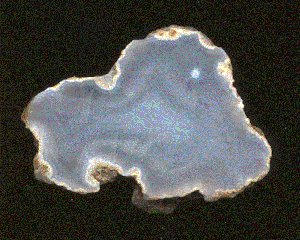
Luna Agate
State: New Mexico
Country: United States
Continent: North America
Date: 9/14/2001
Description: Luna agate, New Mexico. Probably named for Luna County, New Mexico. See Dickerson, B. (1974) who suggested this material was called Laguna Agate by earlier workers and suggested the earlier name was the synonym for Laguna Agate of Chihuahua, Mexico. These agates are commonly light gray to light blue-gray, probably amygdaloidal agates.
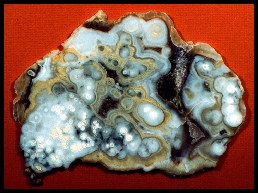
Luna Agate
State: Chihuahua
Country: Mexico
Continent: North America
Date: 10/26/1998
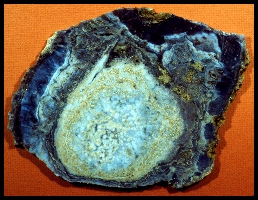
Luna Agate
State: Chihuahua
Country: Mexico
Continent: North America
Date: 10/26/1998
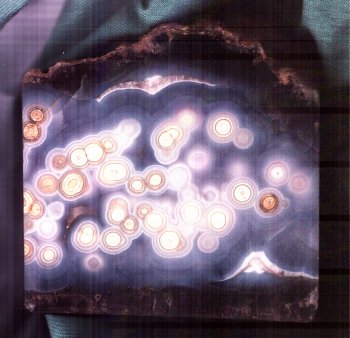
Luna Agate
State: Chihuahua
Country: Mexico
Continent: North America
Date: 8/17/1999
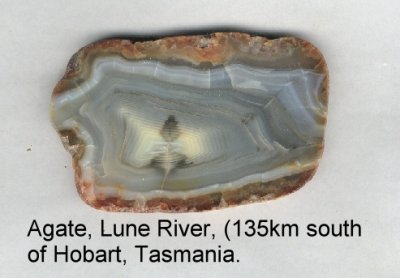
Lune River Agate
Location: Hobart
State: Tasmania
Country: Australia
Continent: Australia
Date: 1/6/2003
Description: 135 kilometers south of Hobart.
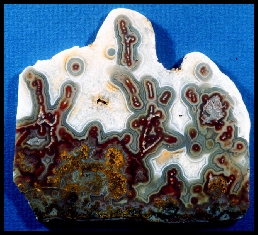
Lysite Agate
State: Wyoming
Country: United States
Continent: North America
Date: 10/26/1998
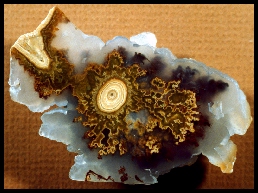
Lysite Agate
State: Wyoming
Country: United States
Continent: North America
Date: 10/26/1998
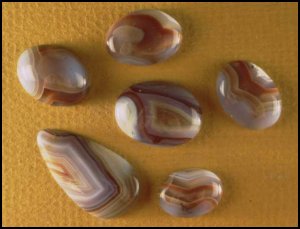
Malawi Agate
Country: Malawi
Continent: Africa
Date: 5/30/1999
Description: Malawi Agate, Malawi, Africa, red, orange, and white, rkp. Adv., Aleta's Rock Shop, Rock Malawi & Gem, v. 6, no. 12, p. 74; Lapidary Journal, v. 29, no. 10, p. 1885. ...resembles Laguna, adv., M. Nowotny & Co., Lapidary Journal, v.33, no. 1, p. 235.
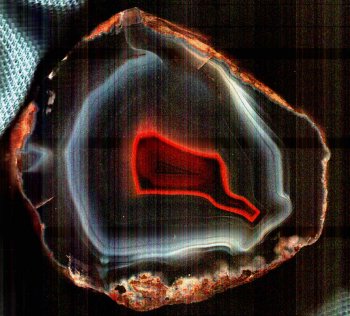
Malawi Agate
Country: Malawi
Continent: Africa
Date: 7/7/1999
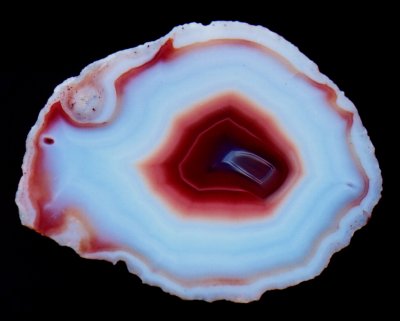
Malawi Agate
Country: Malawi
Continent: Africa
Date: 12/11/2001
Description: Malawi Agates, Malawi, Africa. These are usually orange, red and white, mostly amygdaloidal agates. The lithology and geologic age of their host rock has not yet been established. Size: 1.5" x 2.2".
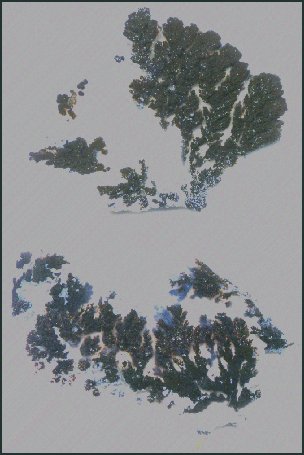
Marfa Plume Agate
Location: Presido County
State: Texas
Country: United States
Continent: North America
Date: 12/10/1998
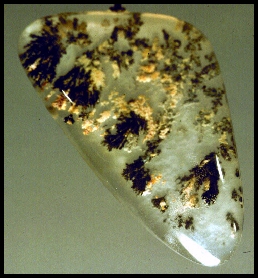
Marfa Plume Agate
Location: Marfa
State: Texas
Country: United States
Continent: North America
Date: 10/26/1998
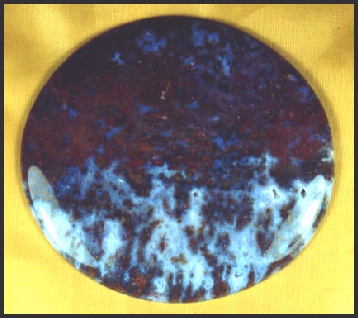
Maury Mountain Agate
Location: Crook County
State: Oregon
Country: United States
Continent: North America
Date: 10/26/1998
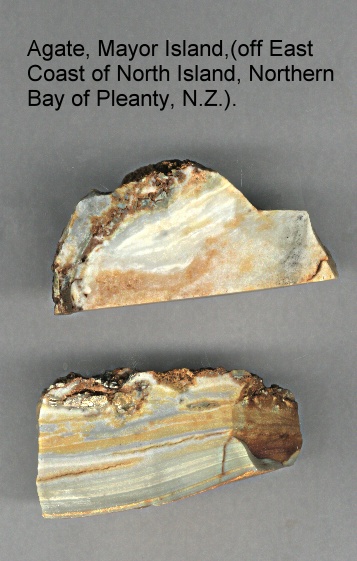
Mayor Island Agate
Location: Mayor Island (off East coast of North Island, Northern Bay of Pleanty)
Country: New Zealand
Continent: Australia
Date: 1/24/2003
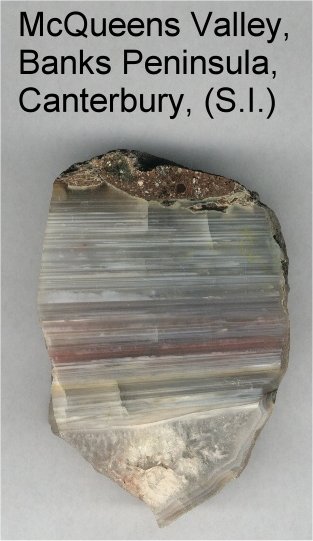
McQueens Valley Agate
Location: McQueens Valley, Banks Peninsula, Canterbury
Country: New Zealand
Continent: Australia
Date: 1/24/2003
Description: South Island
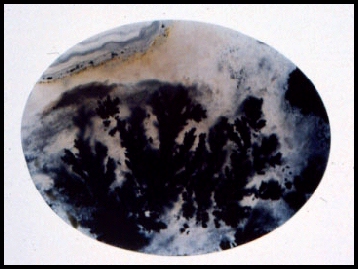
Medicine Bow Plume Agate
State: Wyoming
Country: United States
Continent: North America
Date: 10/26/1998
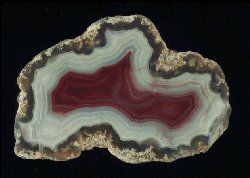
Mezquite Agate
State: Chihuahua
Country: Mexico
Continent: North America
Date: 10/26/1998
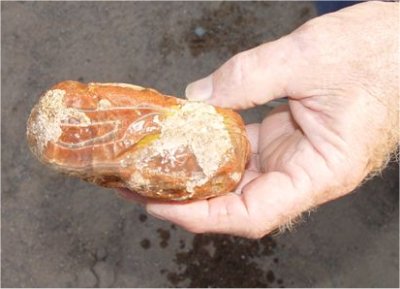
Minnesota Agate
Location: Sherburne County
State: Minnesota
Country: United States
Continent: North America
Date: 8/25/2003
Description: Bill White, of Independence, Missouri, collected this 1.2 pound specimen from Mississippi River gravel in Sherburne County, Minnesota, August 16, 2003.
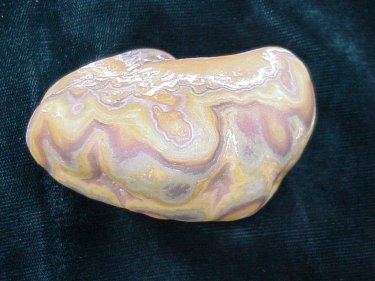
Mississippi Agate
State: Mississippi
Country: United States
Continent: North America
Date: 6/25/2001
Description: Longest dimension is about 3 inches. Agates that have been found in the gravel deposits of southern Mississippi probably originated in marine sedimentary rocks of Paleozoic age that crop out in the Nashville Dome of Tennessee. These agates were eroded from their northern source and carried by streams of Pliocene and Pleistocene ages into Mississippi, where they have been found in gravel of both modern streams and terraces of ancient streams. Dockery (1995) stated that the agates are now found in what geologists call the Citronelle Formation. Dockery also indicated that marine invertebrate fossils found in these gravel deposits are mostly of Devonian and Mississippian age. If any of these agates are ever found with included fossils, they may shed some light on the actual age of the agates.
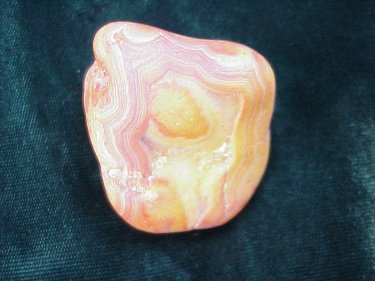
Mississippi Agate
State: Mississippi
Country: United States
Continent: North America
Date: 6/25/2001
Description: Longest dimension is about 1.5 inches. Agates that have been found in the gravel deposits of southern Mississippi probably originated in marine sedimentary rocks of Paleozoic age that crop out in the Nashville Dome of Tennessee. These agates were eroded from their northern source and carried by streams of Pliocene and Pleistocene ages into Mississippi, where they have been found in gravel of both modern streams and terraces of ancient streams. Dockery (1995) stated that the agates are now found in what geologists call the Citronelle Formation. Dockery also indicated that marine invertebrate fossils found in these gravel deposits are mostly of Devonian and Mississippian age. If any of these agates are ever found with included fossils, they may shed some light on the actual age of the agates.
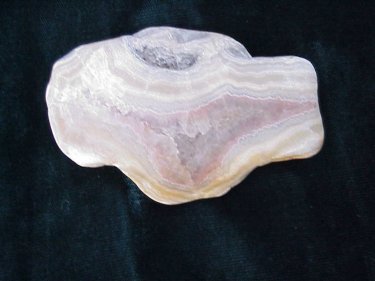
Mississippi Agate
State: Mississippi
Country: United States
Continent: North America
Date: 6/25/2001
Description: Longest dimension is about 1.5 inches. Agates that have been found in the gravel deposits of southern Mississippi probably originated in marine sedimentary rocks of Paleozoic age that crop out in the Nashville Dome of Tennessee. These agates were eroded from their northern source and carried by streams of Pliocene and Pleistocene ages into Mississippi, where they have been found in gravel of both modern streams and terraces of ancient streams. Dockery (1995) stated that the agates are now found in what geologists call the Citronelle Formation. Dockery also indicated that marine invertebrate fossils found in these gravel deposits are mostly of Devonian and Mississippian age. If any of these agates are ever found with included fossils, they may shed some light on the actual age of the agates.
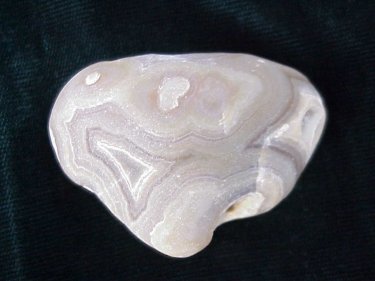
Mississippi Agate
State: Mississippi
Country: United States
Continent: North America
Date: 6/25/2001
Description: Longest dimension is about 3 inches. Agates that have been found in the gravel deposits of southern Mississippi probably originated in marine sedimentary rocks of Paleozoic age that crop out in the Nashville Dome of Tennessee. These agates were eroded from their northern source and carried by streams of Pliocene and Pleistocene ages into Mississippi, where they have been found in gravel of both modern streams and terraces of ancient streams. Dockery (1995) stated that the agates are now found in what geologists call the Citronelle Formation. Dockery also indicated that marine invertebrate fossils found in these gravel deposits are mostly of Devonian and Mississippian age. If any of these agates are ever found with included fossils, they may shed some light on the actual age of the agates.
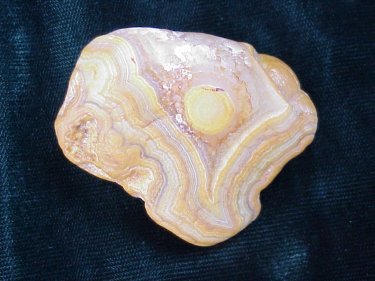
Mississippi Agate
State: Mississippi
Country: United States
Continent: North America
Date: 6/25/2001
Description: Longest dimension is about 2 inches. Agates that have been found in the gravel deposits of southern Mississippi probably originated in marine sedimentary rocks of Paleozoic age that crop out in the Nashville Dome of Tennessee. These agates were eroded from their northern source and carried by streams of Pliocene and Pleistocene ages into Mississippi, where they have been found in gravel of both modern streams and terraces of ancient streams. Dockery (1995) stated that the agates are now found in what geologists call the Citronelle Formation. Dockery also indicated that marine invertebrate fossils found in these gravel deposits are mostly of Devonian and Mississippian age. If any of these agates are ever found with included fossils, they may shed some light on the actual age of the agates.
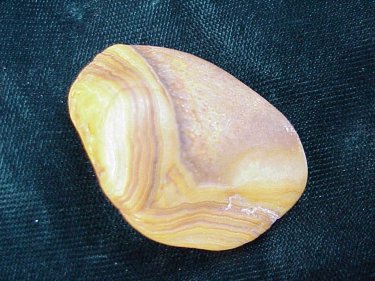
Mississippi Agate
State: Mississippi
Country: United States
Continent: North America
Date: 6/25/2001
Description: Longest dimension is about 2 inches. Agates that have been found in the gravel deposits of southern Mississippi probably originated in marine sedimentary rocks of Paleozoic age that crop out in the Nashville Dome of Tennessee. These agates were eroded from their northern source and carried by streams of Pliocene and Pleistocene ages into Mississippi, where they have been found in gravel of both modern streams and terraces of ancient streams. Dockery (1995) stated that the agates are now found in what geologists call the Citronelle Formation. Dockery also indicated that marine invertebrate fossils found in these gravel deposits are mostly of Devonian and Mississippian age. If any of these agates are ever found with included fossils, they may shed some light on the actual age of the agates.
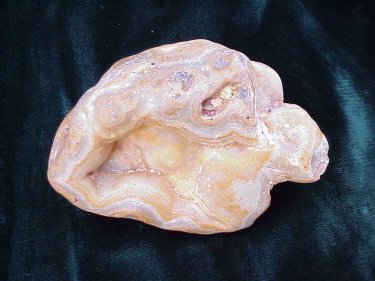
Mississippi Agate
State: Mississippi
Country: United States
Continent: North America
Date: 6/25/2001
Description: Longest dimension is about 3.5 inches. Agates that have been found in the gravel deposits of southern Mississippi probably originated in marine sedimentary rocks of Paleozoic age that crop out in the Nashville Dome of Tennessee. These agates were eroded from their northern source and carried by streams of Pliocene and Pleistocene ages into Mississippi, where they have been found in gravel of both modern streams and terraces of ancient streams. Dockery (1995) stated that the agates are now found in what geologists call the Citronelle Formation. Dockery also indicated that marine invertebrate fossils found in these gravel deposits are mostly of Devonian and Mississippian age. If any of these agates are ever found with included fossils, they may shed some light on the actual age of the agates. Specimen courtesy of Janie Hand.
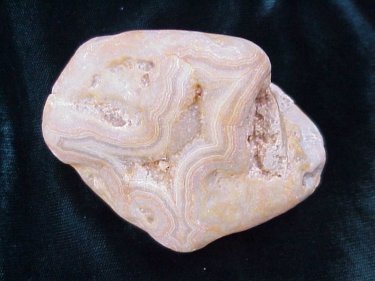
Mississippi Agate
State: Mississippi
Country: United States
Continent: North America
Date: 6/25/2001
Description: Longest dimension is about 2.5 inches. Agates that have been found in the gravel deposits of southern Mississippi probably originated in marine sedimentary rocks of Paleozoic age that crop out in the Nashville Dome of Tennessee. These agates were eroded from their northern source and carried by streams of Pliocene and Pleistocene ages into Mississippi, where they have been found in gravel of both modern streams and terraces of ancient streams. Dockery (1995) stated that the agates are now found in what geologists call the Citronelle Formation. Dockery also indicated that marine invertebrate fossils found in these gravel deposits are mostly of Devonian and Mississippian age. If any of these agates are ever found with included fossils, they may shed some light on the actual age of the agates. Specimen courtesy of Janie Hand.
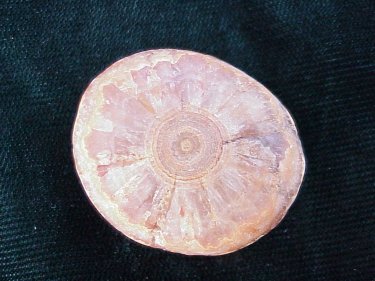
Mississippi Agate
State: Mississippi
Country: United States
Continent: North America
Date: 6/25/2001
Description: Longest dimension is about 1 1/8 inches. Agates that have been found in the gravel deposits of southern Mississippi probably originated in marine sedimentary rocks of Paleozoic age that crop out in the Nashville Dome of Tennessee. These agates were eroded from their northern source and carried by streams of Pliocene and Pleistocene ages into Mississippi, where they have been found in gravel of both modern streams and terraces of ancient streams. Dockery (1995) stated that the agates are now found in what geologists call the Citronelle Formation. Dockery also indicated that marine invertebrate fossils found in these gravel deposits are mostly of Devonian and Mississippian age. If any of these agates are ever found with included fossils, they may shed some light on the actual age of the agates. Specimen courtesy of Janie Hand.
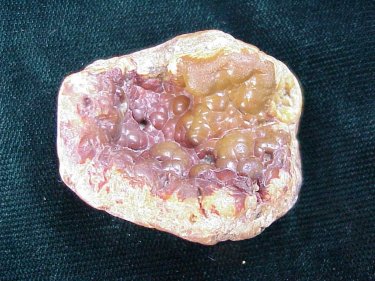
Mississippi Agate
State: Mississippi
Country: United States
Continent: North America
Date: 6/25/2001
Description: Longest dimension is about 1.25 inches. Agates that have been found in the gravel deposits of southern Mississippi probably originated in marine sedimentary rocks of Paleozoic age that crop out in the Nashville Dome of Tennessee. These agates were eroded from their northern source and carried by streams of Pliocene and Pleistocene ages into Mississippi, where they have been found in gravel of both modern streams and terraces of ancient streams. Dockery (1995) stated that the agates are now found in what geologists call the Citronelle Formation. Dockery also indicated that marine invertebrate fossils found in these gravel deposits are mostly of Devonian and Mississippian age. If any of these agates are ever found with included fossils, they may shed some light on the actual age of the agates. Specimen courtesy of Janie Hand.
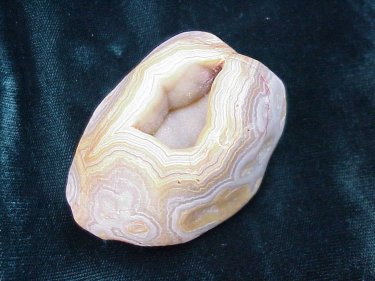
Mississippi Agate
State: Mississippi
Country: United States
Continent: North America
Date: 6/25/2001
Description: Longest dimension is about 2.5 inches. Agates that have been found in the gravel deposits of southern Mississippi probably originated in marine sedimentary rocks of Paleozoic age that crop out in the Nashville Dome of Tennessee. These agates were eroded from their northern source and carried by streams of Pliocene and Pleistocene ages into Mississippi, where they have been found in gravel of both modern streams and terraces of ancient streams. Dockery (1995) stated that the agates are now found in what geologists call the Citronelle Formation. Dockery also indicated that marine invertebrate fossils found in these gravel deposits are mostly of Devonian and Mississippian age. If any of these agates are ever found with included fossils, they may shed some light on the actual age of the agates. Specimen courtesy of Janie Hand.
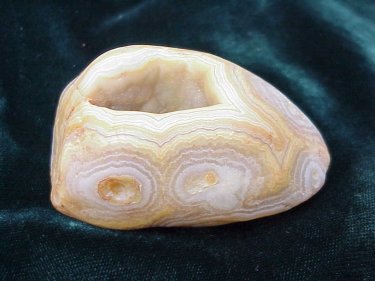
Mississippi Agate
State: Mississippi
Country: United States
Continent: North America
Date: 6/25/2001
Description: Longest dimension is about 2.5 inches. Agates that have been found in the gravel deposits of southern Mississippi probably originated in marine sedimentary rocks of Paleozoic age that crop out in the Nashville Dome of Tennessee. These agates were eroded from their northern source and carried by streams of Pliocene and Pleistocene ages into Mississippi, where they have been found in gravel of both modern streams and terraces of ancient streams. Dockery (1995) stated that the agates are now found in what geologists call the Citronelle Formation. Dockery also indicated that marine invertebrate fossils found in these gravel deposits are mostly of Devonian and Mississippian age. If any of these agates are ever found with included fossils, they may shed some light on the actual age of the agates. Specimen courtesy of Janie Hand.
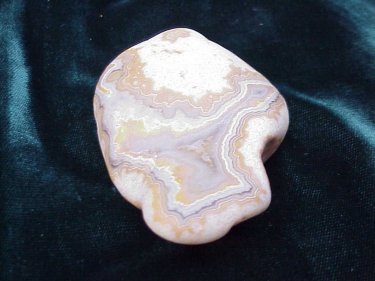
Mississippi Agate
State: Mississippi
Country: United States
Continent: North America
Date: 6/25/2001
Description: Longest dimension is about 3 inches. Agates that have been found in the gravel deposits of southern Mississippi probably originated in marine sedimentary rocks of Paleozoic age that crop out in the Nashville Dome of Tennessee. These agates were eroded from their northern source and carried by streams of Pliocene and Pleistocene ages into Mississippi, where they have been found in gravel of both modern streams and terraces of ancient streams. Dockery (1995) stated that the agates are now found in what geologists call the Citronelle Formation. Dockery also indicated that marine invertebrate fossils found in these gravel deposits are mostly of Devonian and Mississippian age. If any of these agates are ever found with included fossils, they may shed some light on the actual age of the agates. Specimen courtesy of Janie Hand.
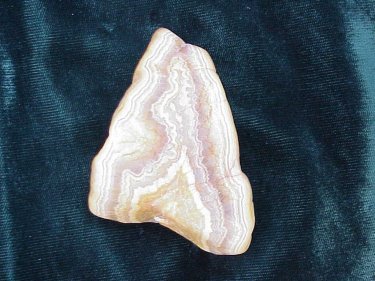
Mississippi Agate
State: Mississippi
Country: United States
Continent: North America
Date: 6/25/2001
Description: Longest dimension is about 2.5 inches. Agates that have been found in the gravel deposits of southern Mississippi probably originated in marine sedimentary rocks of Paleozoic age that crop out in the Nashville Dome of Tennessee. These agates were eroded from their northern source and carried by streams of Pliocene and Pleistocene ages into Mississippi, where they have been found in gravel of both modern streams and terraces of ancient streams. Dockery (1995) stated that the agates are now found in what geologists call the Citronelle Formation. Dockery also indicated that marine invertebrate fossils found in these gravel deposits are mostly of Devonian and Mississippian age. If any of these agates are ever found with included fossils, they may shed some light on the actual age of the agates. Specimen courtesy of Janie Hand.
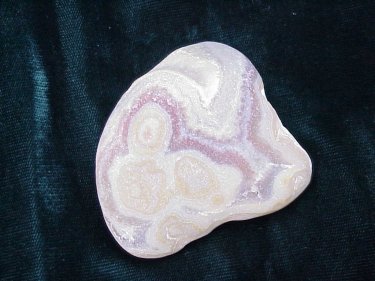
Mississippi Agate
State: Mississippi
Country: United States
Continent: North America
Date: 6/25/2001
Description: Longest dimension is about 2.5 inches. Agates that have been found in the gravel deposits of southern Mississippi probably originated in marine sedimentary rocks of Paleozoic age that crop out in the Nashville Dome of Tennessee. These agates were eroded from their northern source and carried by streams of Pliocene and Pleistocene ages into Mississippi, where they have been found in gravel of both modern streams and terraces of ancient streams. Dockery (1995) stated that the agates are now found in what geologists call the Citronelle Formation. Dockery also indicated that marine invertebrate fossils found in these gravel deposits are mostly of Devonian and Mississippian age. If any of these agates are ever found with included fossils, they may shed some light on the actual age of the agates. Specimen courtesy of Janie Hand.
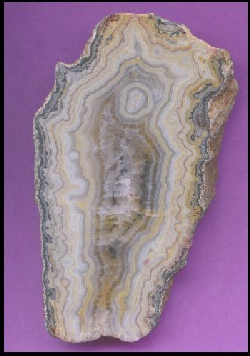
Missouri (Lace) Agate
Location: Southeastern Missouri
State: Missouri
Country: United States
Continent: North America
Date: 10/26/1998
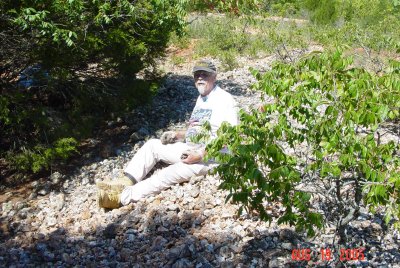
Missouri (Lace) Agate
Location: Washington County
State: Missouri
Country: United States
Continent: North America
Date: 8/19/2005
Description: Roger Pabian explores a Missouri Lace Agate site in Washington County, Missouri.
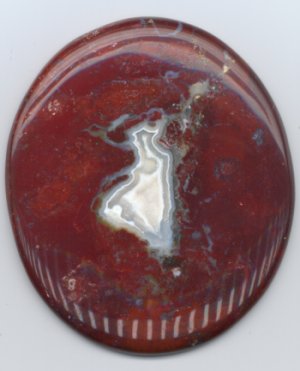
Moab Agate
State: Utah
Country: United States
Continent: North America
Date: 5/23/1999
Description: Moab Agate, Utah. The term Moab Agate may have first appeared in advertisements in 1952 (The Mineralogist, v. 20, no. 1, p. 26). There it was described as red agate with red fortifications. Mitchell (1987, p. 100, 101) used the term for white agates that came from areas about 20 miles South of Moab, Utah. The illustrated examples is a white fortification agate in a red jasper matrix.
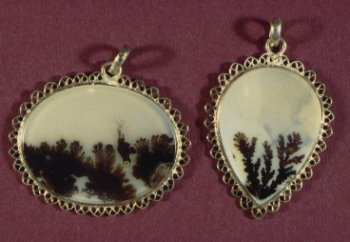
Mocha Stone (Dendritic Agate)
Location: Cambay
Country: India
Continent: Asia
Date: 6/28/1999
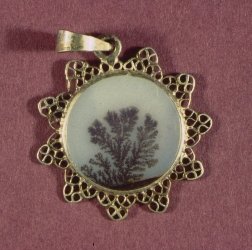
Mocha Stone (Dendritic Agate)
Location: Cambay
Country: India
Continent: Asia
Date: 6/28/1999
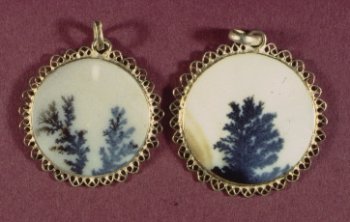
Mocha Stone (Dendritic Agate)
Location: Cambay
Country: India
Continent: Asia
Date: 6/28/1999
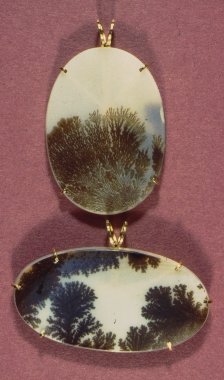
Mocha Stone (Dendritic Agate)
Location: Cambay
Country: India
Continent: Asia
Date: 6/28/1999
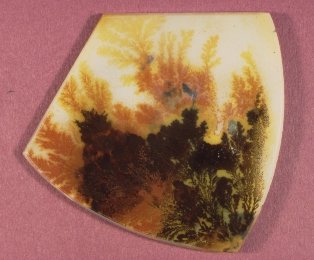
Mocha Stone (Dendritic Agate)
Location: Cambay
Country: India
Continent: Asia
Date: 6/28/1999
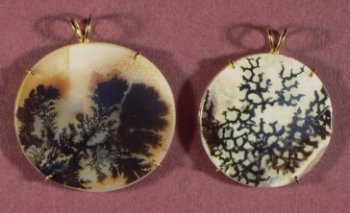
Mocha Stone (Dendritic Agate)
Location: Cambay
Country: India
Continent: Asia
Date: 6/28/1999
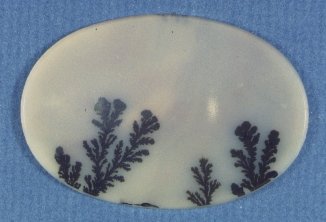
Mocha Stone (Dendritic Agate)
Location: Cambay
Country: India
Continent: Asia
Date: 6/28/1999
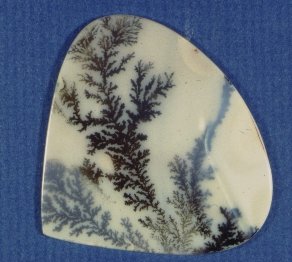
Mocha Stone (Dendritic Agate)
Location: Cambay
Country: India
Continent: Asia
Date: 6/28/1999
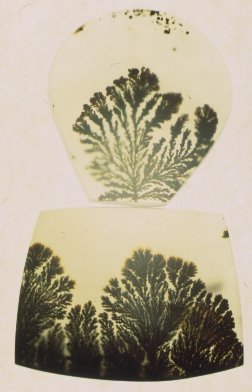
Mocha Stone (Dendritic Agate)
Location: Cambay
Country: India
Continent: Asia
Date: 6/28/1999
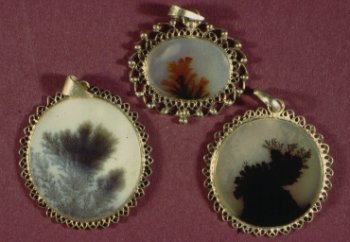
Mocha Stone (Dendritic Agate)
Location: Cambay
Country: India
Continent: Asia
Date: 6/28/1999
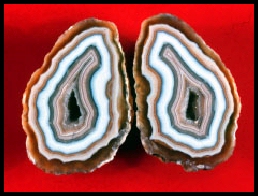
Moctezuma Agate
State: Chihuahua
Country: Mexico
Continent: North America
Date: 10/26/1998
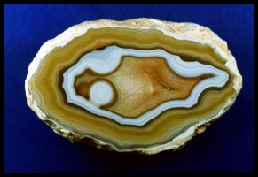
Moctezuma Agate
State: Chihuahua
Country: Mexico
Continent: North America
Date: 10/26/1998
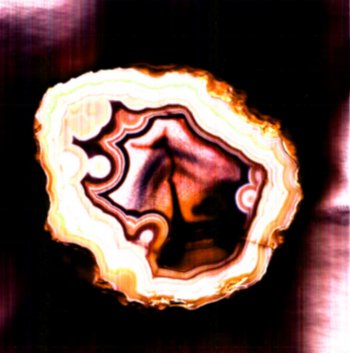
Moctezuma Agate
State: Chihuahua
Country: Mexico
Continent: North America
Date: 8/17/1999
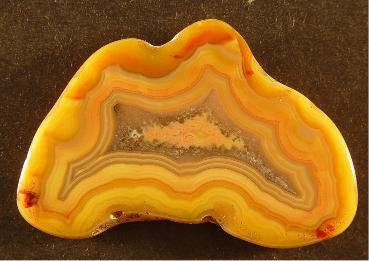
Moctezuma Agate
State: Chihuahua
Country: Mexico
Continent: North America
Date: 2/7/2003
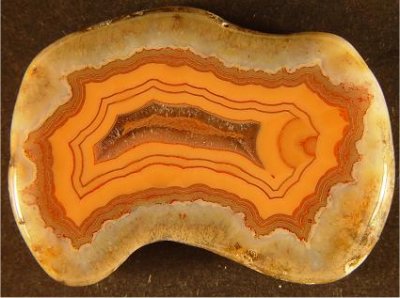
Moctezuma Agate
State: Chihuahua
Country: Mexico
Continent: North America
Date: 2/7/2003
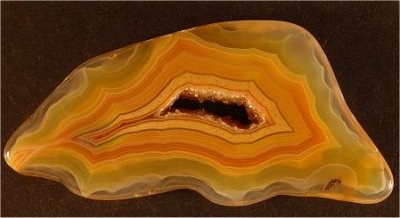
Moctezuma Agate
State: Chihuahua
Country: Mexico
Continent: North America
Date: 2/7/2003
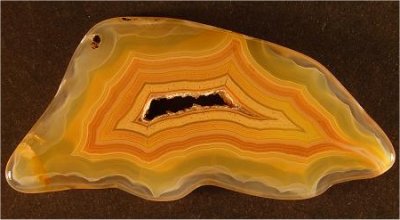
Moctezuma Agate
State: Chihuahua
Country: Mexico
Continent: North America
Date: 2/7/2003
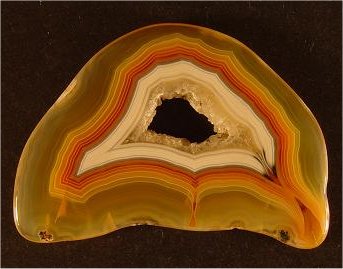
Moctezuma Agate
State: Chihuahua
Country: Mexico
Continent: North America
Date: 2/7/2003
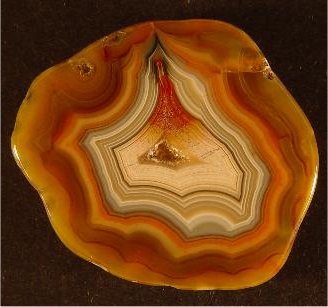
Moctezuma Agate
State: Chihuahua
Country: Mexico
Continent: North America
Date: 2/7/2003
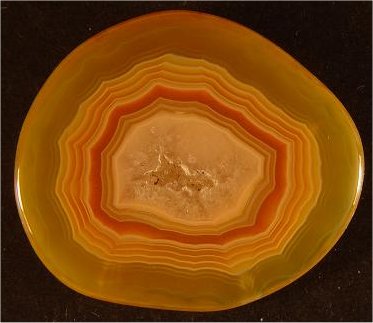
Moctezuma Agate
State: Chihuahua
Country: Mexico
Continent: North America
Date: 2/7/2003
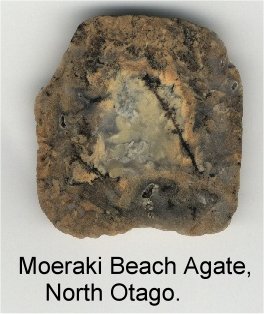
Moeraki Beach Agate
Location: Moeraki Beach, North Otago
Country: New Zealand
Continent: Australia
Date: 2/4/2003
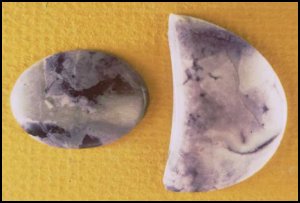
Molybendum Opalite
State: Utah
Country: United States
Continent: North America
Date: 5/10/2000
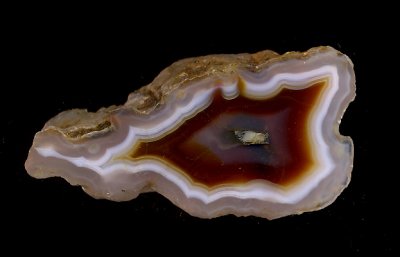
Mongolian Agate
Country: Mongolia
Continent: Asia
Date: 10/9/2003
Description: 9.4 x 4.3 x 1.2 cm, Ih-Hid-Samon deposits.
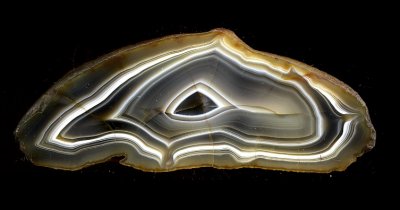
Mongolian Agate
Country: Mongolia
Continent: Asia
Date: 10/9/2003
Description: 12 x 4 x 5.2 cm, region near Budjeger deposits.
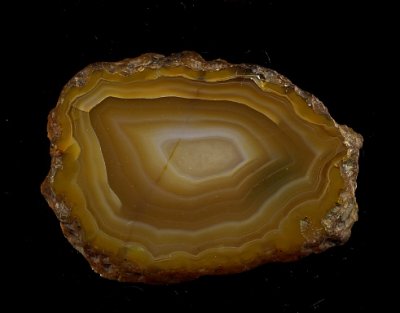
Mongolian Agate
Country: Mongolia
Continent: Asia
Date: 10/9/2003
Description: 6.5 x 4.5 x 1 cm, region near Chara-Ayrak (Chara-Aylach).
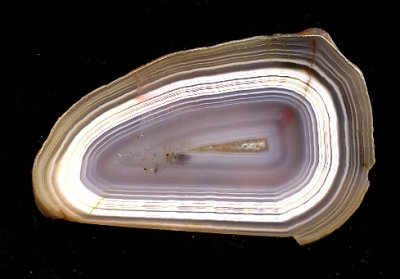
Mongolian Agate
Country: Mongolia
Continent: Asia
Date: 10/9/2003
Description: 7.5 x 4.5 x 2 cm, region near Chara-Ayrak (Chara-Aylach).
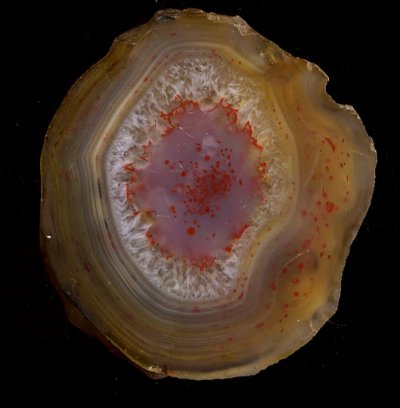
Mongolian Agate
Country: Mongolia
Continent: Asia
Date: 10/9/2003
Description: 8.5 x 7.7 x 2 cm, region near Chara-Ayrak (Chara-Aylach).
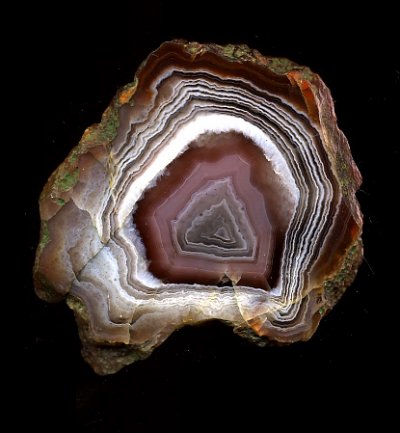
Mongolian Agate
Country: Mongolia
Continent: Asia
Date: 10/9/2003
Description: 6 x 6 x 2.2 cm, region near Chara-Ayrak (Chara-Aylach).
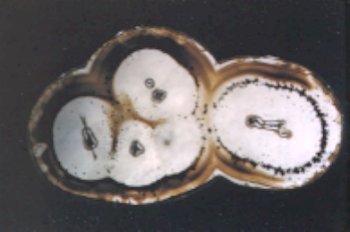
Montana Agate
State: Montana
Country: United States
Continent: North America
Date: 8/11/2000
Description: Image courtesy of Lizzadro Museum of Lapidary Art, Elmhurst, Illinois.
Montana Agate
State: Montana
Country: United States
Continent: North America
Date: 8/11/2000
Description: Image courtesy of Lizzadro Museum of Lapidary Art, Elmhurst, Illinois.
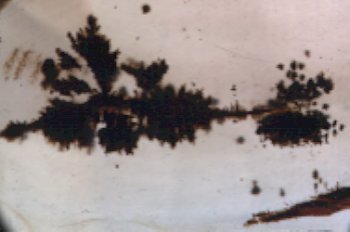
Montana Agate
State: Montana
Country: United States
Continent: North America
Date: 8/11/2000
Description: Image courtesy of Lizzadro Museum of Lapidary Art, Elmhurst, Illinois.
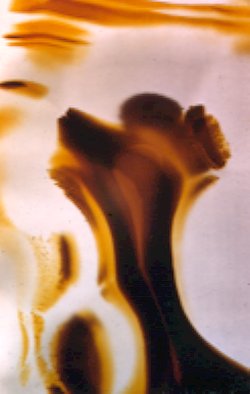
Montana Agate
State: Montana
Country: United States
Continent: North America
Date: 8/11/2000
Description: Image courtesy of Lizzadro Museum of Lapidary Art, Elmhurst, Illinois.
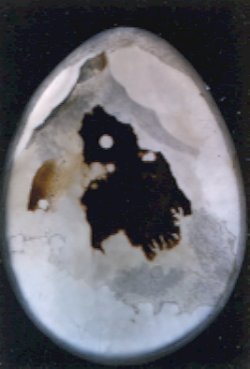
Montana Agate
State: Montana
Country: United States
Continent: North America
Date: 8/11/2000
Description: Image courtesy of Lizzadro Museum of Lapidary Art, Elmhurst, Illinois.
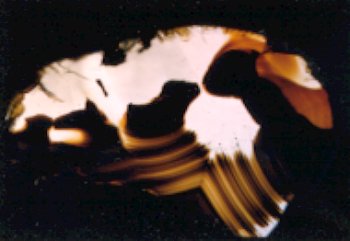
Montana Agate
State: Montana
Country: United States
Continent: North America
Date: 8/11/2000
Description: Image courtesy of Lizzadro Museum of Lapidary Art, Elmhurst, Illinois.
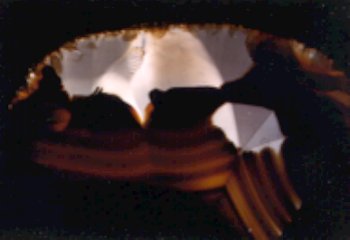
Montana Agate
State: Montana
Country: United States
Continent: North America
Date: 8/11/2000
Description: Image courtesy of Lizzadro Museum of Lapidary Art, Elmhurst, Illinois.
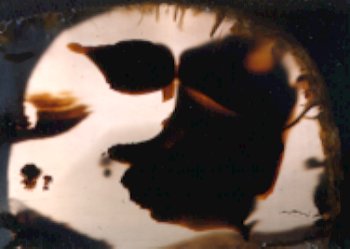
Montana Agate
State: Montana
Country: United States
Continent: North America
Date: 8/11/2000
Description: Image courtesy of Lizzadro Museum of Lapidary Art, Elmhurst, Illinois.
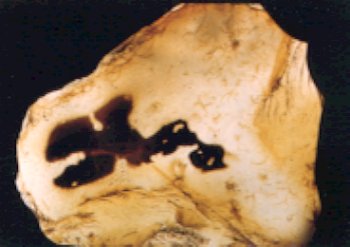
Montana Agate
State: Montana
Country: United States
Continent: North America
Date: 8/11/2000
Description: Image courtesy of Lizzadro Museum of Lapidary Art, Elmhurst, Illinois.
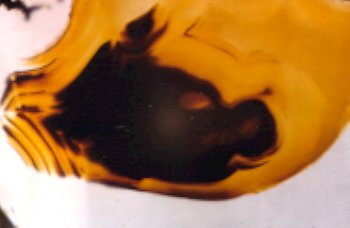
Montana Agate
State: Montana
Country: United States
Continent: North America
Date: 8/11/2000
Description: Image courtesy of Lizzadro Museum of Lapidary Art, Elmhurst, Illinois.
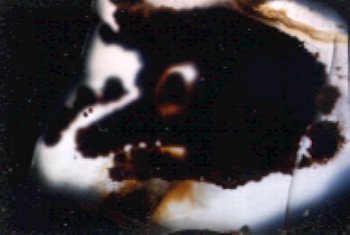
Montana Agate
State: Montana
Country: United States
Continent: North America
Date: 8/11/2000
Description: Image courtesy of Lizzadro Museum of Lapidary Art, Elmhurst, Illinois.
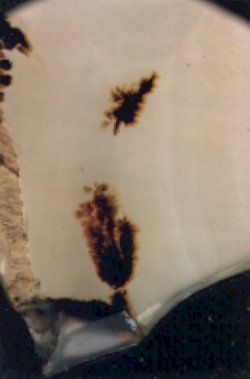
Montana Agate
State: Montana
Country: United States
Continent: North America
Date: 8/11/2000
Description: Image courtesy of Lizzadro Museum of Lapidary Art, Elmhurst, Illinois.
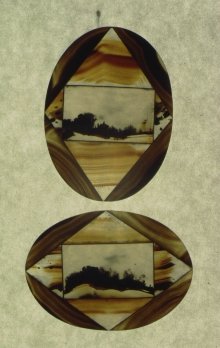
Montana Agates
State: Montana
Country: United States
Continent: North America
Date: 6/28/1999
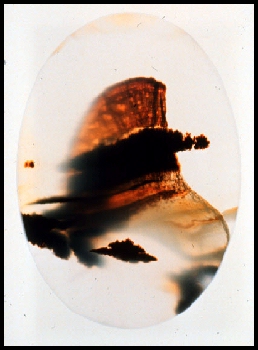
Montana Moss Agate
State: Montana
Country: United States
Continent: North America
Date: 10/26/1998
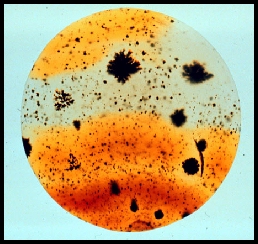
Montana Moss Agate
State: Montana
Country: United States
Continent: North America
Date: 7/7/1999
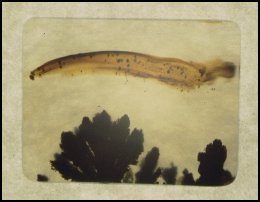
Montana Moss Agate
State: Montana
Country: United States
Continent: North America
Date: 7/7/1999
Description: Most of these agates are derived from gravel deposits of Pleistocene age that were laid down by the Yellowstone River and its tributaries. The agates formed in place in much older rocks that range in age from Devonian through Tertiary.
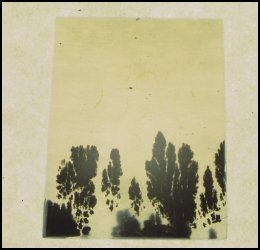
Montana Moss Agate
State: Montana
Country: United States
Continent: North America
Date: 7/7/1999
Description: Most of these agates are derived from gravel deposits of Pleistocene age that were laid down by the Yellowstone River and its tributaries. The agates formed in place in much older rocks that range in age from Devonian through Tertiary.
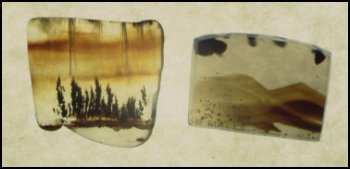
Montana Moss Agate
State: Montana
Country: United States
Continent: North America
Date: 7/7/1999
Description: Most of these agates are derived from gravel deposits of Pleistocene age that were laid down by the Yellowstone River and its tributaries. The agates formed in place in much older rocks that range in age from Devonian through Tertiary.
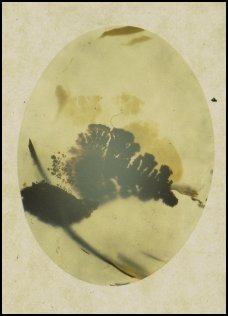
Montana Moss Agate
State: Montana
Country: United States
Continent: North America
Date: 7/7/1999
Description: Most of these agates are derived from gravel deposits of Pleistocene age that were laid down by the Yellowstone River and its tributaries. The agates formed in place in much older rocks that range in age from Devonian through Tertiary.
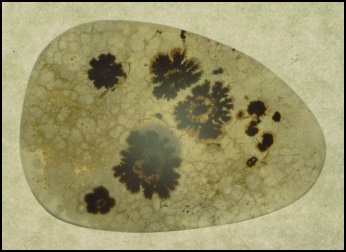
Montana Moss Agate
State: Montana
Country: United States
Continent: North America
Date: 7/7/1999
Description: Most of these agates are derived from gravel deposits of Pleistocene age that were laid down by the Yellowstone River and its tributaries. The agates formed in place in much older rocks that range in age from Devonian through Tertiary.
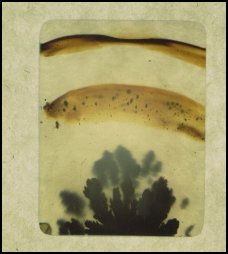
Montana Moss Agate
State: Montana
Country: United States
Continent: North America
Date: 7/7/1999
Description: Most of these agates are derived from gravel deposits of Pleistocene age that were laid down by the Yellowstone River and its tributaries. The agates formed in place in much older rocks that range in age from Devonian through Tertiary.
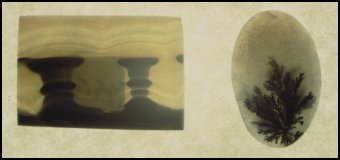
Montana Moss Agate
State: Montana
Country: United States
Continent: North America
Date: 7/7/1999
Description: Most of these agates are derived from gravel deposits of Pleistocene age that were laid down by the Yellowstone River and its tributaries. The agates formed in place in much older rocks that range in age from Devonian through Tertiary.
Montana Moss Agate
State: Montana
Country: United States
Continent: North America
Date: 7/7/1999
Description: Most of these agates are derived from gravel deposits of Pleistocene age that were laid down by the Yellowstone River and its tributaries. The agates formed in place in much older rocks that range in age from Devonian through Tertiary.
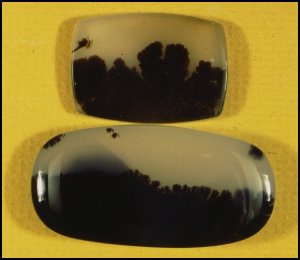
Montana Moss Agate
State: Montana
Country: United States
Continent: North America
Date: 7/7/1999
Description: Most of these agates are derived from gravel deposits of Pleistocene age that were laid down by the Yellowstone River and its tributaries. The agates formed in place in much older rocks that range in age from Devonian through Tertiary.
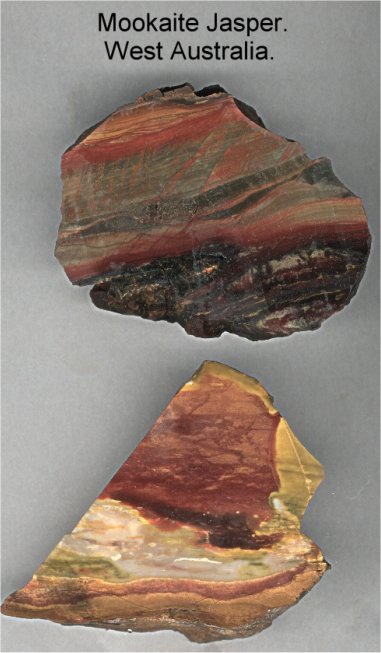
Mookaite Jasper
State: Western Australia
Country: Australia
Continent: Australia
Date: 1/24/2003
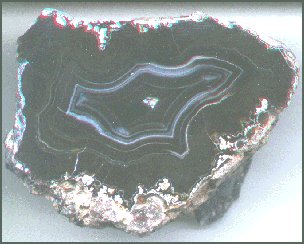
Morion Agate
Location: Brewster County
State: Texas
Country: United States
Continent: North America
Date: 12/10/1998
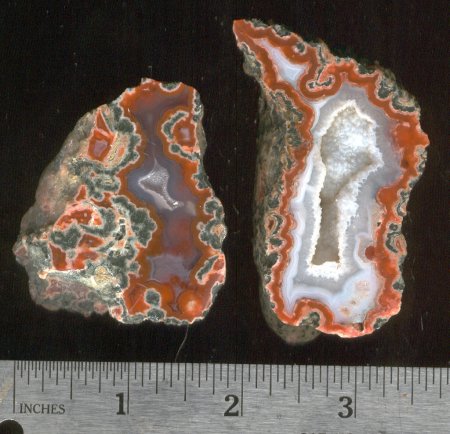
Moroccan Agate
Country: Morocco
Continent: Africa
Date: 8/4/2003
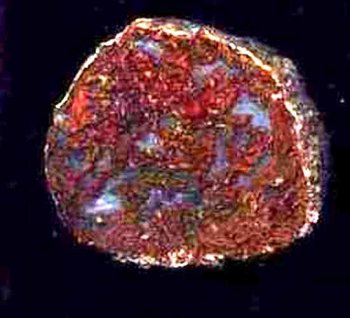
Moss Agate
Location: Khur Agate Field
Country: Iran
Continent: Asia
Date: 4/20/2001
Description: The Khur agate and geode fields are situated at 55o 17' 45" E and 33o 39' 25" N, approximately 25 km (15.5 miles) southeast of the city of Khur, between Tehran and Yazd. This locality is in Iran. The agate nodules and geodes have formed in altered tuffs of lower to middle Eocene age. In some places the tuffaceous layers are completely altered to the clay mineral montmorillonite (bentonite).
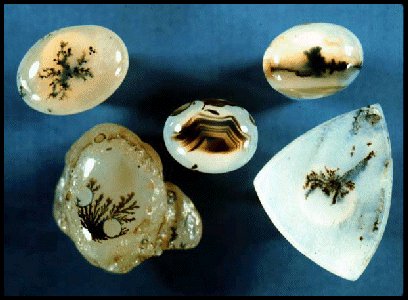
Moss Agate
State: Nebraska
Country: United States
Continent: North America
Date: 10/29/1998
Description: Moss agates or dendritic agates have been found in both the stream deposits originating in western areas and in glacial deposits that originated in northern sources. The "moss" is not moss but oxides of iron or manganese.
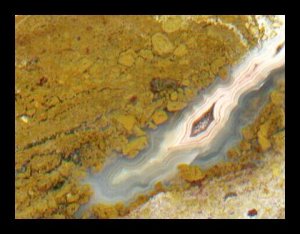
Moss Agate
Location: Morden
State: Nova Scotia
Country: Canada
Continent: North America
Date: 6/17/1999
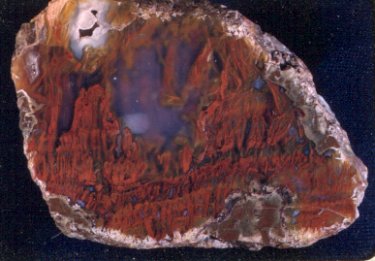
Moss Agate
Location: Antelope
State: Oregon
Country: United States
Continent: North America
Date: 4/27/2000
Description: Image courtesy of Lizzadro Museum
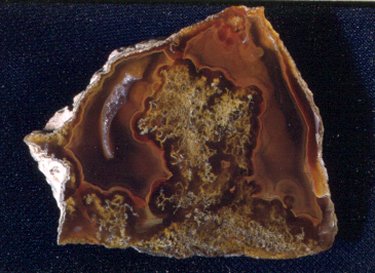
Moss Agate
Location: Mill Creek, near Prineville
State: Oregon
Country: United States
Continent: North America
Date: 5/10/2000
Description: Moss agate with membranous cristobalite inclusions. Image courtesy of Lizzadro Museum
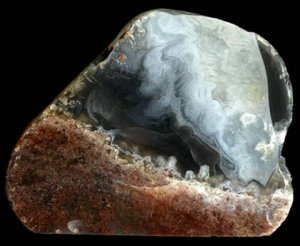
Moss and Plume Agate
Location: Scots Bay
State: Nova Scotia
Country: Canada
Continent: North America
Date: 6/17/1999
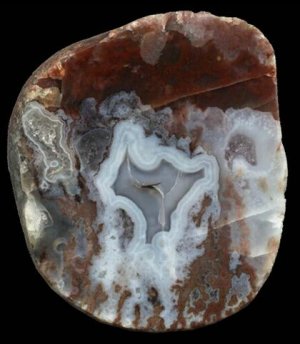
Moss and Plume Agate
Location: Scots Bay
State: Nova Scotia
Country: Canada
Continent: North America
Date: 6/17/1999
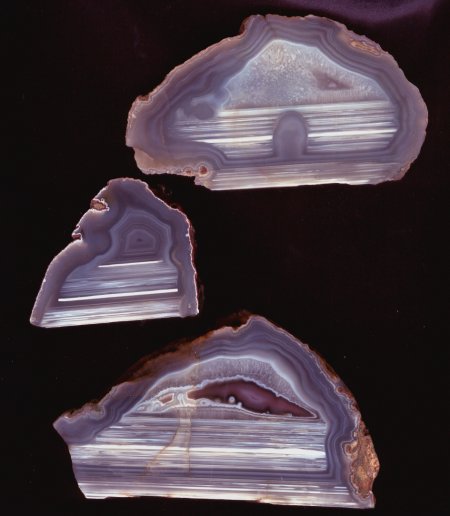
Mozambique Agate
Country: Mozambique
Continent: Africa
Date: 2/3/2003
Description: Polished specimens.
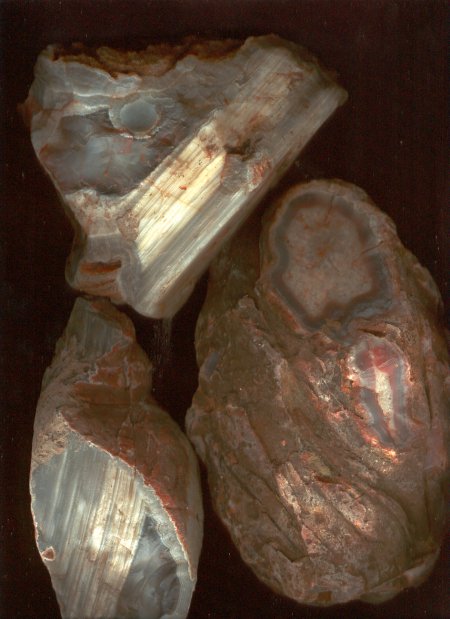
Mozambique Agate
Country: Mozambique
Continent: Africa
Date: 2/3/2003
Description: Rough, unpolished specimens.
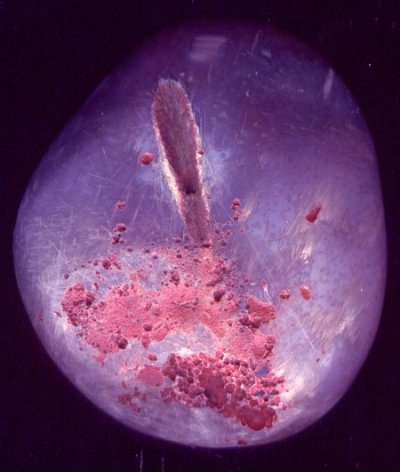
Mozambique Agate
Location: Tete Province
Country: Mozambique
Continent: Africa
Date: 8/4/2003
Description: The next four images are close-ups of this agate.
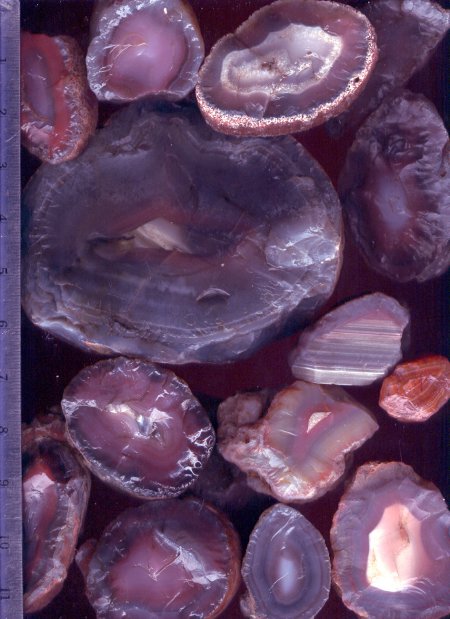
Mozambique Agate
Location: Tete Province
Country: Mozambique
Continent: Africa
Date: 8/4/2003
Description: Rough nodule specimens.
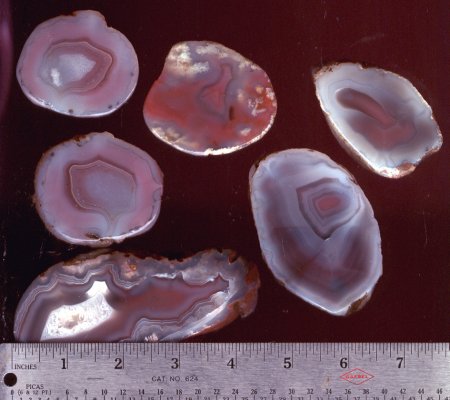
Mozambique Agate
Location: Tete Province
Country: Mozambique
Continent: Africa
Date: 8/4/2003
Description: Unpolished specimens.
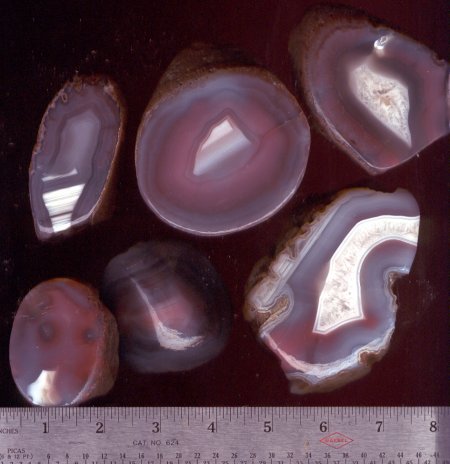
Mozambique Agate
Location: Tete Province
Country: Mozambique
Continent: Africa
Date: 8/4/2003
Description: Unpolished specimens.
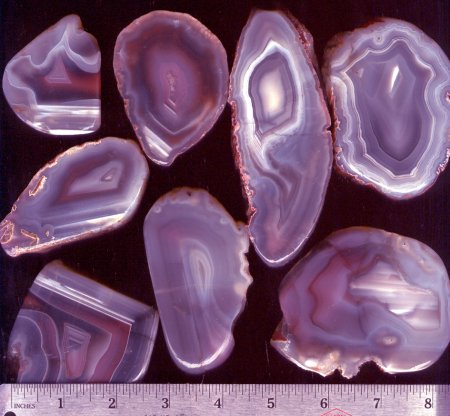
Mozambique Agate
Location: Tete Province
Country: Mozambique
Continent: Africa
Date: 8/4/2003
Description: Unpolished specimens.
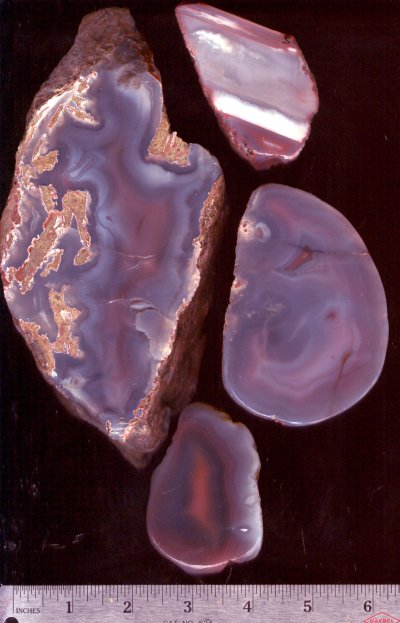
Mozambique Agate
Location: Tete Province
Country: Mozambique
Continent: Africa
Date: 8/4/2003
Description: Unpolished specimens.
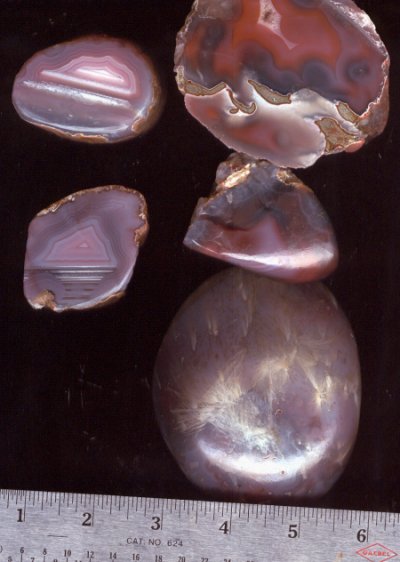
Mozambique Agate
Location: Tete Province
Country: Mozambique
Continent: Africa
Date: 8/4/2003
Description: Unpolished specimens.
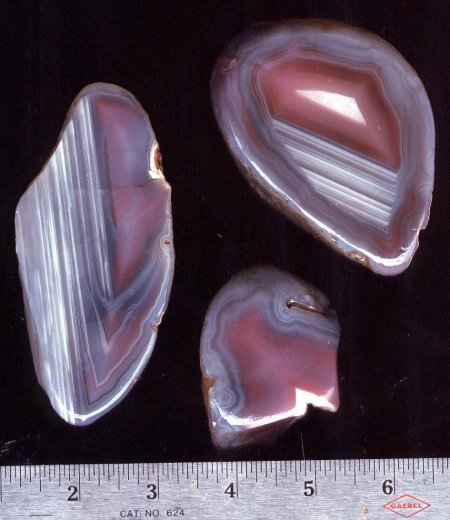
Mozambique Agate
Location: Tete Province
Country: Mozambique
Continent: Africa
Date: 8/4/2003
Description: Unpolished specimens.
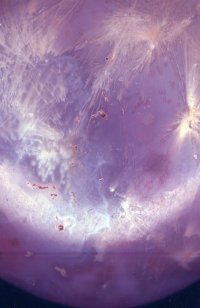
Mozambique Agate - Close-Up View
Location: Tete Province
Country: Mozambique
Continent: Africa
Date: 8/4/2003
Description: Close up view of Mozambique Agate, ID #243.
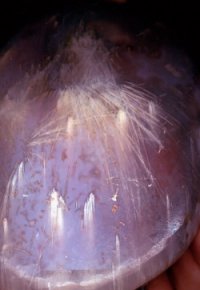
Mozambique Agate - Close-Up View
Location: Tete Province
Country: Mozambique
Continent: Africa
Date: 8/4/2003
Description: Close up view of Mozambique Agate, ID #243.
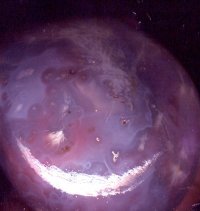
Mozambique Agate - Close-Up View
Location: Tete Province
Country: Mozambique
Continent: Africa
Date: 8/4/2003
Description: Close up view of Mozambique Agate, ID #243.

Mozambique Agate - Close-Up View
Location: Tete Province
Country: Mozambique
Continent: Africa
Date: 8/4/2003
Description: Close up view of Mozambique Agate, ID #243.
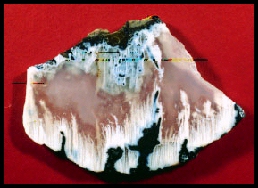
Muldoon Agate
State: Idaho
Country: United States
Continent: North America
Date: 10/26/1998
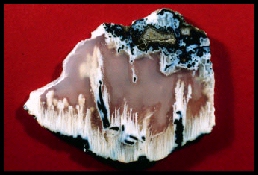
Muldoon Agate
State: Idaho
Country: United States
Continent: North America
Date: 10/26/1998
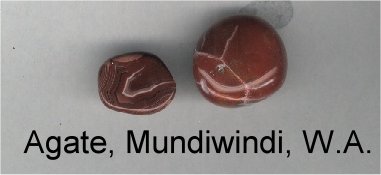
Mundiwindi Agate
Location: Mundiwindi
State: Western Australia
Country: Australia
Continent: Australia
Date: 1/6/2003
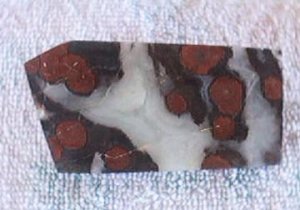
Myrickite
State: California
Country: United States
Continent: North America
Date: 5/20/1999
Description: This sample is from the same piece of rough material that was collected by F. M. Myrick and was sent to and subsequently described by D. B. Sterrett [(1911), 1912]. John Lightburn (personal communication, 1999) stated that it came from the "Blood Opal" claim northeast of Myrick Springs, California. Image courtesy of John Lightburn, F. M. Myrick Research Project. Myrickite, California, chalcedony with cinnabar stains, red-orange, black, white. Named by D. B. Sterrett (1912) for F. M. "Shady" Myrick, early prospector and miner. John Lightburn (personal communication, 1999) has suggested that the true Myrickite was first mined from an area about 2 ½ miles northeast of Myrick Springs, San Bernardino County, California. An adv., Death Valley Curly, Box 22, Beatty, Nevada, The Mineralogist, v. 5, no. 2, p. 28 suggested that the source of Myrickite was Nevada, but this assertion can be disputed. The name "Shady" Myrick was dervied because he was the only prospector working a claim in Colorado who had a shade tree (Chapman, 1937, p. 111, 112). In more recent years the name Myrickite has become a trade name and has been loosely applied to cinnabar stained opal from other localities in California, Arizona, Nevada, Oregon, and Washington, by Shipley, R. M., 1971. Dictionary of Gems and Gemology, p. 131. See Cinnabar in Opal, Cinnabar in Chert. Stones called Myrickite reported from California by Chapman (1937, 111, 112). See McMullen (1975, p. 31) for other illustrations. This name has been used for specimens in the U. S. National Museum (Merrill, Moodey and Wherry, 1922, p. 122) for material from near Johannesburg, California, which includes nine cabochons with U.S. National Museum Catalogue Number 1530 that were cut from specimen no. 87411. Frazier and Frazier (1992, p. 57-60, 94-104) have provided a very useful historical account of F. M. Myrick and Myrickite occurrences.
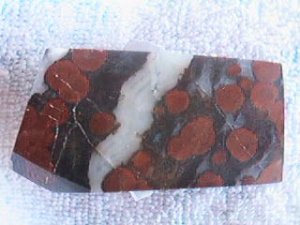
Myrickite
State: California
Country: United States
Continent: North America
Date: 5/20/1999
Description: This sample is from the same piece of rough material that was collected by F. M. Myrick and was sent to and subsequently described by D. B. Sterrett [(1911), 1912]. John Lightburn (personal communication, 1999) stated that it came from the "Blood Opal" claim northeast of Myrick Springs, California. Image courtesy of John Lightburn, F. M. Myrick Research Project. Myrickite, California, chalcedony with cinnabar stains, red-orange, black, white. Named by D. B. Sterrett (1912) for F. M. "Shady" Myrick, early prospector and miner. John Lightburn (personal communication, 1999) has suggested that the true Myrickite was first mined from an area about 2 ½ miles northeast of Myrick Springs, San Bernardino County, California. An adv., Death Valley Curly, Box 22, Beatty, Nevada, The Mineralogist, v. 5, no. 2, p. 28 suggested that the source of Myrickite was Nevada, but this assertion can be disputed. The name "Shady" Myrick was dervied because he was the only prospector working a claim in Colorado who had a shade tree (Chapman, 1937, p. 111, 112). In more recent years the name Myrickite has become a trade name and has been loosely applied to cinnabar stained opal from other localities in California, Arizona, Nevada, Oregon, and Washington, by Shipley, R. M., 1971. Dictionary of Gems and Gemology, p. 131. See Cinnabar in Opal, Cinnabar in Chert. Stones called Myrickite reported from California by Chapman (1937, 111, 112). See McMullen (1975, p. 31) for other illustrations. This name has been used for specimens in the U. S. National Museum (Merrill, Moodey and Wherry, 1922, p. 122) for material from near Johannesburg, California, which includes nine cabochons with U.S. National Museum Catalogue Number 1530 that were cut from specimen no. 87411. Frazier and Frazier (1992, p. 57-60, 94-104) have provided a very useful historical account of F. M. Myrick and Myrickite occurrences.
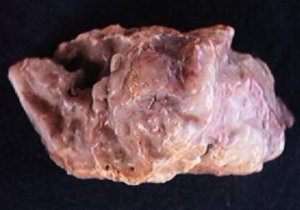
Myrickite
State: California
Country: United States
Continent: North America
Date: 5/20/1999
Description: Image is of a poorer grade of Myrickite that is cinnabar disseminated throughout an opal matrix. These were taken from the "Snow Claim" northwest of Myrick Springs, California. Image courtesy of John Lightburn, F. M. Myrick Research Project. Myrickite, California, chalcedony with cinnabar stains, red-orange, black, white. Named by D. B. Sterrett (1912) for F. M. "Shady" Myrick, early prospector and miner. John Lightburn (personal communication, 1999) has suggested that the true Myrickite was first mined from an area about 2 ½ miles northeast of Myrick Springs, San Bernardino County, California. An adv., Death Valley Curly, Box 22, Beatty, Nevada, The Mineralogist, v. 5, no. 2, p. 28 suggested that the source of Myrickite was Nevada, but this assertion can be disputed. The name "Shady" Myrick was dervied because he was the only prospector working a claim in Colorado who had a shade tree (Chapman, 1937, p. 111, 112). In more recent years the name Myrickite has become a trade name and has been loosely applied to cinnabar stained opal from other localities in California, Arizona, Nevada, Oregon, and Washington, by Shipley, R. M., 1971. Dictionary of Gems and Gemology, p. 131. See Cinnabar in Opal, Cinnabar in Chert. Stones called Myrickite reported from California by Chapman (1937, 111, 112). See McMullen (1975, p. 31) for other illustrations. This name has been used for specimens in the U. S. National Museum (Merrill, Moodey and Wherry, 1922, p. 122) for material from near Johannesburg, California, which includes nine cabochons with U.S. National Museum Catalogue Number 1530 that were cut from specimen no. 87411. Frazier and Frazier (1992, p. 57-60, 94-104) have provided a very useful historical account of F. M. Myrick and Myrickite occurrences.
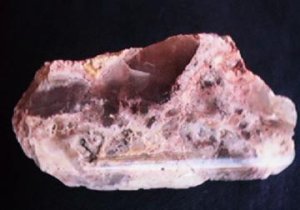
Myrickite
State: California
Country: United States
Continent: North America
Date: 5/20/1999
Description: Image is of a poorer grade of Myrickite that is cinnabar disseminated throughout an opal matrix. These were taken from the "Snow Claim" northwest of Myrick Springs, California. Image courtesy of John Lightburn, F. M. Myrick Research Project. Myrickite, California, chalcedony with cinnabar stains, red-orange, black, white. Named by D. B. Sterrett (1912) for F. M. "Shady" Myrick, early prospector and miner. John Lightburn (personal communication, 1999) has suggested that the true Myrickite was first mined from an area about 2 ½ miles northeast of Myrick Springs, San Bernardino County, California. An adv., Death Valley Curly, Box 22, Beatty, Nevada, The Mineralogist, v. 5, no. 2, p. 28 suggested that the source of Myrickite was Nevada, but this assertion can be disputed. The name "Shady" Myrick was dervied because he was the only prospector working a claim in Colorado who had a shade tree (Chapman, 1937, p. 111, 112). In more recent years the name Myrickite has become a trade name and has been loosely applied to cinnabar stained opal from other localities in California, Arizona, Nevada, Oregon, and Washington, by Shipley, R. M., 1971. Dictionary of Gems and Gemology, p. 131. See Cinnabar in Opal, Cinnabar in Chert. Stones called Myrickite reported from California by Chapman (1937, 111, 112). See McMullen (1975, p. 31) for other illustrations. This name has been used for specimens in the U. S. National Museum (Merrill, Moodey and Wherry, 1922, p. 122) for material from near Johannesburg, California, which includes nine cabochons with U.S. National Museum Catalogue Number 1530 that were cut from specimen no. 87411. Frazier and Frazier (1992, p. 57-60, 94-104) have provided a very useful historical account of F. M. Myrick and Myrickite occurrences.
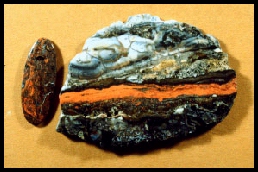
Myrickite
State: California
Country: United States
Continent: North America
Date: 5/20/1999
Description: Opal with variegated stains of cinnarbar. Image courtesy of John Lightburn, F. M. Myrick Research Project. Myrickite, California, chalcedony with cinnabar stains, red-orange, black, white. Named by D. B. Sterrett (1912) for F. M. "Shady" Myrick, early prospector and miner. John Lightburn (personal communication, 1999) has suggested that the true Myrickite was first mined from an area about 2 ½ miles northeast of Myrick Springs, San Bernardino County, California. An adv., Death Valley Curly, Box 22, Beatty, Nevada, The Mineralogist, v. 5, no. 2, p. 28 suggested that the source of Myrickite was Nevada, but this assertion can be disputed. The name "Shady" Myrick was dervied because he was the only prospector working a claim in Colorado who had a shade tree (Chapman, 1937, p. 111, 112). In more recent years the name Myrickite has become a trade name and has been loosely applied to cinnabar stained opal from other localities in California, Arizona, Nevada, Oregon, and Washington, by Shipley, R. M., 1971. Dictionary of Gems and Gemology, p. 131. See Cinnabar in Opal, Cinnabar in Chert. Stones called Myrickite reported from California by Chapman (1937, 111, 112). See McMullen (1975, p. 31) for other illustrations. This name has been used for specimens in the U. S. National Museum (Merrill, Moodey and Wherry, 1922, p. 122) for material from near Johannesburg, California, which includes nine cabochons with U.S. National Museum Catalogue Number 1530 that were cut from specimen no. 87411. Frazier and Frazier (1992, p. 57-60, 94-104) have provided a very useful historical account of F. M. Myrick and Myrickite occurrences.
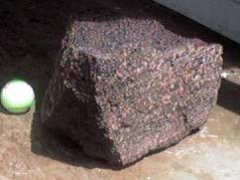
Myrickite
State: California
Country: United States
Continent: North America
Date: 12/2/1999
Description: Myrickite from the U.S. National Museum. Photos by Mr. Robert Wheeler, images scanned by Mr. Jerry Kotz, images made available by Mr. John Lightburn. Myrickite, California, chalcedony with cinnabar stains, red-orange, black, white. Named by D. B. Sterrett (1912) for F. M. "Shady" Myrick, early prospector and miner. John Lightburn (personal communication, 1999) has suggested that the true Myrickite was first mined from an area about 2 ½ miles northeast of Myrick Springs, San Bernardino County, California. An adv., Death Valley Curly, Box 22, Beatty, Nevada, The Mineralogist, v. 5, no. 2, p. 28 suggested that the source of Myrickite was Nevada, but this assertion can be disputed. The name "Shady" Myrick was dervied because he was the only prospector working a claim in Colorado who had a shade tree (Chapman, 1937, p. 111, 112). In more recent years the name Myrickite has become a trade name and has been loosely applied to cinnabar stained opal from other localities in California, Arizona, Nevada, Oregon, and Washington, by Shipley, R. M., 1971. Dictionary of Gems and Gemology, p. 131. See Cinnabar in Opal, Cinnabar in Chert. Stones called Myrickite reported from California by Chapman (1937, 111, 112). See McMullen (1975, p. 31) for other illustrations. This name has been used for specimens in the U. S. National Museum (Merrill, Moodey and Wherry, 1922, p. 122) for material from near Johannesburg, California, which includes nine cabochons with U.S. National Museum Catalogue Number 1530 that were cut from specimen no. 87411. Frazier and Frazier (1992, p. 57-60, 94-104) have provided a very useful historical account of F. M. Myrick and Myrickite occurrences.
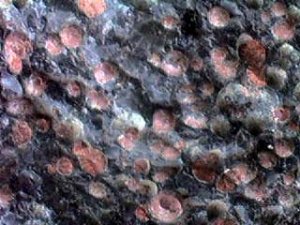
Myrickite
State: California
Country: United States
Continent: North America
Date: 12/2/1999
Description: Close-up view myrickite. Myrickite from the U.S. National Museum. Photos by Mr. Robert Wheeler, images scanned by Mr. Jerry Kotz, images made available by Mr. John Lightburn. Myrickite, California, chalcedony with cinnabar stains, red-orange, black, white. Named by D. B. Sterrett (1912) for F. M. "Shady" Myrick, early prospector and miner. John Lightburn (personal communication, 1999) has suggested that the true Myrickite was first mined from an area about 2 ½ miles northeast of Myrick Springs, San Bernardino County, California. An adv., Death Valley Curly, Box 22, Beatty, Nevada, The Mineralogist, v. 5, no. 2, p. 28 suggested that the source of Myrickite was Nevada, but this assertion can be disputed. The name "Shady" Myrick was dervied because he was the only prospector working a claim in Colorado who had a shade tree (Chapman, 1937, p. 111, 112). In more recent years the name Myrickite has become a trade name and has been loosely applied to cinnabar stained opal from other localities in California, Arizona, Nevada, Oregon, and Washington, by Shipley, R. M., 1971. Dictionary of Gems and Gemology, p. 131. See Cinnabar in Opal, Cinnabar in Chert. Stones called Myrickite reported from California by Chapman (1937, 111, 112). See McMullen (1975, p. 31) for other illustrations. This name has been used for specimens in the U. S. National Museum (Merrill, Moodey and Wherry, 1922, p. 122) for material from near Johannesburg, California, which includes nine cabochons with U.S. National Museum Catalogue Number 1530 that were cut from specimen no. 87411. Frazier and Frazier (1992, p. 57-60, 94-104) have provided a very useful historical account of F. M. Myrick and Myrickite occurrences.
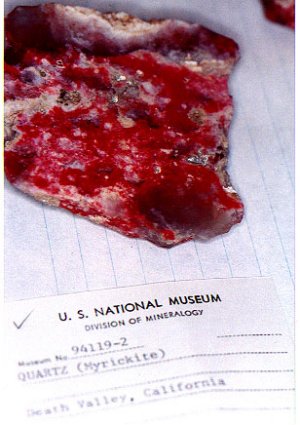
Myrickite
State: California
Country: United States
Continent: North America
Date: 12/2/1999
Description: Myrickite from the U.S. National Museum. Photos by Mr. Robert Wheeler, images scanned by Mr. Jerry Kotz, images made available by Mr. John Lightburn. Myrickite, California, chalcedony with cinnabar stains, red-orange, black, white. Named by D. B. Sterrett (1912) for F. M. "Shady" Myrick, early prospector and miner. John Lightburn (personal communication, 1999) has suggested that the true Myrickite was first mined from an area about 2 ½ miles northeast of Myrick Springs, San Bernardino County, California. An adv., Death Valley Curly, Box 22, Beatty, Nevada, The Mineralogist, v. 5, no. 2, p. 28 suggested that the source of Myrickite was Nevada, but this assertion can be disputed. The name "Shady" Myrick was dervied because he was the only prospector working a claim in Colorado who had a shade tree (Chapman, 1937, p. 111, 112). In more recent years the name Myrickite has become a trade name and has been loosely applied to cinnabar stained opal from other localities in California, Arizona, Nevada, Oregon, and Washington, by Shipley, R. M., 1971. Dictionary of Gems and Gemology, p. 131. See Cinnabar in Opal, Cinnabar in Chert. Stones called Myrickite reported from California by Chapman (1937, 111, 112). See McMullen (1975, p. 31) for other illustrations. This name has been used for specimens in the U. S. National Museum (Merrill, Moodey and Wherry, 1922, p. 122) for material from near Johannesburg, California, which includes nine cabochons with U.S. National Museum Catalogue Number 1530 that were cut from specimen no. 87411. Frazier and Frazier (1992, p. 57-60, 94-104) have provided a very useful historical account of F. M. Myrick and Myrickite occurrences.
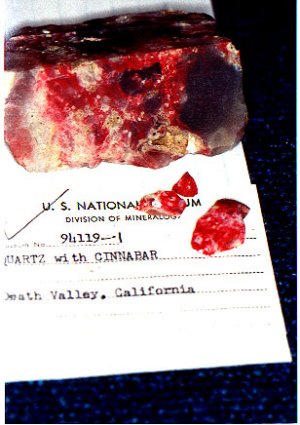
Myrickite
State: California
Country: United States
Continent: North America
Date: 12/2/1999
Description: Myrickite from the U.S. National Museum. Photos by Mr. Robert Wheeler, images scanned by Mr. Jerry Kotz, images made available by Mr. John Lightburn. Myrickite, California, chalcedony with cinnabar stains, red-orange, black, white. Named by D. B. Sterrett (1912) for F. M. "Shady" Myrick, early prospector and miner. John Lightburn (personal communication, 1999) has suggested that the true Myrickite was first mined from an area about 2 ½ miles northeast of Myrick Springs, San Bernardino County, California. An adv., Death Valley Curly, Box 22, Beatty, Nevada, The Mineralogist, v. 5, no. 2, p. 28 suggested that the source of Myrickite was Nevada, but this assertion can be disputed. The name "Shady" Myrick was dervied because he was the only prospector working a claim in Colorado who had a shade tree (Chapman, 1937, p. 111, 112). In more recent years the name Myrickite has become a trade name and has been loosely applied to cinnabar stained opal from other localities in California, Arizona, Nevada, Oregon, and Washington, by Shipley, R. M., 1971. Dictionary of Gems and Gemology, p. 131. See Cinnabar in Opal, Cinnabar in Chert. Stones called Myrickite reported from California by Chapman (1937, 111, 112). See McMullen (1975, p. 31) for other illustrations. This name has been used for specimens in the U. S. National Museum (Merrill, Moodey and Wherry, 1922, p. 122) for material from near Johannesburg, California, which includes nine cabochons with U.S. National Museum Catalogue Number 1530 that were cut from specimen no. 87411. Frazier and Frazier (1992, p. 57-60, 94-104) have provided a very useful historical account of F. M. Myrick and Myrickite occurrences.
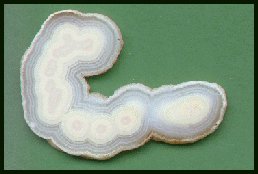
na
Location: Glendo Dam area
State: Wyoming
Country: United States
Continent: North America
Date: 10/26/1998
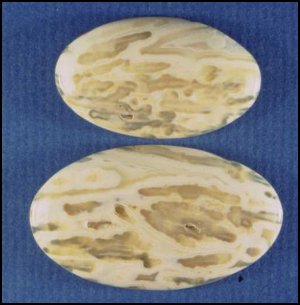
na
Location: Glendo Dam area
State: Wyoming
Country: United States
Continent: North America
Date: 5/27/1999
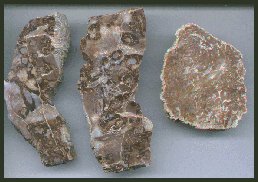
na
Location: "Lonely Butte," (Brown Butte) Kern County
State: California
Country: United States
Continent: North America
Date: 10/26/1998
Description: Agatized remains of a cat tail-like plant called "Typha."
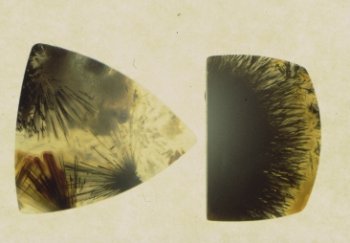
na
Location: Sagenite Hill
State: Idaho
Country: United States
Continent: North America
Date: 6/18/1999
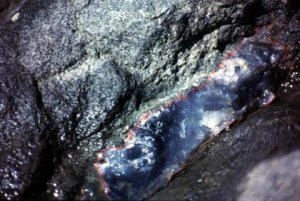
na
Location: Morden
State: Nova Scotia
Country: Canada
Continent: North America
Date: 6/17/1999
Description: In place.
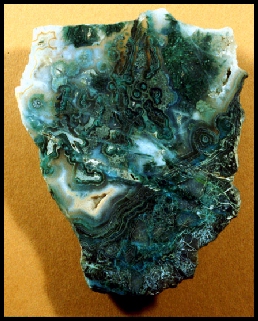
na
Location: Chrysocolla
State: Arizona
Country: United States
Continent: North America
Date: 10/26/1998
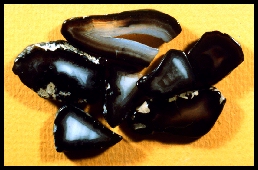
na
Location: Black Hills
State: South Dakota
Country: United States
Continent: North America
Date: 10/26/1998
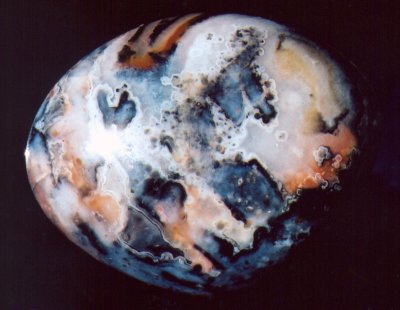
na
Location: Anse-A-Beaufils, North Shore, Gaspesia
State: Quebec
Country: Canada
Continent: North America
Date: 11/21/2001
Description: Size range: 1.4" to 1.7". Gaspe` Pebbles or Gaspe` Agate is a term used for pebbles of red and yellow agate and green jasper that are found along both the North and South shores of the Gaspe` Peninsula, Quebec, Canada. These agates have a very complex geologic history. They appear to be small thunder egg and amygdaloidal agates and they are derived from conglomerates of the Gaspe Sandstone of Devonian age according to D.L.C. Honeyman (1880, p. 136-138) who provided the first known record of these stones. Honeyman's samples were collected from the Magdalene Islands and Gaspe Peninsula and he referred to them as "waifs," or agates that have been eroded from their original host rock and re-deposited elsewhere. R. W. Ells (1888) also made note of these stones. Sinkankas (1959, p. 318) suggested agate pebbles were found in conglomerates of the Bonaventure Formation of Mississippian or Pennsylvanian age. The conglomerate of the Bonaventure Formation have been assigned ages ranging from Devonian through Pennsylvanian and Wilmarth (1936, p. 232, 233) covered this history. Some examples are agatized invertebrate fossils such as favositid corals that are common in sedimentary rocks of Devonian age. Some of these agates are very similar to stones that have formed in the basalts of Triassic age in Nova Scotia. Early researchers such as Chalmers (1887) suggested a very complex history of glaciation in southeastern Quebec and northern New Brunswick and this has been elaborated by recent studies such as Chauvin,Ghismond and LaSalle (1985) and David and Lebuis (1985) in Borns et al, editors (1985). Thus, these agates appear to have been derived from several wide spread sources of differing lithologies and of differing geologic ages. Jean-Baptiste Silla (personal communication) has suggested that these agates became very popular in the early 1930's when they were commonly collected by school children and sold to tourists. References Borns, H. W., LaSalle, P. Jr., and Thompson, W. B., 1985. Late Pleistocene History of Northeastern New England and Adjacent Quebec. Geological society of America, Special Paper 197, 159 p. - Chalmers, R., 1887. On the glaciation and Pleistocene subsidence of northern New Brunswick and southeastern Quebec. Royal Society of Canada Transactions, v. 4, no. 4, p. 139-145. - Chauvin, L., Ghismond, M., and LaSalle, P., 1985. Deglaciation of the Lower St. Lawrence Region, Quebec. In Borns et al (editors) 1985, Geological society of America, Special Paper 197, p. 111-124. - David, P. P., and Lebuis, J., 1985. Glacial maximum and deglaciation of western Gaspe`, Quebec, Canada, In Borns et al (editors) 1985, Geological society of America, Special Paper 197, p. 85-110. - Ells, R. W., 1888. Second report on the geology of a portion of the province of Quebec. Annual report, Geological and Natural History Survey of Candad, pt. K, 120 p. Honeyman, D. L. C., 1880. Geological Waifs from the Magdalen Islands. Transactions of the Nova Scotia Institute of Natural Sciences of Halifax, Nova Scotia, v. 5, part II, p. 136-138. - Sinkankas, J., 1959. Gemstones of North America. Van Nostrand Reinhold Company, New York, 675 p. Wilmarth, M. G., 1938. Lexicon of Stratigraphic Names of the United States. U. S. Geological Survey Bulletin 896, part 1, A-L, 1244 p.
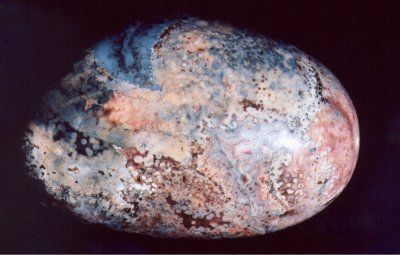
na
Location: Anse-A-Beaufils, North Shore, Gaspesia
State: Quebec
Country: Canada
Continent: North America
Date: 11/21/2001
Description: Size range: 1.5" to 2.3". Gaspe` Pebbles or Gaspe` Agate is a term used for pebbles of red and yellow agate and green jasper that are found along both the North and South shores of the Gaspe` Peninsula, Quebec, Canada. These agates have a very complex geologic history. They appear to be small thunder egg and amygdaloidal agates and they are derived from conglomerates of the Gaspe Sandstone of Devonian age according to D.L.C. Honeyman (1880, p. 136-138) who provided the first known record of these stones. Honeyman's samples were collected from the Magdalene Islands and Gaspe Peninsula and he referred to them as "waifs," or agates that have been eroded from their original host rock and re-deposited elsewhere. R. W. Ells (1888) also made note of these stones. Sinkankas (1959, p. 318) suggested agate pebbles were found in conglomerates of the Bonaventure Formation of Mississippian or Pennsylvanian age. The conglomerate of the Bonaventure Formation have been assigned ages ranging from Devonian through Pennsylvanian and Wilmarth (1936, p. 232, 233) covered this history. Some examples are agatized invertebrate fossils such as favositid corals that are common in sedimentary rocks of Devonian age. Some of these agates are very similar to stones that have formed in the basalts of Triassic age in Nova Scotia. Early researchers such as Chalmers (1887) suggested a very complex history of glaciation in southeastern Quebec and northern New Brunswick and this has been elaborated by recent studies such as Chauvin,Ghismond and LaSalle (1985) and David and Lebuis (1985) in Borns et al, editors (1985). Thus, these agates appear to have been derived from several wide spread sources of differing lithologies and of differing geologic ages. Jean-Baptiste Silla (personal communication) has suggested that these agates became very popular in the early 1930's when they were commonly collected by school children and sold to tourists. References Borns, H. W., LaSalle, P. Jr., and Thompson, W. B., 1985. Late Pleistocene History of Northeastern New England and Adjacent Quebec. Geological society of America, Special Paper 197, 159 p. - Chalmers, R., 1887. On the glaciation and Pleistocene subsidence of northern New Brunswick and southeastern Quebec. Royal Society of Canada Transactions, v. 4, no. 4, p. 139-145. - Chauvin, L., Ghismond, M., and LaSalle, P., 1985. Deglaciation of the Lower St. Lawrence Region, Quebec. In Borns et al (editors) 1985, Geological society of America, Special Paper 197, p. 111-124. - David, P. P., and Lebuis, J., 1985. Glacial maximum and deglaciation of western Gaspe`, Quebec, Canada, In Borns et al (editors) 1985, Geological society of America, Special Paper 197, p. 85-110. - Ells, R. W., 1888. Second report on the geology of a portion of the province of Quebec. Annual report, Geological and Natural History Survey of Candad, pt. K, 120 p. Honeyman, D. L. C., 1880. Geological Waifs from the Magdalen Islands. Transactions of the Nova Scotia Institute of Natural Sciences of Halifax, Nova Scotia, v. 5, part II, p. 136-138. - Sinkankas, J., 1959. Gemstones of North America. Van Nostrand Reinhold Company, New York, 675 p. Wilmarth, M. G., 1938. Lexicon of Stratigraphic Names of the United States. U. S. Geological Survey Bulletin 896, part 1, A-L, 1244 p.
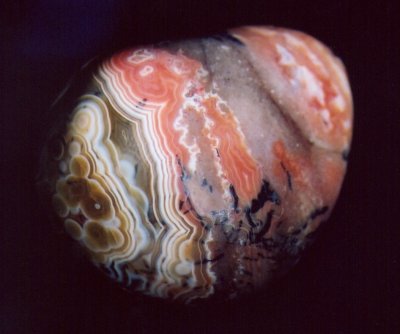
na
Location: Anse-A-Beaufils, North Shore, Gaspesia
State: Quebec
Country: Canada
Continent: North America
Date: 11/21/2001
Description: Size range: 1.3" to 1.5". Gaspe` Pebbles or Gaspe` Agate is a term used for pebbles of red and yellow agate and green jasper that are found along both the North and South shores of the Gaspe` Peninsula, Quebec, Canada. These agates have a very complex geologic history. They appear to be small thunder egg and amygdaloidal agates and they are derived from conglomerates of the Gaspe Sandstone of Devonian age according to D.L.C. Honeyman (1880, p. 136-138) who provided the first known record of these stones. Honeyman's samples were collected from the Magdalene Islands and Gaspe Peninsula and he referred to them as "waifs," or agates that have been eroded from their original host rock and re-deposited elsewhere. R. W. Ells (1888) also made note of these stones. Sinkankas (1959, p. 318) suggested agate pebbles were found in conglomerates of the Bonaventure Formation of Mississippian or Pennsylvanian age. The conglomerate of the Bonaventure Formation have been assigned ages ranging from Devonian through Pennsylvanian and Wilmarth (1936, p. 232, 233) covered this history. Some examples are agatized invertebrate fossils such as favositid corals that are common in sedimentary rocks of Devonian age. Some of these agates are very similar to stones that have formed in the basalts of Triassic age in Nova Scotia. Early researchers such as Chalmers (1887) suggested a very complex history of glaciation in southeastern Quebec and northern New Brunswick and this has been elaborated by recent studies such as Chauvin,Ghismond and LaSalle (1985) and David and Lebuis (1985) in Borns et al, editors (1985). Thus, these agates appear to have been derived from several wide spread sources of differing lithologies and of differing geologic ages. Jean-Baptiste Silla (personal communication) has suggested that these agates became very popular in the early 1930's when they were commonly collected by school children and sold to tourists. References Borns, H. W., LaSalle, P. Jr., and Thompson, W. B., 1985. Late Pleistocene History of Northeastern New England and Adjacent Quebec. Geological society of America, Special Paper 197, 159 p. - Chalmers, R., 1887. On the glaciation and Pleistocene subsidence of northern New Brunswick and southeastern Quebec. Royal Society of Canada Transactions, v. 4, no. 4, p. 139-145. - Chauvin, L., Ghismond, M., and LaSalle, P., 1985. Deglaciation of the Lower St. Lawrence Region, Quebec. In Borns et al (editors) 1985, Geological society of America, Special Paper 197, p. 111-124. - David, P. P., and Lebuis, J., 1985. Glacial maximum and deglaciation of western Gaspe`, Quebec, Canada, In Borns et al (editors) 1985, Geological society of America, Special Paper 197, p. 85-110. - Ells, R. W., 1888. Second report on the geology of a portion of the province of Quebec. Annual report, Geological and Natural History Survey of Candad, pt. K, 120 p. Honeyman, D. L. C., 1880. Geological Waifs from the Magdalen Islands. Transactions of the Nova Scotia Institute of Natural Sciences of Halifax, Nova Scotia, v. 5, part II, p. 136-138. - Sinkankas, J., 1959. Gemstones of North America. Van Nostrand Reinhold Company, New York, 675 p. Wilmarth, M. G., 1938. Lexicon of Stratigraphic Names of the United States. U. S. Geological Survey Bulletin 896, part 1, A-L, 1244 p.
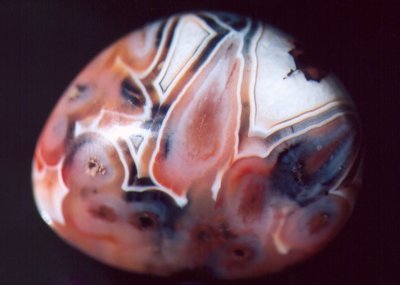
na
Location: Anse-A-Beaufils, North Shore, Gaspesia
State: Quebec
Country: Canada
Continent: North America
Date: 11/21/2001
Description: Size range: 1.1" to 1.2". Gaspe` Pebbles or Gaspe` Agate is a term used for pebbles of red and yellow agate and green jasper that are found along both the North and South shores of the Gaspe` Peninsula, Quebec, Canada. These agates have a very complex geologic history. They appear to be small thunder egg and amygdaloidal agates and they are derived from conglomerates of the Gaspe Sandstone of Devonian age according to D.L.C. Honeyman (1880, p. 136-138) who provided the first known record of these stones. Honeyman's samples were collected from the Magdalene Islands and Gaspe Peninsula and he referred to them as "waifs," or agates that have been eroded from their original host rock and re-deposited elsewhere. R. W. Ells (1888) also made note of these stones. Sinkankas (1959, p. 318) suggested agate pebbles were found in conglomerates of the Bonaventure Formation of Mississippian or Pennsylvanian age. The conglomerate of the Bonaventure Formation have been assigned ages ranging from Devonian through Pennsylvanian and Wilmarth (1936, p. 232, 233) covered this history. Some examples are agatized invertebrate fossils such as favositid corals that are common in sedimentary rocks of Devonian age. Some of these agates are very similar to stones that have formed in the basalts of Triassic age in Nova Scotia. Early researchers such as Chalmers (1887) suggested a very complex history of glaciation in southeastern Quebec and northern New Brunswick and this has been elaborated by recent studies such as Chauvin,Ghismond and LaSalle (1985) and David and Lebuis (1985) in Borns et al, editors (1985). Thus, these agates appear to have been derived from several wide spread sources of differing lithologies and of differing geologic ages. Jean-Baptiste Silla (personal communication) has suggested that these agates became very popular in the early 1930's when they were commonly collected by school children and sold to tourists. References Borns, H. W., LaSalle, P. Jr., and Thompson, W. B., 1985. Late Pleistocene History of Northeastern New England and Adjacent Quebec. Geological society of America, Special Paper 197, 159 p. - Chalmers, R., 1887. On the glaciation and Pleistocene subsidence of northern New Brunswick and southeastern Quebec. Royal Society of Canada Transactions, v. 4, no. 4, p. 139-145. - Chauvin, L., Ghismond, M., and LaSalle, P., 1985. Deglaciation of the Lower St. Lawrence Region, Quebec. In Borns et al (editors) 1985, Geological society of America, Special Paper 197, p. 111-124. - David, P. P., and Lebuis, J., 1985. Glacial maximum and deglaciation of western Gaspe`, Quebec, Canada, In Borns et al (editors) 1985, Geological society of America, Special Paper 197, p. 85-110. - Ells, R. W., 1888. Second report on the geology of a portion of the province of Quebec. Annual report, Geological and Natural History Survey of Candad, pt. K, 120 p. Honeyman, D. L. C., 1880. Geological Waifs from the Magdalen Islands. Transactions of the Nova Scotia Institute of Natural Sciences of Halifax, Nova Scotia, v. 5, part II, p. 136-138. - Sinkankas, J., 1959. Gemstones of North America. Van Nostrand Reinhold Company, New York, 675 p. Wilmarth, M. G., 1938. Lexicon of Stratigraphic Names of the United States. U. S. Geological Survey Bulletin 896, part 1, A-L, 1244 p.
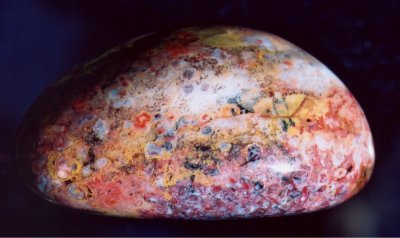
na
Location: Anse-A-Beaufils, North Shore, Gaspesia
State: Quebec
Country: Canada
Continent: North America
Date: 11/21/2001
Description: Size range: 1.6" to 2.5". Gaspe` Pebbles or Gaspe` Agate is a term used for pebbles of red and yellow agate and green jasper that are found along both the North and South shores of the Gaspe` Peninsula, Quebec, Canada. These agates have a very complex geologic history. They appear to be small thunder egg and amygdaloidal agates and they are derived from conglomerates of the Gaspe Sandstone of Devonian age according to D.L.C. Honeyman (1880, p. 136-138) who provided the first known record of these stones. Honeyman's samples were collected from the Magdalene Islands and Gaspe Peninsula and he referred to them as "waifs," or agates that have been eroded from their original host rock and re-deposited elsewhere. R. W. Ells (1888) also made note of these stones. Sinkankas (1959, p. 318) suggested agate pebbles were found in conglomerates of the Bonaventure Formation of Mississippian or Pennsylvanian age. The conglomerate of the Bonaventure Formation have been assigned ages ranging from Devonian through Pennsylvanian and Wilmarth (1936, p. 232, 233) covered this history. Some examples are agatized invertebrate fossils such as favositid corals that are common in sedimentary rocks of Devonian age. Some of these agates are very similar to stones that have formed in the basalts of Triassic age in Nova Scotia. Early researchers such as Chalmers (1887) suggested a very complex history of glaciation in southeastern Quebec and northern New Brunswick and this has been elaborated by recent studies such as Chauvin,Ghismond and LaSalle (1985) and David and Lebuis (1985) in Borns et al, editors (1985). Thus, these agates appear to have been derived from several wide spread sources of differing lithologies and of differing geologic ages. Jean-Baptiste Silla (personal communication) has suggested that these agates became very popular in the early 1930's when they were commonly collected by school children and sold to tourists. References Borns, H. W., LaSalle, P. Jr., and Thompson, W. B., 1985. Late Pleistocene History of Northeastern New England and Adjacent Quebec. Geological society of America, Special Paper 197, 159 p. - Chalmers, R., 1887. On the glaciation and Pleistocene subsidence of northern New Brunswick and southeastern Quebec. Royal Society of Canada Transactions, v. 4, no. 4, p. 139-145. - Chauvin, L., Ghismond, M., and LaSalle, P., 1985. Deglaciation of the Lower St. Lawrence Region, Quebec. In Borns et al (editors) 1985, Geological society of America, Special Paper 197, p. 111-124. - David, P. P., and Lebuis, J., 1985. Glacial maximum and deglaciation of western Gaspe`, Quebec, Canada, In Borns et al (editors) 1985, Geological society of America, Special Paper 197, p. 85-110. - Ells, R. W., 1888. Second report on the geology of a portion of the province of Quebec. Annual report, Geological and Natural History Survey of Candad, pt. K, 120 p. Honeyman, D. L. C., 1880. Geological Waifs from the Magdalen Islands. Transactions of the Nova Scotia Institute of Natural Sciences of Halifax, Nova Scotia, v. 5, part II, p. 136-138. - Sinkankas, J., 1959. Gemstones of North America. Van Nostrand Reinhold Company, New York, 675 p. Wilmarth, M. G., 1938. Lexicon of Stratigraphic Names of the United States. U. S. Geological Survey Bulletin 896, part 1, A-L, 1244 p.
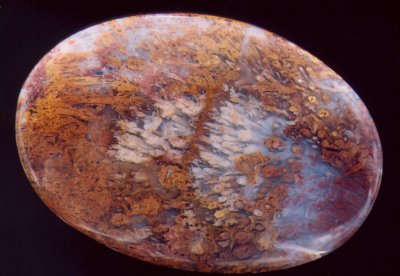
na
Location: Anse-A-Beaufils, North Shore, Gaspesia
State: Quebec
Country: Canada
Continent: North America
Date: 11/21/2001
Description: Size range: 1.5" to 2.2". Gaspe` Pebbles or Gaspe` Agate is a term used for pebbles of red and yellow agate and green jasper that are found along both the North and South shores of the Gaspe` Peninsula, Quebec, Canada. These agates have a very complex geologic history. They appear to be small thunder egg and amygdaloidal agates and they are derived from conglomerates of the Gaspe Sandstone of Devonian age according to D.L.C. Honeyman (1880, p. 136-138) who provided the first known record of these stones. Honeyman's samples were collected from the Magdalene Islands and Gaspe Peninsula and he referred to them as "waifs," or agates that have been eroded from their original host rock and re-deposited elsewhere. R. W. Ells (1888) also made note of these stones. Sinkankas (1959, p. 318) suggested agate pebbles were found in conglomerates of the Bonaventure Formation of Mississippian or Pennsylvanian age. The conglomerate of the Bonaventure Formation have been assigned ages ranging from Devonian through Pennsylvanian and Wilmarth (1936, p. 232, 233) covered this history. Some examples are agatized invertebrate fossils such as favositid corals that are common in sedimentary rocks of Devonian age. Some of these agates are very similar to stones that have formed in the basalts of Triassic age in Nova Scotia. Early researchers such as Chalmers (1887) suggested a very complex history of glaciation in southeastern Quebec and northern New Brunswick and this has been elaborated by recent studies such as Chauvin,Ghismond and LaSalle (1985) and David and Lebuis (1985) in Borns et al, editors (1985). Thus, these agates appear to have been derived from several wide spread sources of differing lithologies and of differing geologic ages. Jean-Baptiste Silla (personal communication) has suggested that these agates became very popular in the early 1930's when they were commonly collected by school children and sold to tourists. References Borns, H. W., LaSalle, P. Jr., and Thompson, W. B., 1985. Late Pleistocene History of Northeastern New England and Adjacent Quebec. Geological society of America, Special Paper 197, 159 p. - Chalmers, R., 1887. On the glaciation and Pleistocene subsidence of northern New Brunswick and southeastern Quebec. Royal Society of Canada Transactions, v. 4, no. 4, p. 139-145. - Chauvin, L., Ghismond, M., and LaSalle, P., 1985. Deglaciation of the Lower St. Lawrence Region, Quebec. In Borns et al (editors) 1985, Geological society of America, Special Paper 197, p. 111-124. - David, P. P., and Lebuis, J., 1985. Glacial maximum and deglaciation of western Gaspe`, Quebec, Canada, In Borns et al (editors) 1985, Geological society of America, Special Paper 197, p. 85-110. - Ells, R. W., 1888. Second report on the geology of a portion of the province of Quebec. Annual report, Geological and Natural History Survey of Candad, pt. K, 120 p. Honeyman, D. L. C., 1880. Geological Waifs from the Magdalen Islands. Transactions of the Nova Scotia Institute of Natural Sciences of Halifax, Nova Scotia, v. 5, part II, p. 136-138. - Sinkankas, J., 1959. Gemstones of North America. Van Nostrand Reinhold Company, New York, 675 p. Wilmarth, M. G., 1938. Lexicon of Stratigraphic Names of the United States. U. S. Geological Survey Bulletin 896, part 1, A-L, 1244 p.
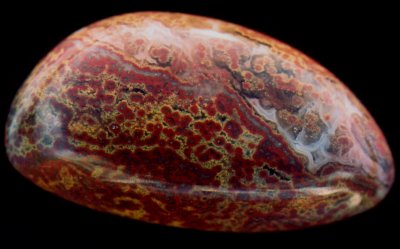
na
Location: Anse-A-Beaufils, North Shore, Gaspesia
State: Quebec
Country: Canada
Continent: North America
Date: 11/21/2001
Description: Size range: 1.3" to 2.0". Gaspe` Pebbles or Gaspe` Agate is a term used for pebbles of red and yellow agate and green jasper that are found along both the North and South shores of the Gaspe` Peninsula, Quebec, Canada. These agates have a very complex geologic history. They appear to be small thunder egg and amygdaloidal agates and they are derived from conglomerates of the Gaspe Sandstone of Devonian age according to D.L.C. Honeyman (1880, p. 136-138) who provided the first known record of these stones. Honeyman's samples were collected from the Magdalene Islands and Gaspe Peninsula and he referred to them as "waifs," or agates that have been eroded from their original host rock and re-deposited elsewhere. R. W. Ells (1888) also made note of these stones. Sinkankas (1959, p. 318) suggested agate pebbles were found in conglomerates of the Bonaventure Formation of Mississippian or Pennsylvanian age. The conglomerate of the Bonaventure Formation have been assigned ages ranging from Devonian through Pennsylvanian and Wilmarth (1936, p. 232, 233) covered this history. Some examples are agatized invertebrate fossils such as favositid corals that are common in sedimentary rocks of Devonian age. Some of these agates are very similar to stones that have formed in the basalts of Triassic age in Nova Scotia. Early researchers such as Chalmers (1887) suggested a very complex history of glaciation in southeastern Quebec and northern New Brunswick and this has been elaborated by recent studies such as Chauvin,Ghismond and LaSalle (1985) and David and Lebuis (1985) in Borns et al, editors (1985). Thus, these agates appear to have been derived from several wide spread sources of differing lithologies and of differing geologic ages. Jean-Baptiste Silla (personal communication) has suggested that these agates became very popular in the early 1930's when they were commonly collected by school children and sold to tourists. References Borns, H. W., LaSalle, P. Jr., and Thompson, W. B., 1985. Late Pleistocene History of Northeastern New England and Adjacent Quebec. Geological society of America, Special Paper 197, 159 p. - Chalmers, R., 1887. On the glaciation and Pleistocene subsidence of northern New Brunswick and southeastern Quebec. Royal Society of Canada Transactions, v. 4, no. 4, p. 139-145. - Chauvin, L., Ghismond, M., and LaSalle, P., 1985. Deglaciation of the Lower St. Lawrence Region, Quebec. In Borns et al (editors) 1985, Geological society of America, Special Paper 197, p. 111-124. - David, P. P., and Lebuis, J., 1985. Glacial maximum and deglaciation of western Gaspe`, Quebec, Canada, In Borns et al (editors) 1985, Geological society of America, Special Paper 197, p. 85-110. - Ells, R. W., 1888. Second report on the geology of a portion of the province of Quebec. Annual report, Geological and Natural History Survey of Candad, pt. K, 120 p. Honeyman, D. L. C., 1880. Geological Waifs from the Magdalen Islands. Transactions of the Nova Scotia Institute of Natural Sciences of Halifax, Nova Scotia, v. 5, part II, p. 136-138. - Sinkankas, J., 1959. Gemstones of North America. Van Nostrand Reinhold Company, New York, 675 p. Wilmarth, M. G., 1938. Lexicon of Stratigraphic Names of the United States. U. S. Geological Survey Bulletin 896, part 1, A-L, 1244 p.
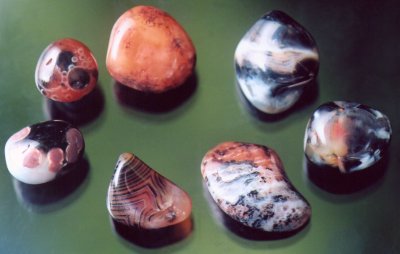
na
Location: Anse-A-Beaufils, North Shore, Gaspesia
State: Quebec
Country: Canada
Continent: North America
Date: 11/21/2001
Description: Size range: 0.4" to 0.9". Gaspe` Pebbles or Gaspe` Agate is a term used for pebbles of red and yellow agate and green jasper that are found along both the North and South shores of the Gaspe` Peninsula, Quebec, Canada. These agates have a very complex geologic history. They appear to be small thunder egg and amygdaloidal agates and they are derived from conglomerates of the Gaspe Sandstone of Devonian age according to D.L.C. Honeyman (1880, p. 136-138) who provided the first known record of these stones. Honeyman's samples were collected from the Magdalene Islands and Gaspe Peninsula and he referred to them as "waifs," or agates that have been eroded from their original host rock and re-deposited elsewhere. R. W. Ells (1888) also made note of these stones. Sinkankas (1959, p. 318) suggested agate pebbles were found in conglomerates of the Bonaventure Formation of Mississippian or Pennsylvanian age. The conglomerate of the Bonaventure Formation have been assigned ages ranging from Devonian through Pennsylvanian and Wilmarth (1936, p. 232, 233) covered this history. Some examples are agatized invertebrate fossils such as favositid corals that are common in sedimentary rocks of Devonian age. Some of these agates are very similar to stones that have formed in the basalts of Triassic age in Nova Scotia. Early researchers such as Chalmers (1887) suggested a very complex history of glaciation in southeastern Quebec and northern New Brunswick and this has been elaborated by recent studies such as Chauvin,Ghismond and LaSalle (1985) and David and Lebuis (1985) in Borns et al, editors (1985). Thus, these agates appear to have been derived from several wide spread sources of differing lithologies and of differing geologic ages. Jean-Baptiste Silla (personal communication) has suggested that these agates became very popular in the early 1930's when they were commonly collected by school children and sold to tourists. References Borns, H. W., LaSalle, P. Jr., and Thompson, W. B., 1985. Late Pleistocene History of Northeastern New England and Adjacent Quebec. Geological society of America, Special Paper 197, 159 p. - Chalmers, R., 1887. On the glaciation and Pleistocene subsidence of northern New Brunswick and southeastern Quebec. Royal Society of Canada Transactions, v. 4, no. 4, p. 139-145. - Chauvin, L., Ghismond, M., and LaSalle, P., 1985. Deglaciation of the Lower St. Lawrence Region, Quebec. In Borns et al (editors) 1985, Geological society of America, Special Paper 197, p. 111-124. - David, P. P., and Lebuis, J., 1985. Glacial maximum and deglaciation of western Gaspe`, Quebec, Canada, In Borns et al (editors) 1985, Geological society of America, Special Paper 197, p. 85-110. - Ells, R. W., 1888. Second report on the geology of a portion of the province of Quebec. Annual report, Geological and Natural History Survey of Candad, pt. K, 120 p. Honeyman, D. L. C., 1880. Geological Waifs from the Magdalen Islands. Transactions of the Nova Scotia Institute of Natural Sciences of Halifax, Nova Scotia, v. 5, part II, p. 136-138. - Sinkankas, J., 1959. Gemstones of North America. Van Nostrand Reinhold Company, New York, 675 p. Wilmarth, M. G., 1938. Lexicon of Stratigraphic Names of the United States. U. S. Geological Survey Bulletin 896, part 1, A-L, 1244 p.
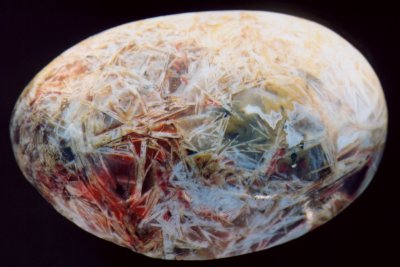
na
Location: Anse-A-Beaufils, North Shore, Gaspesia
State: Quebec
Country: Canada
Continent: North America
Date: 11/21/2001
Description: Size range: 1.3" to 1.7". Gaspe` Pebbles or Gaspe` Agate is a term used for pebbles of red and yellow agate and green jasper that are found along both the North and South shores of the Gaspe` Peninsula, Quebec, Canada. These agates have a very complex geologic history. They appear to be small thunder egg and amygdaloidal agates and they are derived from conglomerates of the Gaspe Sandstone of Devonian age according to D.L.C. Honeyman (1880, p. 136-138) who provided the first known record of these stones. Honeyman's samples were collected from the Magdalene Islands and Gaspe Peninsula and he referred to them as "waifs," or agates that have been eroded from their original host rock and re-deposited elsewhere. R. W. Ells (1888) also made note of these stones. Sinkankas (1959, p. 318) suggested agate pebbles were found in conglomerates of the Bonaventure Formation of Mississippian or Pennsylvanian age. The conglomerate of the Bonaventure Formation have been assigned ages ranging from Devonian through Pennsylvanian and Wilmarth (1936, p. 232, 233) covered this history. Some examples are agatized invertebrate fossils such as favositid corals that are common in sedimentary rocks of Devonian age. Some of these agates are very similar to stones that have formed in the basalts of Triassic age in Nova Scotia. Early researchers such as Chalmers (1887) suggested a very complex history of glaciation in southeastern Quebec and northern New Brunswick and this has been elaborated by recent studies such as Chauvin,Ghismond and LaSalle (1985) and David and Lebuis (1985) in Borns et al, editors (1985). Thus, these agates appear to have been derived from several wide spread sources of differing lithologies and of differing geologic ages. Jean-Baptiste Silla (personal communication) has suggested that these agates became very popular in the early 1930's when they were commonly collected by school children and sold to tourists. References Borns, H. W., LaSalle, P. Jr., and Thompson, W. B., 1985. Late Pleistocene History of Northeastern New England and Adjacent Quebec. Geological society of America, Special Paper 197, 159 p. - Chalmers, R., 1887. On the glaciation and Pleistocene subsidence of northern New Brunswick and southeastern Quebec. Royal Society of Canada Transactions, v. 4, no. 4, p. 139-145. - Chauvin, L., Ghismond, M., and LaSalle, P., 1985. Deglaciation of the Lower St. Lawrence Region, Quebec. In Borns et al (editors) 1985, Geological society of America, Special Paper 197, p. 111-124. - David, P. P., and Lebuis, J., 1985. Glacial maximum and deglaciation of western Gaspe`, Quebec, Canada, In Borns et al (editors) 1985, Geological society of America, Special Paper 197, p. 85-110. - Ells, R. W., 1888. Second report on the geology of a portion of the province of Quebec. Annual report, Geological and Natural History Survey of Candad, pt. K, 120 p. Honeyman, D. L. C., 1880. Geological Waifs from the Magdalen Islands. Transactions of the Nova Scotia Institute of Natural Sciences of Halifax, Nova Scotia, v. 5, part II, p. 136-138. - Sinkankas, J., 1959. Gemstones of North America. Van Nostrand Reinhold Company, New York, 675 p. Wilmarth, M. G., 1938. Lexicon of Stratigraphic Names of the United States. U. S. Geological Survey Bulletin 896, part 1, A-L, 1244 p.
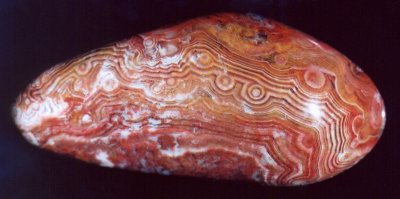
na
Location: Anse-A-Beaufils, North Shore, Gaspesia
State: Quebec
Country: Canada
Continent: North America
Date: 11/21/2001
Description: Size range: 1.4" to 2.2". Gaspe` Pebbles or Gaspe` Agate is a term used for pebbles of red and yellow agate and green jasper that are found along both the North and South shores of the Gaspe` Peninsula, Quebec, Canada. These agates have a very complex geologic history. They appear to be small thunder egg and amygdaloidal agates and they are derived from conglomerates of the Gaspe Sandstone of Devonian age according to D.L.C. Honeyman (1880, p. 136-138) who provided the first known record of these stones. Honeyman's samples were collected from the Magdalene Islands and Gaspe Peninsula and he referred to them as "waifs," or agates that have been eroded from their original host rock and re-deposited elsewhere. R. W. Ells (1888) also made note of these stones. Sinkankas (1959, p. 318) suggested agate pebbles were found in conglomerates of the Bonaventure Formation of Mississippian or Pennsylvanian age. The conglomerate of the Bonaventure Formation have been assigned ages ranging from Devonian through Pennsylvanian and Wilmarth (1936, p. 232, 233) covered this history. Some examples are agatized invertebrate fossils such as favositid corals that are common in sedimentary rocks of Devonian age. Some of these agates are very similar to stones that have formed in the basalts of Triassic age in Nova Scotia. Early researchers such as Chalmers (1887) suggested a very complex history of glaciation in southeastern Quebec and northern New Brunswick and this has been elaborated by recent studies such as Chauvin,Ghismond and LaSalle (1985) and David and Lebuis (1985) in Borns et al, editors (1985). Thus, these agates appear to have been derived from several wide spread sources of differing lithologies and of differing geologic ages. Jean-Baptiste Silla (personal communication) has suggested that these agates became very popular in the early 1930's when they were commonly collected by school children and sold to tourists. References Borns, H. W., LaSalle, P. Jr., and Thompson, W. B., 1985. Late Pleistocene History of Northeastern New England and Adjacent Quebec. Geological society of America, Special Paper 197, 159 p. - Chalmers, R., 1887. On the glaciation and Pleistocene subsidence of northern New Brunswick and southeastern Quebec. Royal Society of Canada Transactions, v. 4, no. 4, p. 139-145. - Chauvin, L., Ghismond, M., and LaSalle, P., 1985. Deglaciation of the Lower St. Lawrence Region, Quebec. In Borns et al (editors) 1985, Geological society of America, Special Paper 197, p. 111-124. - David, P. P., and Lebuis, J., 1985. Glacial maximum and deglaciation of western Gaspe`, Quebec, Canada, In Borns et al (editors) 1985, Geological society of America, Special Paper 197, p. 85-110. - Ells, R. W., 1888. Second report on the geology of a portion of the province of Quebec. Annual report, Geological and Natural History Survey of Candad, pt. K, 120 p. Honeyman, D. L. C., 1880. Geological Waifs from the Magdalen Islands. Transactions of the Nova Scotia Institute of Natural Sciences of Halifax, Nova Scotia, v. 5, part II, p. 136-138. - Sinkankas, J., 1959. Gemstones of North America. Van Nostrand Reinhold Company, New York, 675 p. Wilmarth, M. G., 1938. Lexicon of Stratigraphic Names of the United States. U. S. Geological Survey Bulletin 896, part 1, A-L, 1244 p.
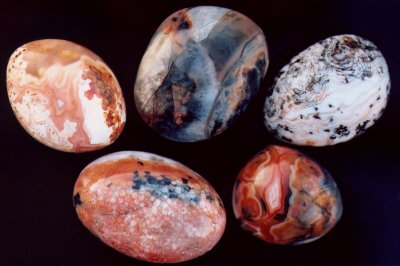
na
Location: Anse-A-Beaufils, North Shore, Gaspesia
State: Quebec
Country: Canada
Continent: North America
Date: 11/21/2001
Description: Size range: 1.0" to 1.6". Gaspe` Pebbles or Gaspe` Agate is a term used for pebbles of red and yellow agate and green jasper that are found along both the North and South shores of the Gaspe` Peninsula, Quebec, Canada. These agates have a very complex geologic history. They appear to be small thunder egg and amygdaloidal agates and they are derived from conglomerates of the Gaspe Sandstone of Devonian age according to D.L.C. Honeyman (1880, p. 136-138) who provided the first known record of these stones. Honeyman's samples were collected from the Magdalene Islands and Gaspe Peninsula and he referred to them as "waifs," or agates that have been eroded from their original host rock and re-deposited elsewhere. R. W. Ells (1888) also made note of these stones. Sinkankas (1959, p. 318) suggested agate pebbles were found in conglomerates of the Bonaventure Formation of Mississippian or Pennsylvanian age. The conglomerate of the Bonaventure Formation have been assigned ages ranging from Devonian through Pennsylvanian and Wilmarth (1936, p. 232, 233) covered this history. Some examples are agatized invertebrate fossils such as favositid corals that are common in sedimentary rocks of Devonian age. Some of these agates are very similar to stones that have formed in the basalts of Triassic age in Nova Scotia. Early researchers such as Chalmers (1887) suggested a very complex history of glaciation in southeastern Quebec and northern New Brunswick and this has been elaborated by recent studies such as Chauvin,Ghismond and LaSalle (1985) and David and Lebuis (1985) in Borns et al, editors (1985). Thus, these agates appear to have been derived from several wide spread sources of differing lithologies and of differing geologic ages. Jean-Baptiste Silla (personal communication) has suggested that these agates became very popular in the early 1930's when they were commonly collected by school children and sold to tourists. References Borns, H. W., LaSalle, P. Jr., and Thompson, W. B., 1985. Late Pleistocene History of Northeastern New England and Adjacent Quebec. Geological society of America, Special Paper 197, 159 p. - Chalmers, R., 1887. On the glaciation and Pleistocene subsidence of northern New Brunswick and southeastern Quebec. Royal Society of Canada Transactions, v. 4, no. 4, p. 139-145. - Chauvin, L., Ghismond, M., and LaSalle, P., 1985. Deglaciation of the Lower St. Lawrence Region, Quebec. In Borns et al (editors) 1985, Geological society of America, Special Paper 197, p. 111-124. - David, P. P., and Lebuis, J., 1985. Glacial maximum and deglaciation of western Gaspe`, Quebec, Canada, In Borns et al (editors) 1985, Geological society of America, Special Paper 197, p. 85-110. - Ells, R. W., 1888. Second report on the geology of a portion of the province of Quebec. Annual report, Geological and Natural History Survey of Candad, pt. K, 120 p. Honeyman, D. L. C., 1880. Geological Waifs from the Magdalen Islands. Transactions of the Nova Scotia Institute of Natural Sciences of Halifax, Nova Scotia, v. 5, part II, p. 136-138. - Sinkankas, J., 1959. Gemstones of North America. Van Nostrand Reinhold Company, New York, 675 p. Wilmarth, M. G., 1938. Lexicon of Stratigraphic Names of the United States. U. S. Geological Survey Bulletin 896, part 1, A-L, 1244 p.
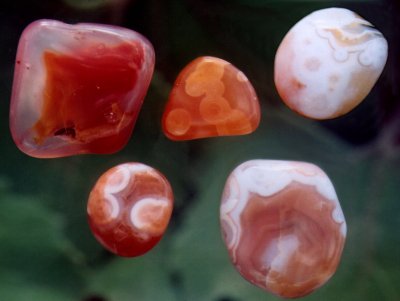
na
Location: Carleton, Gaspesia
State: Quebec
Country: Canada
Continent: North America
Date: 11/21/2001
Description: Size range: 0.6" to 1.2". Gaspe` Pebbles or Gaspe` Agate is a term used for pebbles of red and yellow agate and green jasper that are found along both the North and South shores of the Gaspe` Peninsula, Quebec, Canada. These agates have a very complex geologic history. They appear to be small thunder egg and amygdaloidal agates and they are derived from conglomerates of the Gaspe Sandstone of Devonian age according to D.L.C. Honeyman (1880, p. 136-138) who provided the first known record of these stones. Honeyman's samples were collected from the Magdalene Islands and Gaspe Peninsula and he referred to them as "waifs," or agates that have been eroded from their original host rock and re-deposited elsewhere. R. W. Ells (1888) also made note of these stones. Sinkankas (1959, p. 318) suggested agate pebbles were found in conglomerates of the Bonaventure Formation of Mississippian or Pennsylvanian age. The conglomerate of the Bonaventure Formation have been assigned ages ranging from Devonian through Pennsylvanian and Wilmarth (1936, p. 232, 233) covered this history. Some examples are agatized invertebrate fossils such as favositid corals that are common in sedimentary rocks of Devonian age. Some of these agates are very similar to stones that have formed in the basalts of Triassic age in Nova Scotia. Early researchers such as Chalmers (1887) suggested a very complex history of glaciation in southeastern Quebec and northern New Brunswick and this has been elaborated by recent studies such as Chauvin,Ghismond and LaSalle (1985) and David and Lebuis (1985) in Borns et al, editors (1985). Thus, these agates appear to have been derived from several wide spread sources of differing lithologies and of differing geologic ages. Jean-Baptiste Silla (personal communication) has suggested that these agates became very popular in the early 1930's when they were commonly collected by school children and sold to tourists. References Borns, H. W., LaSalle, P. Jr., and Thompson, W. B., 1985. Late Pleistocene History of Northeastern New England and Adjacent Quebec. Geological society of America, Special Paper 197, 159 p. - Chalmers, R., 1887. On the glaciation and Pleistocene subsidence of northern New Brunswick and southeastern Quebec. Royal Society of Canada Transactions, v. 4, no. 4, p. 139-145. - Chauvin, L., Ghismond, M., and LaSalle, P., 1985. Deglaciation of the Lower St. Lawrence Region, Quebec. In Borns et al (editors) 1985, Geological society of America, Special Paper 197, p. 111-124. - David, P. P., and Lebuis, J., 1985. Glacial maximum and deglaciation of western Gaspe`, Quebec, Canada, In Borns et al (editors) 1985, Geological society of America, Special Paper 197, p. 85-110. - Ells, R. W., 1888. Second report on the geology of a portion of the province of Quebec. Annual report, Geological and Natural History Survey of Candad, pt. K, 120 p. Honeyman, D. L. C., 1880. Geological Waifs from the Magdalen Islands. Transactions of the Nova Scotia Institute of Natural Sciences of Halifax, Nova Scotia, v. 5, part II, p. 136-138. - Sinkankas, J., 1959. Gemstones of North America. Van Nostrand Reinhold Company, New York, 675 p. Wilmarth, M. G., 1938. Lexicon of Stratigraphic Names of the United States. U. S. Geological Survey Bulletin 896, part 1, A-L, 1244 p.
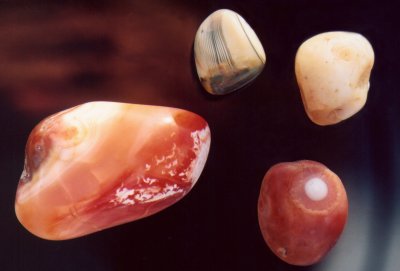
na
Location: Coin Du Banc, North Shore, Gaspesia
State: Quebec
Country: Canada
Continent: North America
Date: 11/21/2001
Description: Size range: 1.0" to 1.6". Gaspe` Pebbles or Gaspe` Agate is a term used for pebbles of red and yellow agate and green jasper that are found along both the North and South shores of the Gaspe` Peninsula, Quebec, Canada. These agates have a very complex geologic history. They appear to be small thunder egg and amygdaloidal agates and they are derived from conglomerates of the Gaspe Sandstone of Devonian age according to D.L.C. Honeyman (1880, p. 136-138) who provided the first known record of these stones. Honeyman's samples were collected from the Magdalene Islands and Gaspe Peninsula and he referred to them as "waifs," or agates that have been eroded from their original host rock and re-deposited elsewhere. R. W. Ells (1888) also made note of these stones. Sinkankas (1959, p. 318) suggested agate pebbles were found in conglomerates of the Bonaventure Formation of Mississippian or Pennsylvanian age. The conglomerate of the Bonaventure Formation have been assigned ages ranging from Devonian through Pennsylvanian and Wilmarth (1936, p. 232, 233) covered this history. Some examples are agatized invertebrate fossils such as favositid corals that are common in sedimentary rocks of Devonian age. Some of these agates are very similar to stones that have formed in the basalts of Triassic age in Nova Scotia. Early researchers such as Chalmers (1887) suggested a very complex history of glaciation in southeastern Quebec and northern New Brunswick and this has been elaborated by recent studies such as Chauvin,Ghismond and LaSalle (1985) and David and Lebuis (1985) in Borns et al, editors (1985). Thus, these agates appear to have been derived from several wide spread sources of differing lithologies and of differing geologic ages. Jean-Baptiste Silla (personal communication) has suggested that these agates became very popular in the early 1930's when they were commonly collected by school children and sold to tourists. References Borns, H. W., LaSalle, P. Jr., and Thompson, W. B., 1985. Late Pleistocene History of Northeastern New England and Adjacent Quebec. Geological society of America, Special Paper 197, 159 p. - Chalmers, R., 1887. On the glaciation and Pleistocene subsidence of northern New Brunswick and southeastern Quebec. Royal Society of Canada Transactions, v. 4, no. 4, p. 139-145. - Chauvin, L., Ghismond, M., and LaSalle, P., 1985. Deglaciation of the Lower St. Lawrence Region, Quebec. In Borns et al (editors) 1985, Geological society of America, Special Paper 197, p. 111-124. - David, P. P., and Lebuis, J., 1985. Glacial maximum and deglaciation of western Gaspe`, Quebec, Canada, In Borns et al (editors) 1985, Geological society of America, Special Paper 197, p. 85-110. - Ells, R. W., 1888. Second report on the geology of a portion of the province of Quebec. Annual report, Geological and Natural History Survey of Candad, pt. K, 120 p. Honeyman, D. L. C., 1880. Geological Waifs from the Magdalen Islands. Transactions of the Nova Scotia Institute of Natural Sciences of Halifax, Nova Scotia, v. 5, part II, p. 136-138. - Sinkankas, J., 1959. Gemstones of North America. Van Nostrand Reinhold Company, New York, 675 p. Wilmarth, M. G., 1938. Lexicon of Stratigraphic Names of the United States. U. S. Geological Survey Bulletin 896, part 1, A-L, 1244 p.
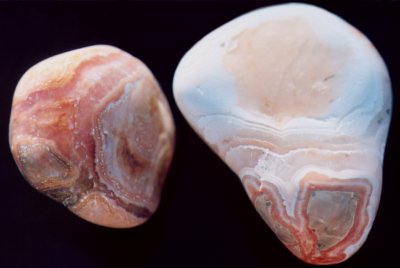
na
Location: Coin Du Banc, North Shore, Gaspesia
State: Quebec
Country: Canada
Continent: North America
Date: 11/21/2001
Description: Size range: 1.2" to 2.0". Gaspe` Pebbles or Gaspe` Agate is a term used for pebbles of red and yellow agate and green jasper that are found along both the North and South shores of the Gaspe` Peninsula, Quebec, Canada. These agates have a very complex geologic history. They appear to be small thunder egg and amygdaloidal agates and they are derived from conglomerates of the Gaspe Sandstone of Devonian age according to D.L.C. Honeyman (1880, p. 136-138) who provided the first known record of these stones. Honeyman's samples were collected from the Magdalene Islands and Gaspe Peninsula and he referred to them as "waifs," or agates that have been eroded from their original host rock and re-deposited elsewhere. R. W. Ells (1888) also made note of these stones. Sinkankas (1959, p. 318) suggested agate pebbles were found in conglomerates of the Bonaventure Formation of Mississippian or Pennsylvanian age. The conglomerate of the Bonaventure Formation have been assigned ages ranging from Devonian through Pennsylvanian and Wilmarth (1936, p. 232, 233) covered this history. Some examples are agatized invertebrate fossils such as favositid corals that are common in sedimentary rocks of Devonian age. Some of these agates are very similar to stones that have formed in the basalts of Triassic age in Nova Scotia. Early researchers such as Chalmers (1887) suggested a very complex history of glaciation in southeastern Quebec and northern New Brunswick and this has been elaborated by recent studies such as Chauvin,Ghismond and LaSalle (1985) and David and Lebuis (1985) in Borns et al, editors (1985). Thus, these agates appear to have been derived from several wide spread sources of differing lithologies and of differing geologic ages. Jean-Baptiste Silla (personal communication) has suggested that these agates became very popular in the early 1930's when they were commonly collected by school children and sold to tourists. References Borns, H. W., LaSalle, P. Jr., and Thompson, W. B., 1985. Late Pleistocene History of Northeastern New England and Adjacent Quebec. Geological society of America, Special Paper 197, 159 p. - Chalmers, R., 1887. On the glaciation and Pleistocene subsidence of northern New Brunswick and southeastern Quebec. Royal Society of Canada Transactions, v. 4, no. 4, p. 139-145. - Chauvin, L., Ghismond, M., and LaSalle, P., 1985. Deglaciation of the Lower St. Lawrence Region, Quebec. In Borns et al (editors) 1985, Geological society of America, Special Paper 197, p. 111-124. - David, P. P., and Lebuis, J., 1985. Glacial maximum and deglaciation of western Gaspe`, Quebec, Canada, In Borns et al (editors) 1985, Geological society of America, Special Paper 197, p. 85-110. - Ells, R. W., 1888. Second report on the geology of a portion of the province of Quebec. Annual report, Geological and Natural History Survey of Candad, pt. K, 120 p. Honeyman, D. L. C., 1880. Geological Waifs from the Magdalen Islands. Transactions of the Nova Scotia Institute of Natural Sciences of Halifax, Nova Scotia, v. 5, part II, p. 136-138. - Sinkankas, J., 1959. Gemstones of North America. Van Nostrand Reinhold Company, New York, 675 p. Wilmarth, M. G., 1938. Lexicon of Stratigraphic Names of the United States. U. S. Geological Survey Bulletin 896, part 1, A-L, 1244 p.
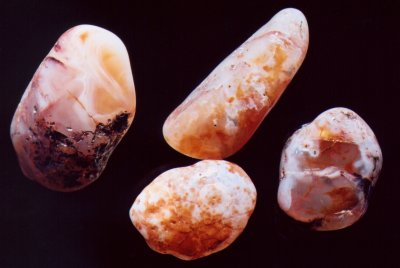
na
Location: Misguasha, Gaspesia
State: Quebec
Country: Canada
Continent: North America
Date: 11/21/2001
Description: Size range: 1.0" to 1.7". Gaspe` Pebbles or Gaspe` Agate is a term used for pebbles of red and yellow agate and green jasper that are found along both the North and South shores of the Gaspe` Peninsula, Quebec, Canada. These agates have a very complex geologic history. They appear to be small thunder egg and amygdaloidal agates and they are derived from conglomerates of the Gaspe Sandstone of Devonian age according to D.L.C. Honeyman (1880, p. 136-138) who provided the first known record of these stones. Honeyman's samples were collected from the Magdalene Islands and Gaspe Peninsula and he referred to them as "waifs," or agates that have been eroded from their original host rock and re-deposited elsewhere. R. W. Ells (1888) also made note of these stones. Sinkankas (1959, p. 318) suggested agate pebbles were found in conglomerates of the Bonaventure Formation of Mississippian or Pennsylvanian age. The conglomerate of the Bonaventure Formation have been assigned ages ranging from Devonian through Pennsylvanian and Wilmarth (1936, p. 232, 233) covered this history. Some examples are agatized invertebrate fossils such as favositid corals that are common in sedimentary rocks of Devonian age. Some of these agates are very similar to stones that have formed in the basalts of Triassic age in Nova Scotia. Early researchers such as Chalmers (1887) suggested a very complex history of glaciation in southeastern Quebec and northern New Brunswick and this has been elaborated by recent studies such as Chauvin,Ghismond and LaSalle (1985) and David and Lebuis (1985) in Borns et al, editors (1985). Thus, these agates appear to have been derived from several wide spread sources of differing lithologies and of differing geologic ages. Jean-Baptiste Silla (personal communication) has suggested that these agates became very popular in the early 1930's when they were commonly collected by school children and sold to tourists. References Borns, H. W., LaSalle, P. Jr., and Thompson, W. B., 1985. Late Pleistocene History of Northeastern New England and Adjacent Quebec. Geological society of America, Special Paper 197, 159 p. - Chalmers, R., 1887. On the glaciation and Pleistocene subsidence of northern New Brunswick and southeastern Quebec. Royal Society of Canada Transactions, v. 4, no. 4, p. 139-145. - Chauvin, L., Ghismond, M., and LaSalle, P., 1985. Deglaciation of the Lower St. Lawrence Region, Quebec. In Borns et al (editors) 1985, Geological society of America, Special Paper 197, p. 111-124. - David, P. P., and Lebuis, J., 1985. Glacial maximum and deglaciation of western Gaspe`, Quebec, Canada, In Borns et al (editors) 1985, Geological society of America, Special Paper 197, p. 85-110. - Ells, R. W., 1888. Second report on the geology of a portion of the province of Quebec. Annual report, Geological and Natural History Survey of Candad, pt. K, 120 p. Honeyman, D. L. C., 1880. Geological Waifs from the Magdalen Islands. Transactions of the Nova Scotia Institute of Natural Sciences of Halifax, Nova Scotia, v. 5, part II, p. 136-138. - Sinkankas, J., 1959. Gemstones of North America. Van Nostrand Reinhold Company, New York, 675 p. Wilmarth, M. G., 1938. Lexicon of Stratigraphic Names of the United States. U. S. Geological Survey Bulletin 896, part 1, A-L, 1244 p.
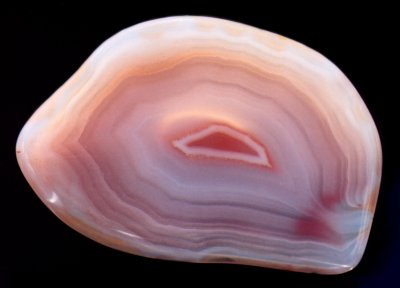
na
Location: Misguasha, Gaspesia
State: Quebec
Country: Canada
Continent: North America
Date: 11/21/2001
Description: Size range: 1.6" to 2.1". Gaspe` Pebbles or Gaspe` Agate is a term used for pebbles of red and yellow agate and green jasper that are found along both the North and South shores of the Gaspe` Peninsula, Quebec, Canada. These agates have a very complex geologic history. They appear to be small thunder egg and amygdaloidal agates and they are derived from conglomerates of the Gaspe Sandstone of Devonian age according to D.L.C. Honeyman (1880, p. 136-138) who provided the first known record of these stones. Honeyman's samples were collected from the Magdalene Islands and Gaspe Peninsula and he referred to them as "waifs," or agates that have been eroded from their original host rock and re-deposited elsewhere. R. W. Ells (1888) also made note of these stones. Sinkankas (1959, p. 318) suggested agate pebbles were found in conglomerates of the Bonaventure Formation of Mississippian or Pennsylvanian age. The conglomerate of the Bonaventure Formation have been assigned ages ranging from Devonian through Pennsylvanian and Wilmarth (1936, p. 232, 233) covered this history. Some examples are agatized invertebrate fossils such as favositid corals that are common in sedimentary rocks of Devonian age. Some of these agates are very similar to stones that have formed in the basalts of Triassic age in Nova Scotia. Early researchers such as Chalmers (1887) suggested a very complex history of glaciation in southeastern Quebec and northern New Brunswick and this has been elaborated by recent studies such as Chauvin,Ghismond and LaSalle (1985) and David and Lebuis (1985) in Borns et al, editors (1985). Thus, these agates appear to have been derived from several wide spread sources of differing lithologies and of differing geologic ages. Jean-Baptiste Silla (personal communication) has suggested that these agates became very popular in the early 1930's when they were commonly collected by school children and sold to tourists. References Borns, H. W., LaSalle, P. Jr., and Thompson, W. B., 1985. Late Pleistocene History of Northeastern New England and Adjacent Quebec. Geological society of America, Special Paper 197, 159 p. - Chalmers, R., 1887. On the glaciation and Pleistocene subsidence of northern New Brunswick and southeastern Quebec. Royal Society of Canada Transactions, v. 4, no. 4, p. 139-145. - Chauvin, L., Ghismond, M., and LaSalle, P., 1985. Deglaciation of the Lower St. Lawrence Region, Quebec. In Borns et al (editors) 1985, Geological society of America, Special Paper 197, p. 111-124. - David, P. P., and Lebuis, J., 1985. Glacial maximum and deglaciation of western Gaspe`, Quebec, Canada, In Borns et al (editors) 1985, Geological society of America, Special Paper 197, p. 85-110. - Ells, R. W., 1888. Second report on the geology of a portion of the province of Quebec. Annual report, Geological and Natural History Survey of Candad, pt. K, 120 p. Honeyman, D. L. C., 1880. Geological Waifs from the Magdalen Islands. Transactions of the Nova Scotia Institute of Natural Sciences of Halifax, Nova Scotia, v. 5, part II, p. 136-138. - Sinkankas, J., 1959. Gemstones of North America. Van Nostrand Reinhold Company, New York, 675 p. Wilmarth, M. G., 1938. Lexicon of Stratigraphic Names of the United States. U. S. Geological Survey Bulletin 896, part 1, A-L, 1244 p.
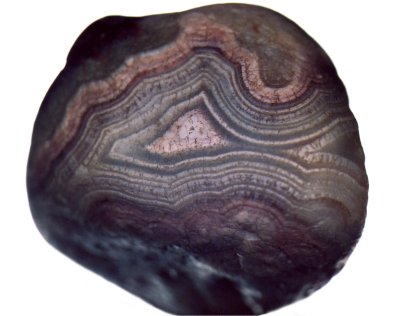
na
Location: Maria, South Shore, Gaspesia
State: Quebec
Country: Canada
Continent: North America
Date: 11/21/2001
Description: Size range: 2.1" to 2.3". Gaspe` Pebbles or Gaspe` Agate is a term used for pebbles of red and yellow agate and green jasper that are found along both the North and South shores of the Gaspe` Peninsula, Quebec, Canada. These agates have a very complex geologic history. They appear to be small thunder egg and amygdaloidal agates and they are derived from conglomerates of the Gaspe Sandstone of Devonian age according to D.L.C. Honeyman (1880, p. 136-138) who provided the first known record of these stones. Honeyman's samples were collected from the Magdalene Islands and Gaspe Peninsula and he referred to them as "waifs," or agates that have been eroded from their original host rock and re-deposited elsewhere. R. W. Ells (1888) also made note of these stones. Sinkankas (1959, p. 318) suggested agate pebbles were found in conglomerates of the Bonaventure Formation of Mississippian or Pennsylvanian age. The conglomerate of the Bonaventure Formation have been assigned ages ranging from Devonian through Pennsylvanian and Wilmarth (1936, p. 232, 233) covered this history. Some examples are agatized invertebrate fossils such as favositid corals that are common in sedimentary rocks of Devonian age. Some of these agates are very similar to stones that have formed in the basalts of Triassic age in Nova Scotia. Early researchers such as Chalmers (1887) suggested a very complex history of glaciation in southeastern Quebec and northern New Brunswick and this has been elaborated by recent studies such as Chauvin,Ghismond and LaSalle (1985) and David and Lebuis (1985) in Borns et al, editors (1985). Thus, these agates appear to have been derived from several wide spread sources of differing lithologies and of differing geologic ages. Jean-Baptiste Silla (personal communication) has suggested that these agates became very popular in the early 1930's when they were commonly collected by school children and sold to tourists. References Borns, H. W., LaSalle, P. Jr., and Thompson, W. B., 1985. Late Pleistocene History of Northeastern New England and Adjacent Quebec. Geological society of America, Special Paper 197, 159 p. - Chalmers, R., 1887. On the glaciation and Pleistocene subsidence of northern New Brunswick and southeastern Quebec. Royal Society of Canada Transactions, v. 4, no. 4, p. 139-145. - Chauvin, L., Ghismond, M., and LaSalle, P., 1985. Deglaciation of the Lower St. Lawrence Region, Quebec. In Borns et al (editors) 1985, Geological society of America, Special Paper 197, p. 111-124. - David, P. P., and Lebuis, J., 1985. Glacial maximum and deglaciation of western Gaspe`, Quebec, Canada, In Borns et al (editors) 1985, Geological society of America, Special Paper 197, p. 85-110. - Ells, R. W., 1888. Second report on the geology of a portion of the province of Quebec. Annual report, Geological and Natural History Survey of Candad, pt. K, 120 p. Honeyman, D. L. C., 1880. Geological Waifs from the Magdalen Islands. Transactions of the Nova Scotia Institute of Natural Sciences of Halifax, Nova Scotia, v. 5, part II, p. 136-138. - Sinkankas, J., 1959. Gemstones of North America. Van Nostrand Reinhold Company, New York, 675 p. Wilmarth, M. G., 1938. Lexicon of Stratigraphic Names of the United States. U. S. Geological Survey Bulletin 896, part 1, A-L, 1244 p.
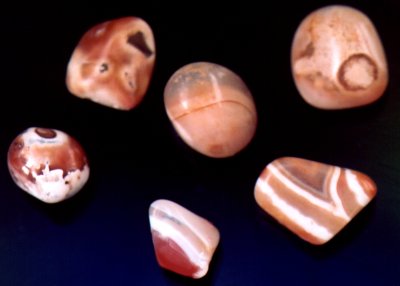
na
Location: Maria, South Shore, Gaspesia
State: Quebec
Country: Canada
Continent: North America
Date: 11/21/2001
Description: Size range: 0.2" to 0.5". Gaspe` Pebbles or Gaspe` Agate is a term used for pebbles of red and yellow agate and green jasper that are found along both the North and South shores of the Gaspe` Peninsula, Quebec, Canada. These agates have a very complex geologic history. They appear to be small thunder egg and amygdaloidal agates and they are derived from conglomerates of the Gaspe Sandstone of Devonian age according to D.L.C. Honeyman (1880, p. 136-138) who provided the first known record of these stones. Honeyman's samples were collected from the Magdalene Islands and Gaspe Peninsula and he referred to them as "waifs," or agates that have been eroded from their original host rock and re-deposited elsewhere. R. W. Ells (1888) also made note of these stones. Sinkankas (1959, p. 318) suggested agate pebbles were found in conglomerates of the Bonaventure Formation of Mississippian or Pennsylvanian age. The conglomerate of the Bonaventure Formation have been assigned ages ranging from Devonian through Pennsylvanian and Wilmarth (1936, p. 232, 233) covered this history. Some examples are agatized invertebrate fossils such as favositid corals that are common in sedimentary rocks of Devonian age. Some of these agates are very similar to stones that have formed in the basalts of Triassic age in Nova Scotia. Early researchers such as Chalmers (1887) suggested a very complex history of glaciation in southeastern Quebec and northern New Brunswick and this has been elaborated by recent studies such as Chauvin,Ghismond and LaSalle (1985) and David and Lebuis (1985) in Borns et al, editors (1985). Thus, these agates appear to have been derived from several wide spread sources of differing lithologies and of differing geologic ages. Jean-Baptiste Silla (personal communication) has suggested that these agates became very popular in the early 1930's when they were commonly collected by school children and sold to tourists. References Borns, H. W., LaSalle, P. Jr., and Thompson, W. B., 1985. Late Pleistocene History of Northeastern New England and Adjacent Quebec. Geological society of America, Special Paper 197, 159 p. - Chalmers, R., 1887. On the glaciation and Pleistocene subsidence of northern New Brunswick and southeastern Quebec. Royal Society of Canada Transactions, v. 4, no. 4, p. 139-145. - Chauvin, L., Ghismond, M., and LaSalle, P., 1985. Deglaciation of the Lower St. Lawrence Region, Quebec. In Borns et al (editors) 1985, Geological society of America, Special Paper 197, p. 111-124. - David, P. P., and Lebuis, J., 1985. Glacial maximum and deglaciation of western Gaspe`, Quebec, Canada, In Borns et al (editors) 1985, Geological society of America, Special Paper 197, p. 85-110. - Ells, R. W., 1888. Second report on the geology of a portion of the province of Quebec. Annual report, Geological and Natural History Survey of Candad, pt. K, 120 p. Honeyman, D. L. C., 1880. Geological Waifs from the Magdalen Islands. Transactions of the Nova Scotia Institute of Natural Sciences of Halifax, Nova Scotia, v. 5, part II, p. 136-138. - Sinkankas, J., 1959. Gemstones of North America. Van Nostrand Reinhold Company, New York, 675 p. Wilmarth, M. G., 1938. Lexicon of Stratigraphic Names of the United States. U. S. Geological Survey Bulletin 896, part 1, A-L, 1244 p.
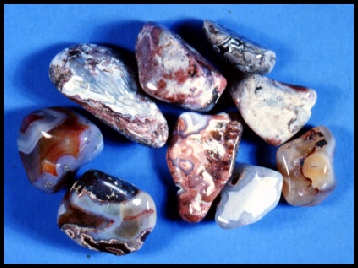
na
Location: Scots Bay
State: Nova Scotia
Country: Canada
Continent: North America
Date: 6/17/1999
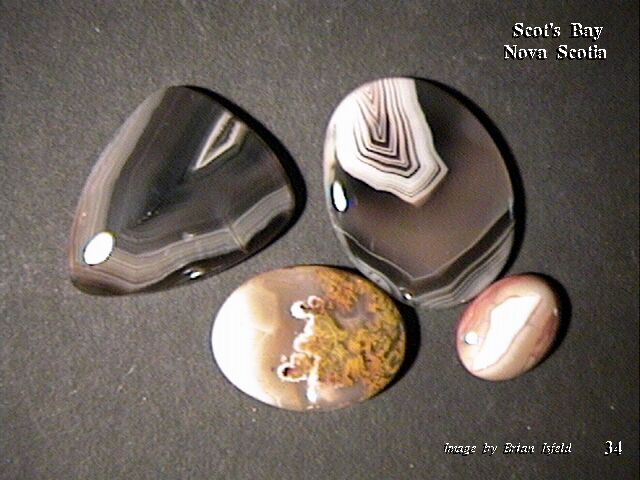
na
Location: Scots Bay
State: Nova Scotia
Country: Canada
Continent: North America
Date: 6/17/1999
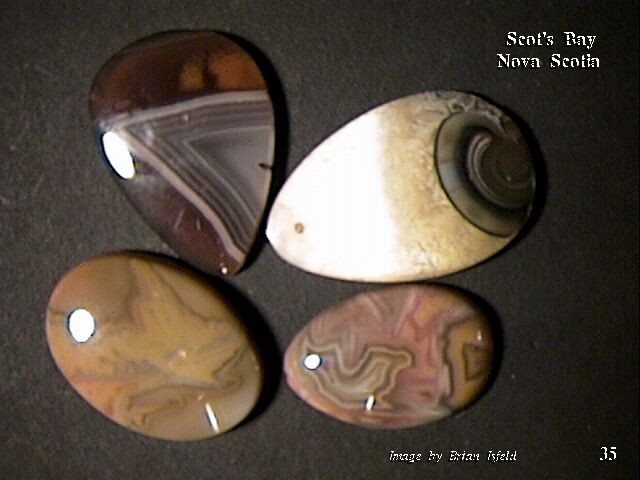
na
Location: Scots Bay
State: Nova Scotia
Country: Canada
Continent: North America
Date: 6/17/1999
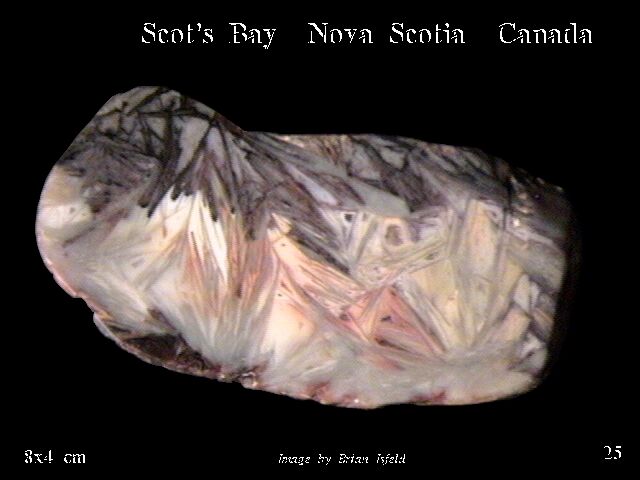
na
Location: Scots Bay
State: Nova Scotia
Country: Canada
Continent: North America
Date: 6/17/1999
na
Location: Scots Bay
State: Nova Scotia
Country: Canada
Continent: North America
Date: 6/17/1999
na
Location: Scots Bay
State: Nova Scotia
Country: Canada
Continent: North America
Date: 6/17/1999
Description: Agate in place.
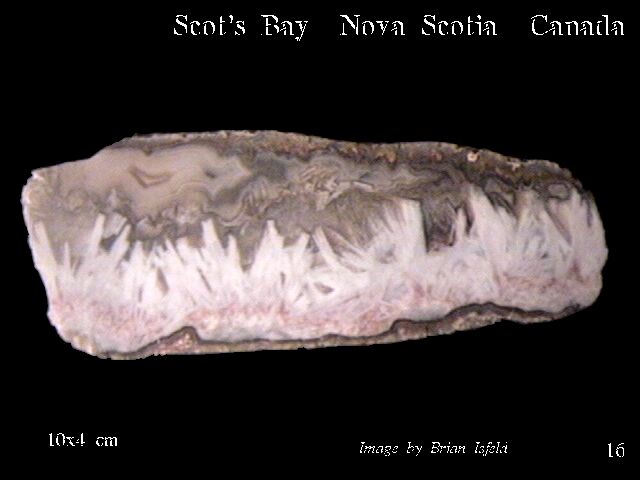
na
Location: Scots Bay
State: Nova Scotia
Country: Canada
Continent: North America
Date: 6/17/1999
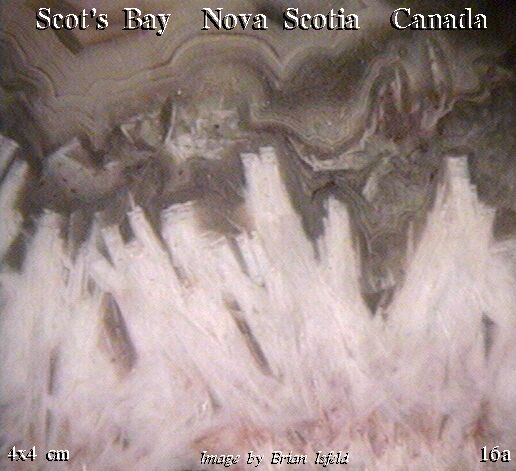
na
Location: Scots Bay
State: Nova Scotia
Country: Canada
Continent: North America
Date: 6/17/1999
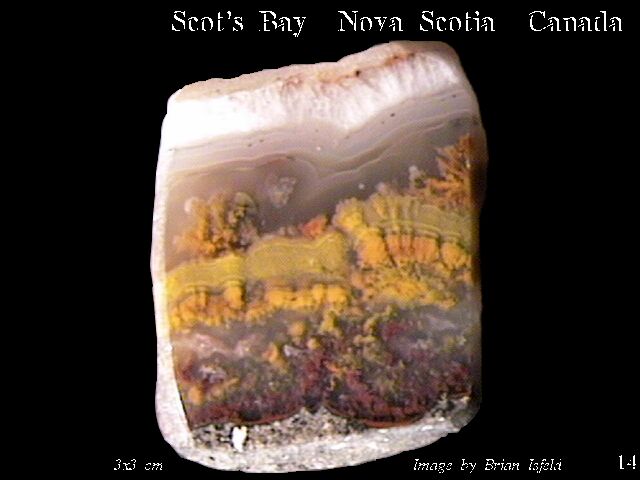
na
Location: Scots Bay
State: Nova Scotia
Country: Canada
Continent: North America
Date: 6/17/1999
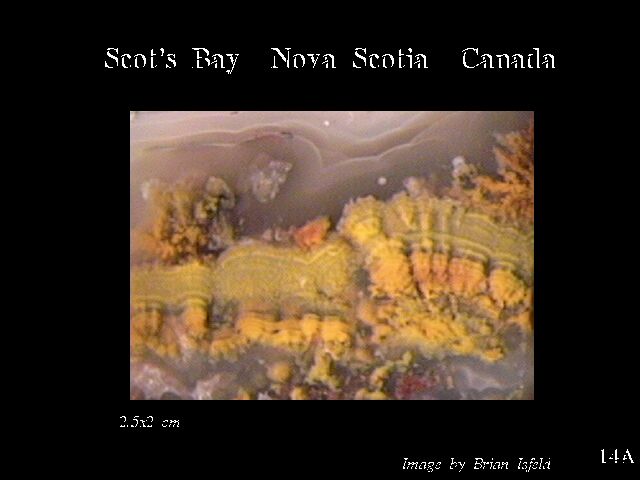
na
Location: Scots Bay
State: Nova Scotia
Country: Canada
Continent: North America
Date: 6/17/1999
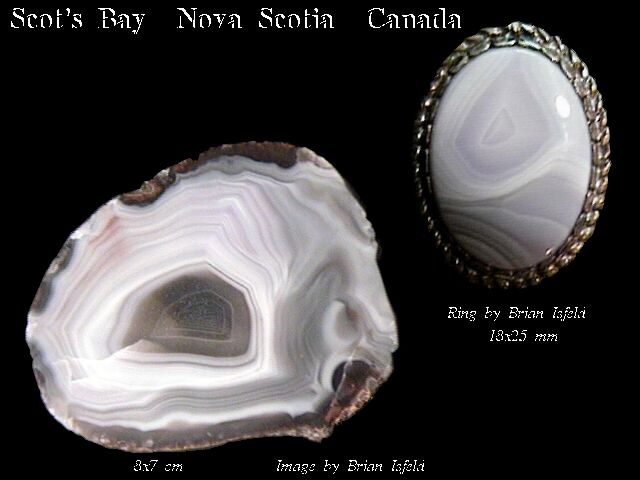
na
Location: Scots Bay
State: Nova Scotia
Country: Canada
Continent: North America
Date: 6/17/1999
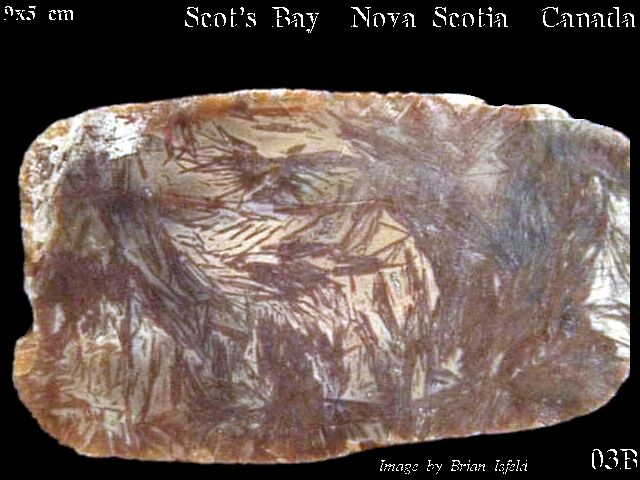
na
Location: Scots Bay
State: Nova Scotia
Country: Canada
Continent: North America
Date: 6/17/1999
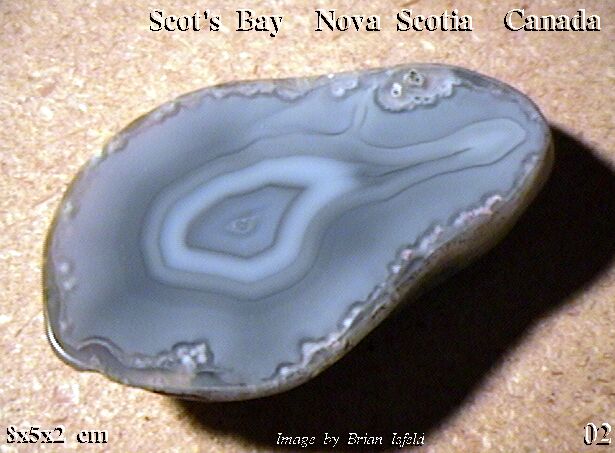
na
Location: Scots Bay
State: Nova Scotia
Country: Canada
Continent: North America
Date: 6/17/1999
na
Location: Centreville
State: Nova Scotia
Country: Canada
Continent: North America
Date: 6/17/1999
na
Location: Centreville
State: Nova Scotia
Country: Canada
Continent: North America
Date: 6/17/1999
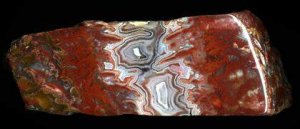
na
Location: Centreville
State: Nova Scotia
Country: Canada
Continent: North America
Date: 6/17/1999
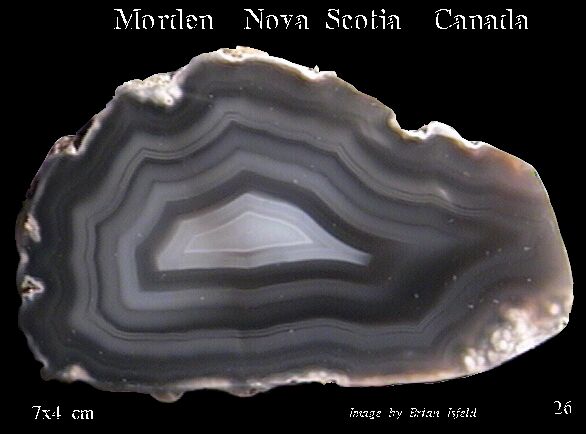
na
Location: Morden
State: Nova Scotia
Country: Canada
Continent: North America
Date: 6/17/1999
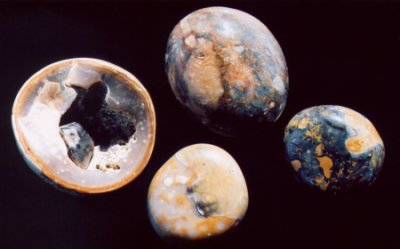
na
Location: Prevel, North Shore, Gaspesia
State: Quebec
Country: Canada
Continent: North America
Date: 11/21/2001
Description: Size range: 1.4" to 2.1". Gaspe` Pebbles or Gaspe` Agate is a term used for pebbles of red and yellow agate and green jasper that are found along both the North and South shores of the Gaspe` Peninsula, Quebec, Canada. These agates have a very complex geologic history. They appear to be small thunder egg and amygdaloidal agates and they are derived from conglomerates of the Gaspe Sandstone of Devonian age according to D.L.C. Honeyman (1880, p. 136-138) who provided the first known record of these stones. Honeyman's samples were collected from the Magdalene Islands and Gaspe Peninsula and he referred to them as "waifs," or agates that have been eroded from their original host rock and re-deposited elsewhere. R. W. Ells (1888) also made note of these stones. Sinkankas (1959, p. 318) suggested agate pebbles were found in conglomerates of the Bonaventure Formation of Mississippian or Pennsylvanian age. The conglomerate of the Bonaventure Formation have been assigned ages ranging from Devonian through Pennsylvanian and Wilmarth (1936, p. 232, 233) covered this history. Some examples are agatized invertebrate fossils such as favositid corals that are common in sedimentary rocks of Devonian age. Some of these agates are very similar to stones that have formed in the basalts of Triassic age in Nova Scotia. Early researchers such as Chalmers (1887) suggested a very complex history of glaciation in southeastern Quebec and northern New Brunswick and this has been elaborated by recent studies such as Chauvin,Ghismond and LaSalle (1985) and David and Lebuis (1985) in Borns et al, editors (1985). Thus, these agates appear to have been derived from several wide spread sources of differing lithologies and of differing geologic ages. Jean-Baptiste Silla (personal communication) has suggested that these agates became very popular in the early 1930's when they were commonly collected by school children and sold to tourists. References Borns, H. W., LaSalle, P. Jr., and Thompson, W. B., 1985. Late Pleistocene History of Northeastern New England and Adjacent Quebec. Geological society of America, Special Paper 197, 159 p. - Chalmers, R., 1887. On the glaciation and Pleistocene subsidence of northern New Brunswick and southeastern Quebec. Royal Society of Canada Transactions, v. 4, no. 4, p. 139-145. - Chauvin, L., Ghismond, M., and LaSalle, P., 1985. Deglaciation of the Lower St. Lawrence Region, Quebec. In Borns et al (editors) 1985, Geological society of America, Special Paper 197, p. 111-124. - David, P. P., and Lebuis, J., 1985. Glacial maximum and deglaciation of western Gaspe`, Quebec, Canada, In Borns et al (editors) 1985, Geological society of America, Special Paper 197, p. 85-110. - Ells, R. W., 1888. Second report on the geology of a portion of the province of Quebec. Annual report, Geological and Natural History Survey of Candad, pt. K, 120 p. Honeyman, D. L. C., 1880. Geological Waifs from the Magdalen Islands. Transactions of the Nova Scotia Institute of Natural Sciences of Halifax, Nova Scotia, v. 5, part II, p. 136-138. - Sinkankas, J., 1959. Gemstones of North America. Van Nostrand Reinhold Company, New York, 675 p. Wilmarth, M. G., 1938. Lexicon of Stratigraphic Names of the United States. U. S. Geological Survey Bulletin 896, part 1, A-L, 1244 p.
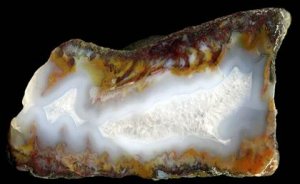
na
Location: Blomidon
State: Nova Scotia
Country: Canada
Continent: North America
Date: 6/17/1999
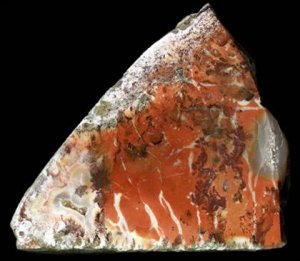
na
Location: Blomidon
State: Nova Scotia
Country: Canada
Continent: North America
Date: 6/17/1999
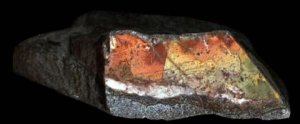
na
Location: Blomidon
State: Nova Scotia
Country: Canada
Continent: North America
Date: 6/17/1999
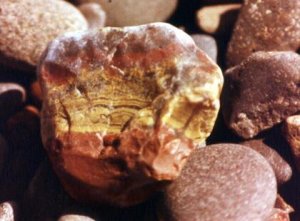
na
Location: Blomidon
State: Nova Scotia
Country: Canada
Continent: North America
Date: 6/17/1999
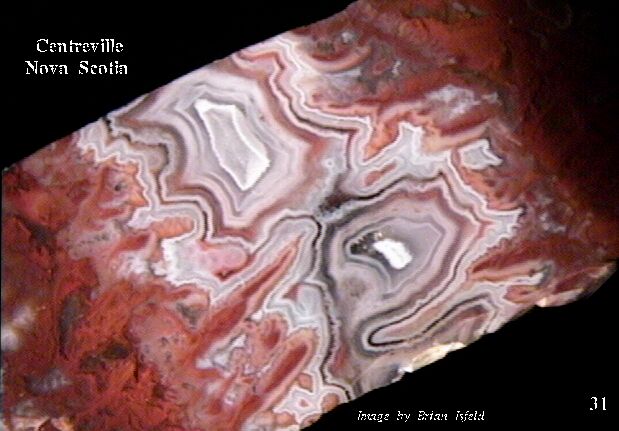
na
Location: Centreville
State: Nova Scotia
Country: Canada
Continent: North America
Date: 6/17/1999
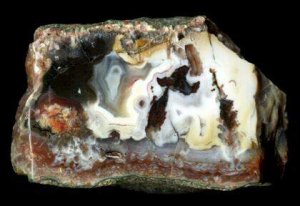
na
Location: Centreville
State: Nova Scotia
Country: Canada
Continent: North America
Date: 6/17/1999
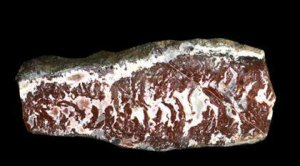
na
Location: Centreville
State: Nova Scotia
Country: Canada
Continent: North America
Date: 6/17/1999
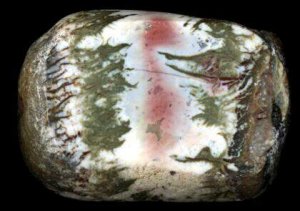
na
Location: Centreville
State: Nova Scotia
Country: Canada
Continent: North America
Date: 6/17/1999
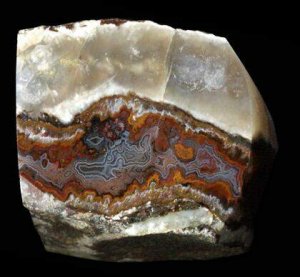
na
Location: Centreville
State: Nova Scotia
Country: Canada
Continent: North America
Date: 6/17/1999
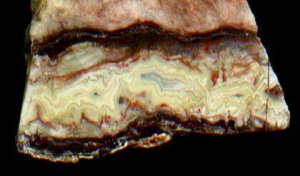
na
Location: Centreville
State: Nova Scotia
Country: Canada
Continent: North America
Date: 6/17/1999
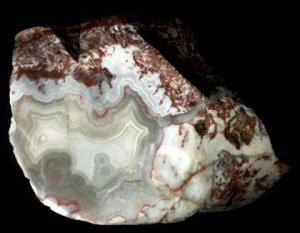
na
Location: Centreville
State: Nova Scotia
Country: Canada
Continent: North America
Date: 6/17/1999
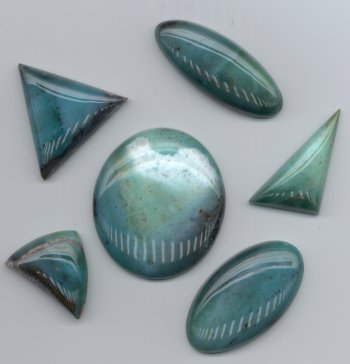
Needles, Calfornia Blue Agate
Location: Needles
State: California
Country: United States
Continent: North America
Date: 2/23/2000
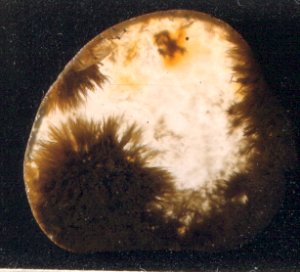
Newport Beach Agate
State: Oregon
Country: United States
Continent: North America
Date: 5/10/2000
Description: Image courtesy of Lizzadro Museum
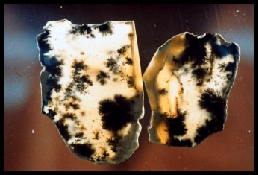
Nine Mile Dendritic Agate
State: California
Country: United States
Continent: North America
Date: 10/26/1998
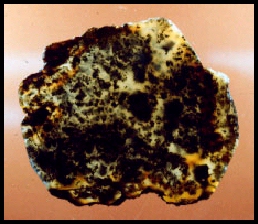
Nipomo Marcasite Agate
State: California
Country: United States
Continent: North America
Date: 10/26/1998
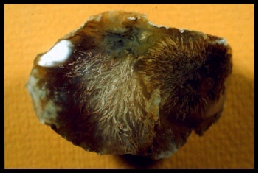
Nipomo Sagenitic Agate
State: California
Country: United States
Continent: North America
Date: 10/26/1998
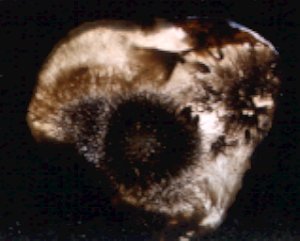
Nipomo Sagenitic Agate
State: California
Country: United States
Continent: North America
Date: 8/11/2000
Description: Image courtesy of Lizzadro Museum of Lapidary Art, Elmhurst, Illinois.
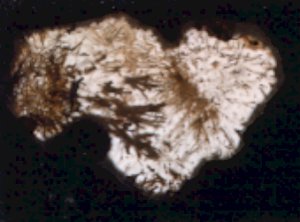
Nipomo Sagenitic Agate
State: California
Country: United States
Continent: North America
Date: 8/11/2000
Description: Image courtesy of Lizzadro Museum of Lapidary Art, Elmhurst, Illinois.
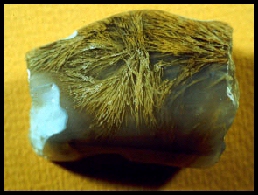
Nipomo Sagenitic Agate
State: California
Country: United States
Continent: North America
Date: 10/26/1998
Description: Reflected light.
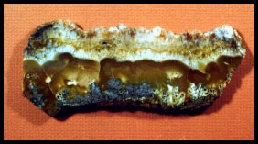
Nipomo Sagenitic Agate
State: California
Country: United States
Continent: North America
Date: 10/26/1998
Description: Reflected light.
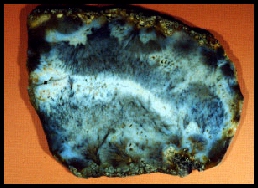
Nipomo Sagenitic Agate
State: California
Country: United States
Continent: North America
Date: 10/26/1998
Description: Reflected light.
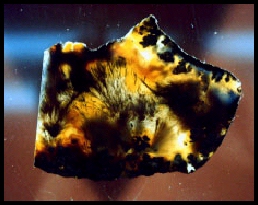
Nipomo Sagenitic Agate
State: California
Country: United States
Continent: North America
Date: 10/26/1998
Description: Transmitted light.
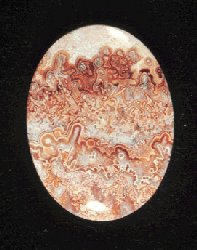
Noriega Lace Agate
State: Chihuahua
Country: Mexico
Continent: North America
Date: 10/26/1998
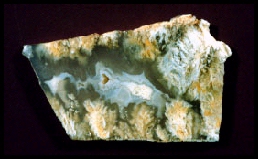
Nyedigger Ranch Plume Agate
State: Oregon
Country: United States
Continent: North America
Date: 10/26/1998
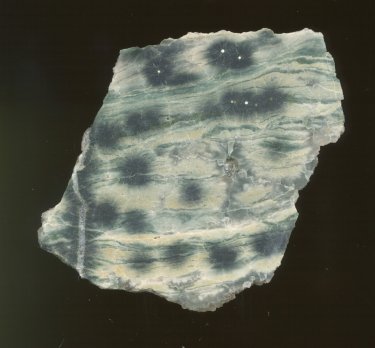
Ocean Jasper
Location: Northwest Coast
Country: Madagascar
Continent: Africa
Date: 3/7/2002
Description: Ocean Jasper, Madagascar is a trade name applied to orbicular jasper from the northwest coast of this island nation. Similar material had been observed in the gem trade for about 50 years but none had been recovered from in situ deposits until the late 1990's. Paul Obenich located the in situ deposits and the material appeared in the United States in 1999. The colors range from green, yellow, gray, blue and pink. The most prominent feature of the jasper is spherulites that range in diameter from about 1 mm to 1 cm. The material is similar in structure to such stones as Priday Polka Dot Agate from Oregon and Morgan Hill Poppy Jasper from California. Reference: Johnson, Koivula, McClure and DeGhionno (2000, p. 69).
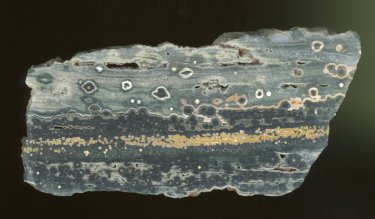
Ocean Jasper
Location: Northwest Coast
Country: Madagascar
Continent: Africa
Date: 3/7/2002
Description: Ocean Jasper, Madagascar is a trade name applied to orbicular jasper from the northwest coast of this island nation. Similar material had been observed in the gem trade for about 50 years but none had been recovered from in situ deposits until the late 1990's. Paul Obenich located the in situ deposits and the material appeared in the United States in 1999. The colors range from green, yellow, gray, blue and pink. The most prominent feature of the jasper is spherulites that range in diameter from about 1 mm to 1 cm. The material is similar in structure to such stones as Priday Polka Dot Agate from Oregon and Morgan Hill Poppy Jasper from California. Reference: Johnson, Koivula, McClure and DeGhionno (2000, p. 69).
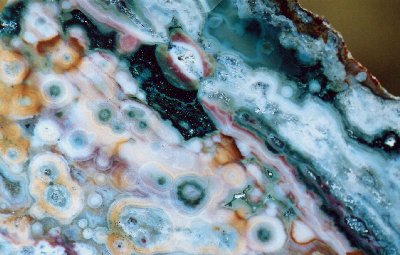
Ocean Jasper
Location: Northwest Coast
Country: Madagascar
Continent: Africa
Date: 3/7/2002
Description: Ocean Jasper [TM], Madagascar, is a trade name applied to orbicular jasper from the northwest coast of this island nation. Similar material had been observed in the gem trade for about 50 years but none had been recovered from in situ deposits in Madagascar until the late 1990's. Paul Obenich located the in situ deposits and the material appeared in the United States in 1999. The colors range from green, yellow, gray, blue and pink. The most prominent feature of the jasper is the spherulites that range in diameter from about 1 mm to 1 cm. Spherulites form when quartz and feldspar crystallize rapidly from a rhyolitic (SiO2) rich magma. The material is similar in structure to such stones as Priday Polka Dot Agate from Oregon and Morgan Hill Poppy Jasper from California. Scan area: about 5.4" x 5.5". Reference: Johnson, Koivula, McClure and DeGhionno (2000, p. 69).
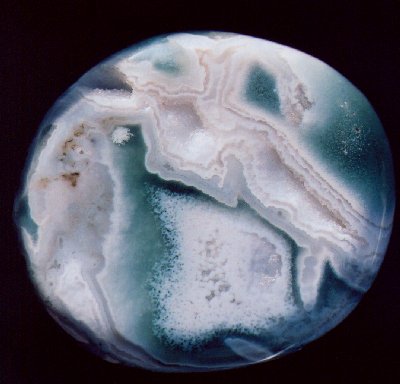
Ocean Jasper
Location: Northwest Coast
Country: Madagascar
Continent: Africa
Date: 3/7/2002
Description: Ocean Jasper [TM], Madagascar, is a trade name applied to orbicular jasper from the northwest coast of this island nation. Similar material had been observed in the gem trade for about 50 years but none had been recovered from in situ deposits in Madagascar until the late 1990's. Paul Obenich located the in situ deposits and the material appeared in the United States in 1999. The colors range from green, yellow, gray, blue and pink. The most prominent feature of the jasper is the spherulites that range in diameter from about 1 mm to 1 cm. Spherulites form when quartz and feldspar crystallize rapidly from a rhyolitic (SiO2) rich magma. The material is similar in structure to such stones as Priday Polka Dot Agate from Oregon and Morgan Hill Poppy Jasper from California. Size: about 1.5" x 1.5". Reference: Johnson, Koivula, McClure and DeGhionno (2000, p. 69).
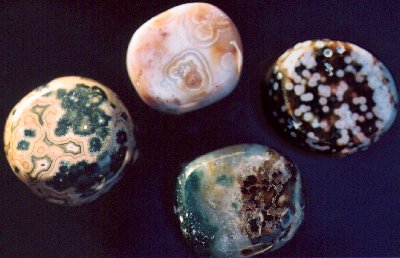
Ocean Jasper
Location: Northwest Coast
Country: Madagascar
Continent: Africa
Date: 3/7/2002
Description: Ocean Jasper [TM], Madagascar, is a trade name applied to orbicular jasper from the northwest coast of this island nation. Similar material had been observed in the gem trade for about 50 years but none had been recovered from in situ deposits in Madagascar until the late 1990's. Paul Obenich located the in situ deposits and the material appeared in the United States in 1999. The colors range from green, yellow, gray, blue and pink. The most prominent feature of the jasper is the spherulites that range in diameter from about 1 mm to 1 cm. Spherulites form when quartz and feldspar crystallize rapidly from a rhyolitic (SiO2) rich magma. The material is similar in structure to such stones as Priday Polka Dot Agate from Oregon and Morgan Hill Poppy Jasper from California. Size: about 0.7" x 1.2". Reference: Johnson, Koivula, McClure and DeGhionno (2000, p. 69).
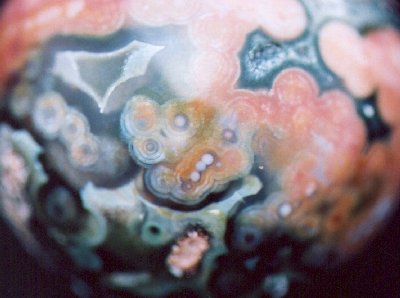
Ocean Jasper
Location: Northwest Coast
Country: Madagascar
Continent: Africa
Date: 3/7/2002
Description: Ocean Jasper [TM], Madagascar, is a trade name applied to orbicular jasper from the northwest coast of this island nation. Similar material had been observed in the gem trade for about 50 years but none had been recovered from in situ deposits in Madagascar until the late 1990's. Paul Obenich located the in situ deposits and the material appeared in the United States in 1999. The colors range from green, yellow, gray, blue and pink. The most prominent feature of the jasper is the spherulites that range in diameter from about 1 mm to 1 cm. Spherulites form when quartz and feldspar crystallize rapidly from a rhyolitic (SiO2) rich magma. The material is similar in structure to such stones as Priday Polka Dot Agate from Oregon and Morgan Hill Poppy Jasper from California. Size: about 2.0" x 2.0". Reference: Johnson, Koivula, McClure and DeGhionno (2000, p. 69).
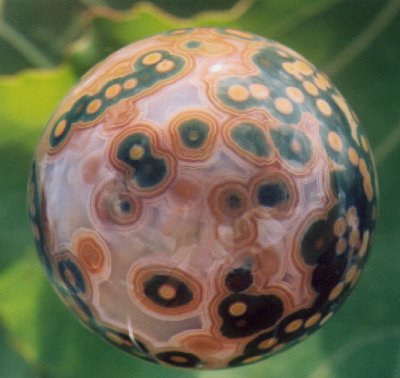
Ocean Jasper
Location: Northwest Coast
Country: Madagascar
Continent: Africa
Date: 3/7/2002
Description: Ocean Jasper [TM], Madagascar, is a trade name applied to orbicular jasper from the northwest coast of this island nation. Similar material had been observed in the gem trade for about 50 years but none had been recovered from in situ deposits in Madagascar until the late 1990's. Paul Obenich located the in situ deposits and the material appeared in the United States in 1999. The colors range from green, yellow, gray, blue and pink. The most prominent feature of the jasper is the spherulites that range in diameter from about 1 mm to 1 cm. Spherulites form when quartz and feldspar crystallize rapidly from a rhyolitic (SiO2) rich magma. The material is similar in structure to such stones as Priday Polka Dot Agate from Oregon and Morgan Hill Poppy Jasper from California. Sphere diameter: 1.6". Reference: Johnson, Koivula, McClure and DeGhionno (2000, p. 69).
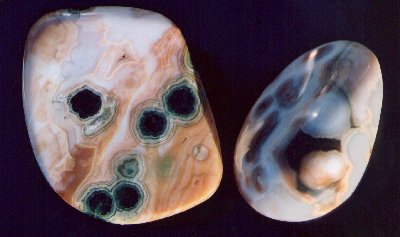
Ocean Jasper
Location: Northwest Coast
Country: Madagascar
Continent: Africa
Date: 3/7/2002
Description: Ocean Jasper [TM], Madagascar, is a trade name applied to orbicular jasper from the northwest coast of this island nation. Similar material had been observed in the gem trade for about 50 years but none had been recovered from in situ deposits in Madagascar until the late 1990's. Paul Obenich located the in situ deposits and the material appeared in the United States in 1999. The colors range from green, yellow, gray, blue and pink. The most prominent feature of the jasper is the spherulites that range in diameter from about 1 mm to 1 cm. Spherulites form when quartz and feldspar crystallize rapidly from a rhyolitic (SiO2) rich magma. The material is similar in structure to such stones as Priday Polka Dot Agate from Oregon and Morgan Hill Poppy Jasper from California. Size: about 1.5" x 2.2". Reference: Johnson, Koivula, McClure and DeGhionno (2000, p. 69).
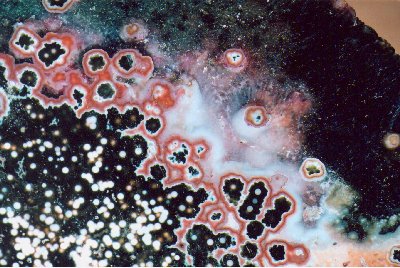
Ocean Jasper
Location: Northwest Coast
Country: Madagascar
Continent: Africa
Date: 3/7/2002
Description: Ocean Jasper [TM], Madagascar, is a trade name applied to orbicular jasper from the northwest coast of this island nation. Similar material had been observed in the gem trade for about 50 years but none had been recovered from in situ deposits in Madagascar until the late 1990's. Paul Obenich located the in situ deposits and the material appeared in the United States in 1999. The colors range from green, yellow, gray, blue and pink. The most prominent feature of the jasper is the spherulites that range in diameter from about 1 mm to 1 cm. Spherulites form when quartz and feldspar crystallize rapidly from a rhyolitic (SiO2) rich magma. The material is similar in structure to such stones as Priday Polka Dot Agate from Oregon and Morgan Hill Poppy Jasper from California. Size: about 6.2" x 6.5". Reference: Johnson, Koivula, McClure and DeGhionno (2000, p. 69).
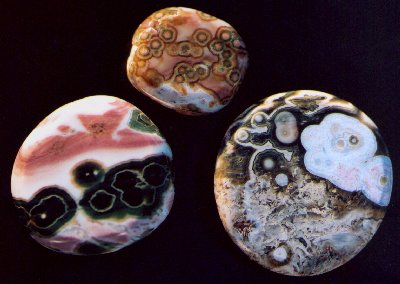
Ocean Jasper
Location: Northwest Coast
Country: Madagascar
Continent: Africa
Date: 3/7/2002
Description: Ocean Jasper [TM], Madagascar, is a trade name applied to orbicular jasper from the northwest coast of this island nation. Similar material had been observed in the gem trade for about 50 years but none had been recovered from in situ deposits in Madagascar until the late 1990's. Paul Obenich located the in situ deposits and the material appeared in the United States in 1999. The colors range from green, yellow, gray, blue and pink. The most prominent feature of the jasper is the spherulites that range in diameter from about 1 mm to 1 cm. Spherulites form when quartz and feldspar crystallize rapidly from a rhyolitic (SiO2) rich magma. The material is similar in structure to such stones as Priday Polka Dot Agate from Oregon and Morgan Hill Poppy Jasper from California. Size: about 0.9" x 1.5". Reference: Johnson, Koivula, McClure and DeGhionno (2000, p. 69).
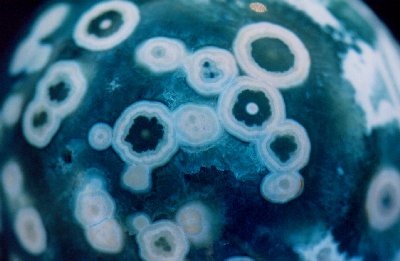
Ocean Jasper
Location: Northwest Coast
Country: Madagascar
Continent: Africa
Date: 3/7/2002
Description: Ocean Jasper [TM], Madagascar, is a trade name applied to orbicular jasper from the northwest coast of this island nation. Similar material had been observed in the gem trade for about 50 years but none had been recovered from in situ deposits in Madagascar until the late 1990's. Paul Obenich located the in situ deposits and the material appeared in the United States in 1999. The colors range from green, yellow, gray, blue and pink. The most prominent feature of the jasper is the spherulites that range in diameter from about 1 mm to 1 cm. Spherulites form when quartz and feldspar crystallize rapidly from a rhyolitic (SiO2) rich magma. The material is similar in structure to such stones as Priday Polka Dot Agate from Oregon and Morgan Hill Poppy Jasper from California. Size: about 1.3" x 1.3". Reference: Johnson, Koivula, McClure and DeGhionno (2000, p. 69).
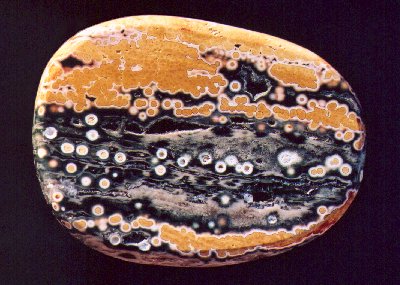
Ocean Jasper
Location: Northwest Coast
Country: Madagascar
Continent: Africa
Date: 3/7/2002
Description: Ocean Jasper [TM], Madagascar, is a trade name applied to orbicular jasper from the northwest coast of this island nation. Similar material had been observed in the gem trade for about 50 years but none had been recovered from in situ deposits in Madagascar until the late 1990's. Paul Obenich located the in situ deposits and the material appeared in the United States in 1999. The colors range from green, yellow, gray, blue and pink. The most prominent feature of the jasper is the spherulites that range in diameter from about 1 mm to 1 cm. Spherulites form when quartz and feldspar crystallize rapidly from a rhyolitic (SiO2) rich magma. The material is similar in structure to such stones as Priday Polka Dot Agate from Oregon and Morgan Hill Poppy Jasper from California. Size: about 1.6" x 2.3". Reference: Johnson, Koivula, McClure and DeGhionno (2000, p. 69).
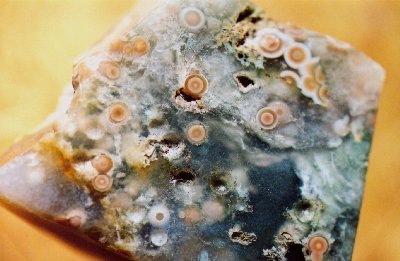
Ocean Jasper
Location: Northwest Coast
Country: Madagascar
Continent: Africa
Date: 3/7/2002
Description: Ocean Jasper [TM], Madagascar, is a trade name applied to orbicular jasper from the northwest coast of this island nation. Similar material had been observed in the gem trade for about 50 years but none had been recovered from in situ deposits in Madagascar until the late 1990's. Paul Obenich located the in situ deposits and the material appeared in the United States in 1999. The colors range from green, yellow, gray, blue and pink. The most prominent feature of the jasper is the spherulites that range in diameter from about 1 mm to 1 cm. Spherulites form when quartz and feldspar crystallize rapidly from a rhyolitic (SiO2) rich magma. The material is similar in structure to such stones as Priday Polka Dot Agate from Oregon and Morgan Hill Poppy Jasper from California. Size: about 1.8" x 2.3". Reference: Johnson, Koivula, McClure and DeGhionno (2000, p. 69).
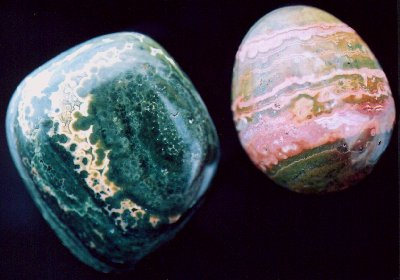
Ocean Jasper
Location: Northwest Coast
Country: Madagascar
Continent: Africa
Date: 3/7/2002
Description: Ocean Jasper [TM], Madagascar, is a trade name applied to orbicular jasper from the northwest coast of this island nation. Similar material had been observed in the gem trade for about 50 years but none had been recovered from in situ deposits in Madagascar until the late 1990's. Paul Obenich located the in situ deposits and the material appeared in the United States in 1999. The colors range from green, yellow, gray, blue and pink. The most prominent feature of the jasper is the spherulites that range in diameter from about 1 mm to 1 cm. Spherulites form when quartz and feldspar crystallize rapidly from a rhyolitic (SiO2) rich magma. The material is similar in structure to such stones as Priday Polka Dot Agate from Oregon and Morgan Hill Poppy Jasper from California. Size: about 1.6" x 2.4". Reference: Johnson, Koivula, McClure and DeGhionno (2000, p. 69).
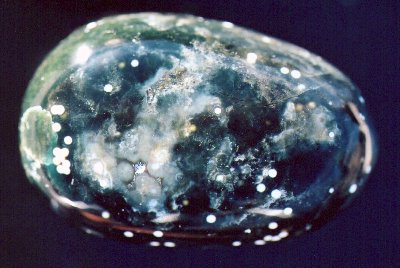
Ocean Jasper
Location: Northwest Coast
Country: Madagascar
Continent: Africa
Date: 3/7/2002
Description: Ocean Jasper [TM], Madagascar, is a trade name applied to orbicular jasper from the northwest coast of this island nation. Similar material had been observed in the gem trade for about 50 years but none had been recovered from in situ deposits in Madagascar until the late 1990's. Paul Obenich located the in situ deposits and the material appeared in the United States in 1999. The colors range from green, yellow, gray, blue and pink. The most prominent feature of the jasper is the spherulites that range in diameter from about 1 mm to 1 cm. Spherulites form when quartz and feldspar crystallize rapidly from a rhyolitic (SiO2) rich magma. The material is similar in structure to such stones as Priday Polka Dot Agate from Oregon and Morgan Hill Poppy Jasper from California. Size: about 1.7" x 2.6". Reference: Johnson, Koivula, McClure and DeGhionno (2000, p. 69).
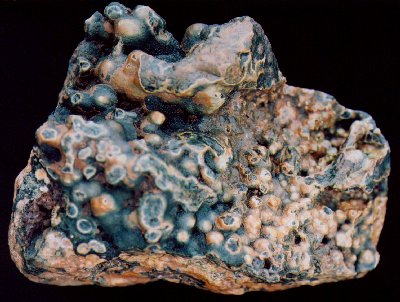
Ocean Jasper
Location: Northwest Coast
Country: Madagascar
Continent: Africa
Date: 3/7/2002
Description: Ocean Jasper [TM], Madagascar, is a trade name applied to orbicular jasper from the northwest coast of this island nation. Similar material had been observed in the gem trade for about 50 years but none had been recovered from in situ deposits in Madagascar until the late 1990's. Paul Obenich located the in situ deposits and the material appeared in the United States in 1999. The colors range from green, yellow, gray, blue and pink. The most prominent feature of the jasper is the spherulites that range in diameter from about 1 mm to 1 cm. Spherulites form when quartz and feldspar crystallize rapidly from a rhyolitic (SiO2) rich magma. The material is similar in structure to such stones as Priday Polka Dot Agate from Oregon and Morgan Hill Poppy Jasper from California. Size: about 6.0" x 7.8". Reference: Johnson, Koivula, McClure and DeGhionno (2000, p. 69).
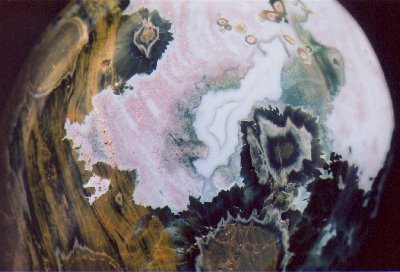
Ocean Jasper
Location: Northwest Coast
Country: Madagascar
Continent: Africa
Date: 3/7/2002
Description: Ocean Jasper [TM], Madagascar, is a trade name applied to orbicular jasper from the northwest coast of this island nation. Similar material had been observed in the gem trade for about 50 years but none had been recovered from in situ deposits in Madagascar until the late 1990's. Paul Obenich located the in situ deposits and the material appeared in the United States in 1999. The colors range from green, yellow, gray, blue and pink. The most prominent feature of the jasper is the spherulites that range in diameter from about 1 mm to 1 cm. Spherulites form when quartz and feldspar crystallize rapidly from a rhyolitic (SiO2) rich magma. The material is similar in structure to such stones as Priday Polka Dot Agate from Oregon and Morgan Hill Poppy Jasper from California. Size: about 2.3" x 2.9". Reference: Johnson, Koivula, McClure and DeGhionno (2000, p. 69).
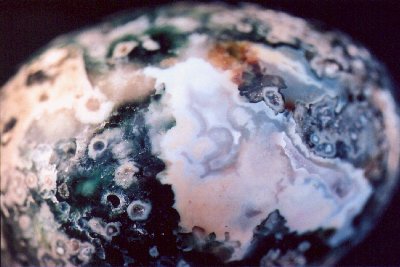
Ocean Jasper
Location: Northwest Coast
Country: Madagascar
Continent: Africa
Date: 3/7/2002
Description: Ocean Jasper [TM], Madagascar, is a trade name applied to orbicular jasper from the northwest coast of this island nation. Similar material had been observed in the gem trade for about 50 years but none had been recovered from in situ deposits in Madagascar until the late 1990's. Paul Obenich located the in situ deposits and the material appeared in the United States in 1999. The colors range from green, yellow, gray, blue and pink. The most prominent feature of the jasper is the spherulites that range in diameter from about 1 mm to 1 cm. Spherulites form when quartz and feldspar crystallize rapidly from a rhyolitic (SiO2) rich magma. The material is similar in structure to such stones as Priday Polka Dot Agate from Oregon and Morgan Hill Poppy Jasper from California. Size: about 2.2" x 2.8". Reference: Johnson, Koivula, McClure and DeGhionno (2000, p. 69).
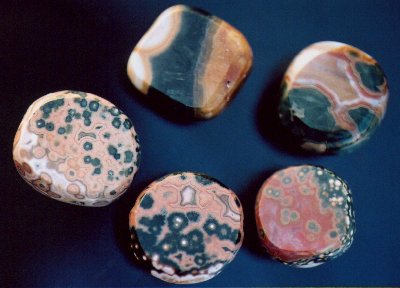
Ocean Jasper
Location: Northwest Coast
Country: Madagascar
Continent: Africa
Date: 3/7/2002
Description: Ocean Jasper [TM], Madagascar, is a trade name applied to orbicular jasper from the northwest coast of this island nation. Similar material had been observed in the gem trade for about 50 years but none had been recovered from in situ deposits in Madagascar until the late 1990's. Paul Obenich located the in situ deposits and the material appeared in the United States in 1999. The colors range from green, yellow, gray, blue and pink. The most prominent feature of the jasper is the spherulites that range in diameter from about 1 mm to 1 cm. Spherulites form when quartz and feldspar crystallize rapidly from a rhyolitic (SiO2) rich magma. The material is similar in structure to such stones as Priday Polka Dot Agate from Oregon and Morgan Hill Poppy Jasper from California. Size: about 0.6" x 1.2". Reference: Johnson, Koivula, McClure and DeGhionno (2000, p. 69).
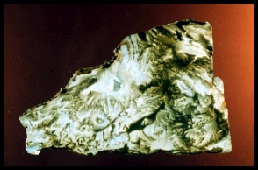
Ochoco Plume Agate
State: Oregon
Country: United States
Continent: North America
Date: 10/26/1998
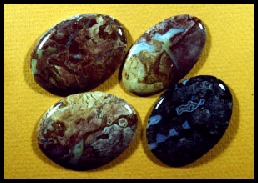
Ohio Gem Flint
State: Ohio
Country: United States
Continent: North America
Date: 10/26/1998
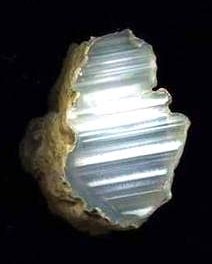
Onyx Agate
Location: Khur Agate Field
Country: Iran
Continent: Asia
Date: 4/20/2001
Description: Fine parallel oriented layers characterize these onyx agates. The Khur agate and geode fields are situated at 55o 17' 45" E and 33o 39' 25" N, approximately 25 km (15.5 miles) southeast of the city of Khur, between Tehran and Yazd. This locality is in Iran. The agate nodules and geodes have formed in altered tuffs of lower to middle Eocene age. In some places the tuffaceous layers are completely altered to the clay mineral montmorillonite (bentonite).
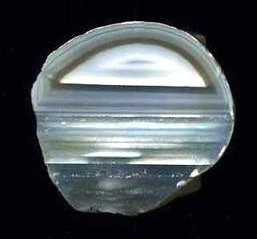
Onyx Agate
Location: Khur Agate Field
Country: Iran
Continent: Asia
Date: 4/20/2001
Description: Fine parallel oriented layers characterize these onyx agates. The Khur agate and geode fields are situated at 55o 17' 45" E and 33o 39' 25" N, approximately 25 km (15.5 miles) southeast of the city of Khur, between Tehran and Yazd. This locality is in Iran. The agate nodules and geodes have formed in altered tuffs of lower to middle Eocene age. In some places the tuffaceous layers are completely altered to the clay mineral montmorillonite (bentonite).
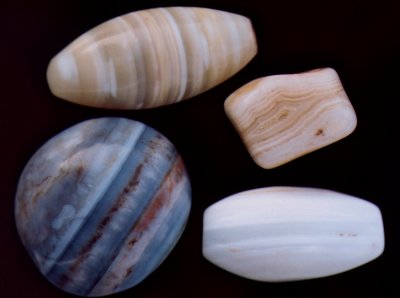
Onyx and Fortification Agates
Country: Mali
Continent: Africa
Date: 11/27/2001
Description: Size range: 0.4" to 1.7"
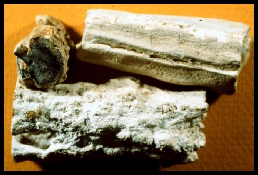
Opalized Wood
Location: Deming
State: New Mexico
Country: United States
Continent: North America
Date: 10/26/1998
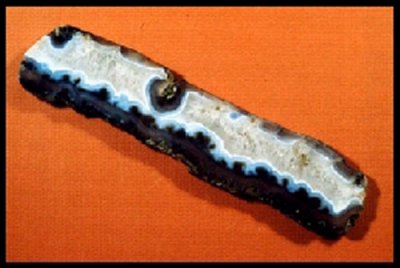
Owl Hole Sagenitic Agate
State: California
Country: United States
Continent: North America
Date: 2/2/2001
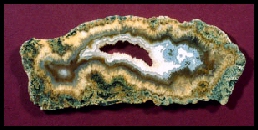
Owl Hole Sagenitic Agate
State: California
Country: United States
Continent: North America
Date: 10/26/1998
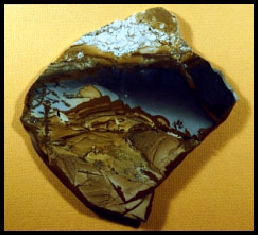
Owyhee Picture Jasper
State: Oregon
Country: United States
Continent: North America
Date: 10/26/1998
Description: Owyhee Jasper, Oregon, ---a colorful and popular picture jasper that probably derives its name from the Owyhee River 43o 48' 46" N and 117o 01' 28" W and Owyhee Canyon that extends from 43o 12' 13" N to 43o 44' 20" N and 117o 37' 29" to 117o 10' 45" W, Malheur County, Oregon, Owyhee, Hole in the Ground, and Owyhee Dam maps, U. S. Geological Survey, 7.5 minute series (topographic). This material has been offered under several trade names including Owyhee Jasper Agate, Owyhee Junction Jasper, Owyhee Picture Jasper, Owyhee Picture Rock, etc. (see lexicon for more complete listing of synonyms).
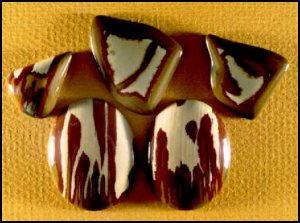
Owyhee Picture Jasper
State: Oregon
Country: United States
Continent: North America
Date: 5/5/1999
Description: Owyhee Jasper, Oregon, ---a colorful and popular picture jasper that probably derives its name from the Owyhee River 43o 48' 46" N and 117o 01' 28" W and Owyhee Canyon that extends from 43o 12' 13" N to 43o 44' 20" N and 117o 37' 29" to 117o 10' 45" W, Malheur County, Oregon, Owyhee, Hole in the Ground, and Owyhee Dam maps, U. S. Geological Survey, 7.5 minute series (topographic). This material has been offered under several trade names including Owyhee Jasper Agate, Owyhee Junction Jasper, Owyhee Picture Jasper, Owyhee Picture Rock, etc. (see lexicon for more complete listing of synonyms).
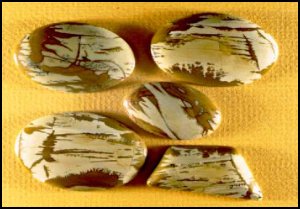
Owyhee Picture Jasper
State: Oregon
Country: United States
Continent: North America
Date: 5/5/1999
Description: Owyhee Jasper, Oregon, ---a colorful and popular picture jasper that probably derives its name from the Owyhee River 43o 48' 46" N and 117o 01' 28" W and Owyhee Canyon that extends from 43o 12' 13" N to 43o 44' 20" N and 117o 37' 29" to 117o 10' 45" W, Malheur County, Oregon, Owyhee, Hole in the Ground, and Owyhee Dam maps, U. S. Geological Survey, 7.5 minute series (topographic). This material has been offered under several trade names including Owyhee Jasper Agate, Owyhee Junction Jasper, Owyhee Picture Jasper, Owyhee Picture Rock, etc. (see lexicon for more complete listing of synonyms).
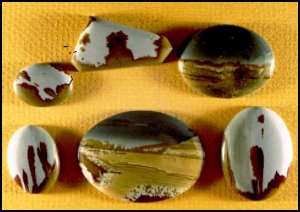
Owyhee Picture Jasper
State: Oregon
Country: United States
Continent: North America
Date: 5/5/1999
Description: Owyhee Jasper, Oregon, ---a colorful and popular picture jasper that probably derives its name from the Owyhee River 43o 48' 46" N and 117o 01' 28" W and Owyhee Canyon that extends from 43o 12' 13" N to 43o 44' 20" N and 117o 37' 29" to 117o 10' 45" W, Malheur County, Oregon, Owyhee, Hole in the Ground, and Owyhee Dam maps, U. S. Geological Survey, 7.5 minute series (topographic). This material has been offered under several trade names including Owyhee Jasper Agate, Owyhee Junction Jasper, Owyhee Picture Jasper, Owyhee Picture Rock, etc. (see lexicon for more complete listing of synonyms).
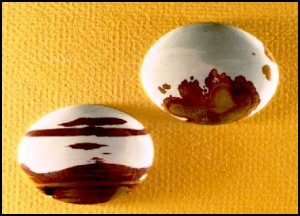
Owyhee Picture Jasper
State: Oregon
Country: United States
Continent: North America
Date: 5/5/1999
Description: Owyhee Jasper, Oregon, ---a colorful and popular picture jasper that probably derives its name from the Owyhee River 43o 48' 46" N and 117o 01' 28" W and Owyhee Canyon that extends from 43o 12' 13" N to 43o 44' 20" N and 117o 37' 29" to 117o 10' 45" W, Malheur County, Oregon, Owyhee, Hole in the Ground, and Owyhee Dam maps, U. S. Geological Survey, 7.5 minute series (topographic). This material has been offered under several trade names including Owyhee Jasper Agate, Owyhee Junction Jasper, Owyhee Picture Jasper, Owyhee Picture Rock, etc. (see lexicon for more complete listing of synonyms).
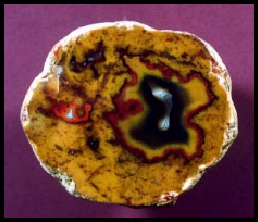
Paint Rock Agate
State: Alabama
Country: United States
Continent: North America
Date: 10/26/1998
Description: Paint Rock Agate, Alabama, ...a banded, probably marine sedimentary agate plumes and bands of red or yellow. Named for either Paint Rock River, 34o 28' 34" N and 86o 28' 04" W, Marshall County, or the town of Paint Rock, 34o 39' 38" N and 86o 19' 44" W, Jackson County. See Watts (1965, p. 370-373), who first applied the term to materials found out of place in gravel in Alabama. Zeitner (1968, p. 1212-1226,1230) also stated these agates came from Jackson County, Alabama; Owens (1980, p. 1524-1531) used the term "Paint Rock Agate" for agates found mostly in place in the Bangor Formation of late Mississippian age in Tennessee and mentioned that the river flowed into Alabama. Colored illustrations in adv., Wisconsin Gems & custom Jewelry, Lapidary Journal, v. 45, no. 7, p. 66.
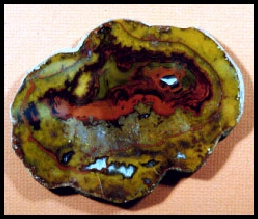
Paint Rock Agate
State: Alabama
Country: United States
Continent: North America
Date: 10/26/1998
Description: Paint Rock Agate, Alabama, ...a banded, probably marine sedimentary agate plumes and bands of red or yellow. Named for either Paint Rock River, 34o 28' 34" N and 86o 28' 04" W, Marshall County, or the town of Paint Rock, 34o 39' 38" N and 86o 19' 44" W, Jackson County. See Watts (1965, p. 370-373), who first applied the term to materials found out of place in gravel in Alabama. Zeitner (1968, p. 1212-1226,1230) also stated these agates came from Jackson County, Alabama; Owens (1980, p. 1524-1531) used the term "Paint Rock Agate" for agates found mostly in place in the Bangor Formation of late Mississippian age in Tennessee and mentioned that the river flowed into Alabama. Colored illustrations in adv., Wisconsin Gems & custom Jewelry, Lapidary Journal, v. 45, no. 7, p. 66.
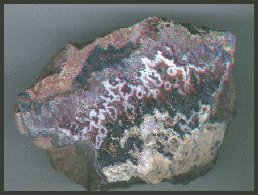
Paisley Lace Agate
Location: Wiley Well area, Riverside County
State: California
Country: United States
Continent: North America
Date: 8/16/2001
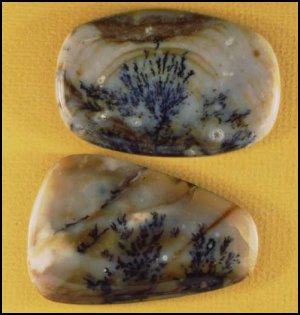
Paiute Agate
State: Oregon
Country: United States
Continent: North America
Date: 5/28/1999
Description: Paiute Agate, Oregon, local name, probably named for the area in and around Paiute Reservoir, 43o 37' 26" N and 119o 02' 24" W, Harney County, Oregon, Burns Map, U. S. Geological Survey, 7.5' x 7.5'. Usually a massive, black and white to light yellow brown, dendritic agate in nearly opaque matrix.
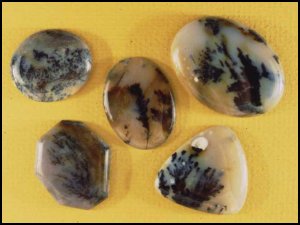
Paiute Agate
State: Oregon
Country: United States
Continent: North America
Date: 5/28/1999
Description: Paiute Agate, Oregon, local name, probably named for the area in and around Paiute Reservoir, 43o 37' 26" N and 119o 02' 24" W, Harney County, Oregon, Burns Map, U. S. Geological Survey, 7.5' x 7.5'. Usually a massive, black and white to light yellow brown, dendritic agate in nearly opaque matrix.
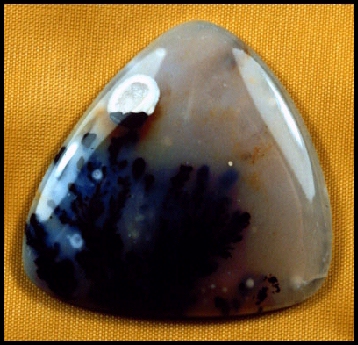
Paiute Dendritic Agate
Location: Oregon/Nevada border
State: Oregon
Country: United States
Continent: North America
Date: 10/26/1998
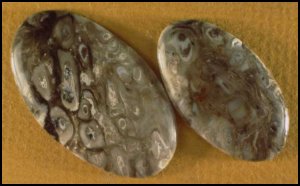
Palm Root
Location: numerous localities
State: California
Country: United States
Continent: North America
Date: 5/30/1999
Description: Palm Root, agatized roots of palm trees, characterized by large, irregular eye-like structures; it has been reported from numerous localities in California, Texas, Nebraska, Colorado. See Middle Butte, Ogilby, etc.
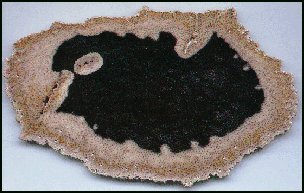
Palm Wood Agate
Location: Eastern Texas
State: Texas
Country: United States
Continent: North America
Date: 12/10/1998
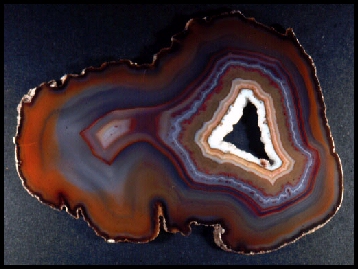
Parana Agate
Country: Brazil
Continent: South America
Date: 10/26/1998
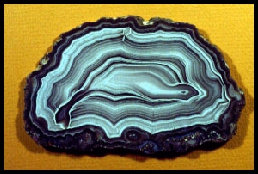
Parcellas Agate
State: Chihuahua
Country: Mexico
Continent: North America
Date: 10/26/1998
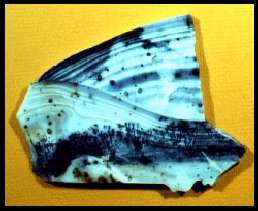
Parral Dendritic Agate
State: Chihuahua
Country: Mexico
Continent: North America
Date: 10/26/1998
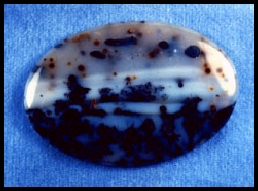
Parral Dendritic Agate
State: Chihuahua
Country: Mexico
Continent: North America
Date: 10/26/1998
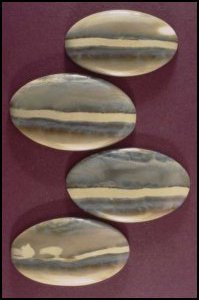
Pastelite
State: Arizona
Country: United States
Continent: North America
Date: 5/28/1999
Description: Pastelite, term used for pink, orange, brown, and white jasper from vicinity of secs. 5, 6, 7, 8, T. 14 N., R. 10 W., secs 1, 12, T. 14 N. R. 11 W., and secs. 31, 32, 33, T. 15 N., R. 10 W., Yavapai and Mohave Counties, Arizona, Grayback Mountains Quadrangle, U. S. Geological Survey, 7.5 Minute Series (Topographic). See Simpson and Mitchell, 1989. Secs. 35, T. 1 S., R. 19 W., Yuma County, Arizona, Stone Cabin Quadrangle, U. S. Geological Survey, 7.5 Minute Series (Topographic). See Simpson & Mitchell, 1989. Approximately 114o 7' 30" W, 33o 22' 30"N, Yuma County, Arizona, Palm Canyon Road Quadrangle? U. S. Geological Survey, 7.5 Minute Series (Topographic) Simpson & Mitchell (1989).
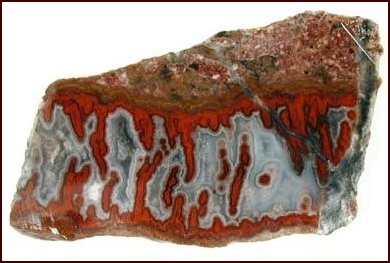
Paul Bunyon Agate
State: California
Country: United States
Continent: North America
Date: 4/23/2002
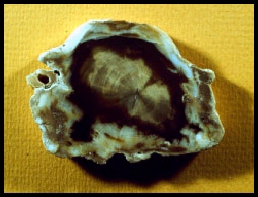
Petrified Wood
Location: Saddle Mountain
State: Washington
Country: United States
Continent: North America
Date: 10/26/1998
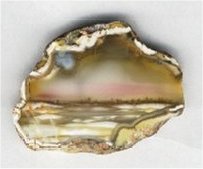
Picture Agate
Location: Barossa Station, Canterbury
Country: New Zealand
Continent: Australia
Date: 8/12/2002
Description: Picture Agate, with scene resembling Coober Pedy (Australia) Opal mining area, Barossa Station, Canterbury, New Zealand (South Island).
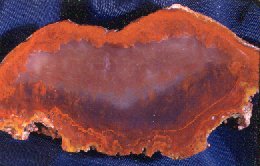
Pigeon Blood Agate
Location: near Cisco
State: Utah
Country: United States
Continent: North America
Date: 10/26/1998
Description: Image courtesy of Lizzadro Museum
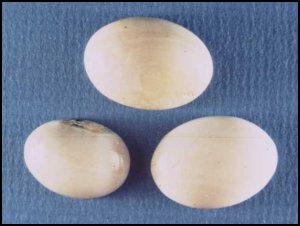
Pink Agate
Location: Lynmouth
Country: England
Continent: Europe
Date: 5/27/1999
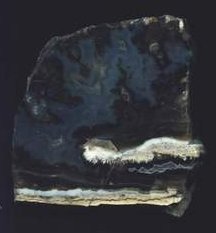
Plume Agate
Location: Khur Agate Field
Country: Iran
Continent: Asia
Date: 4/20/2001
Description: The Khur agate and geode fields are situated at 55o 17' 45" E and 33o 39' 25" N, approximately 25 km (15.5 miles) southeast of the city of Khur, between Tehran and Yazd. This locality is in Iran. The agate nodules and geodes have formed in altered tuffs of lower to middle Eocene age. In some places the tuffaceous layers are completely altered to the clay mineral montmorillonite (bentonite).
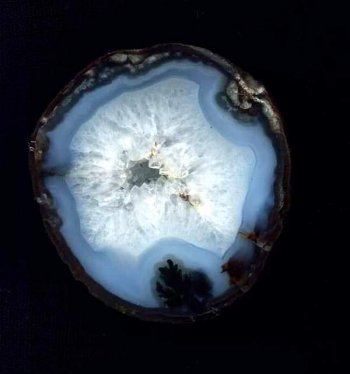
Plume Agate
Location: Khur Agate Field
Country: Iran
Continent: Asia
Date: 4/20/2001
Description: The Khur agate and geode fields are situated at 55o 17' 45" E and 33o 39' 25" N, approximately 25 km (15.5 miles) southeast of the city of Khur, between Tehran and Yazd. This locality is in Iran. The agate nodules and geodes have formed in altered tuffs of lower to middle Eocene age. In some places the tuffaceous layers are completely altered to the clay mineral montmorillonite (bentonite).
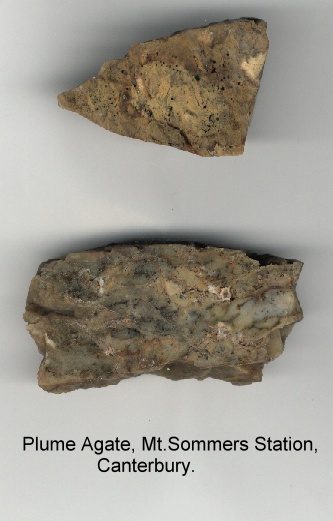
Plume Agate
Location: Mount Sommers Station, Canterbury
Country: New Zealand
Continent: Australia
Date: 2/4/2003
Description: South Island
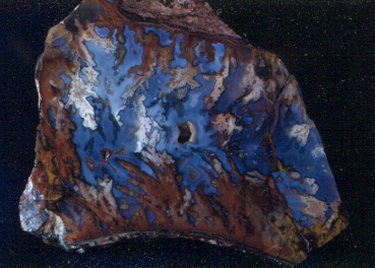
Plume Agate
Location: Challis
State: Idaho
Country: United States
Continent: North America
Date: 5/10/2000
Description: Image courtesy of Lizzadro Museum of Lapidary Art, Elmhurst, Illinois.
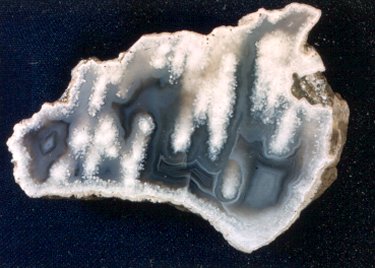
Plume Agate
Location: Challis
State: Idaho
Country: United States
Continent: North America
Date: 5/10/2000
Description: Image courtesy of Lizzadro Museum of Lapidary Art, Elmhurst, Illinois.
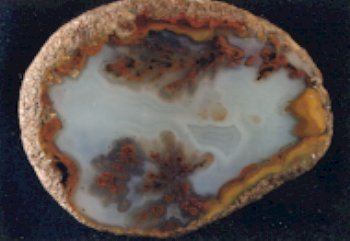
Plume Agate
Location: Alpine
State: Texas
Country: United States
Continent: North America
Date: 8/11/2000
Description: Image courtesy of Lizzadro Museum of Lapidary Art, Elmhurst, Illinois.
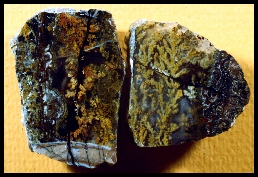
Plume Agate
Location: Deming
State: New Mexico
Country: United States
Continent: North America
Date: 10/26/1998
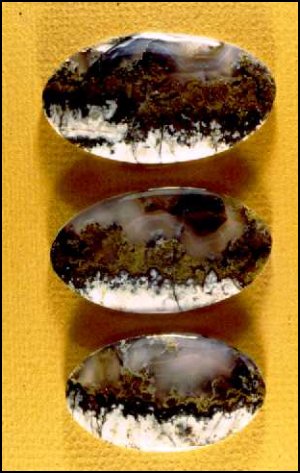
Plume Agate
Location: Deming area
State: New Mexico
Country: United States
Continent: North America
Date: 5/5/1999
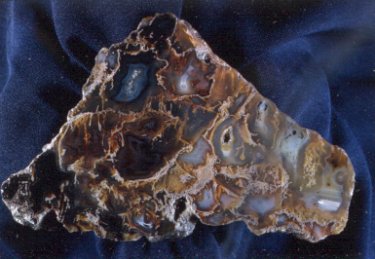
Plume Agate
Location: Succor Creek area, near Nyssa
State: Oregon
Country: United States
Continent: North America
Date: 5/10/2000
Description: Image courtesy of Lizzadro Museum
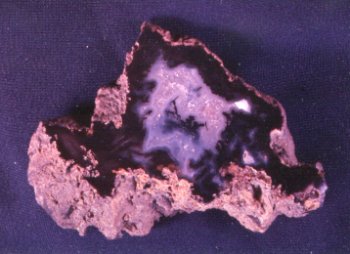
Plume Agate
Location: Succor Creek area, near Nyssa
State: Oregon
Country: United States
Continent: North America
Date: 5/10/2000
Description: Image courtesy of Lizzadro Museum
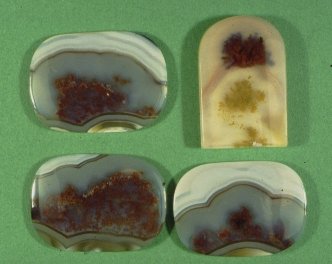
Plume Agates
Location: Rio Grande Do Sul
Country: Brazil
Continent: South America
Date: 6/18/1999
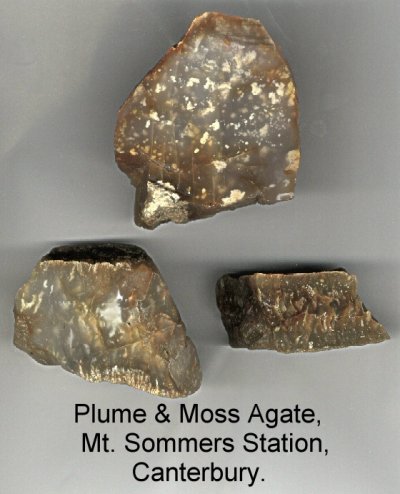
Plume and Moss Agates
Location: Mount Sommers Station, Canterbury
Country: New Zealand
Continent: Australia
Date: 2/4/2003
Description: South Island
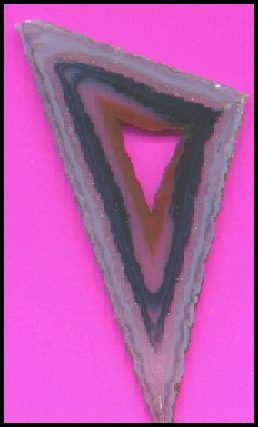
Polyhedroid of Agate
Location: Rio Grande Do Sul
Country: Brazil
Continent: South America
Date: 10/26/1998
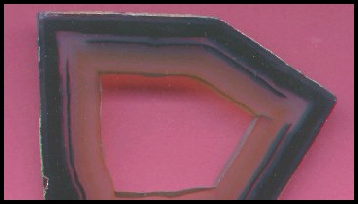
Polyhedroid of Agate
Location: Rio Grande Do Sul
Country: Brazil
Continent: South America
Date: 10/26/1998
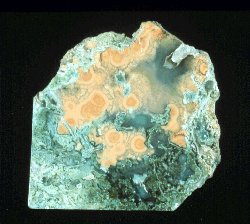
Pom Pom Agate
Location: West Texas
State: Texas
Country: United States
Continent: North America
Date: 10/26/1998
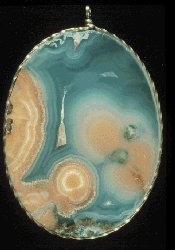
Pom Pom Agate
Location: West Texas
State: Texas
Country: United States
Continent: North America
Date: 10/26/1998
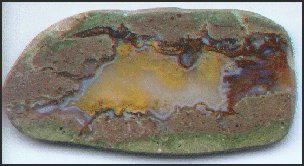
Pom Pom Agate
Location: Brewster County
State: Texas
Country: United States
Continent: North America
Date: 12/10/1998
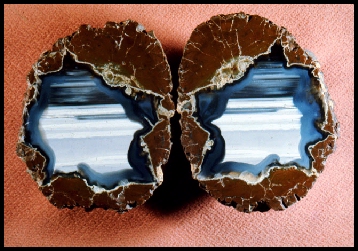
Pony Butte Thunder Egg
State: Oregon
Country: United States
Continent: North America
Date: 10/26/1998
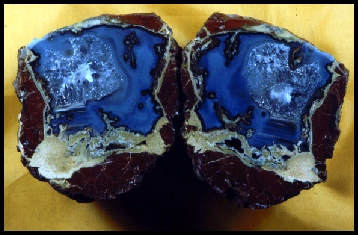
Pony Butte Thunder Egg
State: Oregon
Country: United States
Continent: North America
Date: 10/26/1998
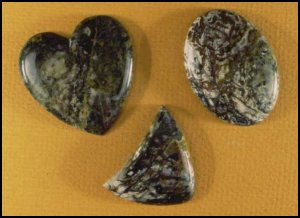
Pope Creek Jasper
State: California
Country: United States
Continent: North America
Date: 5/30/1999
Description: Pope Creek Jasper, probably a local name; a green jasper with white and yellow stringers, named for Pope Creek that flows from 38o 37' 22" N and 122o 15' 52" W to 38o 42' 02" N and 122o 29' 32" W, Napa and Lake counties, California, Chiles Valley, Walter Springs and Aetna Springs maps, U. S. Geological Survey, 7.5' x 7.5'. The jasper may be derived from either the Knoxville Formation (Upper Jurassic) or from undivided lower Cretaceous marine units according to maps compiled by Koenig (1963).
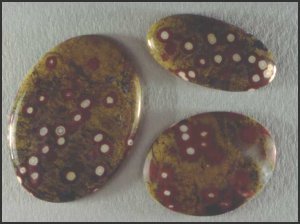
Poppy Jasper
State: California
Country: United States
Continent: North America
Date: 2/2/2001
Description: Poppy jasper, California, term used as early as 1940 in adv., Warner and Grieger, Hobbies, v. 45, no. 9, p. 111. See W. S. Shirey. Where Llagos Creek Passes under U. S. Hwy 101, California. Hagar, D., 1946. A few California locations, Earth Science Digest, v. 1, no. 5, p. 8-9. On Llagas Creek, 121o 42' 30" W, 37o 07" 30" N. ...reds, browns, yellows, Mexico, adv., Gorin's Gemarts & Rocks, Lapidary Journal, v. 15, no. 1, p. 65. Ferguson (1977, p. 1794-1800) used the name Guadalupe Jasper for this material. Synonym: Paradise Jasper, which see.
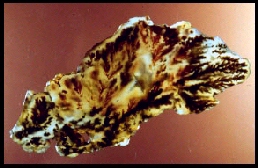
Powell Butte Plume Agate
State: Oregon
Country: United States
Continent: North America
Date: 10/26/1998
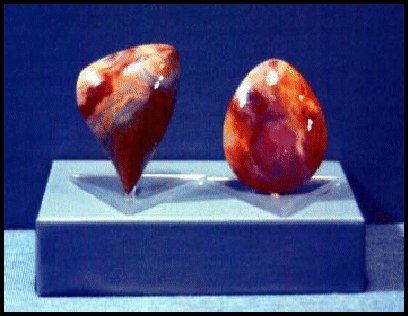
Prairie Agate
State: Nebraska
Country: United States
Continent: North America
Date: 10/29/1998
Description: Prairie Agate, the Nebraska State Rock, is found in about the same areas as Fairburn Agate. Prairie Agate does not have the fine banding that characterizes Fairburn Agates, but it can be transformed into very fine cabochons (an unfaceted cut gemstone of domed or convex form). These were fashioned by Bill White.
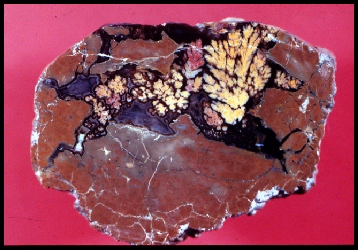
Priday Plume Agate
State: Oregon
Country: United States
Continent: North America
Date: 10/26/1998
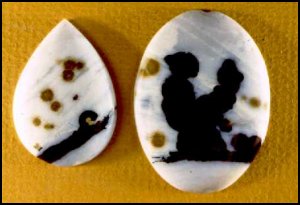
Priday Polka Dot Agate
State: Oregon
Country: United States
Continent: North America
Date: 5/5/1999
Description: Priday Polka Dot Agate, Oregon, adv., Central Oregon Gem Supply Earth Science, v. 13, no. 2, p. 73. The term is used as early as 1934 by Dake (The Mineralogist, v. 2, no. 5, p. 8, 9) and the name appears as early as 1935 in an adv., E. A. Southwick, Hobbies, v. 40, no. 5, p. 112. Forbes (1936, p. 168) reported this material from Pony Butte, Jefferson County, Oregon (see in lexicon). Name appears in 1954 catalogue for Gem Exchange (Gem Village), Bayfield, Colorado, p. 7. See Priday Polka Dot Agate in lexicon for other name
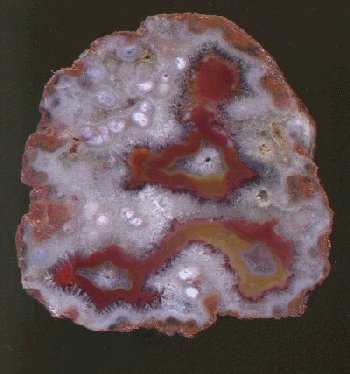
Puma Agate
Location: Andes Mountains, Patagonia
Country: Argentina
Continent: South America
Date: 1/13/2003
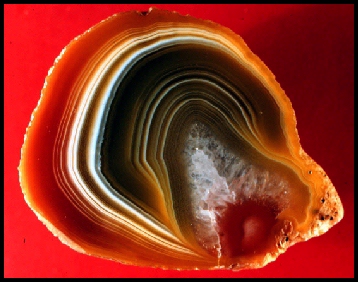
Queensland Agate
Location: Agate Creek
State: Queensland
Country: Australia
Continent: Australia
Date: 10/26/1998
Description: Queensland Agate, Agate Creek, Queensland, Australia. These are highly colorful amygdaloidal agates that formed in the Agate Creek Volcanics of Permian age that are exposed on Agate Creek about 11 miles northwest of Percyville. These rocks were first described by Cameron (1900) and Hill and Denmead (1960) stated that there are additional exposures of these volcanics about 8.5 miles north of Gilberton Station. Ridgway (1945, p. 299, 300) described mining of vein agate from this area and he stated that the material was used in war time to make precision bearings for military purposes. Term appears in an advertizement by Stones and Findings of Australia, Pty., Limited, Lapidary Journal, v. 21, no. 1, p. 33.
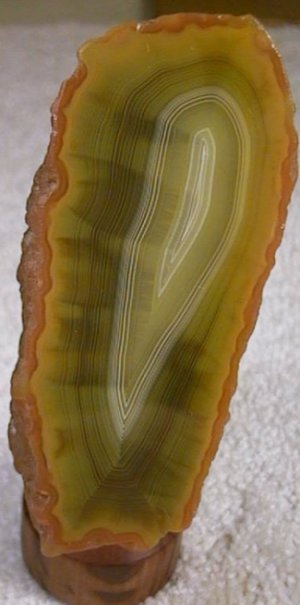
Queensland Agate
Location: Agate Creek
State: Queensland
Country: Australia
Continent: Australia
Date: 3/10/2000
Description: Queensland Agate, Agate Creek, Queensland, Australia. These are highly colorful amygdaloidal agates that formed in the Agate Creek Volcanics of Permian age that are exposed on Agate Creek about 11 miles northwest of Percyville. These rocks were first described by Cameron (1900) and Hill and Denmead (1960) stated that there are additional exposures of these volcanics about 8.5 miles north of Gilberton Station. Ridgway (1945, p. 299, 300) described mining of vein agate from this area and he stated that the material was used in war time to make precision bearings for military purposes. Term appears in an advertizement by Stones and Findings of Australia, Pty., Limited, Lapidary Journal, v. 21, no. 1, p. 33.
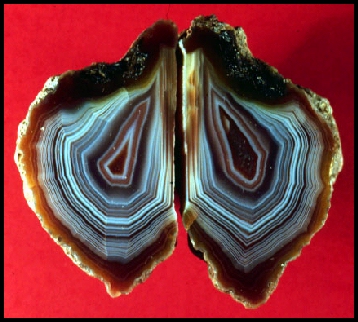
Queensland Agate
Location: Agate Creek
State: Queensland
Country: Australia
Continent: Australia
Date: 10/26/1998
Description: Queensland Agate, Agate Creek, Queensland, Australia. These are highly colorful amygdaloidal agates that formed in the Agate Creek Volcanics of Permian age that are exposed on Agate Creek about 11 miles northwest of Percyville. These rocks were first described by Cameron (1900) and Hill and Denmead (1960) stated that there are additional exposures of these volcanics about 8.5 miles north of Gilberton Station. Ridgway (1945, p. 299, 300) described mining of vein agate from this area and he stated that the material was used in war time to make precision bearings for military purposes. Term appears in an advertizement by Stones and Findings of Australia, Pty., Limited, Lapidary Journal, v. 21, no. 1, p. 33.
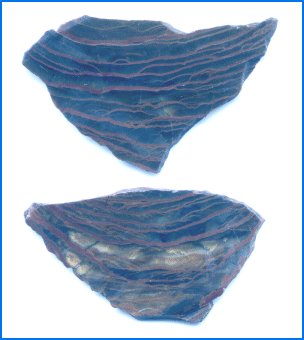
Ramshorn Mountain Jasper
State: Montana
Country: United States
Continent: North America
Date: 3/8/1999
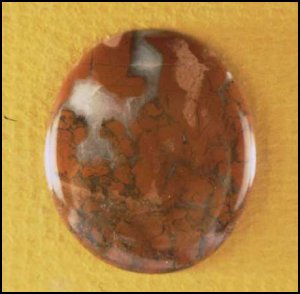
Red River Jasper
Country: South Africa
Continent: Africa
Date: 5/27/1999
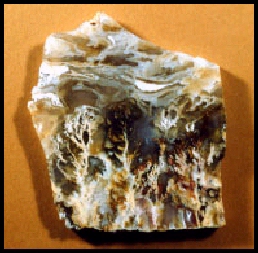
Regency Rose Agate
State: Idaho
Country: United States
Continent: North America
Date: 10/26/1998
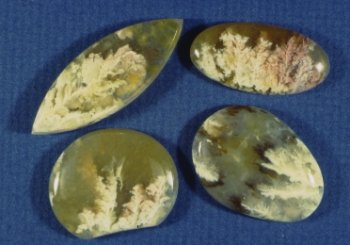
Regency Rose Agate
State: Idaho
Country: United States
Continent: North America
Date: 6/18/1999
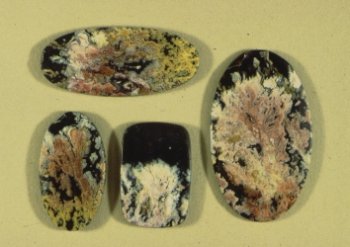
Regency Rose Agate
State: Idaho
Country: United States
Continent: North America
Date: 6/18/1999
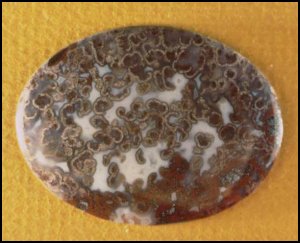
Rio Grande Agate
State: Texas
Country: United States
Continent: North America
Date: 5/30/1999
Description: Rio Grande Agate, Texas, for various plume, moss, lace, sagenitic, and fortification agates found in the Rio Grande River gravels of Holocene age and in terrace gravels of the Rio Grande River of Pleistocene age. Recorded deposits extend from about Laredo, Texas, southeastward to Brownsville. Similar agates probably are found in gravels and terraces to the west and northwest. Dake (1940, p. 487 and 1946, p. 50-52) probably first recorded these agates and stated that they are red, green jasp-agates and moss agates and were brought to his attention by Mr. J. E. Applewhite, who suggested they were washed into the Mc-Allen-Laredo, Texas, areas from western sources. Zeitner (1964, p. 86) stated---it had no particular name so I will call it Rio Grande agate, but later in the same article stated that ranchers called any stone "Rio Grande Agate", and that years earlier she had purchased Rio Grande agate. In the same article (p. 89) Zeitner used the term Valley Agates to describe this material. Zeitner suggested that these agates were similar to agates from the Big Bend area that are now described as Woodward Ranch, Pom-Pom, Thistle and other varieties of agate.
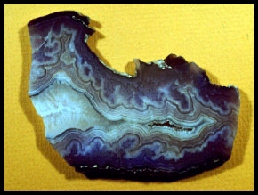
Royal Aztec Purple Agate
State: Durango
Country: Mexico
Continent: North America
Date: 10/26/1998
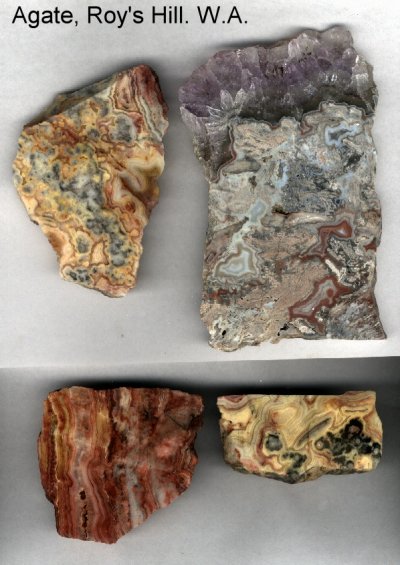
Roy's Hill Agate
Location: Roy's Hill
State: Western Australia
Country: Australia
Continent: Australia
Date: 1/7/2003
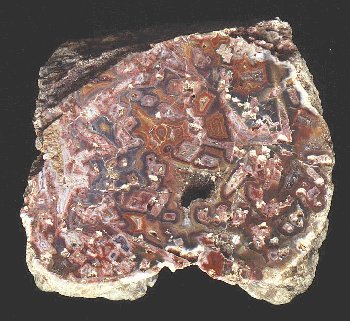
Ruin Agate
Location: Alzey, near Mainz
Country: Germany
Continent: Europe
Date: 10/28/1998
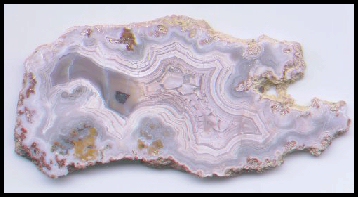
Ruin Agate
Location: Rancho Burunda, Ojo De Laguna
State: Chihuahua
Country: Mexico
Continent: North America
Date: 10/26/1998
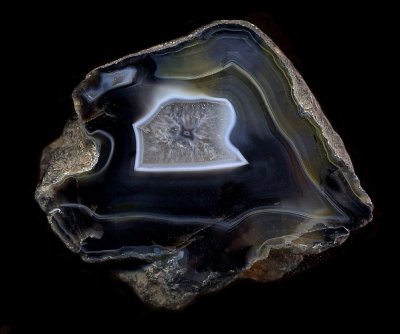
Russian Agate
Location: Chukot(-ski) Peninsula
Country: Russia
Continent: Asia
Date: 10/17/2003
Description: Agate from Timan deposit, 7.3 x 5 x 2.3 cm.
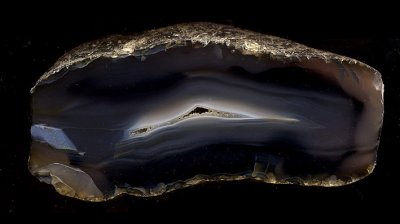
Russian Agate
Location: Chukot(-ski) Peninsula
Country: Russia
Continent: Asia
Date: 10/17/2003
Description: Agate from Chukot(-ski) peninsula, 12 x 5x 4 cm.
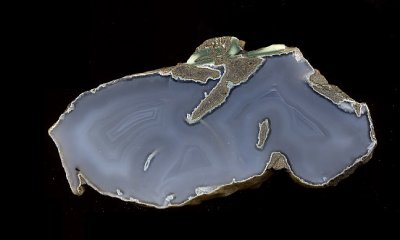
Russian Agate
Location: Dalnegorsk Region
Country: Russia
Continent: Asia
Date: 10/17/2003
Description: Agate from Dalnegorsk region, Omgu deposit, 9 x 4 x 3 cm.
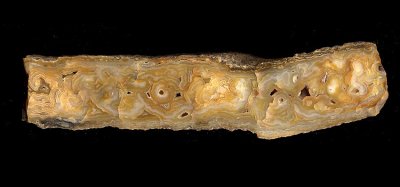
Russian Agate
Location: Middle Ural
Country: Russia
Continent: Asia
Date: 10/17/2003
Description: Agate from Middle Ural, 19.5 x 4 x 3 cm.
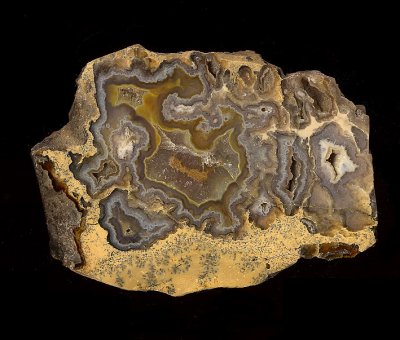
Russian Agate
Location: Golutvin Quarry, Moscow region
Country: Russia
Continent: Asia
Date: 10/17/2003
Description: Agate in limestone, 12 x 9 x 1.5 cm, Moscow region, Golutvin quarry.
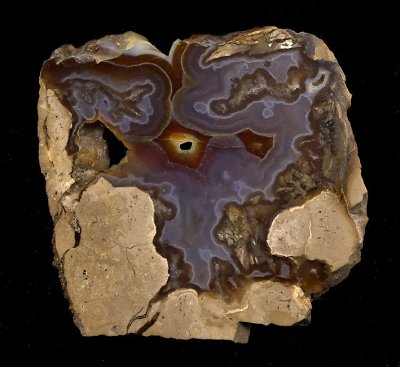
Russian Agate
Location: Golutvin Quarry, Moscow region
Country: Russia
Continent: Asia
Date: 10/17/2003
Description: Agate in limestone, 11.5 x 12 x1 cm, Moscow region, Golutvin quarry.
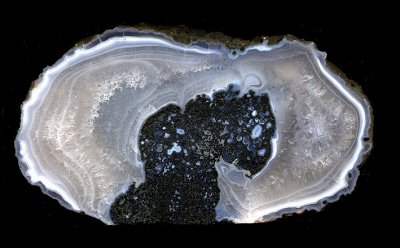
Russian Agate
Country: Russia
Continent: Asia
Date: 10/17/2003
Description: Agate from Timan deposit, 13.5 x 7 x 2.5 cm.
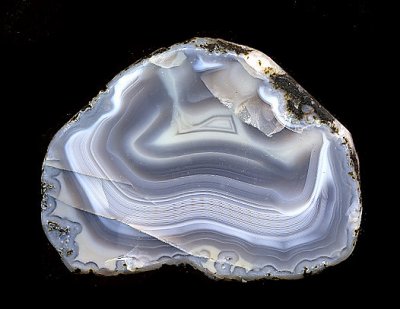
Russian Agate
Country: Russia
Continent: Asia
Date: 10/17/2003
Description: Agate from Timan deposit, 7.3 x 5 x 2.3 cm.
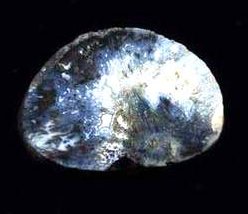
Sagenetic Agate
Location: Khur Agate Field
Country: Iran
Continent: Asia
Date: 4/20/2001
Description: These agates contain inclusions of such minerals as goethite and aragonite. The Khur agate and geode fields are situated at 55o 17' 45" E and 33o 39' 25" N, approximately 25 km (15.5 miles) southeast of the city of Khur, between Tehran and Yazd. This locality is in Iran. The agate nodules and geodes have formed in altered tuffs of lower to middle Eocene age. In some places the tuffaceous layers are completely altered to the clay mineral montmorillonite (bentonite).
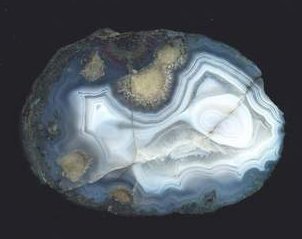
Sagenitic Agate
Location: Khur Agate Field
Country: Iran
Continent: Asia
Date: 4/20/2001
Description: These agates contain inclusions of such minerals as goethite and aragonite. The Khur agate and geode fields are situated at 55o 17' 45" E and 33o 39' 25" N, approximately 25 km (15.5 miles) southeast of the city of Khur, between Tehran and Yazd. This locality is in Iran. The agate nodules and geodes have formed in altered tuffs of lower to middle Eocene age. In some places the tuffaceous layers are completely altered to the clay mineral montmorillonite (bentonite).
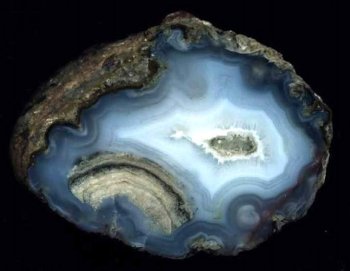
Sagenitic Agate
Location: Khur Agate Field
Country: Iran
Continent: Asia
Date: 4/20/2001
Description: These agates contain inclusions of such minerals as goethite and aragonite. The Khur agate and geode fields are situated at 55o 17' 45" E and 33o 39' 25" N, approximately 25 km (15.5 miles) southeast of the city of Khur, between Tehran and Yazd. This locality is in Iran. The agate nodules and geodes have formed in altered tuffs of lower to middle Eocene age. In some places the tuffaceous layers are completely altered to the clay mineral montmorillonite (bentonite).
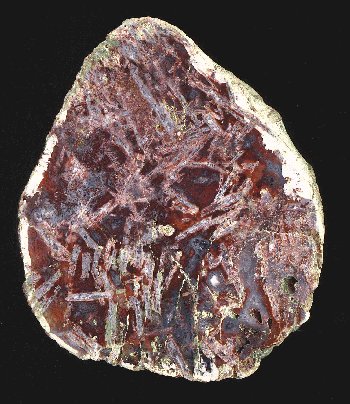
Sagenitic Agate
Location: Alzey, near Mainz
Country: Germany
Continent: Europe
Date: 10/28/1998
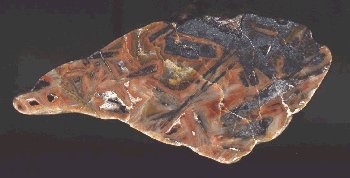
Sagenitic Agate
Location: Alzey, near Mainz
Country: Germany
Continent: Europe
Date: 10/28/1998
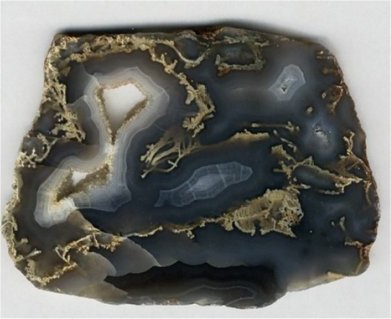
Sagenitic Agate
Location: Rangatata Gorge, Canterbury
Country: New Zealand
Continent: Australia
Date: 8/12/2002
Description: South Island
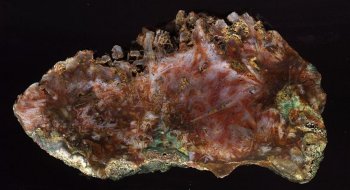
Sagenitic Agate
Location: Cubuk
Country: Turkey
Continent: Asia
Date: 9/12/2000
Description: Sagenitic Agates from currently unknown host rock from Cubuk, about 100 km. north of Ankara.
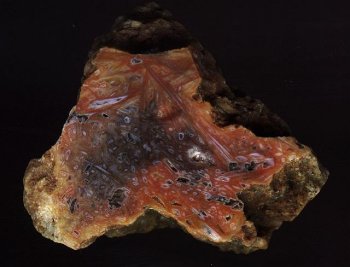
Sagenitic Agate
Location: Cubuk
Country: Turkey
Continent: Asia
Date: 9/12/2000
Description: Sagenitic Agates from currently unknown host rock from Cubuk, about 100 km. north of Ankara.
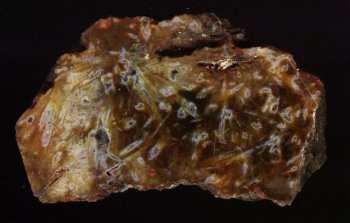
Sagenitic Agate
Location: Cubuk
Country: Turkey
Continent: Asia
Date: 9/12/2000
Description: Sagenitic Agates from currently unknown host rock from Cubuk, about 100 km. north of Ankara.
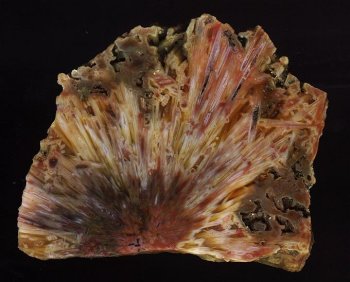
Sagenitic Agate
Location: Cubuk
Country: Turkey
Continent: Asia
Date: 9/12/2000
Description: Sagenitic Agates from currently unknown host rock from Cubuk, about 100 km. north of Ankara.
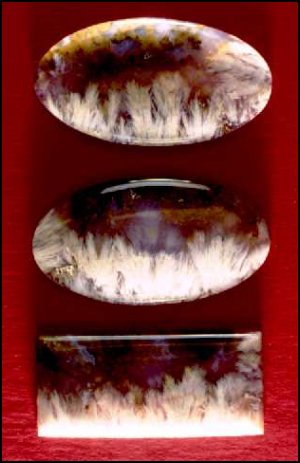
Sagenitic Agate
State: Durango
Country: Mexico
Continent: North America
Date: 5/5/1999
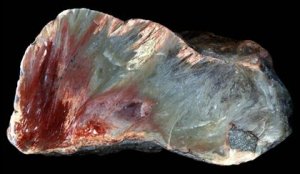
Sagenitic Agate
Location: Morden
State: Nova Scotia
Country: Canada
Continent: North America
Date: 6/17/1999
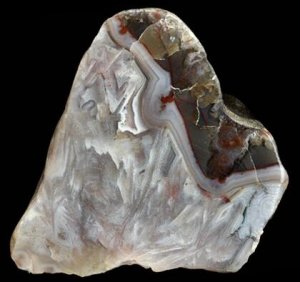
Sagenitic Agate
Location: Morden
State: Nova Scotia
Country: Canada
Continent: North America
Date: 6/17/1999
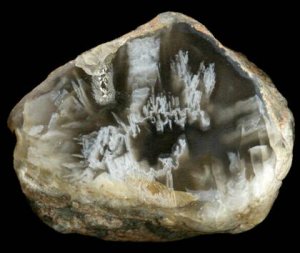
Sagenitic Agate
Location: Morden
State: Nova Scotia
Country: Canada
Continent: North America
Date: 6/17/1999
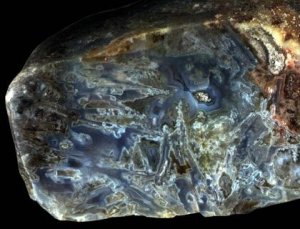
Sagenitic Agate
Location: Morden
State: Nova Scotia
Country: Canada
Continent: North America
Date: 6/17/1999
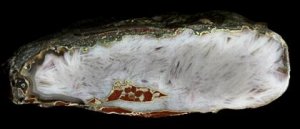
Sagenitic Agate
Location: Morden
State: Nova Scotia
Country: Canada
Continent: North America
Date: 6/17/1999
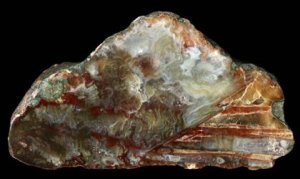
Sagenitic Agate
Location: Morden
State: Nova Scotia
Country: Canada
Continent: North America
Date: 6/17/1999
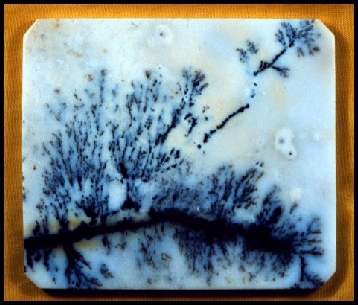
Sagenitic Agate
Location: Snake River
State: Idaho
Country: United States
Continent: North America
Date: 10/26/1998
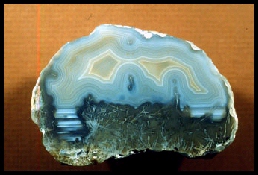
Sagenitic Agate
Location: Wolf Creek Pass
State: Colorado
Country: United States
Continent: North America
Date: 10/26/1998
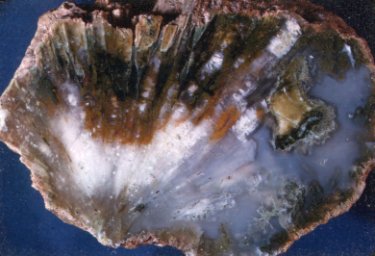
Sagenitic Agate
Location: Antelope
State: Oregon
Country: United States
Continent: North America
Date: 4/27/2000
Description: Image courtesy of Lizzadro Museum
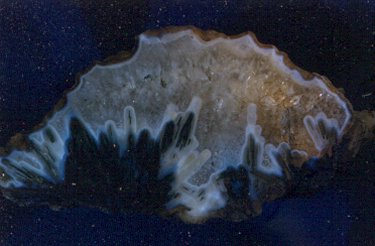
Sagenitic Agate
Location: Antelope
State: Oregon
Country: United States
Continent: North America
Date: 4/27/2000
Description: Image courtesy of Lizzadro Museum
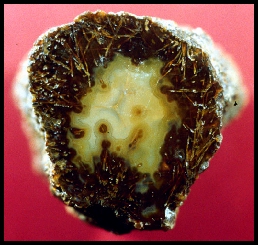
Sagenitic Agate
Location: Kent
State: Washington
Country: United States
Continent: North America
Date: 10/26/1998
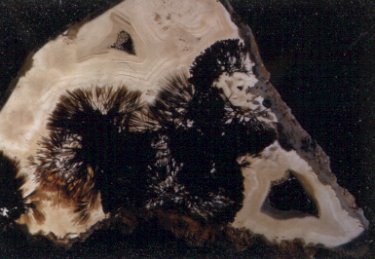
Sagenitic Agate
Location: Succor Creek, near Oregon/Idaho border
State: Oregon
Country: United States
Continent: North America
Date: 4/27/2000
Description: Image courtesy of Lizzadro Museum
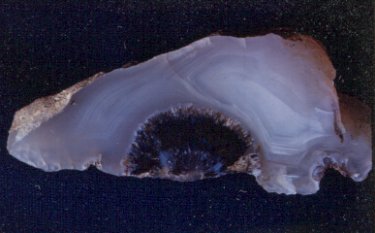
Sagenitic Agate
Location: Succor Creek, near Oregon/Idaho border
State: Oregon
Country: United States
Continent: North America
Date: 4/27/2000
Description: Image courtesy of Lizzadro Museum
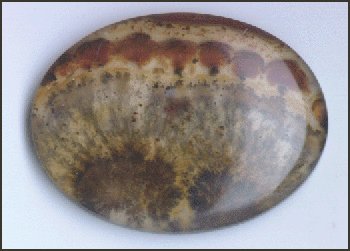
Sagenitic Agate Doublet
Country: Brazil
Continent: South America
Date: 10/26/1998
Description: Doublets are produced by cementing a clear quartz or synthetic spinel layer over a thin slice of other gem material. Stone by Bill White.
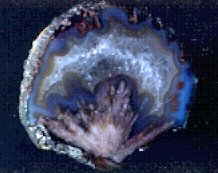
Sagenitic Coconut Geode
State: Chihuahua
Country: Mexico
Continent: North America
Date: 8/11/2000
Description: Image courtesy of Lizzadro Museum of Lapidary Art, Elmhurst, Illinois.
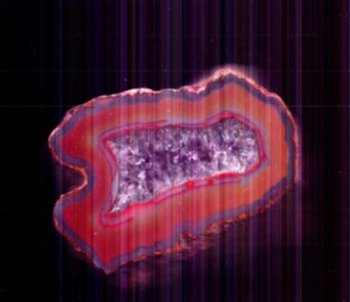
San Carlos Red Agate
State: Durango
Country: Mexico
Continent: North America
Date: 8/17/1999
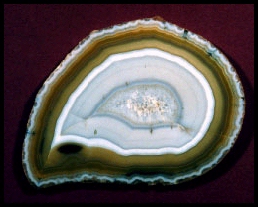
San Luis Potosi Agate
State: San Luis Potosi
Country: Mexico
Continent: North America
Date: 10/26/1998
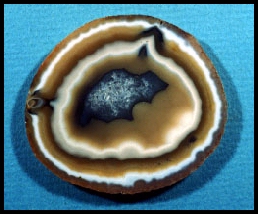
San Luis Potosi Agate
State: San Luis Potosi
Country: Mexico
Continent: North America
Date: 10/26/1998
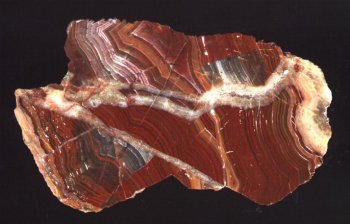
Schlottwitz Brecciated Agate
Location: Schlottwitz
Country: Germany
Continent: Europe
Date: 1/18/2000
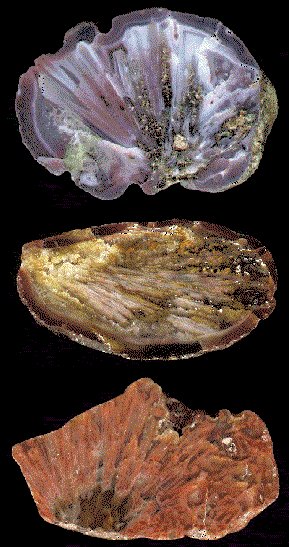
Scolecite in Agate
Location: Nack, near Alzey, Mainz
Country: Germany
Continent: Europe
Date: 10/26/1998
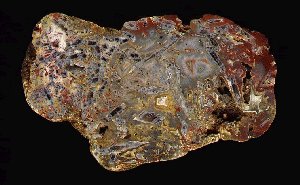
Scolesite Agate
Location: Lathum, near Arnheim
Country: Netherlands
Continent: Europe
Date: 11/20/1998
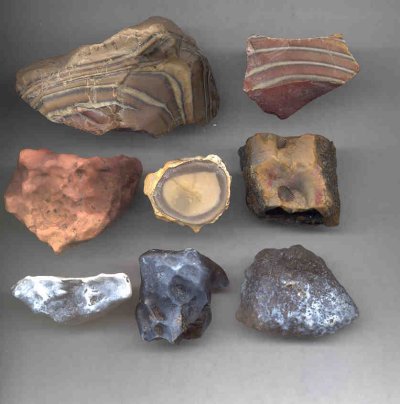
Shirley Basin Agates
Location: Shirley Basin
State: Wyoming
Country: United States
Continent: North America
Date: 8/24/2000
Description: Shirley Basin Agates, Shirley Basin, Wyoming, local name, the term has been applied to various examples of agate, jasper and chert. Most of the material has been observed as orphans. Much of the material is similar to the wood-grained cherts that have been recorded by DeCelles and Gutschick (1983, 1175-1191). They determined that the banded structure of the wood-grained chert was caused by alternating carbonaceous and quartzose bands in a silica matrix. Some moss agates have also been found in the Shirley Basin and at least one mine has been active there in the recent past.
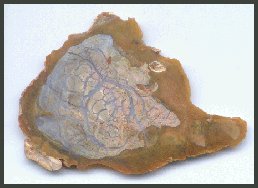
Siam Agate, Siam Siding
Location: San Bernadino County
State: California
Country: United States
Continent: North America
Date: 10/26/1998
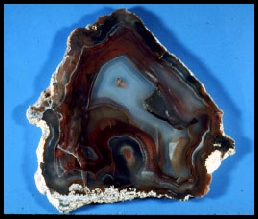
Smoke and Fire Agate
State: Chihuahua
Country: Mexico
Continent: North America
Date: 10/26/1998
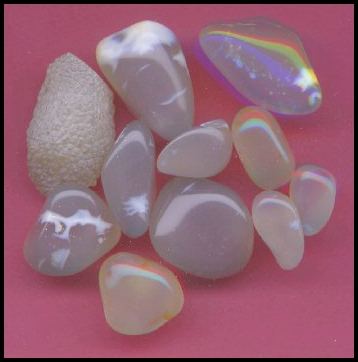
Snakeskin Agate
State: Oregon
Country: United States
Continent: North America
Date: 10/26/1999
Description: One rough and several tumble polished pieces.
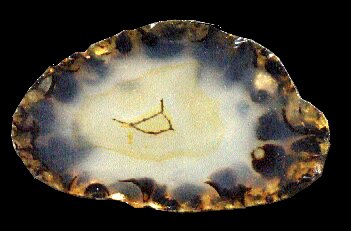
Souris Agate
Location: Souris
State: Manitoba
Country: Canada
Continent: North America
Date: 1/16/2002
Description: Souris Agate, for Souris, Manitoba, Canada, have been collected from a locality about 50 miles northwest of the International Peace Gardens, on Highway No. 2, ...a Montana type agate with various colors, dendrite, and scenes. Ormerod (1964, p. 704) reported that these were derived from glacial sources; they are generally pastel colors and may have moss or dendrites. ...clear to bluish agate with black patterns, dendrites, fortifications, that are similar to Montana Agate. See Hotson (1972, p. 1044-1048). Name also appeared in adv., Souris Rock & Agate, Lapidary Journal, v. 17, no. 1, p. 149, and adv., Souris Rock & Agate, Lapidary Journal, v. 18, no. 1, p. 130.
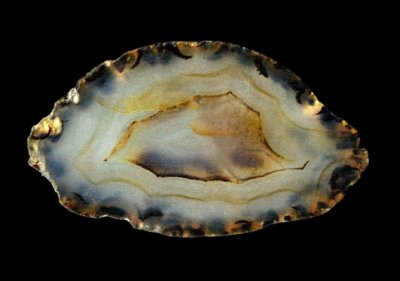
Souris Agate
Location: Souris
State: Manitoba
Country: Canada
Continent: North America
Date: 1/16/2002
Description: Souris Agate, for Souris, Manitoba, Canada, have been collected from a locality about 50 miles northwest of the International Peace Gardens, on Highway No. 2, ...a Montana type agate with various colors, dendrite, and scenes. Ormerod (1964, p. 704) reported that these were derived from glacial sources; they are generally pastel colors and may have moss or dendrites. ...clear to bluish agate with black patterns, dendrites, fortifications, that are similar to Montana Agate. See Hotson (1972, p. 1044-1048). Name also appeared in adv., Souris Rock & Agate, Lapidary Journal, v. 17, no. 1, p. 149, and adv., Souris Rock & Agate, Lapidary Journal, v. 18, no. 1, p. 130.
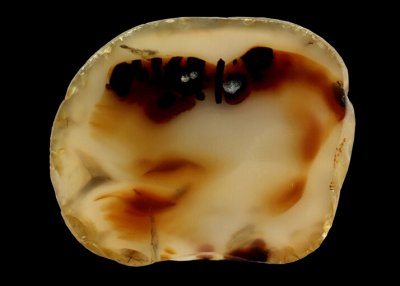
Souris Agate
Location: Souris
State: Manitoba
Country: Canada
Continent: North America
Date: 1/16/2002
Description: Souris Agate, for Souris, Manitoba, Canada, have been collected from a locality about 50 miles northwest of the International Peace Gardens, on Highway No. 2, ...a Montana type agate with various colors, dendrite, and scenes. Ormerod (1964, p. 704) reported that these were derived from glacial sources; they are generally pastel colors and may have moss or dendrites. ...clear to bluish agate with black patterns, dendrites, fortifications, that are similar to Montana Agate. See Hotson (1972, p. 1044-1048). Name also appeared in adv., Souris Rock & Agate, Lapidary Journal, v. 17, no. 1, p. 149, and adv., Souris Rock & Agate, Lapidary Journal, v. 18, no. 1, p. 130.
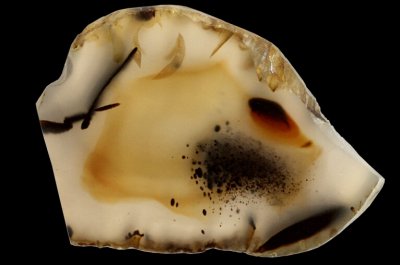
Souris Agate
Location: Souris
State: Manitoba
Country: Canada
Continent: North America
Date: 1/16/2002
Description: Souris Agate, for Souris, Manitoba, Canada, have been collected from a locality about 50 miles northwest of the International Peace Gardens, on Highway No. 2, ...a Montana type agate with various colors, dendrite, and scenes. Ormerod (1964, p. 704) reported that these were derived from glacial sources; they are generally pastel colors and may have moss or dendrites. ...clear to bluish agate with black patterns, dendrites, fortifications, that are similar to Montana Agate. See Hotson (1972, p. 1044-1048). Name also appeared in adv., Souris Rock & Agate, Lapidary Journal, v. 17, no. 1, p. 149, and adv., Souris Rock & Agate, Lapidary Journal, v. 18, no. 1, p. 130.
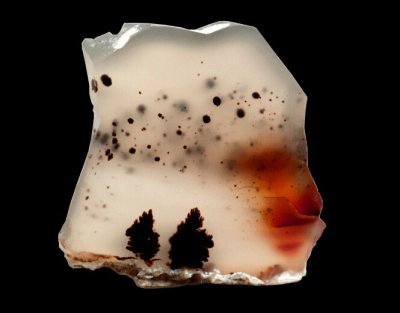
Souris Agate
Location: Souris
State: Manitoba
Country: Canada
Continent: North America
Date: 1/16/2002
Description: Souris Agate, for Souris, Manitoba, Canada, have been collected from a locality about 50 miles northwest of the International Peace Gardens, on Highway No. 2, ...a Montana type agate with various colors, dendrite, and scenes. Ormerod (1964, p. 704) reported that these were derived from glacial sources; they are generally pastel colors and may have moss or dendrites. ...clear to bluish agate with black patterns, dendrites, fortifications, that are similar to Montana Agate. See Hotson (1972, p. 1044-1048). Name also appeared in adv., Souris Rock & Agate, Lapidary Journal, v. 17, no. 1, p. 149, and adv., Souris Rock & Agate, Lapidary Journal, v. 18, no. 1, p. 130.
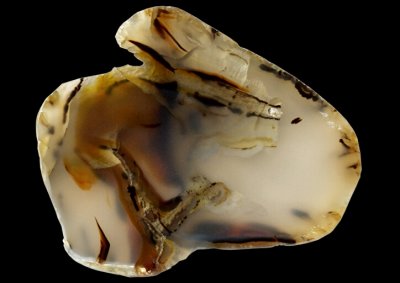
Souris Agate
Location: Souris
State: Manitoba
Country: Canada
Continent: North America
Date: 1/16/2002
Description: Souris Agate, for Souris, Manitoba, Canada, have been collected from a locality about 50 miles northwest of the International Peace Gardens, on Highway No. 2, ...a Montana type agate with various colors, dendrite, and scenes. Ormerod (1964, p. 704) reported that these were derived from glacial sources; they are generally pastel colors and may have moss or dendrites. ...clear to bluish agate with black patterns, dendrites, fortifications, that are similar to Montana Agate. See Hotson (1972, p. 1044-1048). Name also appeared in adv., Souris Rock & Agate, Lapidary Journal, v. 17, no. 1, p. 149, and adv., Souris Rock & Agate, Lapidary Journal, v. 18, no. 1, p. 130.
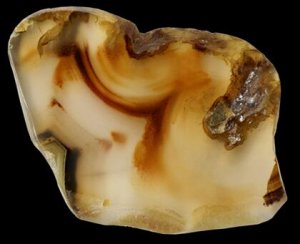
Souris Agate
Location: Souris
State: Manitoba
Country: Canada
Continent: North America
Date: 1/16/2002
Description: Souris Agate, for Souris, Manitoba, Canada, have been collected from a locality about 50 miles northwest of the International Peace Gardens, on Highway No. 2, ...a Montana type agate with various colors, dendrite, and scenes. Ormerod (1964, p. 704) reported that these were derived from glacial sources; they are generally pastel colors and may have moss or dendrites. ...clear to bluish agate with black patterns, dendrites, fortifications, that are similar to Montana Agate. See Hotson (1972, p. 1044-1048). Name also appeared in adv., Souris Rock & Agate, Lapidary Journal, v. 17, no. 1, p. 149, and adv., Souris Rock & Agate, Lapidary Journal, v. 18, no. 1, p. 130.
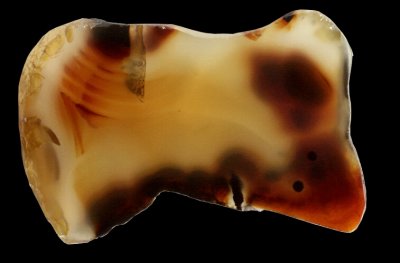
Souris Agate
Location: Souris
State: Manitoba
Country: Canada
Continent: North America
Date: 1/16/2002
Description: Souris Agate, for Souris, Manitoba, Canada, have been collected from a locality about 50 miles northwest of the International Peace Gardens, on Highway No. 2, ...a Montana type agate with various colors, dendrite, and scenes. Ormerod (1964, p. 704) reported that these were derived from glacial sources; they are generally pastel colors and may have moss or dendrites. ...clear to bluish agate with black patterns, dendrites, fortifications, that are similar to Montana Agate. See Hotson (1972, p. 1044-1048). Name also appeared in adv., Souris Rock & Agate, Lapidary Journal, v. 17, no. 1, p. 149, and adv., Souris Rock & Agate, Lapidary Journal, v. 18, no. 1, p. 130.
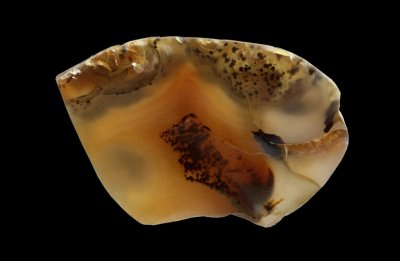
Souris Agate
Location: Souris
State: Manitoba
Country: Canada
Continent: North America
Date: 1/16/2002
Description: Souris Agate, for Souris, Manitoba, Canada, have been collected from a locality about 50 miles northwest of the International Peace Gardens, on Highway No. 2, ...a Montana type agate with various colors, dendrite, and scenes. Ormerod (1964, p. 704) reported that these were derived from glacial sources; they are generally pastel colors and may have moss or dendrites. ...clear to bluish agate with black patterns, dendrites, fortifications, that are similar to Montana Agate. See Hotson (1972, p. 1044-1048). Name also appeared in adv., Souris Rock & Agate, Lapidary Journal, v. 17, no. 1, p. 149, and adv., Souris Rock & Agate, Lapidary Journal, v. 18, no. 1, p. 130.
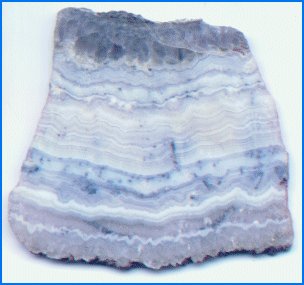
Sowbelly Agate
State: Colorado
Country: United States
Continent: North America
Date: 3/8/1999
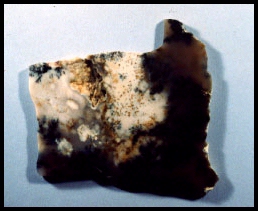
Spanish Point Dendritic Agate
State: Wyoming
Country: United States
Continent: North America
Date: 10/26/1998
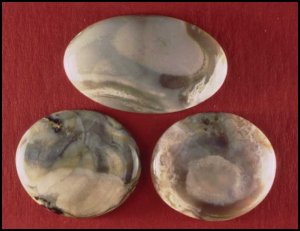
Spavinaw Chert
State: Oklahoma
Country: United States
Continent: North America
Date: 5/29/1999
Description: Spavinaw Chert, Oklahoma, ...gray, white, red, brown, orange, yellow, or black chert, named for Spavinaw Dam, 36o 22' 59" N and 095o 02' 51W, Mayes County, Oklahoma, Spavinaw Map, USGS 7.5' x 7.5'. (Murphy, 1963, p. 114).
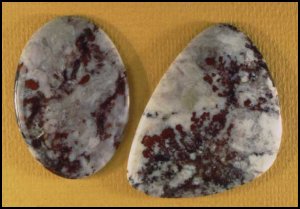
St. John Jasper
State: Arizona
Country: United States
Continent: North America
Date: 5/30/1999
Description: St. John Jasper, Arizona, for St. John's Arizona, site listed in McMackin (1976c, p. 1480-1487, 1977c, p. 1728- 738; 1981a, p. 1232-1238).
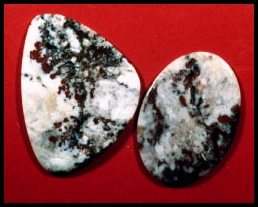
St. John Picture Agate
State: Utah
Country: United States
Continent: North America
Date: 10/26/1998
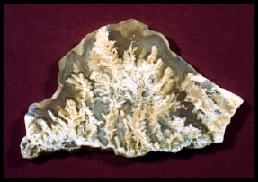
Stinking Water Plume Agate
State: Oregon
Country: United States
Continent: North America
Date: 9/25/2003
Description: Reflected light.
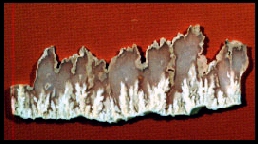
Stinking Water Plume Agate
State: Oregon
Country: United States
Continent: North America
Date: 9/25/2003
Description: Transmitted light.
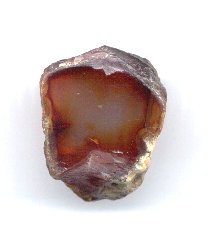
Stirling Brook Carnelian
State: New Jersey
Country: United States
Continent: North America
Date: 2/12/2001
Description: Alternative spelling (Sterling Brook). A local name, probably derived from stream in the area of Stirling, Morris County, New Jersey. The name Stirling Brook does not appear on the U. S. Geological Survey 7.5 minute topographic map (Chatham Quadrangle) that includes the populated place of Stirling. These are amygdaloidal agates that formed in basalt sills of the Watchung Series of Triassic age that are now exposed in the Watchung Mountains of north central New Jersey. These agates have been eroded from their host rock and have been found in gravel in stream deposits. See Zodac (1950, p. 481-483) and Sinkankas (1959, p. 328, 329).
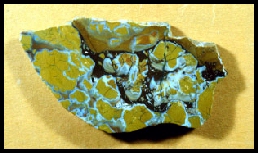
Stone Canyon Jasper
State: California
Country: United States
Continent: North America
Date: 10/26/1998
Description: Stone Canyon Jasper, California, adv., Gold-n-Blue Rocks & Minerals, Rocks and Minerals, v. 38, no. 3,4, p. 209. E. of Hwy. 101 at San Miguel, CA. (See also Breccia Jasper from Stone Canyon). Famous brecciated yellow, tan, or brown angular pieces cemented by contrasting, clear chalcedony of white, blue, purple, or black. Name derived from Stone Canyon, 36o 00' 43" N and 120o 34' 52" W, Monterey County, California, Smith Mountain Quadrangle, U. S. Geological Survey, 7.5 Minute Series (Topographic). Sperisen, 1938, p. 49). Bell (1939) stated that it formed in veins that were about 3 inches thick, and Rowe (1956, p. 44) suggested that it was found in sediments of the Franciscan Series? of Jurassic Age and was a brecciated, yellow, white, yellow-red, or reddish-brown material. Synonyms: Breccia Jasper from Stone Canyon, Stone Canyon Breccia Jasper.
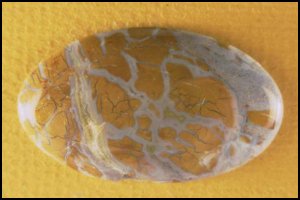
Stone Canyon Jasper
State: California
Country: United States
Continent: North America
Date: 5/27/1999
Description: Stone Canyon Jasper, California, adv., Gold-n-Blue Rocks & Minerals, Rocks and Minerals, v. 38, no. 3,4, p. 209. E. of Hwy. 101 at San Miguel, CA. (See also Breccia Jasper from Stone Canyon). Famous brecciated yellow, tan, or brown angular pieces cemented by contrasting, clear chalcedony of white, blue, purple, or black. Name derived from Stone Canyon, 36o 00' 43" N and 120o 34' 52" W, Monterey County, California, Smith Mountain Quadrangle, U. S. Geological Survey, 7.5 Minute Series (Topographic). Sperisen, 1938, p. 49). Bell (1939) stated that it formed in veins that were about 3 inches thick, and Rowe (1956, p. 44) suggested that it was found in sediments of the Franciscan Series? of Jurassic Age and was a brecciated, yellow, white, yellow-red, or reddish-brown material. Synonyms: Breccia Jasper from Stone Canyon, Stone Canyon Breccia Jasper.
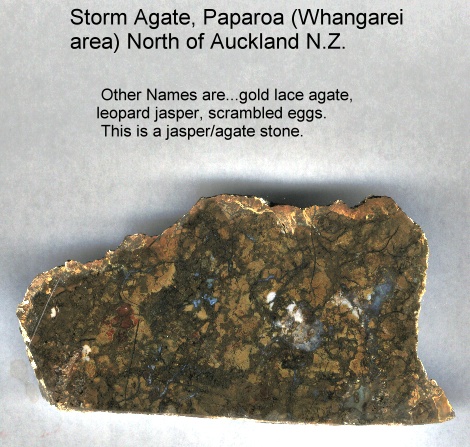
Storm Agate
Location: Paparoa, North of Auckland
Country: New Zealand
Continent: Australia
Date: 1/24/2003
Description: Other names include: gold lace agate, leopard jasper, scrambled eggs. This speciman is a jasper/agate stone.
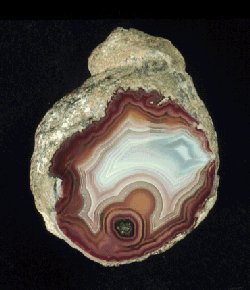
Sueco Agate
State: Chihuahua
Country: Mexico
Continent: North America
Date: 10/26/1998
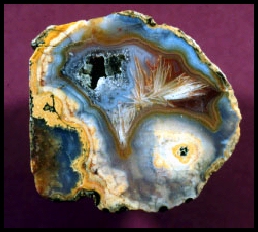
Surprise Agate
State: Chihuahua
Country: Mexico
Continent: North America
Date: 10/26/1998
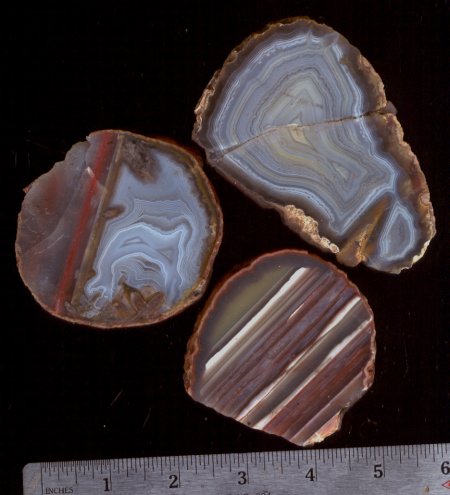
Swaziland Agate
Country: Swaziland
Continent: Africa
Date: 8/4/2003
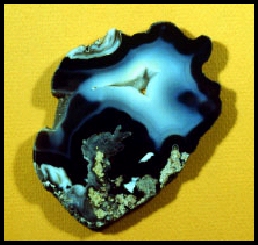
Sweet Home Oregon Agate
State: Oregon
Country: United States
Continent: North America
Date: 10/26/1998
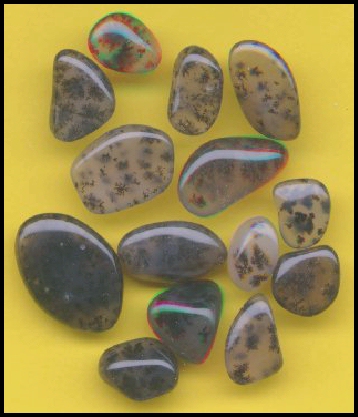
Sweetwater Agate
Location: Sweetwater County
State: Wyoming
Country: United States
Continent: North America
Date: 10/26/1998
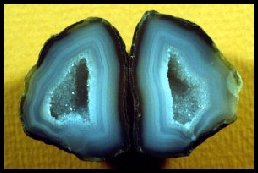
Tabasco Agate
State: Tabasco
Country: Mexico
Continent: North America
Date: 10/26/1998
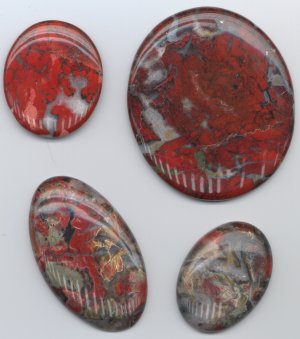
Tabutabu Jasper
Country: South Africa
Continent: Africa
Date: 1/20/2000
Description: Tabutabu Jasper, South Africa. Tabutabu Jasper, locality not certain but probably South Africa. A trade name applied to usually red, white and black brecciated jaspers. The material has been offered under the names Tabutabu Jasper and Tabu Jasper, the former name being used first. See lexicon for further datails.
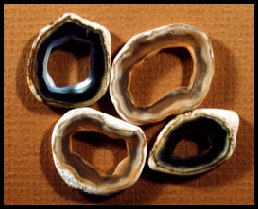
Tampa Bay Agatized Coral
State: Florida
Country: United States
Continent: North America
Date: 10/26/1998
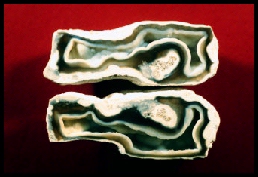
Tampa Bay Agatized Coral
State: Florida
Country: United States
Continent: North America
Date: 10/26/1998
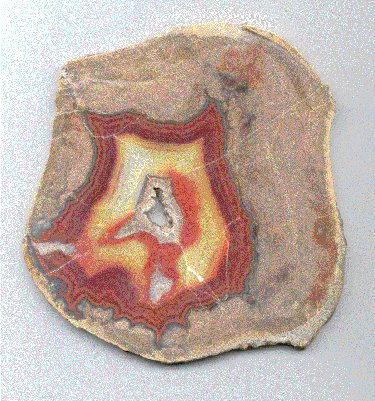
Tepee Canyon Agate
State: South Dakota
Country: United States
Continent: North America
Date: 9/14/2001
Description: Tepee Canyon Agate, South Dakota, a marine sedimentary, banded agate that has been recovered from chert nodules within limestones of middle Pennsylvanian (Desmoinesian) age. The agates are named for Tepee Canyon, 43o 33' 03" N and 103o 57' 02" W, Custer County, South Dakota, Jewel Cave SW map, U. S. Geological Survey, 7.5' x 7.5'. The agates are similar to Hell Canyon Agate which runs just east of and nearly parallel to Tepee Canyon. At this writing, it has not been established which names (Hell Canyon or Tepee Canyon) was used first but it appears that the agates from the two sites are environmentally and stratigraphically related. The orthography has not yet been established but early usages use the spelling Teepee Canyon. See also Shaub, M. S., (1958, p. 394-397, 437), Shaub, B. M., (1980a, p. 650-659, 670-679) and Zeitner, J. C. (1957, p. 11-13; 1959, p. 42-54) and Clark (1998).
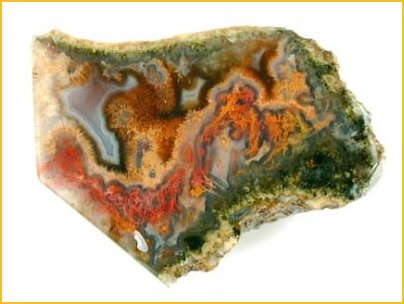
Thistle Agate
State: Texas
Country: United States
Continent: North America
Date: 4/23/2001
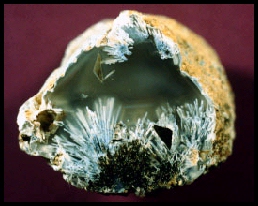
Thistle Creek Sagenitic Agate
State: Oregon
Country: United States
Continent: North America
Date: 10/26/1998
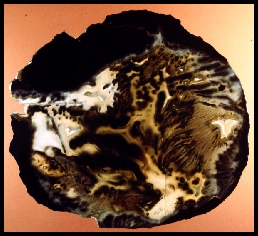
Thunder Egg
Location: Deschutes River
State: Oregon
Country: United States
Continent: North America
Date: 10/26/1998
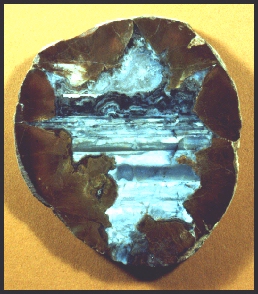
Thunder Egg
Location: Buchanan
State: Oregon
Country: United States
Continent: North America
Date: 10/26/1998
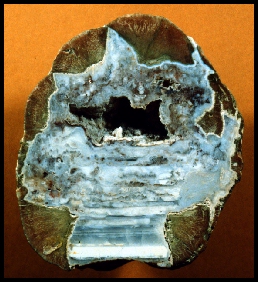
Thunder Egg
Location: Buchanan
State: Oregon
Country: United States
Continent: North America
Date: 10/26/1998
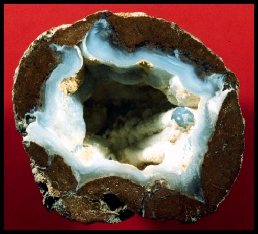
Thunder Egg
Location: Dugway
State: Utah
Country: United States
Continent: North America
Date: 10/26/1998
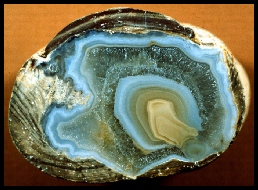
Thunder Egg
Location: Dugway
State: Utah
Country: United States
Continent: North America
Date: 10/26/1998
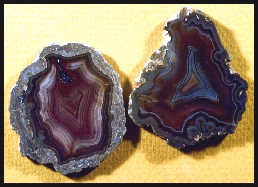
Thunder Egg
Location: Deming
State: New Mexico
Country: United States
Continent: North America
Date: 10/26/1998
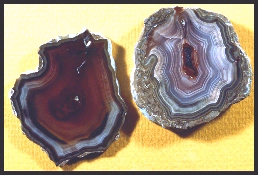
Thunder Egg
Location: Deming
State: New Mexico
Country: United States
Continent: North America
Date: 10/26/1998
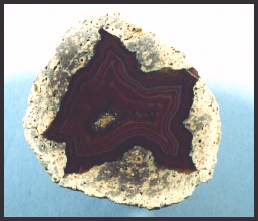
Thunder Egg
Location: Saxony
Country: Germany
Continent: Europe
Date: 10/26/1998
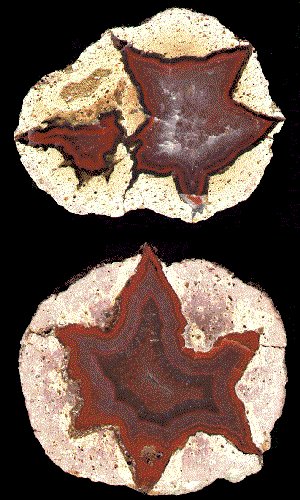
Thunder Egg
Location: St. Egidien, near Dresden
Country: Germany
Continent: Europe
Date: 10/26/1998
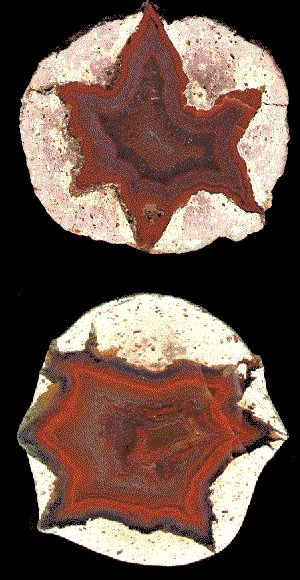
Thunder Egg
Location: St. Egidien, near Dresden
Country: Germany
Continent: Europe
Date: 10/26/1998
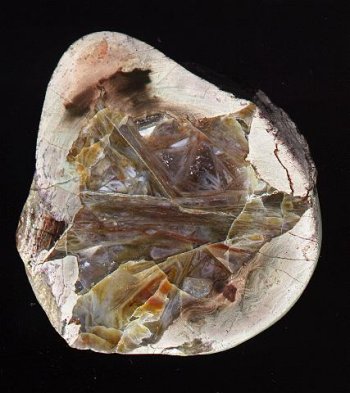
Thunder Egg
Location: Lierbachtal
Country: Germany
Continent: Europe
Date: 9/12/2000
Description: Thunder Egg collected from alluvial deposits in a river valley near Lierbachtal, near Oppenau, near Freudenstadt, in the Black Forrest, Germany.
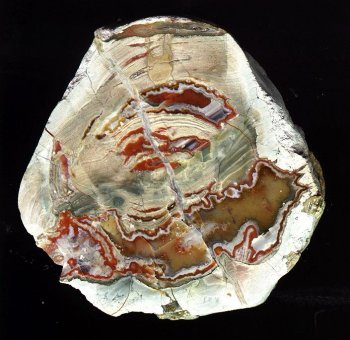
Thunder Egg
Location: Lierbachtal
Country: Germany
Continent: Europe
Date: 9/12/2000
Description: Thunder Egg collected from alluvial deposits in a river valley near Lierbachtal, near Oppenau, near Freudenstadt, in the Black Forrest, Germany.
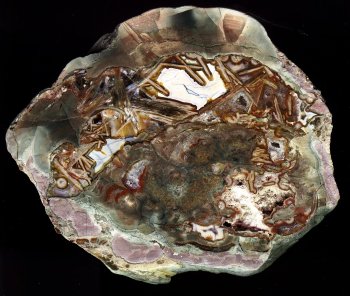
Thunder Egg
Location: Lierbachtal
Country: Germany
Continent: Europe
Date: 9/12/2000
Description: Thunder Egg collected from alluvial deposits in a river valley near Lierbachtal, near Oppenau, near Freudenstadt, in the Black Forrest, Germany.
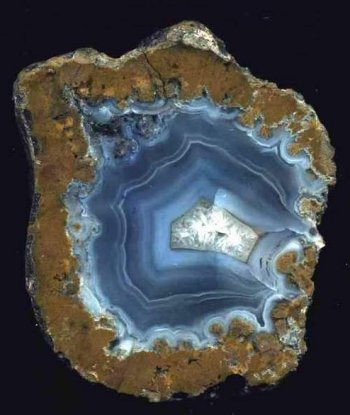
Thunder Egg
Location: Khur Agate Field
Country: Iran
Continent: Asia
Date: 4/20/2001
Description: The Khur agate and geode fields are situated at 55o 17' 45" E and 33o 39' 25" N, approximately 25 km (15.5 miles) southeast of the city of Khur, between Tehran and Yazd. This locality is in Iran. The agate nodules and geodes have formed in altered tuffs of lower to middle Eocene age. In some places the tuffaceous layers are completely altered to the clay mineral montmorillonite (bentonite).
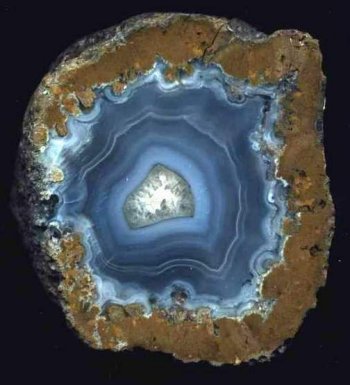
Thunder Egg
Location: Khur Agate Field
Country: Iran
Continent: Asia
Date: 4/20/2001
Description: The Khur agate and geode fields are situated at 55o 17' 45" E and 33o 39' 25" N, approximately 25 km (15.5 miles) southeast of the city of Khur, between Tehran and Yazd. This locality is in Iran. The agate nodules and geodes have formed in altered tuffs of lower to middle Eocene age. In some places the tuffaceous layers are completely altered to the clay mineral montmorillonite (bentonite).
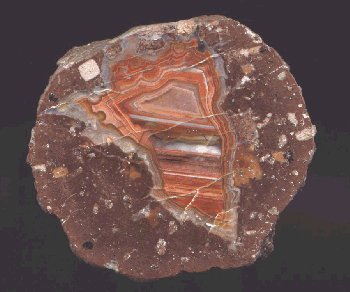
Thunder Egg
Location: Oberhof/Schneekopf, Thuringen
Country: Germany
Continent: Europe
Date: 10/28/1998
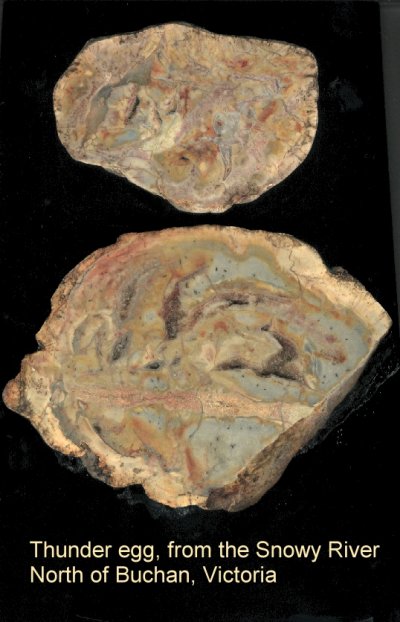
Thunder Egg
Location: Snowy River, north of Buchan
State: Victoria
Country: Australia
Continent: Australia
Date: 1/24/2003
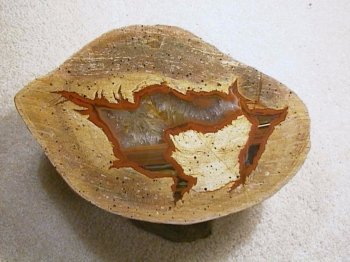
Thunder Egg
Location: Agate Creek
State: Queensland
Country: Australia
Continent: Australia
Date: 3/16/2000
Description: Agate Creek Thunder eggs, Queensland, Australia, This term probably was first used with no description in an advertisement by Minex Lapidary Supplies, Lapidary Journal, v. 27, no. 4, p. 603. Large lots of rough amygdaloidal Queensland Agates from Agate Creek have been seen to contain some of these thunder eggs. The original published offer used the spelling of thunder egg as one word.
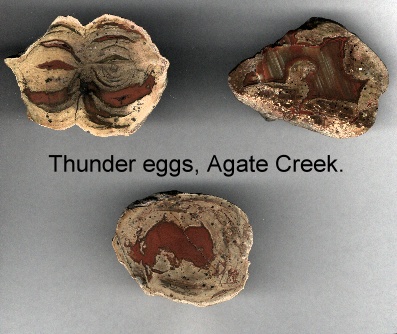
Thunder Egg
Location: Agate Creek
State: Queensland
Country: Australia
Continent: Australia
Date: 1/6/2003
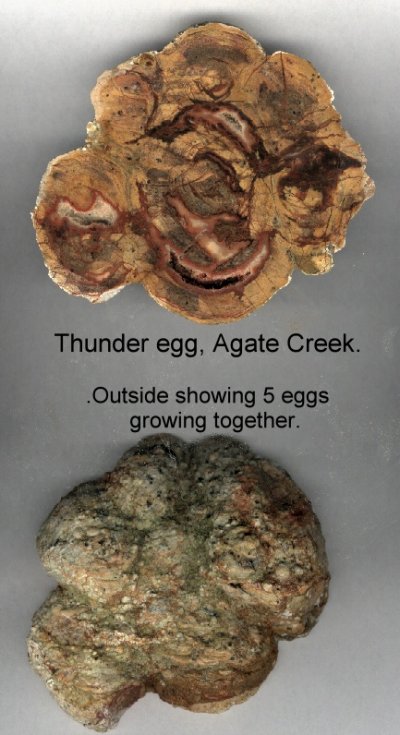
Thunder Egg
Location: Agate Creek
State: Queensland
Country: Australia
Continent: Australia
Date: 1/24/2003
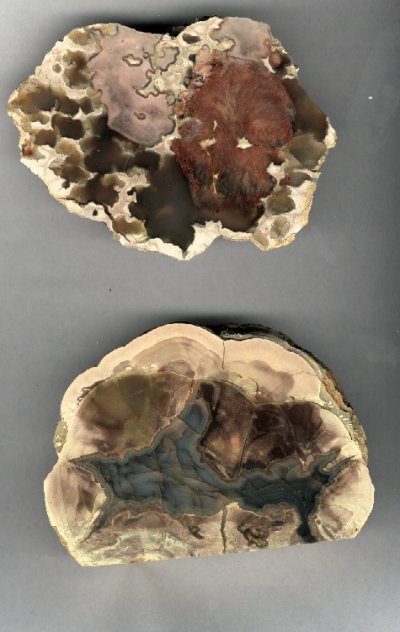
Thunder Egg
Location: Mount Hay area
State: Queensland
Country: Australia
Continent: Australia
Date: 1/6/2003
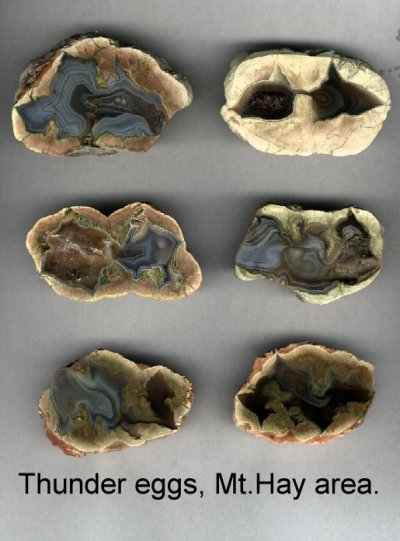
Thunder Egg
Location: Mount Hay area
State: Queensland
Country: Australia
Continent: Australia
Date: 1/6/2003
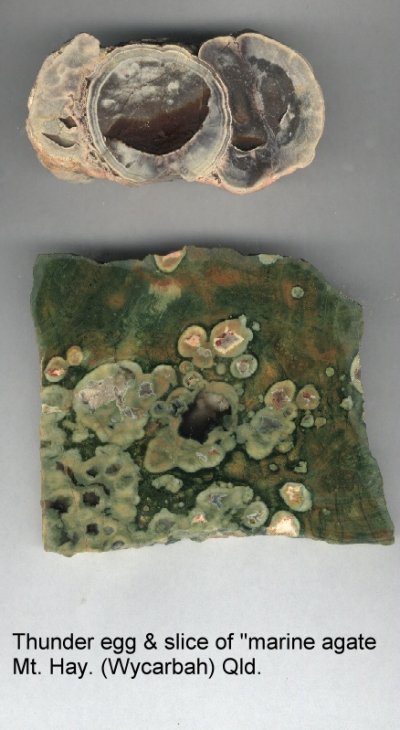
Thunder Egg
Location: Mount Hay area (Wycarbah)
State: Queensland
Country: Australia
Continent: Australia
Date: 1/6/2003
Description: Thunder egg and slice of "Marine Agate,"
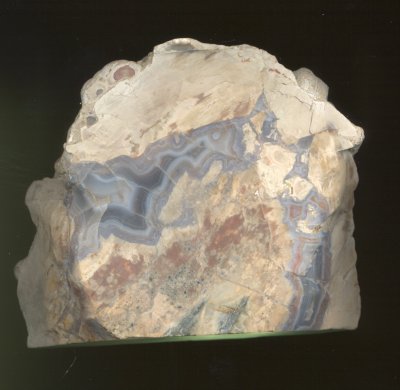
Thunder Egg Agate
Location: Mount Lyall
State: Quebec
Country: Canada
Continent: North America
Date: 11/21/2001
Description: Size range: 3.0" to 3.5"
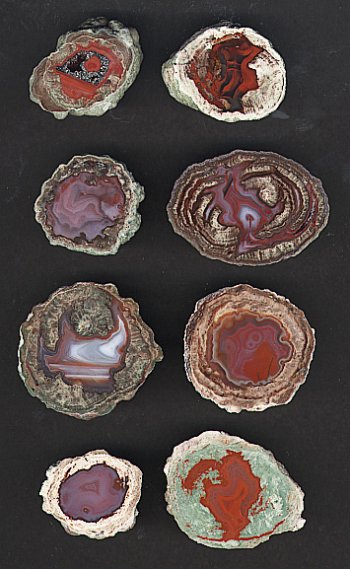
Thunder Egg Agates
Location: Lithophysed de l'Esterel
Country: France
Continent: Europe
Date: 11/15/1999
Description: Lithophysed de l'Esterel, France, (tr. lit. lithophysae from l'esterel), thunder egg agates from rocks mapped as Permian volcanics found near Vigne, near Frejus, near the Mediterranean coast, southern France.
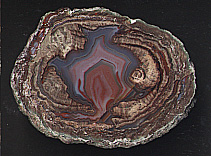
Thunder Egg Agates
Location: Lithophysed de l'Esterel
Country: France
Continent: Europe
Date: 11/15/1999
Description: Lithophysed de l'Esterel, France, (tr. lit. lithophysae from l'esterel), thunder egg agates from rocks mapped as Permian volcanics found near Vigne, near Frejus, near the Mediterranean coast, southern France.
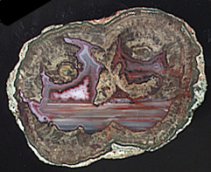
Thunder Egg Agates
Location: Lithophysed de l'Esterel
Country: France
Continent: Europe
Date: 11/15/1999
Description: Lithophysed de l'Esterel, France, (tr. lit. lithophysae from l'esterel), thunder egg agates from rocks mapped as Permian volcanics found near Vigne, near Frejus, near the Mediterranean coast, southern France.
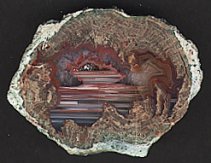
Thunder Egg Agates
Location: Lithophysed de l'Esterel
Country: France
Continent: Europe
Date: 11/15/1999
Description: Lithophysed de l'Esterel, France, (tr. lit. lithophysae from l'esterel), thunder egg agates from rocks mapped as Permian volcanics found near Vigne, near Frejus, near the Mediterranean coast, southern France.
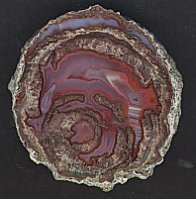
Thunder Egg Agates
Location: Lithophysed de l'Esterel
Country: France
Continent: Europe
Date: 11/15/1999
Description: Lithophysed de l'Esterel, France, (tr. lit. lithophysae from l'esterel), thunder egg agates from rocks mapped as Permian volcanics found near Vigne, near Frejus, near the Mediterranean coast, southern France.
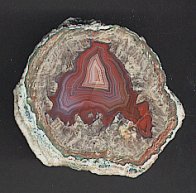
Thunder Egg Agates
Location: Lithophysed de l'Esterel
Country: France
Continent: Europe
Date: 11/15/1999
Description: Lithophysed de l'Esterel, France, (tr. lit. lithophysae from l'esterel), thunder egg agates from rocks mapped as Permian volcanics found near Vigne, near Frejus, near the Mediterranean coast, southern France.
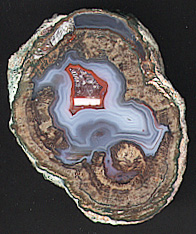
Thunder Egg Agates
Location: Lithophysed de l'Esterel
Country: France
Continent: Europe
Date: 11/15/1999
Description: Lithophysed de l'Esterel, France, (tr. lit. lithophysae from l'esterel), thunder egg agates from rocks mapped as Permian volcanics found near Vigne, near Frejus, near the Mediterranean coast, southern France.
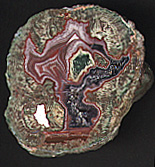
Thunder Egg Agates
Location: Lithophysed de l'Esterel
Country: France
Continent: Europe
Date: 11/15/1999
Description: Lithophysed de l'Esterel, France, (tr. lit. lithophysae from l'esterel), thunder egg agates from rocks mapped as Permian volcanics found near Vigne, near Frejus, near the Mediterranean coast, southern France.
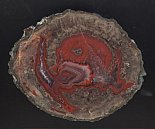
Thunder Egg Agates
Location: Lithophysed de l'Esterel
Country: France
Continent: Europe
Date: 11/15/1999
Description: Lithophysed de l'Esterel, France, (tr. lit. lithophysae from l'esterel), thunder egg agates from rocks mapped as Permian volcanics found near Vigne, near Frejus, near the Mediterranean coast, southern France.
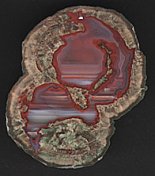
Thunder Egg Agates
Location: Lithophysed de l'Esterel
Country: France
Continent: Europe
Date: 11/15/1999
Description: Lithophysed de l'Esterel, France, (tr. lit. lithophysae from l'esterel), thunder egg agates from rocks mapped as Permian volcanics found near Vigne, near Frejus, near the Mediterranean coast, southern France.
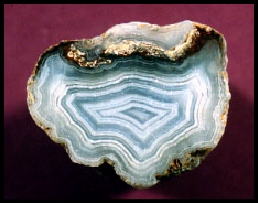
Tomache Agate
State: Chihuahua
Country: Mexico
Continent: North America
Date: 10/26/1998
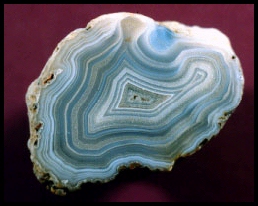
Tomache Agate
State: Chihuahua
Country: Mexico
Continent: North America
Date: 10/26/1998
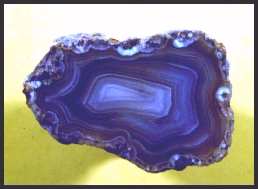
Tomache Agate
State: Chihuahua
Country: Mexico
Continent: North America
Date: 10/26/1998
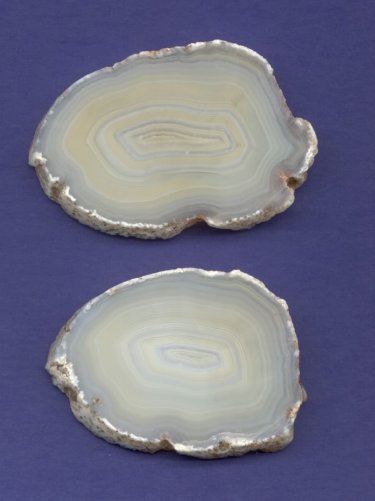
Toyah Agate
State: Texas
Country: United States
Continent: North America
Date: 8/15/2001
Description: Toyah Agate, Texas, a local name given to amygdaloidal agate nodules that have formed in volcanic rocks of either Eocene or Oligocene age that are exposed west of Toyah, 31o 18'53" N, 103o 47' 34"W, Reeves County, Texas. Such stones have been observed in shops and shows in Texas and New Mexico. No further data available.
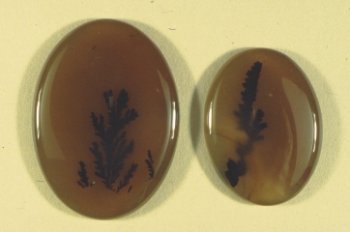
Trans-Montana Agate
Country: Brazil
Continent: South America
Date: 6/18/1999
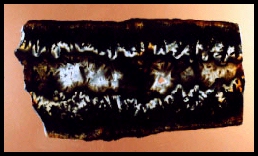
Trent Sagenitic Agate
State: Oregon
Country: United States
Continent: North America
Date: 10/26/1998
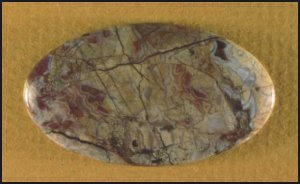
Trinidad Jasper
Location: Trinidad
State: California
Country: United States
Continent: North America
Date: 5/29/1999
Description: Trinidad Jasper, for Trinidad, California, green, red brecciated jasper, for Trinidad, 41o 03' 34" N and 134o 08' 31" W, Humboldt, County, California, Trinidad Map, U. S. Geological Survey, 7.5' x 7.5'. The jaspers may have originated in cherts of the Franciscan Series of Jurassic age. ...colorful, adv., Roy's Rock Shop, Lapidary Journal, v. 11, no. 5, p. 607.
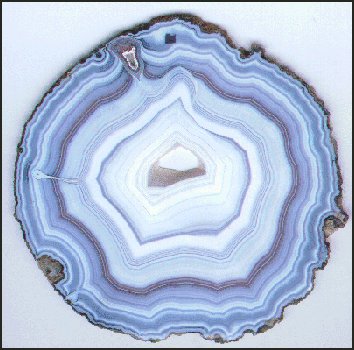
Trublack Agate (artificially colored)
Country: Brazil
Continent: South America
Date: 10/26/1998
Description: Trublack is copyrighted trade name for an artificially-colored black, Brazilian agate and the name appeared in an advertizement from Adolph Meller Co., "The Mineralogist", v. 14, no. 11, p. 525. The coloring process appears to be restricted to the surface of the slice; it may have been an electrochemical or photographic process. The agate is translucent where one can observe the interior of the slice. This piece appears to have a small square spot near the top and center of the slab where an electrode may have been attached. These kinds of agates were offered for sale in the late 1940's and early 1950's.
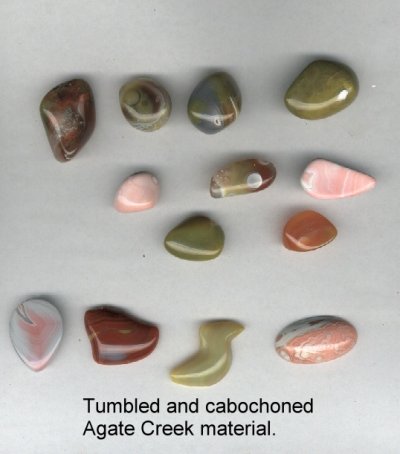
Tumbled and Cabochoned
Location: Agate Creek
State: Queensland
Country: Australia
Continent: Australia
Date: 1/6/2003
Description: Tumbled and Cabochoned Agate Creek Material from Agate Creek
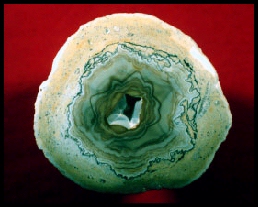
Union Road Agate
State: Missouri
Country: United States
Continent: North America
Date: 10/26/1998
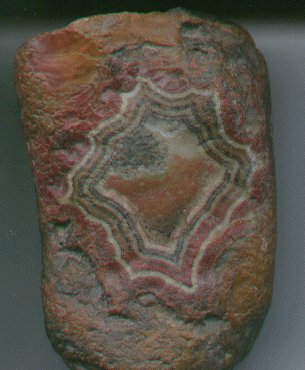
Unnamed Agate Variety
Location: Jackson
State: Michigan
Country: United States
Continent: North America
Date: 10/28/1996
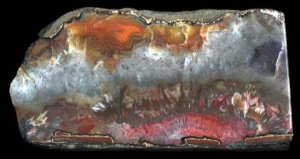
Vein Agate
Location: Scots Bay
State: Nova Scotia
Country: Canada
Continent: North America
Date: 6/17/1999
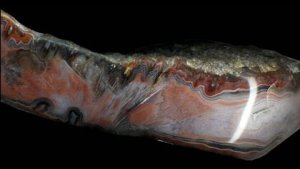
Vein Agate
Location: Scots Bay
State: Nova Scotia
Country: Canada
Continent: North America
Date: 6/17/1999
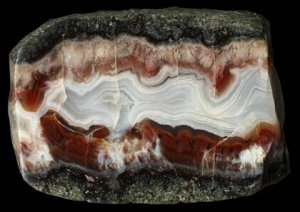
Vein Agate
Location: Scots Bay
State: Nova Scotia
Country: Canada
Continent: North America
Date: 6/17/1999
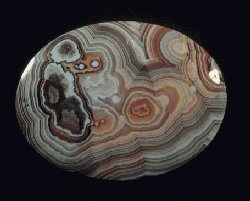
Victor's Lace Agate
State: Chihuahua
Country: Mexico
Continent: North America
Date: 10/26/1998
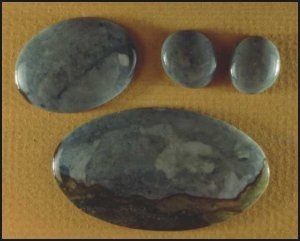
Vista-ite
State: Oregon
Country: United States
Continent: North America
Date: 5/28/1999
Description: Vista-ite, Oregon, trade name, green, tan, or pale cream picture jasper. See Ashby, 1961, p. 140. Ashby (1962, p. 148) called it an agate but it appears to be a blue-green jasper.
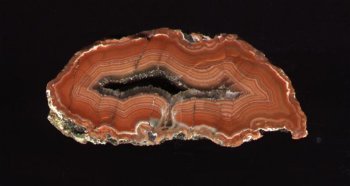
Vollmersbach Quarry Agate
Location: Vollmersbach Quarry
Country: Germany
Continent: Europe
Date: 1/18/2000
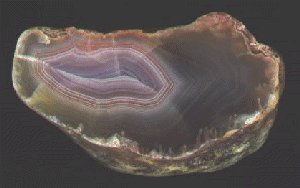
Wagler Agate
Location: Lathum, near Arnheim
Country: Netherlands
Continent: Europe
Date: 11/20/1998
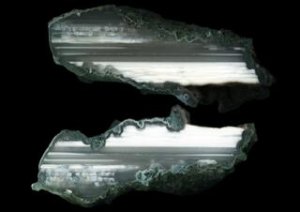
White Sail Agate, onyx bands with precious opal inclusion
State: British Columbia
Country: Canada
Continent: North America
Date: 6/1/1999
White Sail Agate, onyx bands with precious opal inclusion
State: British Columbia
Country: Canada
Continent: North America
Date: 6/1/1999
White Sail Agate, onyx bands with precious opal inclusion
State: British Columbia
Country: Canada
Continent: North America
Date: 6/1/1999
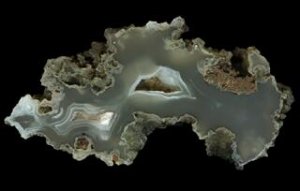
White Sail Agate, with chloritic moss inclusions
State: British Columbia
Country: Canada
Continent: North America
Date: 6/1/1999
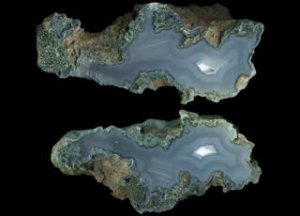
White Sail Agate, with chloritic moss inclusions
State: British Columbia
Country: Canada
Continent: North America
Date: 6/1/1999
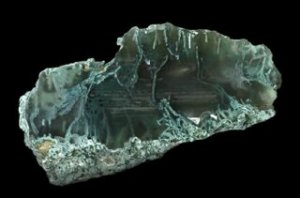
White Sail Agate, with chloritic moss inclusions
State: British Columbia
Country: Canada
Continent: North America
Date: 6/1/1999
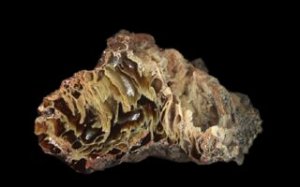
White Sail Agate, with moss inclusions
State: British Columbia
Country: Canada
Continent: North America
Date: 6/1/1999
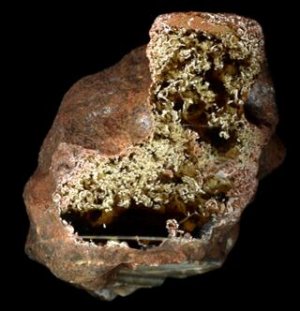
White Sail Agate, with moss inclusions
State: British Columbia
Country: Canada
Continent: North America
Date: 6/1/1999
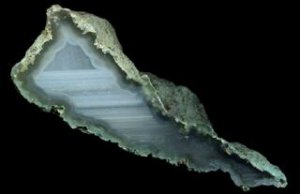
White Sail Agate, with onyx banding and plume
State: British Columbia
Country: Canada
Continent: North America
Date: 6/1/1999
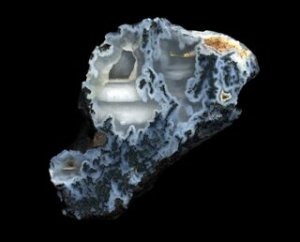
White Sail Agate, with onyx banding and plume
State: British Columbia
Country: Canada
Continent: North America
Date: 6/1/1999
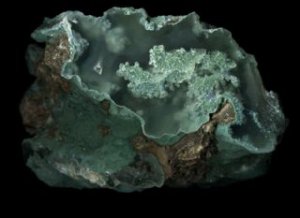
White Sail Agate, with plume inclusions
State: British Columbia
Country: Canada
Continent: North America
Date: 6/1/1999
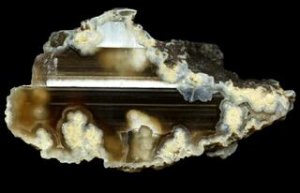
White Sail Agate,with plume inclusions
State: British Columbia
Country: Canada
Continent: North America
Date: 6/1/1999
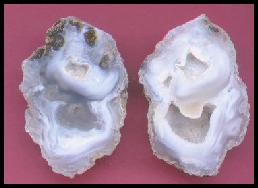
Whorl Agate
Location: Rancho Coyamito
State: Chihuahua
Country: Mexico
Continent: North America
Date: 10/26/1998
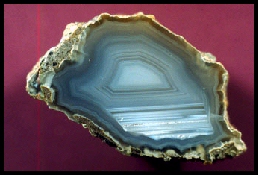
Wiggins Fork Agatized Limb Cast
State: Wyoming
Country: United States
Continent: North America
Date: 10/26/1998
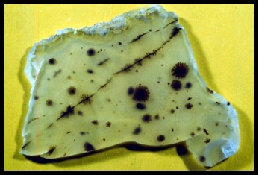
Wiggins Fork Dendritic Agate
State: Wyoming
Country: United States
Continent: North America
Date: 10/26/1998
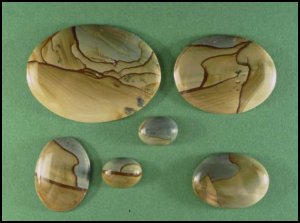
Wildhorse Picture Jasper
Location: Oregon/Idaho border
State: Oregon
Country: United States
Continent: North America
Date: 5/28/1999
Description: Wildhorse picture jasper, well-known picture jasper from the Oregon/Idaho border, usually with blue skies and tan or brown landscapes; ...scenic hills, clouds, blue skies, brown and tan landscapes, ete., adv., Smokey Mtn. Rock Shop, Lapidary Journal, v. 27, no. 7, p. 1068.
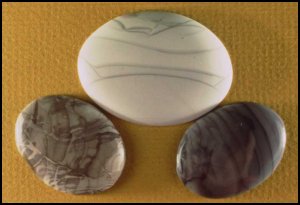
Willow Creek Agate
State: Idaho
Country: United States
Continent: North America
Date: 5/27/1999
Description: Willow Creek Jasper, Idaho, no description, adv., Zack's Rocks, Earth Science, v. 15, no. 3, p. 142; Westbrook Gems & Minerals, Lapidary Journal, v. 11, no. 5, p. 605. For Willow Creek, nodular and vein yellow, purple, pink, green jasper with Liesegang Rings, pictures, scenes. Occurs in outcrops mapped as Columbia River Basalts and Payette Formations exposed along north and south forks of Willow Creek, especially in NW 1/4, sec. 25, N 1/2, secs. 26, 27, 28, T. 6 N., R. 1 W., Gem County, Idaho, and in NE 1/4 sec. 5, N 1/2 sec. 4, NW 1/4, sec. 3, T. 5 N., R. 1 W, Ada County, Idaho, Southeast Emmett Quadrangle, 1985, U. S. Geological Survey, 7.5 Minute Series (Topographic). The outcrop area appears to extend to contiguous sections in the adjoining Pearl Quadrangle, 1985. See Novinger (1969, p. 1530-1536). Jasper found in the Longhair mine, near Eagle, Idaho.
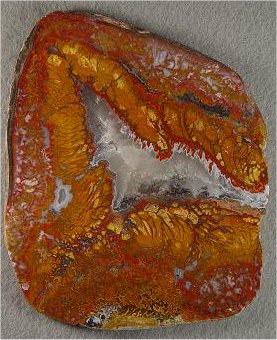
Wingate Pass Agate
Location: Wingate Pass, San Bernadino County
State: California
Country: United States
Continent: North America
Date: 12/13/2001
Description: Wingate Pass Agate, California, translucent, white to deep purple agate with sagenite, eyes, anon (1978, p. 1139); ...red, brown, and yellow, plumes, scenes, blue matrix, adv., Hutter's, Lapidary Journal, v. 10, no. 1, p. 65. Name is derived from Wingate Pass, 35o 44' 15" N and 117o 03' 32" W, San Bernardino County, California, Wingate Pass Quadrangle, U. S. Geological Survey, 7.5 Minute Series (Topographic). Bennett (1954, p. 13-15) illustrated sagenitic agate from here and suggested that there was seam agate cf. nodular agate at the nearby Owl Hole locality.
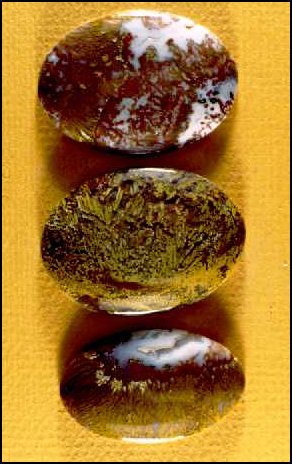
Wingate Pass Agate
Location: Wingate Pass, San Bernadino County
State: California
Country: United States
Continent: North America
Date: 5/5/1999
Description: Wingate Pass Agate, California, translucent, white to deep purple agate with sagenite, eyes, anon (1978, p. 1139); ...red, brown, and yellow, plumes, scenes, blue matrix, adv., Hutter's, Lapidary Journal, v. 10, no. 1, p. 65. Name is derived from Wingate Pass, 35o 44' 15" N and 117o 03' 32" W, San Bernardino County, California, Wingate Pass Quadrangle, U. S. Geological Survey, 7.5 Minute Series (Topographic). Bennett (1954, p. 13-15) illustrated sagenitic agate from here and suggested that there was seam agate cf. nodular agate at the nearby Owl Hole locality.
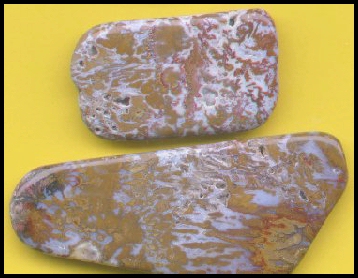
Wingate Pass Plume Agate
Location: Wingate Pass, San Bernadino County
State: California
Country: United States
Continent: North America
Date: 10/26/1998
Description: Wingate Pass Agate, California, translucent, white to deep purple agate with sagenite, eyes, anon (1978, p. 1139); ...red, brown, and yellow, plumes, scenes, blue matrix, adv., Hutter's, Lapidary Journal, v. 10, no. 1, p. 65. Name is derived from Wingate Pass, 35o 44' 15" N and 117o 03' 32" W, San Bernardino County, California, Wingate Pass Quadrangle, U. S. Geological Survey, 7.5 Minute Series (Topographic). Bennett (1954, p. 13-15) illustrated sagenitic agate from here and suggested that there was seam agate cf. nodular agate at the nearby Owl Hole locality.
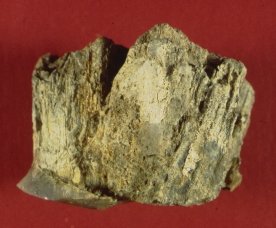
Withlacoochee River Agate
State: Georgia
Country: United States
Continent: North America
Date: 6/28/1999
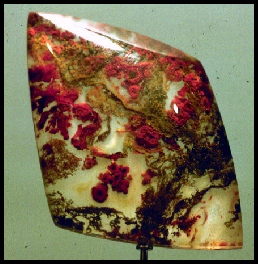
Woodward Ranch Plume Agate Doublet
Location: Brewster County
State: Texas
Country: United States
Continent: North America
Date: 10/26/1998
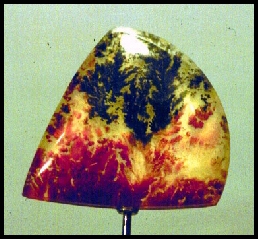
Woodward Ranch Plume Agate Doublet
Location: Brewster County
State: Texas
Country: United States
Continent: North America
Date: 10/26/1998
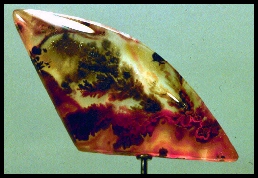
Woodward Ranch Plume Agate Doublet
Location: Brewster County
State: Texas
Country: United States
Continent: North America
Date: 10/26/1998
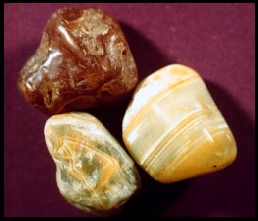
Yachats Beach Agate
State: Oregon
Country: United States
Continent: North America
Date: 10/26/1998
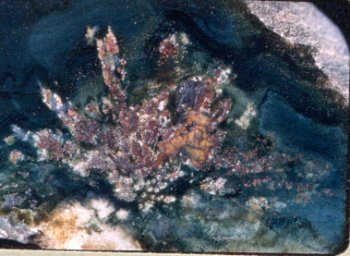
Yachats Beach Agate
State: Oregon
Country: United States
Continent: North America
Date: 4/20/2000
Description: Microphotograph of sagenitic inclusions. Image courtesy of Lizzadro Museum
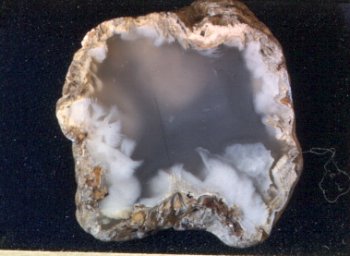
Yachats Beach Agate
State: Oregon
Country: United States
Continent: North America
Date: 4/20/2000
Description: Sagenitic inclusions. Image courtesy of Lizzadro Museum
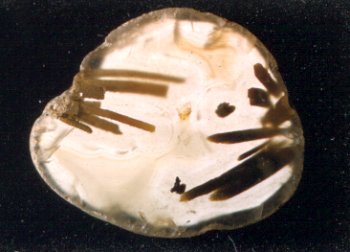
Yachats Sagenitic Beach Agate
State: Oregon
Country: United States
Continent: North America
Date: 4/20/2000
Description: Image courtesy of Lizzadro Museum
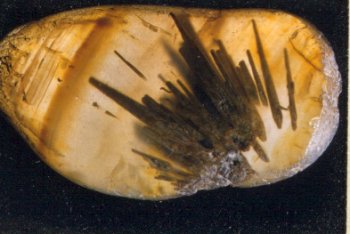
Yachats Sagenitic Beach Agate
State: Oregon
Country: United States
Continent: North America
Date: 4/20/2000
Description: Image courtesy of Lizzadro Museum
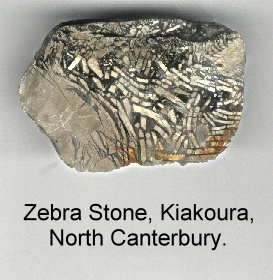
Zebra Stone
Location: Kiakoura, North Canterbury
Country: New Zealand
Continent: Australia
Date: 2/4/2003
Description: South Island
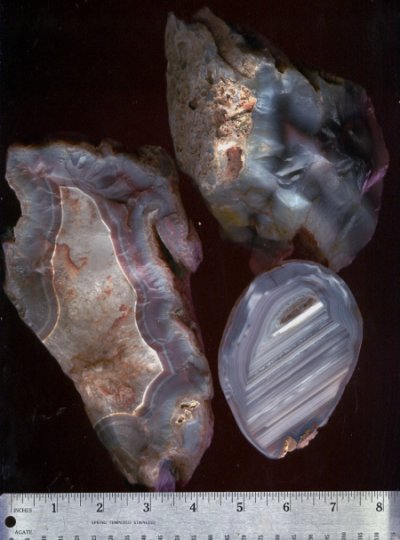
Zimbabwe Agate
Country: Zimbabwe
Continent: Africa
Date: 8/4/2003