Specimens Collected By
- William Rushlau
- Ed Schafer
- W. D. “Ted” White
- Roger K. Pabian
Images By
- Ed Schafer
- Roger K. Pabian
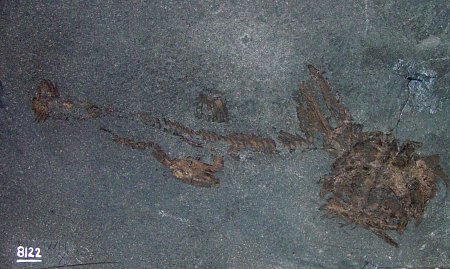
Iniopterygians
Species Name: Iniopteryx rushlaui
Date: 7/8/2003
Database ID: 1
Description: Specimen courtesy of Bill Rushlau, photo by Roger Pabian.
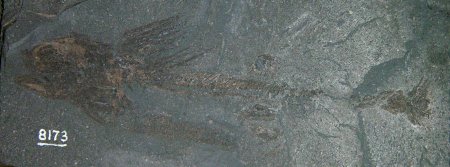
Iniopterygians
Species Name: Iniopteryx tedwhitei
Date: 7/8/2003
Database ID: 2
Description: Specimen courtesy of Bill Rushlau, photo by Roger Pabian.
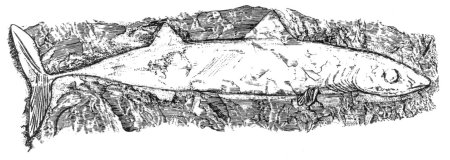
Cladondont Sharks
Species Name: Cladodus occidentalis
Date: 7/8/2003
Database ID: 3
Description: Illustration by Frankie Gould.
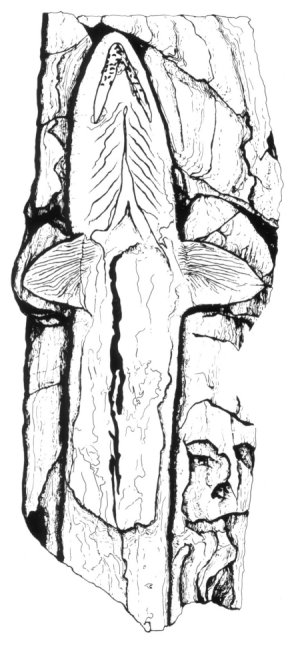
Eugeneodontid Sharks
Species Name: Campodus variabilis
Date: 7/8/2003
Database ID: 4
Description: Artist's reconstruction of "Campodus variabilis". Illustration by Frankie Gould.
Orodont Shark Teeth
Species Name: Orodus? sp.
Date: 7/27/2006
Database ID: 5
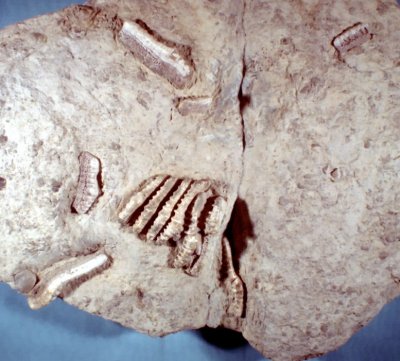
Description: This large plate of lateral teeth of Orodus? was collected from the Rakes Creek Shale member of the Tecumseh formation by the late W. D. "Ted" White from outcrops near Weeping Water in Cass County. White also found several hundred loose teeth associated with this plate. The largest of these teeth was about 10 cm (4 inches) wide. This suggests some orodont sharks became quite large.
Orodont Shark Teeth
Species Name: Orodus? sp.
Date: 7/27/2006
Database ID: 6
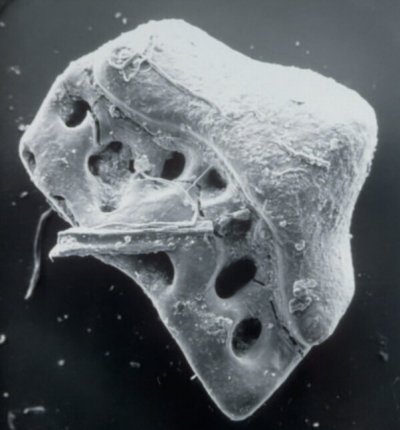
Description: This is a scanning electron microscope photograph of a very tiny "Orodus"? tooth that was collected in Richardson County from a bed in the Eskridge Shale Formation that appears to be a fresh water limestone. Such specimens raise two questions: (1) Was "Orodus" an anadromous fish that returned to fresh water to spawn? or (2) Were there species of "Orodus" that had adapted to living in fresh water?
Orodont Shark Teeth
Species Name: Orodus? sp.
Date: 7/27/2006
Database ID: 7
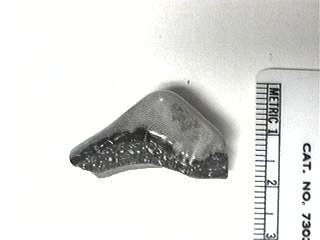
Description: This is a plate (right) and counterplate of a fissile, black shale slab that contains a single lateral tooth of "Orodus". This specimen was collected from the Stark Shale Member of the Dennis Formation in Sarpy County.
Orodont Shark Teeth
Species Name: Orodus? sp.
Date: 7/27/2006
Database ID: 8
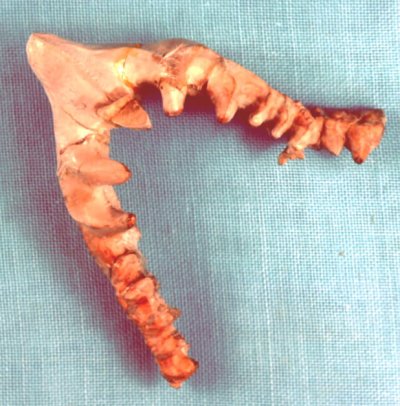
Description: Symphysial teeth are essentially "V-shaped" and are situated on the plane of bilateral symmetry of a large shark-like fish. Some of these kinds of teeth have been found in whorls with large teeth on the outer part and tiny, probably un-erupted teeth near the center.
Eugeneodontid Sharks
Species Name: Campodus variabilis
Date: 7/27/2006
Database ID: 9
Description: Artist's reconstruction of "Campodus variabilis". Illustration by Frankie Gould.
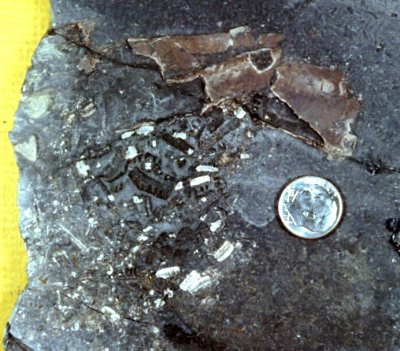
Eugeneodontid Sharks
Species Name: Campodus variabilis
Date: 7/27/2006
Database ID: 10
Description: This example shows the cartilage of the jaw (brown) and teeth (white) of an immature specimen of Campodus variabilis. Specimen from Stark Shale Member, Dennis Formation, Late Pennsylvanian (Missourian), Sarpy County, Nebraska. Specimen from W. D. “Ted” White collections.
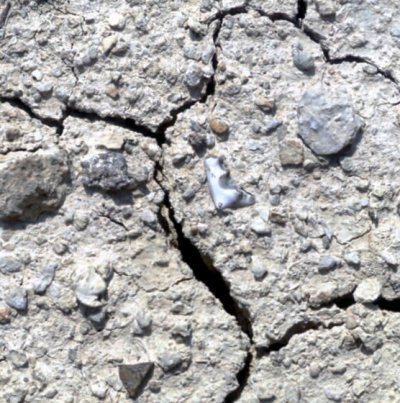
Eugeneodontid Sharks
Species Name: Campodus variabilis
Date: 7/27/2006
Database ID: 11
Description: Near the center of the image is a partially exposed, small lateral tooth from Campodus variabilis---can you spot it.This specimen was collected from Haynies Limestone bed, Ervine Creek Limestone Member, Deer Creek Formation, Late Pennsylvanian (Virgilian), Cass County, Nebraska.
Cladondont Sharks
Species Name: Cladodus occidentalis
Date: 7/27/2006
Database ID: 12
Description: Illustration by Frankie Gould.
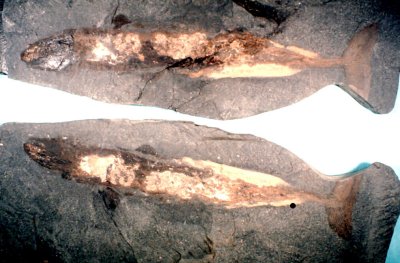
Cladondont Sharks
Species Name: Cladodus occidentalis
Date: 7/27/2006
Database ID: 13
Description: Plate and counter plate of a small, cladodont? Shark. Length of specimen about 25 cm (12 in). Specimen from Stark Shale Member, Dennis Formation, Late Pennsylvanian (Missourian), Sarpy County, Nebraska. Specimen from W. D. "Ted" White collections.
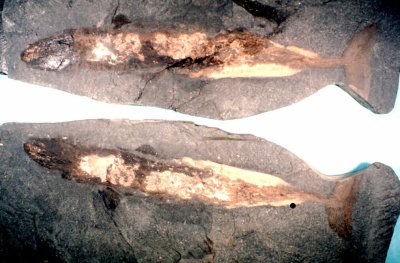
Cladondont Sharks
Species Name: Cladodus occidentalis
Date: 7/27/2006
Database ID: 14
Description: These are scanning electron microscope photographs of very tiny teeth of a cladodont shark that is probably attributed to the genus "Cladodus". These tiny specimens were recovered by dissolving a thin limestone that was composed almost entirely of calcified worm tubes of the genus "Spirorbis". Specimens from Eskridge Shale Formation, Big Blue Series, Early Permian, Richardson County, Nebraska.
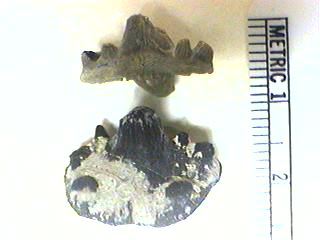
Cladondont Sharks
Species Name: Cladodus occidentalis
Date: 7/27/2006
Database ID: 15
Description: Cladodus teeth.
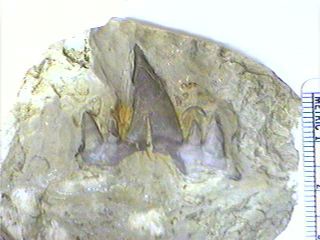
Cladondont Sharks
Species Name: Cladodus occidentalis
Date: 7/27/2006
Database ID: 16
Description: Cladodus teeth.
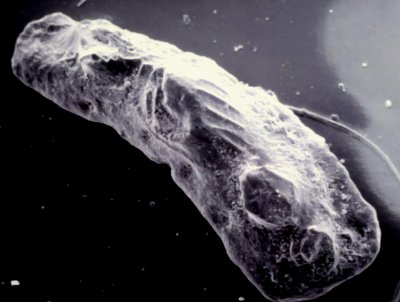
Euselachian Sharks
Species Name: Protacrodus sp.
Date: 7/27/2006
Database ID: 17
Description: "Protacrodus" teeth similar to "orodont" teeth and are characterized by having a larger central cone and several smaller lateral cones. The teeth form in whorls rather than pavements as in the "orodonts".
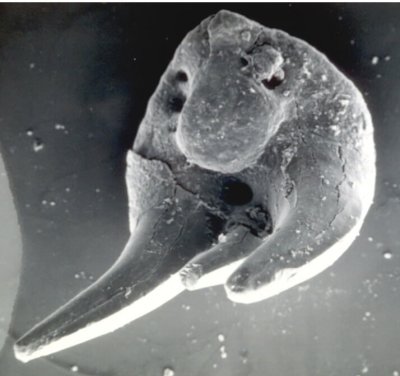
Xenachanthid Sharks
Species Name: Xenacanthus sp.
Date: 7/27/2006
Database ID: 18
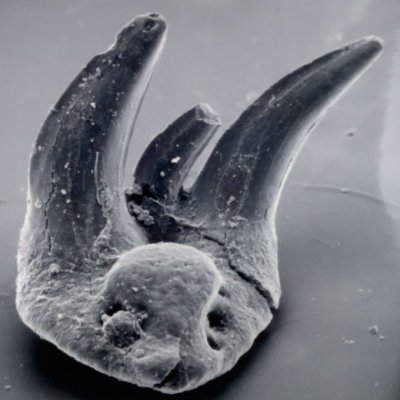
Description: Xenacanths are typically fresh water sharks that ar characterized by having modified cladodont teeth that have large lateral cusps and a smaller central (cf. small lateral cusps and long central cusps). Xenacanths have elongated dorsal fins and a large, single spine. Specimens from Eskridge Shale Formation (early Permian), Richardson County, Nebraska.
Xenachanthid Sharks
Species Name: Xenacanthus sp.
Date: 7/27/2006
Database ID: 19
Description: Xenacanths are typically fresh water sharks that ar characterized by having modified cladodont teeth that have large lateral cusps and a smaller central (cf. small lateral cusps and long central cusps). Xenacanths have elongated dorsal fins and a large, single spine. Specimens from Eskridge Shale Formation (early Permian), Richardson County, Nebraska.
Petalodont Teeth
Species Name: Petalodus sp. cf. destructor
Date: 7/27/2006
Database ID: 20
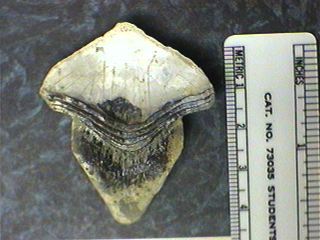
Description: Tooth from mature individual of "Petalodus" sp. cf. "destructor".
Petalodont Teeth
Species Name: Petalodus sp. cf. destructor
Date: 7/27/2006
Database ID: 21
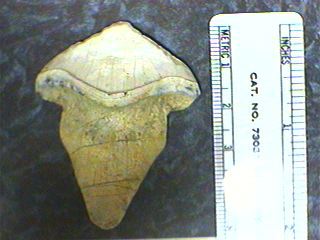
Description: Tooth from mature individual of "Petalodus" sp. cf. "destructor".
Petalodont Teeth
Species Name: Petalodus sp. cf. destructor
Date: 7/27/2006
Database ID: 22
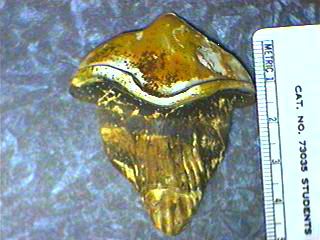
Description: Tooth from mature individual of "Petalodus" sp. cf. "destructor".
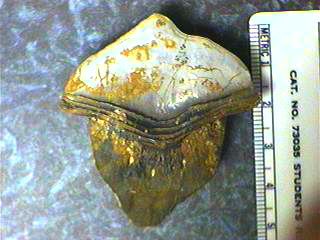
Petalodont Teeth
Species Name: Petalodus sp. cf. destructor
Date: 7/27/2006
Database ID: 23
Description: Lateral tooth of "Petalodus" sp. cf. "destructor".
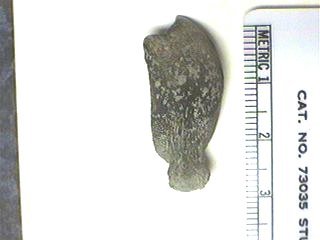
Petalodont Teeth
Species Name: Janassa sp. cf. maxima
Date: 7/27/2006
Database ID: 24
Description: "Janassa" sp. cf. "maxima"
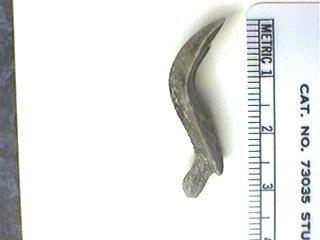
Petalodont Teeth
Species Name: Janassa sp. cf. maxima
Date: 7/27/2006
Database ID: 25
Description: "Janassa" sp. cf. "maxima"
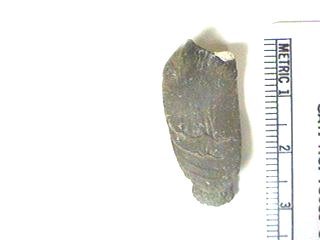
Petalodont Teeth
Species Name: Janassa sp. cf. maxima
Date: 7/27/2006
Database ID: 26
Description: "Janassa" sp. cf. "maxima"
Petalodont Teeth
Species Name: Petalodus sp. cf. destructor
Date: 7/27/2006
Database ID: 27
Description: Tooth from mature individual of "Petalodus" sp. cf. "destructor".
Pristodonts
Species Name: Peripristis "Ctenoptychius" semicircularis
Date: 7/28/2006
Database ID: 28
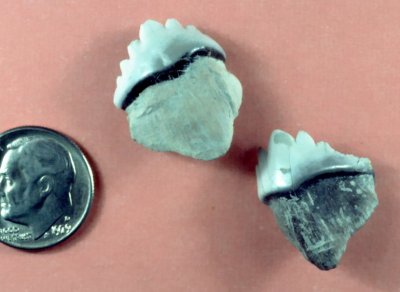
Description: "Peripristis" (commonly mislabeled as "Cetnoptychius") is usually found only as isolated, single teeth. The tooth has a serrated cutting edge, and this fish may have lived in a style similar to modern parrot fish although there is no relationship between the two forms. "Ctenoptychius" may have fed on such animals as corals and conularids, biting off chunks of tissue from from the hard, stony skeletons of their prey. These teeth may have occurred in an upper and lower pair and may have functioned in the same way that the beak-like jaws of the modern, parrot fish does.
Pristodonts
Species Name: Peripristis "Ctenoptychius" semicircularis
Date: 7/28/2006
Database ID: 29
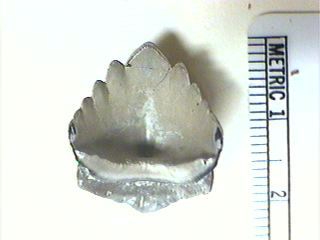
Description: "Peripristis" (commonly mislabeled as "Cetnoptychius") is usually found only as isolated, single teeth. The tooth has a serrated cutting edge, and this fish may have lived in a style similar to modern parrot fish although there is no relationship between the two forms. "Ctenoptychius" may have fed on such animals as corals and conularids, biting off chunks of tissue from from the hard, stony skeletons of their prey. These teeth may have occurred in an upper and lower pair and may have functioned in the same way that the beak-like jaws of the modern, parrot fish does.
Petalodont Teeth
Species Name: Petalodus sp. cf. destructor
Date: 7/28/2006
Database ID: 30
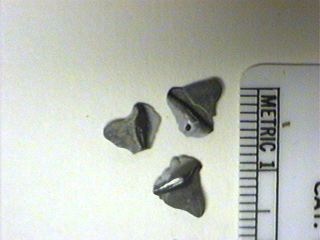
Description: Tiny teeth of Petalodus sp. cf. destructor have been interpreted as both the cutting tooth of a predator that stalked large prey, and as a pavement tooth that served to crush shells of invertebrates. It may be that P. destructor had an unspecialized diet and that it fed on both large prey and small invertebrates.
Chimaeroids, Skates, Rays
Species Name: Cochliodus sp. cf. contortus
Date: 7/28/2006
Database ID: 31
Description: Cochylodus tooth. There are no known examples of complete fossil fishes that can be associated with the tooth plates of "C. contortus". These strange fish have, in the past, been lumped into a group loosely called “pavement tooth sharks.” Pavement teeth appear to have been designed for crushing shells.
Chimaeroids, Skates, Rays
Species Name: Deltodus sp.
Date: 7/28/2006
Database ID: 32
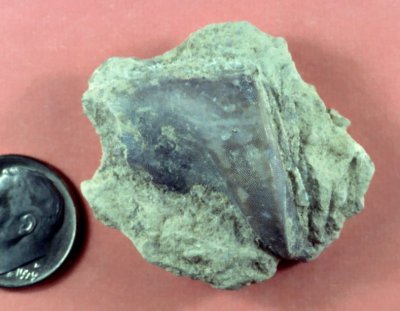
Description: "Deltodus" is characterized by its relatively low profile and triangular outline. Its’ teeth appear to be suitable for crushing shells.
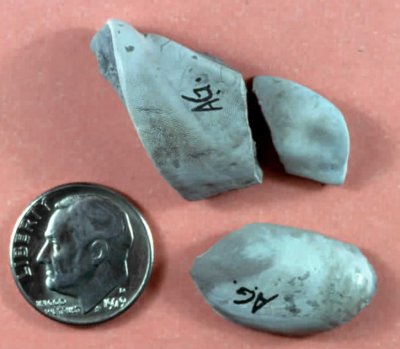
Chimaeroids, Skates, Rays
Species Name: Deltodus sp.
Date: 7/28/2006
Database ID: 33
Description: "Deltodus" (above) compared to "Sandalodus" (below).
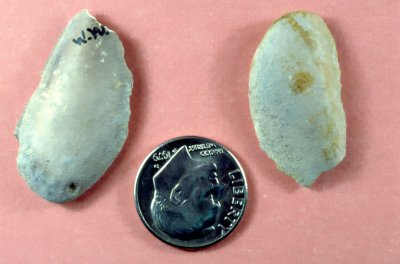
Chimaeroids, Skates, Rays
Species Name: ?Sandalodus sp. ?Sandalodus sp. ?Sandalodus sp.
Date: 7/28/2006
Database ID: 34
Description: "Sandalodus" was a chimaeroid fish---it had a cartilaginous skeleton like sharks, but was not closely related to the sharks. Tooth morphology suggests that "Sandalodus" used its’ teeth to crush shells of invertebrates.
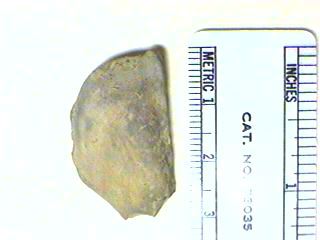
Chimaeroids, Skates, Rays
Species Name: ?Sandalodus sp.
Date: 7/28/2006
Database ID: 35
Description: "Sandalodus" was a chimaeroid fish---it had a cartilaginous skeleton like sharks, but was not closely related to the sharks. Tooth morphology suggests that "Sandalodus" used its’ teeth to crush shells of invertebrates.
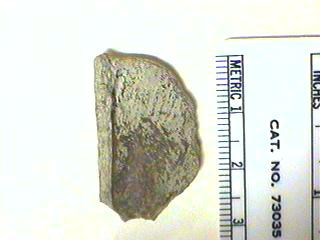
Chimaeroids, Skates, Rays
Species Name: ?Sandalodus sp.
Date: 7/28/2006
Database ID: 36
Description: "Sandalodus" was a chimaeroid fish---it had a cartilaginous skeleton like sharks, but was not closely related to the sharks. Tooth morphology suggests that "Sandalodus" used its’ teeth to crush shells of invertebrates.
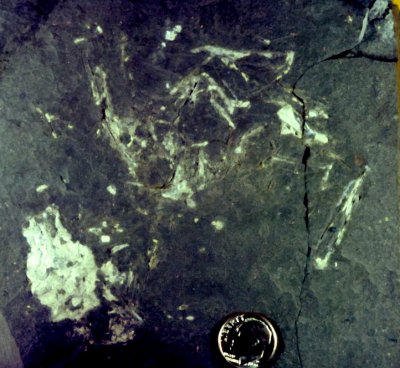
Paleoniscoid Fishes
Species Name: Paleoniscus? sp.
Date: 7/28/2006
Database ID: 37
Description: Paleoniscoid fishes are relatively rare in the fossil record of Nebraska. They are characterized by having an elongated body compared to the platysomoid fishes below. A relatively complete example of paleoniscoid was collected from the Queen Hill Shale member of the Lecompton Formation in Cass County by David Brown in about 1956. The example shown here has a large brain case (lower left) and some of the ribs and bones are scattered nearby.
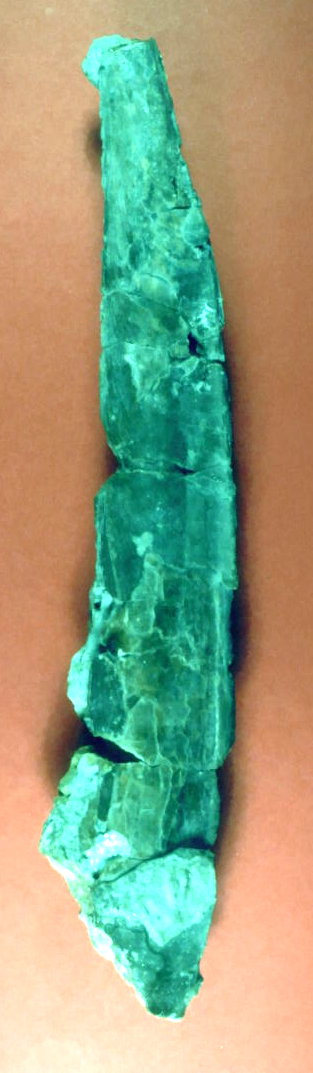
Miscellaneous Shark and Fish Remains
Species Name: Ctenacanthus
Date: 7/28/2006
Database ID: 38
Description: "Ctenacanthus" is the generic name given to spines of sharks or shark-like fishes that range from Devonian through Permian ages. None have been found associated directly other remains such as teeth or imprints in black shale and it is not possible to associate these spines to any other described genus or species.
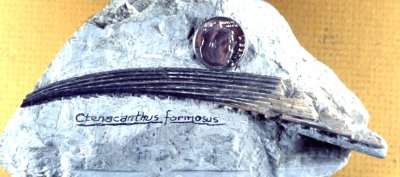
Miscellaneous Shark and Fish Remains
Species Name: Ctenacanthus
Date: 7/28/2006
Database ID: 39
Description: "Ctenacanthus" is the generic name given to spines of sharks or shark-like fishes that range from Devonian through Permian ages. None have been found associated directly other remains such as teeth or imprints in black shale and it is not possible to associate these spines to any other described genus or species.
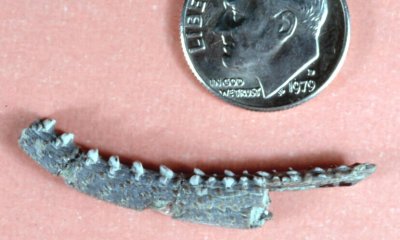
Miscellaneous Shark and Fish Remains
Species Name: Physonemus
Date: 7/28/2006
Database ID: 40
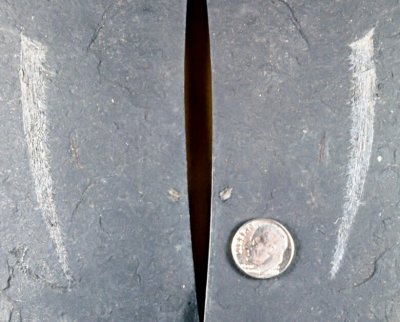
Description: The spines of "Physonemus" are reversely directed; that is, the inside of the curve points to the anterior of the fish. Maisey (1981) has suggested that the genus "Physonemus" needs a great deal of revision, and that some spines that have been relegated to "Physonemus" have been proved to be from other genera of fish when they have been found with more complete fossils.
Miscellaneous Shark and Fish Remains
Species Name: Listracanthus
Date: 7/28/2006
Database ID: 41
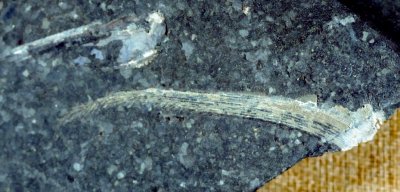
Description: "Listracanthus" is probably the most commonly found fish fossil in the offshore, black shale facies of the typical cyclothem. "Listracanthus" is most commonly found as loose, single short spines, but groups of four or 5 joined together are sometimes found. Some workers have suggested that these spines were dorsally situated. They have been found associated with dermal ossicles of "Petrodus" sp. (below) but it has not been ascertained that these fossils may have belonged to the same species of fish.
Miscellaneous Shark and Fish Remains
Species Name: Listracanthus - Shark Fin
Date: 7/28/2006
Database ID: 42
Description: "Listracanthus" is probably the most commonly found fish fossil in the offshore, black shale facies of the typical cyclothem. "Listracanthus" is most commonly found as loose, single short spines, but groups of four or 5 joined together are sometimes found. Some workers have suggested that these spines were dorsally situated. They have been found associated with dermal ossicles of "Petrodus" sp. (below) but it has not been ascertained that these fossils may have belonged to the same species of fish.
Miscellaneous Shark and Fish Remains
Species Name: Petrodus
Date: 7/28/2006
Database ID: 43
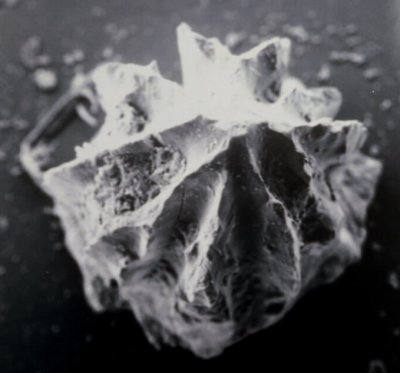
Description: This is a scanning electron microscope image of a small ossicle that has been assigned to Petrodus. It is from the Eskridge Shale Formation, lower Permian, in Richardson County. This ossicle came from a fresh water limestone and no remains of Listracanthus (above) were found associated with it. Dermal ossicles are calcified cartilage that forms the rough skin or shagreen of sharks.
Miscellaneous Shark and Fish Remains
Species Name: Petrodus
Date: 7/28/2006
Database ID: 44
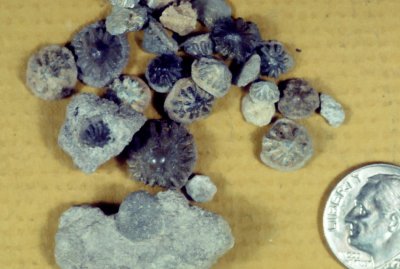
Description: This group of dermal ossicles of "Petrodus" was collected from the Ervine Creek Limestone member of the Deer Creek Formation in Cass County. They likely came from a relatively large shark.
Miscellaneous Shark and Fish Remains
Species Name: Gastric residue spatter
Date: 7/28/2006
Database ID: 45
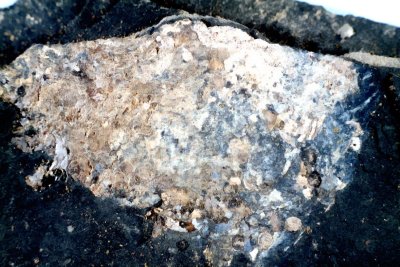
Description: Gastric residue spatters are composed of the indigestible and/or insoluble fragments of plant and animal matter from a fish’s stomach. Such spatters provide important data about the diet of fishes during the late Paleozoic. This spatter contains conjoined scales of small fish, fragments of shrimp, and other invertebrate shell fragments.
Miscellaneous Shark and Fish Remains
Species Name: Coprolites
Date: 7/28/2006
Database ID: 46
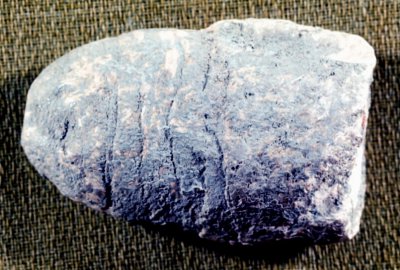
Description: Coprolites are the fossilized excrement of animals. They are more commonly associated with the land vertebrates but marine sediments may contains coprolites from fish or even invertebrates. The spiral pattern from this example of a coprolite suggests it was from an ellasmobranch (sharks, rays, skates, etc.) as these animals all have spiral digestive tracts. This example was found in the Eskridge Shale, a lower Permian stratigraphic unit that contains teeth that have been attributed to "Cladodus", "Orodus", "Protacrodus", "Petrodus", and "Xenacanthus", the latter genus commonly found in fresh water deposits.
Miscellaneous Shark and Fish Remains
Species Name: Bite marks on Ameura
Date: 7/28/2006
Database ID: 47
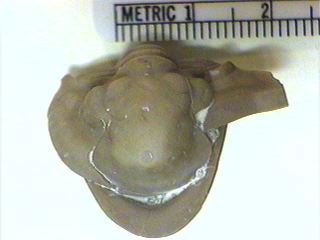
Description: This example of the trilobite "Ameura missouriensis" (Shumard) from the Kiewitz Shale bed of the Stoner Limestone Member of the Stanton Formation from Cass County, Nebraska, shows a puncture wound on the left lateral lobe of the pygidium and a small, round puncture wound near the center of the cranidium.
Miscellaneous Shark and Fish Remains
Species Name: Bite marks on Ameura
Date: 7/28/2006
Database ID: 48
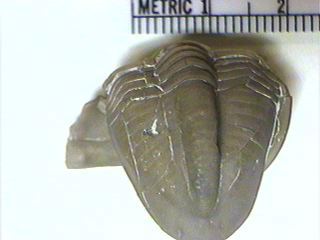
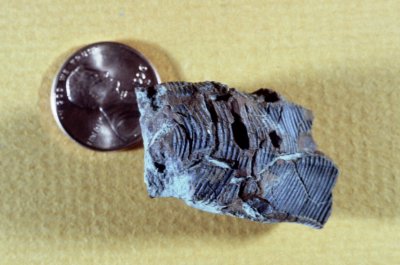
Description: This example of the trilobite "Ameura missouriensis" (Shumard) from the Kiewitz Shale bed of the Stoner Limestone Member of the Stanton Formation from Cass County, Nebraska, shows a puncture wound on the left lateral lobe of the pygidium and a small, round puncture wound near the center of the cranidium.
Miscellaneous Shark and Fish Remains
Species Name: Bite marks on a conularid
Date: 7/28/2006
Database ID: 49
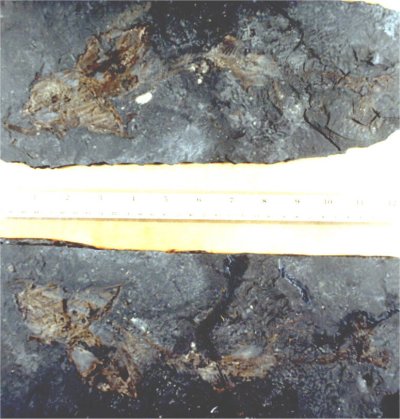
Description: This example of a conularid fossil from the Barnsdall Formation of northeastern Oklahoma shows a mark that may have been caused by a cladodont shark. Mapes and Hansen have described similar marks on a Pennsylvania ammonoid from Ohio and attributed it to a cladodont shark.
Iniopterygians
Species Name: Iniopteryx sp.
Date: 8/2/2006
Database ID: 50
Description: Specimen courtesy of Bill Rushlau, photo by Roger Pabian.
Cladodont Sharks
Species Name: Cladodont Shark Drawing
Date: 8/2/2006
Database ID: 51
Description: Illustration by Frankie Gould.
Cladodont Sharks
Species Name: Cladodus? sp.
Date: 8/2/2006
Database ID: 52
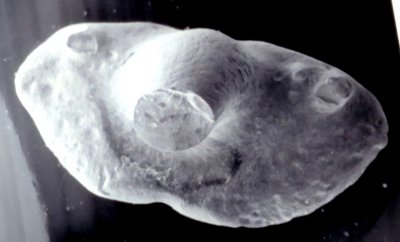
Description: These are scanning electron microscope photographs of very tiny teeth of a cladodont shark that is probably attributed to the genus Cladodus. These tiny specimens were recovered by dissolving a thin limestone that was composed almost entirely of calcified worm tubes of the genus Spirorbis. Specimens from Eskridge Shale Formation, Big Blue Series, Early Permian, Richardson County, Nebraska.
Cladodont Sharks
Species Name: Cladodus? sp.
Date: 8/2/2006
Database ID: 53
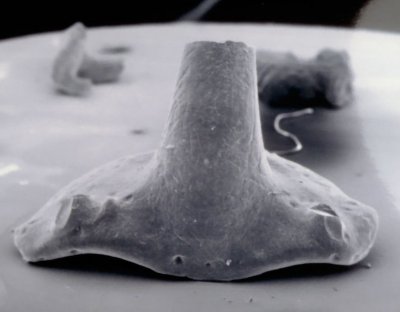
Description: These are scanning electron microscope photographs of very tiny teeth of a cladodont shark that is probably attributed to the genus Cladodus. These tiny specimens were recovered by dissolving a thin limestone that was composed almost entirely of calcified worm tubes of the genus Spirorbis. Specimens from Eskridge Shale Formation, Big Blue Series, Early Permian, Richardson County, Nebraska.
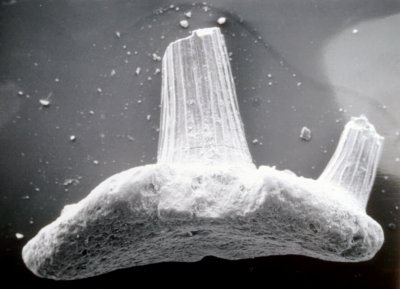
Cladodont Sharks
Species Name: Cladodus? sp.
Date: 8/2/2006
Database ID: 54
Description: These are scanning electron microscope photographs of very tiny teeth of a cladodont shark that is probably attributed to the genus Cladodus. These tiny specimens were recovered by dissolving a thin limestone that was composed almost entirely of calcified worm tubes of the genus Spirorbis. Specimens from Eskridge Shale Formation, Big Blue Series, Early Permian, Richardson County, Nebraska.
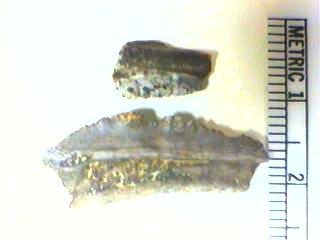
Petalodont Teeth
Species Name: Chomatodus sp.
Date: 8/8/2006
Database ID: 55
Description: "Chomatodus" teeth suggest that it was a shell crusher. "Chomatodus" is a very long ranging genus (Devonian – Permian) that had a broad geographic distribution (USA, Canada, Ireland, and European Continent).
Petalodont Teeth
Species Name: Serratodus? sp.
Date: 8/8/2006
Database ID: 56
Description: This tooth is compared to the genus "Serratodus" that was described from the much older lower Carboniferous (Mississippian) of Belgium. The tooth has the same general oval outline with a short root and crown as "Serratodus" but lacks the serrations on the crown.
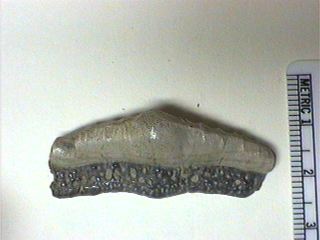
Eugeneodontid Sharks
Species Name: Campodus variabilis
Date: 8/8/2006
Database ID: 57
Description: "Campodus variabilis"
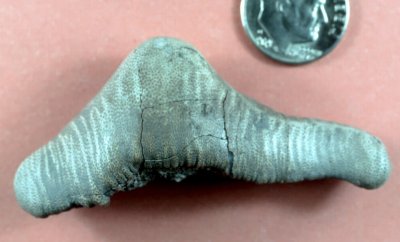
Orodont Shark Teeth
Species Name: Orodus sp.?
Date: 8/8/2006
Database ID: 58
Description: Orodus sp.?
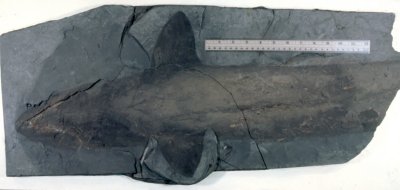
Eugeneodontid Sharks
Species Name: Campodus variabilis
Date: 8/8/2006
Database ID: 59
Description: More or less complete anterior of "Campodus variabilis".
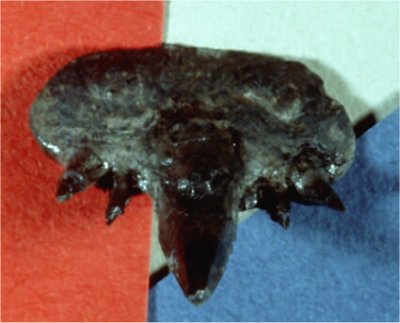
Cladodont Sharks
Species Name: Cladodus Louisville
Date: 8/9/2006
Database ID: 60
Description: Cladodus Louisville
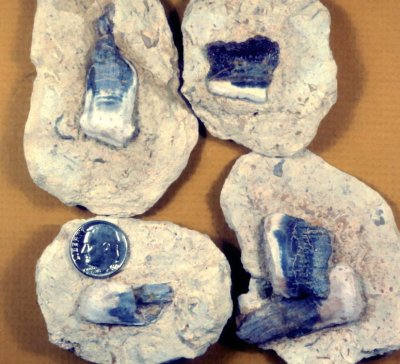
Petalodont Teeth
Species Name: Janassa sp. cf. maxima
Date: 8/9/2006
Database ID: 61
Description: "Janassa" sp. cf. "maxima"
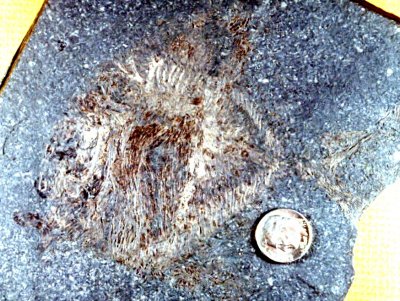
Platysomoid Fishes
Species Name: Chirodus? sp.
Date: 8/9/2006
Database ID: 62
Description: Platysomoid fishes have bodies that are similar to modern sunfishes or crappie although there is no close relationship between these forms. Some outstanding examples were collected by the late W. D. “Ted” White from the Stark and Wea shales, both offshore, black shale beds, in Sarpy County. All of the paleoniscoid fishes collected in Nebraska have tentatively been assigned to the genus Chirodus, but these designations could change with further study.
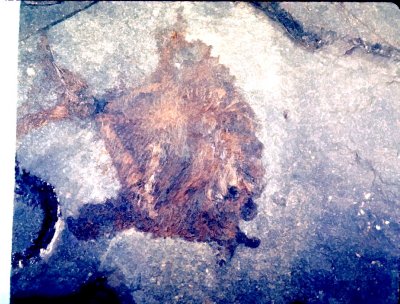
Platysomoid Fishes
Species Name: Chirodus? sp.
Date: 8/9/2006
Database ID: 63
Description: Platysomoid fishes have bodies that are similar to modern sunfishes or crappie although there is no close relationship between these forms. Some outstanding examples were collected by the late W. D. “Ted” White from the Stark and Wea shales, both offshore, black shale beds, in Sarpy County. All of the paleoniscoid fishes collected in Nebraska have tentatively been assigned to the genus Chirodus, but these designations could change with further study.