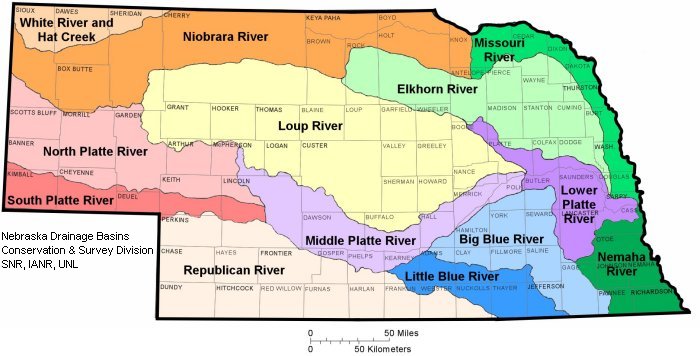
The Gem Collections is organized by drainage basins (seen in image) and the source (glacial deposits, drainage basin or formed in situ).
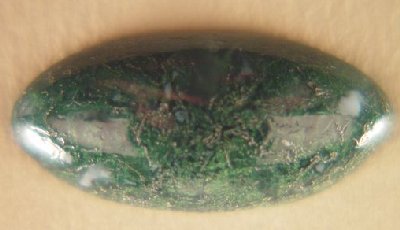
Moss Agate
Drainage Basin: Big Blue River
Source: Drainage Basin
Date: 3/7/2002
Description: Moss agate cabochon, 21 x 10 mm. This finely colored gem was cut from rough material collected from gravel deposits of Pleistocene or Recent age along the Big Blue River near Crete in Saline County. The stone came to the University of Nebraska State Museum in 1936 through C. S. Krebs of Crete and C. S. Butler, then head of Nebraska Game and Park Commission. The source area for this kind of agate is currently not known.
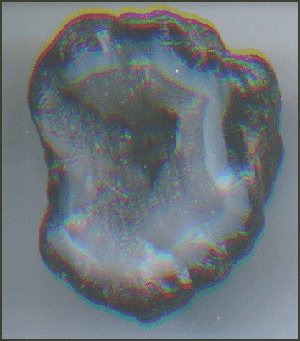
Banded Agate
Drainage Basin: Elkhorn River
Source: Drainage Basin
Date: 10/29/1998
Description: Banded Agate, Elkhorn River Gravels, near Ewing, Holt County. Found by Beau Fry, age 7.
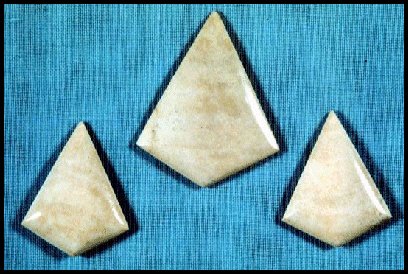
Opalized Wood
Drainage Basin: Elkhorn River
Source: Drainage Basin
Date: 10/29/1998
Description: Opalized wood is sometimes a very pure white although much of it is black and the grain can only be discerned after the specimen has been soaked in a chlorine bleach.
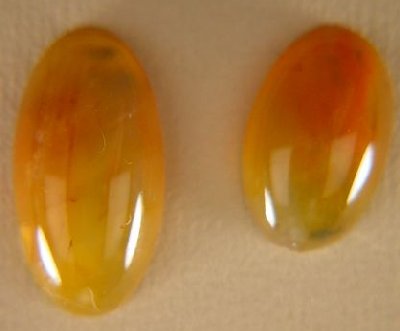
Agatized Wood
Drainage Basin: Little Blue River
Source: Drainage Basin
Date: 3/7/2002
Description: Agatized wood cabochons, 23 x 12 mm and 18 x 11 mm. These stones were fashioned from rough material that was collected by F. D. Norris from near Fairbury in Jefferson County in about 1921. The source of the wood is unknown; it may have been from gravel of Pleistocene or Recent age deposited along the Little Blue River; it may have been collected from glacial deposits of Pleistocene age; or it may have been collected from agatized wood that has been found in the Greenhorn Limestone of late Cretaceous age. State Historical Society documents show that large quantities of agatized wood were once mined and sold in the Fairbury area. We have collected several examples of wood from the Greenhorn but we have not yet observed any in place in any large quantity.
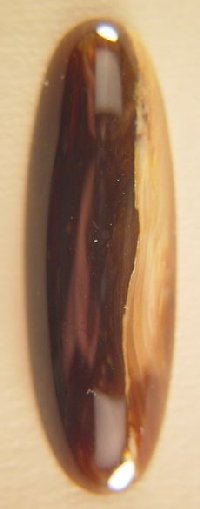
Agatized Wood
Drainage Basin: Little Blue River
Source: Drainage Basin
Date: 3/7/2002
Description: Agatized wood cabochon, 45 x 15 mm. Agatized wood is characterized by silica occupying the hollow spaces within and between the cells of wood from a plant. The wood is still present but is stiffened with silica in the form of chalcedony. This specimen was cut from a piece of rough collected from glacial till of Pleistocene age from near Princeton, Nebraska, by P. Matthews in 1918. The source of such wood is not known.
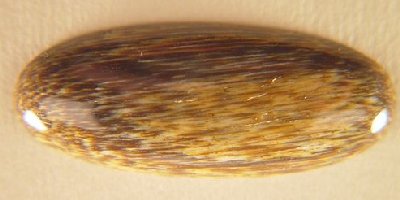
Agatized Wood
Drainage Basin: Little Blue River
Source: Drainage Basin
Date: 3/7/2002
Description: Fine agatized wood has been found in the South Platte River drainage in Nebraska. It has been observed in gravel bars in the modern stream as well as in terrace gravels in the surrounding hills of Lincoln, Keith, and Deuel counties. The se woods probably originated in continental deposits of Cretaceous age that are exposed in the foothills of the Front Range.
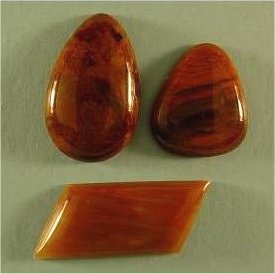
Agatized Wood
Drainage Basin: Little Blue River
Source: Drainage Basin
Date: 1/31/2003
Description: Agatized wood cabochons, 80 x 16 mm, 71 x 14 mm, 38 x 17 mm, 28 x 14 mm, and 23 x 10 mm. These appear to have been fashioned out of at least two different pieces of rough material that C. W. Kaley collected from gravel deposits of Pleistocene or Recent age along the Republican River near Red Willow, Nebraska. Red Willow is situated about 6 miles east of McCook in Red Willow County. Note the small knot just to the right of center on the largest cabochon above. This kind of wood possibly originated in rocks of Cretaceous age that are along the Front Range of Colorado.
Agatized Wood
Drainage Basin: Little Blue River
Source: Drainage Basin
Date: 1/31/2003
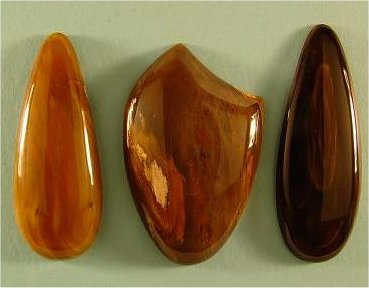
Description: Agatized wood cabochon, 38 x 15 mm. This stones were fashioned from rough material that was collected by Wm.Morris from near Faribury in Jefferson County in about 1923. The source of the wood is unknown; it may have been from gravel of Pleistocene or Recent age deposited along the Little Blue River; it may have been collected from glacial deposits of Pleistocene age; or it may have been collected from agatized wood that has been found in the Greenhorn Limestone of late Cretaceous age. State Historical Society documents show that large quantities of agatized wood were once mined and sold in the Fairbury area. We have collected several examples of wood from the Greenhorn but we have not yet observed any in place in any large quantity. This piece of wood more closely resembles that from the Cretaceous rather than the Pleistocene or Recent.
Cloud Agates
Drainage Basin: Little Blue River
Source: Drainage Basin
Date: 1/31/2003
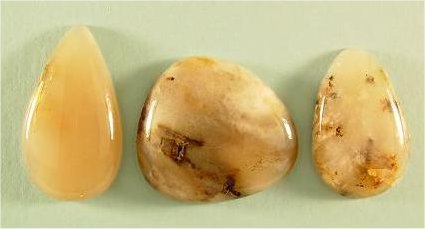
Description: Cloud Agates, Little Blue River, Jefferson and Thayer Counties
Jasper
Drainage Basin: Little Blue River
Source: Drainage Basin
Date: 1/31/2003
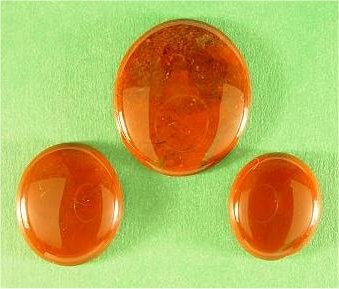
Description: Jasper, Little Blue River, Jefferson and Thayer Counties.
Jasper
Drainage Basin: Little Blue River
Source: Drainage Basin
Date: 1/31/2003
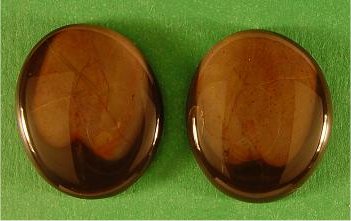
Description: Jasper, Little Blue River, Jefferson and Thayer Counties.
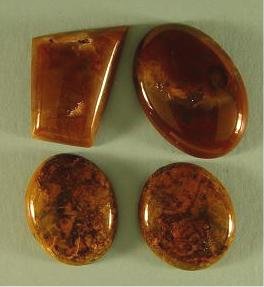
Jasper
Drainage Basin: Little Blue River
Source: Drainage Basin
Date: 1/31/2003
Description: Jasper, Little Blue River, Jefferson and Thayer Counties.
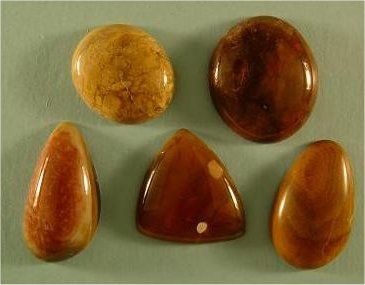
Jasper
Drainage Basin: Little Blue River
Source: Drainage Basin
Date: 1/31/2003
Description: Jasper, Little Blue River, Jefferson and Thayer Counties.
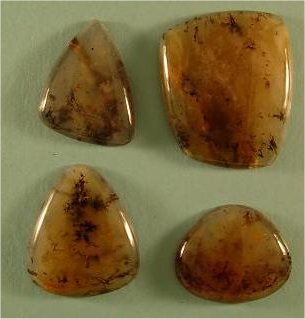
Moss Agates
Drainage Basin: Little Blue River
Source: Drainage Basin
Date: 1/31/2003
Description: Moss Agates, Little Blue River, Jefferson and Thayer Counties.
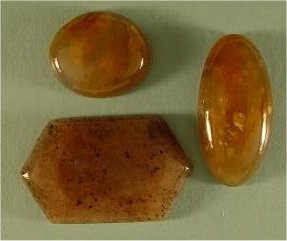
Moss Agates
Drainage Basin: Little Blue River
Source: Drainage Basin
Date: 1/31/2003
Description: Moss Agates, Little Blue River, Jefferson and Thayer Counties.
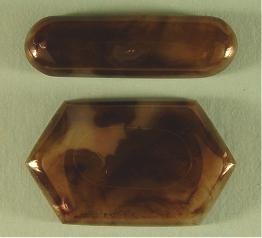
Moss Agates
Drainage Basin: Little Blue River
Source: Drainage Basin
Date: 1/31/2003
Description: Moss Agates, Little Blue River, Jefferson and Thayer Counties.
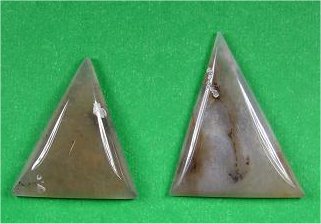
Moss Agates
Drainage Basin: Lower Platte River
Source: Drainage Basin
Date: 4/22/2003
Description: na
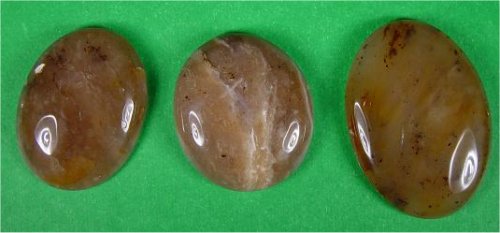
Moss Agates
Drainage Basin: Lower Platte River
Source: Drainage Basin
Date: 4/22/2003
Description: na
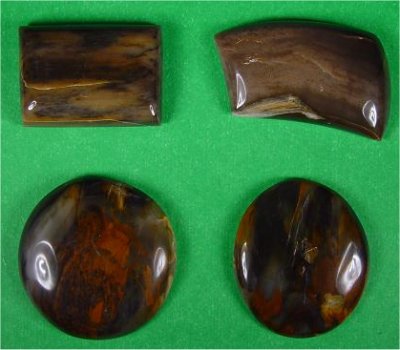
Agatized Wood
Drainage Basin: Lower Platte River
Source: Drainage Basin
Date: 4/22/2003
Description: na
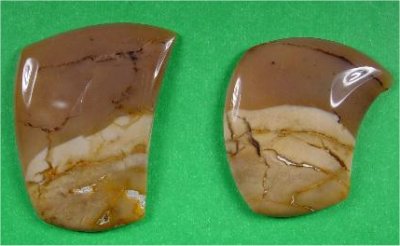
Picture Jasper
Drainage Basin: Lower Platte River
Source: Drainage Basin
Date: 4/22/2003
Description: na
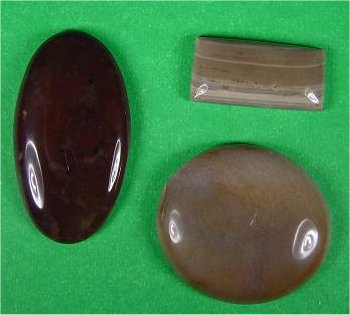
Jasper
Drainage Basin: Lower Platte River
Source: Drainage Basin
Date: 4/22/2003
Description: na
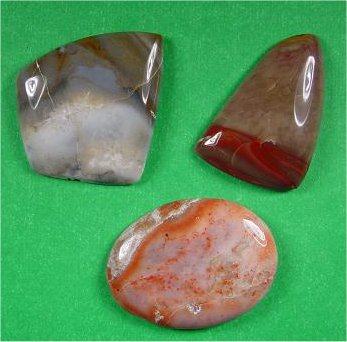
Jasper
Drainage Basin: Lower Platte River
Source: Drainage Basin
Date: 4/22/2003
Description: na
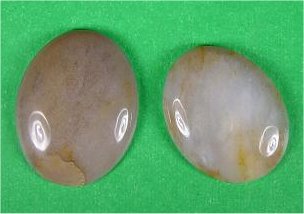
Jasper
Drainage Basin: Lower Platte River
Source: Drainage Basin
Date: 4/22/2003
Description: na
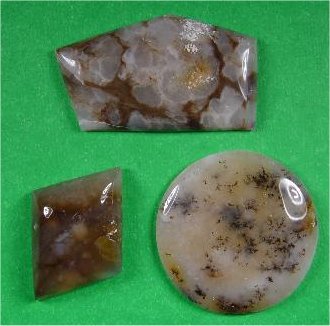
Dentritic Agate
Drainage Basin: Lower Platte River
Source: Drainage Basin
Date: 4/22/2003
Description: na
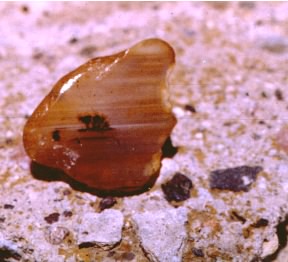
Dendritic Agate
Drainage Basin: Missouri River
Source: Drainage Basin
Date: 4/22/2003
Description: Dendritic agate from Missouri River gravel near South Sioux City, Nebraska, found and polished by Carl Wells, 1974.
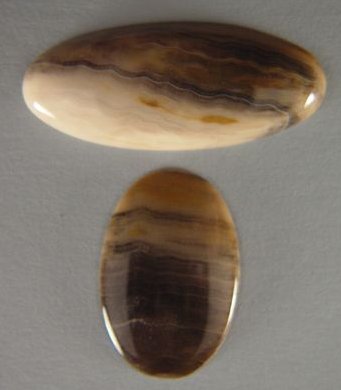
Agatized Wood
Drainage Basin: Niobrara River
Source: Drainage Basin
Date: 3/7/2002
Description: Agatized wood cabochons, 50 x 21 mm and 34 x 23 mm. C. D. Sawyer collected the rough material from which these stones were derived in 1923 from gravel deposits of Pleistocene or Recent age along the Niobrara River about 12 miles south of Rushville in Sheridan County. The source of the wood is currently not known.
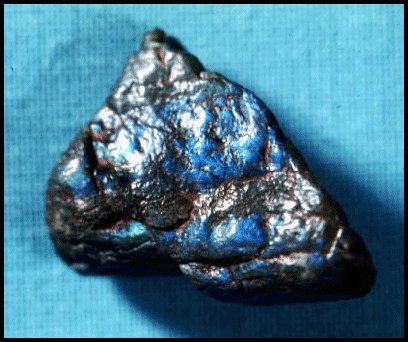
Labradorite
Drainage Basin: Niobrara River
Source: Drainage Basin
Date: 10/29/1998
Description: Other material from western sources include Labradorite, also called Anorthosite, an iridescent feldspar that originated in the Front Range of the Rockies. These have been found in the Dismal, Loup, and Niobrara River drainages.
Agatized Palm Wood
Drainage Basin: North Platte River
Source: Drainage Basin
Date: 3/27/2002
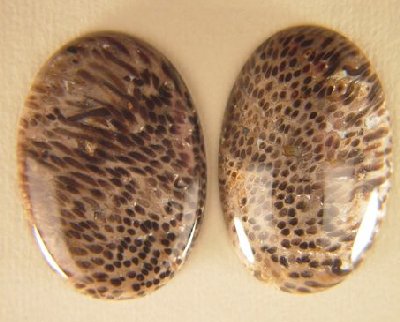
Description: Agatized palm wood cabochons, 37 x 16 mm and 36 x 14 mm. These gems were derived from a piece of rough that was collected by C. D. Sawyer in 1923 from gravel deposits of Pleistocene or Recent age that are exposed along the North Platte River near Scottsbluff in Scotts Bluff County. Tidwell (1975) used the generic name Palmoxylon for the petrified trunks of palms and other tree-like monocot plants. Monocots include palms, lilies and grasses.
Agatized Wood
Drainage Basin: North Platte River
Source: Drainage Basin
Date: 3/7/2002
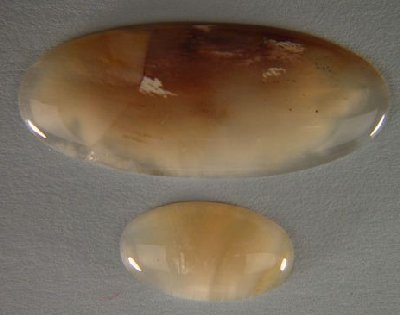
Description: Agatized wood cabochons, 56 x 23 mm and 26 x 15 mm. These gems were derived from a piece of rough that was collected by C. D. Sawyer in 1923 from gravel deposits of Pleistocene or Recent age that are exposed slong the North Platte River near Scottsbluff in Scotts Bluff County. The catalogue of the University of Nebraska State Museum suggests that this wood is from a cedar tree but this identification can not be extablished.
Nephrite
Drainage Basin: North Platte River
Source: Drainage Basin
Date: 10/29/1998
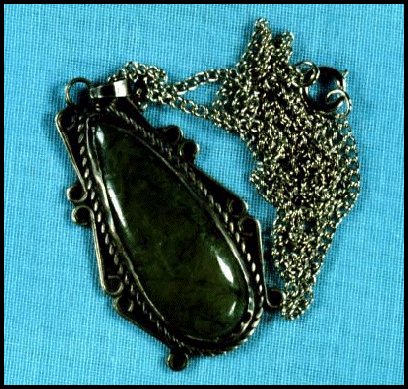
Description: Nephrite, one of the two forms of jade, has been found in small amounts in the North Platte River drainage. It probably originated in the Front Range of Wyoming where several active jade claims are in operation. These stones date back to the Precambrian, near a billion years ago.
Orbicular Jasper
Drainage Basin: North Platte River
Source: Drainage Basin
Date: 3/7/2002
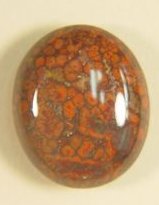
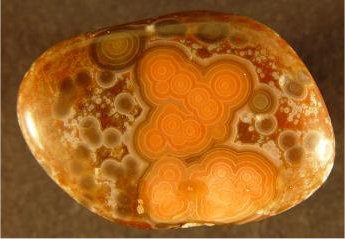
Description: Orbicular jasper cabochon, 25 x 21 mm.. This stone was collected by Lee Jacobs in 1919 from gravel deposits of Pleistocene or Recent age along the North Platte River near LeMoyne in Keith County. Orbicular jasper forms when a silica rich rhyolitic ash flow cools quickly. Quartz and feldspar crystallize in spherulites, radial aggregates of needle like crystals, that provide the interesting structure seen in this kind of jasper. Better known examples of orbicular jasper are often seen offered as Poppy Jasper or Morgan Hill Jasper from California or Ocean Jasper from Madagascar. The Nebraska stone has a similar structure to these latter varieties.
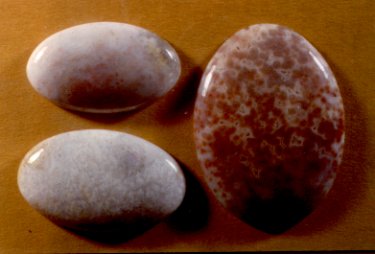
Agatized Oolite
Drainage Basin: not yet assigned
Source: Formed in Situ
Date: 2/12/2001
Description: Agatized oolite, found in North Fork of Big Nemaha River, Pawnee and Richardson Counties. Similar nodules of agatized oolite have been found in place in limestone and shale of Pennsylvanian and Permian age in Richardson and Pawnee counties. The source of the silica (SiO2) that formed these nodules is not certain--it may have been biogenic, being precipitated by sponges and protozoans or it may have been derived from air-fall volcanic ash. The oolite texture is easily observed with about ten-power magnification.
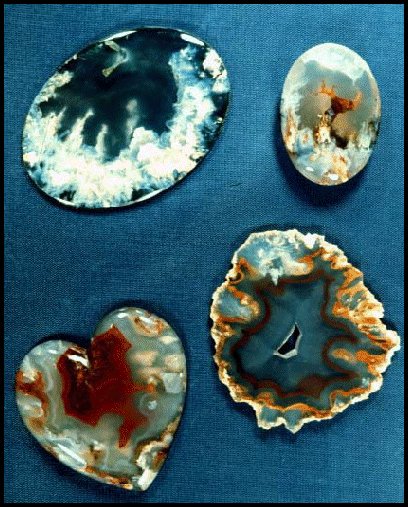
Blue Agate
Drainage Basin: not yet assigned
Source: Formed in Situ
Date: 10/29/1998
Description: Blue Agate, the Nebraska State Gem, has been found in place in wind-deposited claystones in the Chadron Formation of Oligocene Age in Sioux and Dawes counties. These gems have been found in colors other than blue and the large oval stone is a doublet with a blackened back to highlight the plumes in this material. The chalcedony probably originated from silica that was freed when devitrification (changing from a glassy to a crystalline state) of wind-blown volcanic ash took place. The chalcedony appears to have formed in or near sources of alkaline water.
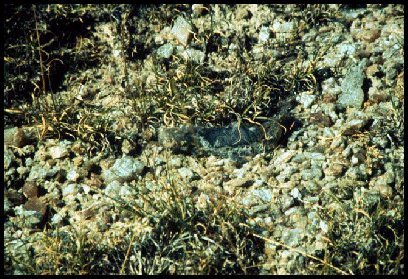
Chalcedony
Drainage Basin: not yet assigned
Source: Formed in Situ
Date: 10/29/1998
Description: In many areas, the ground is literally covered with chalcedony but little of it is large, gemmy pieces such as the ones near the center of the picture.
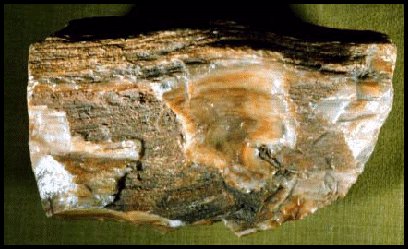
Common Opal
Drainage Basin: not yet assigned
Source: Formed in Situ
Date: 10/29/1998
Description: Some common opal is found in place in surface deposits, especially in deposits of the Ogallala Formation of Miocene/Pliocene Age. Much of the opal has permeated wood and opalized wood has been found in both North-Central and South-Central Nebraska. Some of the wood has been eroded from its host rock and re-deposited in gravels of streams streams that drain these areas.
Flint
Drainage Basin: not yet assigned
Source: Formed in Situ
Date: 3/7/2002
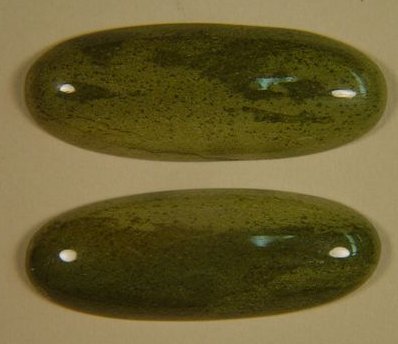
Description: Silicified chalk or "flint" cabochons, 58 x 22 mm and 57 x 21 mm. Silicified chalk, sometimes referred to as flint, has been found in large quantities in the Smoky Hill Chalk member of the Niobrara Formation of Cretaceous age that is exposed along the Republican River in south-central Nebraska. The fact that there are many bentonite (altered volcanic ash) beds in the Niobrara Formation suggests that the source of silica for these rocks was volcanic ash. These cabochons were fashioned from rough material that was collected by E. H. Barbour in 1923.
Flint
Drainage Basin: not yet assigned
Source: Formed in Situ
Date: 3/7/2002
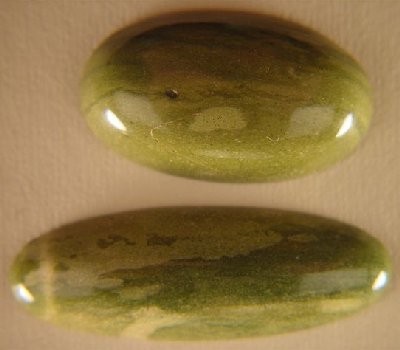
Description: Silicified chalk or "flint" cabochons, 40 x 24 mm and 53 x 19 mm. Silicified chalk, sometimes referred to as flint, has been found in large quantities in the Smoky Hill Chalk member of the Niobrara Formation of Cretaceous age that is exposed along the Republican River in south-central Nebraska. The fact that there are many bentonite (altered volcanic ash) beds in the Niobrara Formation suggests that the source of silica for these rocks was volcanic ash. These cabochons were fashioned from rough material that was collected by E. H. Barbour in about 1917.
Flint
Drainage Basin: not yet assigned
Source: Formed in Situ
Date: 3/7/2002
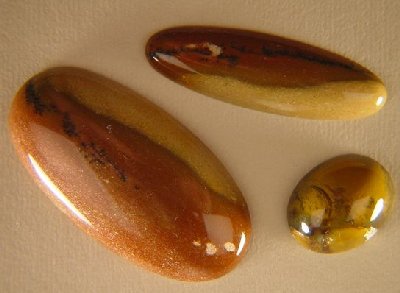
Description: Silicified chalk or "flint" cabochons, 53 x 27 mm, 46 x 14 mm, and 21 x 16 mm. Silicified chalk, sometimes referred to as flint, has been found in large quantities in the Smoky Hill Chalk member of the Niobrara Formation of Cretaceous age that is exposed along the Republican River in south-central Nebraska. The fact that there are many bentonite (altered volcanic ash) beds in the Niobrara Formation suggests that the source of silica for these rocks was volcanic ash. These cabochons were fashioned from rough material that was gathered by an unknown collector and it was fashioned into cabochons by Golden State Gem Company of San Francisco in about 1923. The material was found near Cambridge, Nebraska.
Flint
Drainage Basin: not yet assigned
Source: Formed in Situ
Date: 3/7/2002
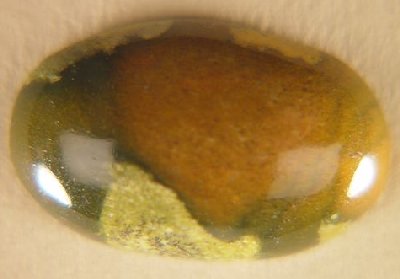
Description: Silicified chalk or "flint" cabochon, 25 x 16 mm. Silicified chalk, sometimes referred to as flint, has been found in large quantities in the Smoky Hill Chalk member of the Niobrara Formation of Cretaceous age that is exposed along the Republican River in south-central Nebraska. The fact that there are many bentonite (altered volcanic ash) beds in the Niobrara Formation suggests that the source of silica for these rocks was volcanic ash. This stone was shaped from rough that was collected near Cambridge, Nebraska, and was donated to the University of Nebraska State Museum in 1921 by Mrs. Samuel R. McKelvie, wife of then Governor of Nebraska, Samuel R. McKelvie. The McKelvies were active collectors and they provided many invertebrate fossils of Cretaceous age to the state museum.
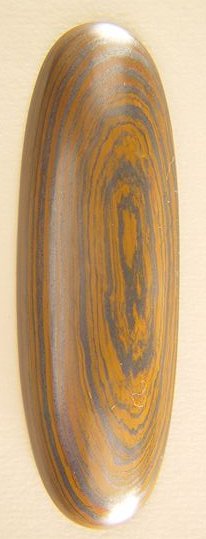
Ironwood
Drainage Basin: not yet assigned
Source: Formed in Situ
Date: 3/7/2002
Description: Ironwood Cabochon, 75 x 25 mm. Iron wood is a lapidary name for fossil wood that has been impregnated with iron oxides such as hematite (black layers) and limonite (brown layers). This specimen was collected in 1917 by E. H. Barbour from Sandstone of the Dakota Group of Cretaceous age in Jefferson County. Some iron wood has been observed in place in the vicinity of Steele City. It is characterized by a very high specific gravity.
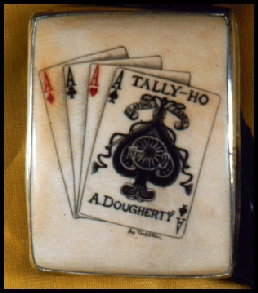
Ivory and Bone
Drainage Basin: not yet assigned
Source: Formed in Situ
Date: 10/29/1998
Description: Fragments of fossil ivory and bone have been found in many of Nebraska's stream gravels. Some of this material has been used as a medium for the art of scrimshaw in which the artist makes a scratch in the medium and colors it with ink. This piece was done by Nebraska Artist Jay Tschetter.
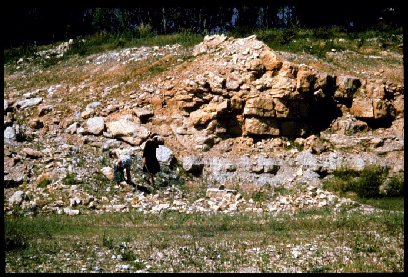
Onyx
Drainage Basin: not yet assigned
Source: Formed in Situ
Date: 10/29/1998
Description: The oldest in-place gems include some honey colored onyx that has been collected from limestone quarries in rocks of late Pennsylvanian age. Such onyx has been found in joint (oriented, non-displaced fractures) fillings in thick limestone beds such as the one seen here.
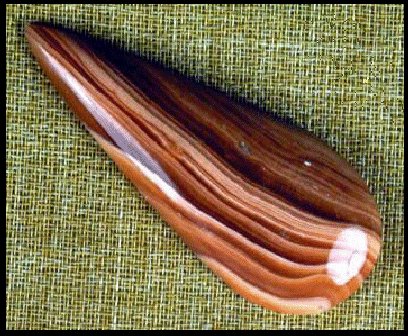
Onyx
Drainage Basin: not yet assigned
Source: Formed in Situ
Date: 10/29/1998
Description: All of this onyx tends to be a uniform color. Many pieces are suitable for jewelry use, but some pieces large enough to make ornaments and spheres up to 3 or 4 inches in diameter have been found. Agatized corals, gemmy flint or chert, and some banded agates have also been found in these quarries in the southeastern part of the state.
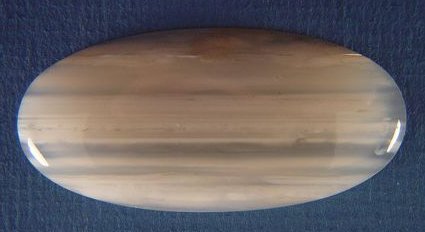
Onyx
Drainage Basin: not yet assigned
Source: Formed in Situ
Date: 3/7/2002
Description: Onyx agate cabochon, 58 x 28 mm. Onyx agate is characterized by parallel bands; such stones are sometimes called water line agates. This specimen was collected by E. H. Barbour in 1896 and was fashioned into a cabochon in about 1919 by Golden State Gem Company of San Francisco. Pabian (1971, p. 32, 33, plate I, figure 3) showed gypsum that is being repalced with chalcedony that retained the cleavage planes of the gypsum. It was suggested then that much of the onyx agate is pseudomorph os chalcedony after gypsum. This kind of material has been recovered from the Chadron Formation of Oligocene age.
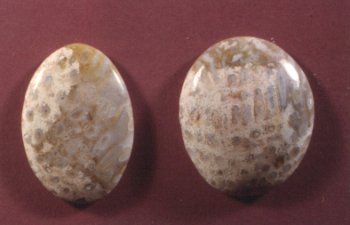
Agatized Coral
Drainage Basin: not yet assigned
Source: Glacial Deposits
Date: 2/12/2001
Description: Agatized Coral, from glacial till of Pleistocene age, Richardson County. The transverse (left) and longitudinal (right) sections of this agatized coral suggest little about the coral's true affinities. It can only be compared to the genus "Syringopora," a long ranging form of fairly wide distribution. The coral may have originally lived in seas of Devonian age that covered an area along the west shore of Lake Winnipel in Manitoba, Canada, as many of these fossils have been found as "strays" in glacial deposits of the Midwest.
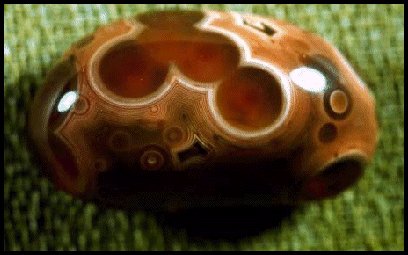
Eye Agate
Drainage Basin: not yet assigned
Source: Glacial Deposits
Date: 10/29/1998
Description: This very fine eye agate was collected near Table Rock in Pawnee County. The eyes are thought to have formed as a result of a self organizational chemical reaction called a Belousov-Zhabotinski reaction that causes concentric wave fronts in the reaction medium.
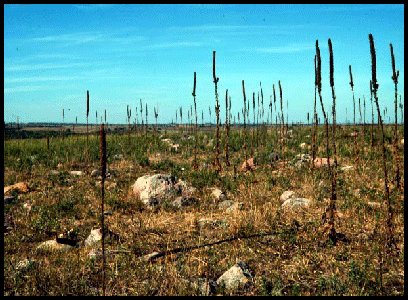
Glacial Deposits
Drainage Basin: not yet assigned
Source: Glacial Deposits
Date: 10/29/1998
Description: Glacial deposits are what geologists call unsorted---they contain particles ranging from clay and silt sizes to very large boulders. They are not bedded or stratified and in Nebraska, they are found only in the eastern part of the state.
Honey Agate
Drainage Basin: not yet assigned
Source: Glacial Deposits
Date: 10/29/1998
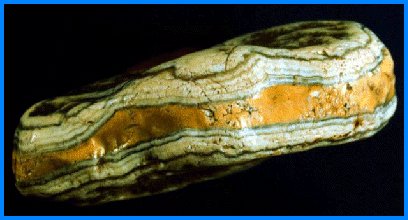
Description: A popular kind of agate is called "honey agate" for its color. These are thought to have originated in sedimentary rocks of Devonian age that are exposed on the west shore of Lake Winnipeg in Manitoba, Canada. Many honey agates have nice moss or dendrites. Many have a white exterior as a result of deep weathering.
Jasper
Drainage Basin: not yet assigned
Source: Glacial Deposits
Date: 2/12/2001
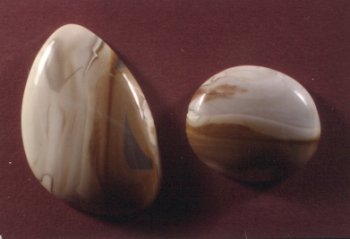
Description: Jasper, from glacial till of Pleistocene age, Richardson County. Many of the examples of jasper found in the glacial tills of southeastern Nebraska may have originated more or less locally as chert nodules in limestone deposits of Pennsylvanian and Permian age. This is suggested by the presence of fusulinids, wheat-grained sized and shaped protozoans that lived in shallow seas that covered much of North America many times during the Paleozoic Era. Fusulinids are commonly found in the limestone deposits of eastern Nebraska. Glaciers tore up and reworked the limestone and the hard chert remained after the soft host rock was pulverized. The coloration may have been changed from drab gray and brown to red by oxidation of iron impurities in the chert.
Jasper
Drainage Basin: not yet assigned
Source: Glacial Deposits
Date: 2/12/2001
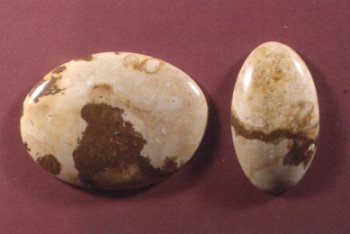
Description: Jasper, from glacial till of Pleistocene age, Richardson County. Many of the examples of jasper found in the glacial tills of southeastern Nebraska may have originated more or less locally as chert nodules in limestone deposits of Pennsylvanian and Permian age. This is suggested by the presence of fusulinids, wheat-grained sized and shaped protozoans that lived in shallow seas that covered much of North America many times during the Paleozoic Era. Fusulinids are commonly found in the limestone deposits of eastern Nebraska. Glaciers tore up and reworked the limestone and the hard chert remained after the soft host rock was pulverized. The coloration may have been changed from drab gray and brown to red by oxidation of iron impurities in the chert.
Jaspers, Flints and Cherts
Drainage Basin: not yet assigned
Source: Glacial Deposits
Date: 10/29/1998
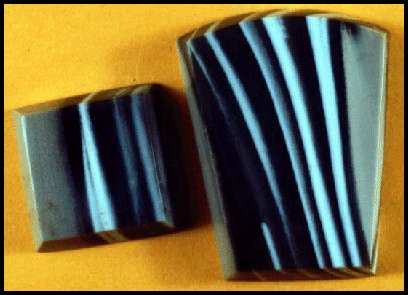
Description: The glacial deposits of eastern Nebraska have produced some very interesting jaspers, flints and cherts. They do not have the fine banding that characterizes agates but many have fine colors and patterns. They come from a large number of sources such as sedimentary rocks of Paleozoic age from parts of Canada and Minnesota and even Nebraska.
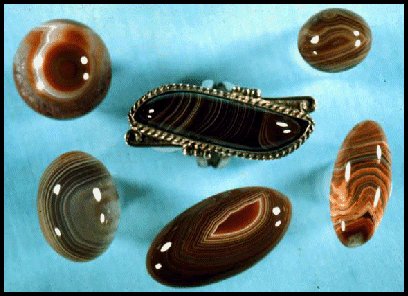
Lake Superior Agate
Drainage Basin: not yet assigned
Source: Glacial Deposits
Date: 10/28/1998
Description: The most popular gems from Nebraska's glacial deposits are probably the Lake Superior Agates. These originated in basalt flows of Late Precambrian age that are now exposed along the North Shore of Lake Superior. The agates actually derived their name from the Lake Superior Till, a glacial deposit that is exposed in much of eastern Minnesota and is known for both the quantity and quality of agates it has yielded to collectors. These stones were found in the vicinity of Palmyra in Otoe County.
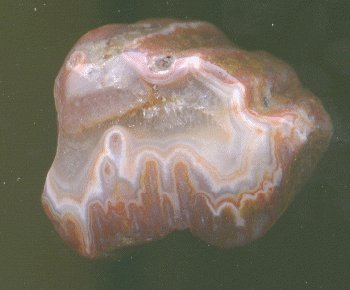
Lake Superior Agate
Drainage Basin: not yet assigned
Source: Glacial Deposits
Date: 10/28/1998
Description: Lake Superior Agate, from Glacial Deposits, Southeastern Nebraska.
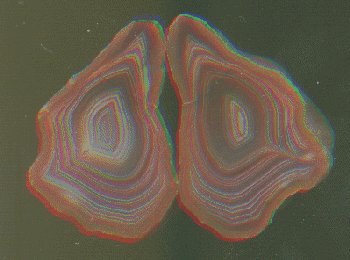
Lake Superior Agate
Drainage Basin: not yet assigned
Source: Glacial Deposits
Date: 10/28/1998
Description: Lake Superior Agate, from Glacial Deposits, Southeastern Nebraska.
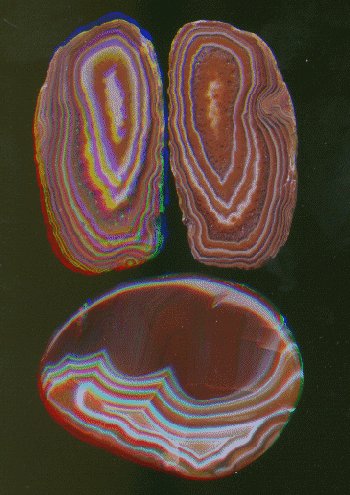
Lake Superior Agate
Drainage Basin: not yet assigned
Source: Glacial Deposits
Date: 10/28/1998
Description: Lake Superior Agate, from Glacial Deposits, Southeastern Nebraska.
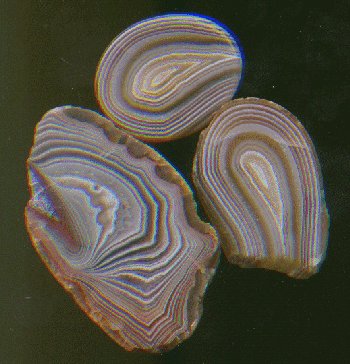
Lake Superior Agate
Drainage Basin: not yet assigned
Source: Glacial Deposits
Date: 10/28/1998
Description: Lake Superior Agate, from Glacial Deposits, Southeastern Nebraska.
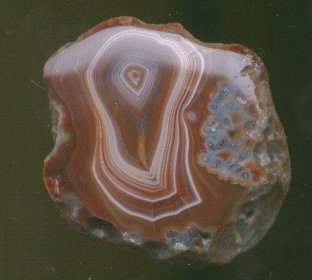
Lake Superior Agate
Drainage Basin: not yet assigned
Source: Glacial Deposits
Date: 10/28/1998
Description: Lake Superior Agate, from Glacial Deposits, Southeastern Nebraska.
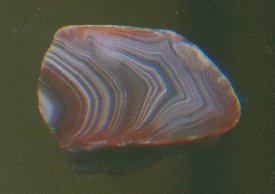
Lake Superior Agate
Drainage Basin: not yet assigned
Source: Glacial Deposits
Date: 10/28/1998
Description: Lake Superior Agate, from Glacial Deposits, Southeastern Nebraska.
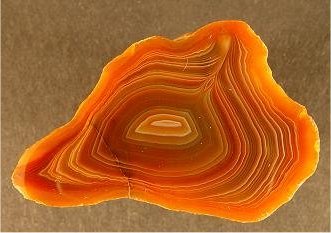
Lake Superior Agate
Drainage Basin: not yet assigned
Source: Glacial Deposits
Date: 2/7/2003
Description: Lake Superior Agate, from Glacial Deposits, Southeastern Nebraska.
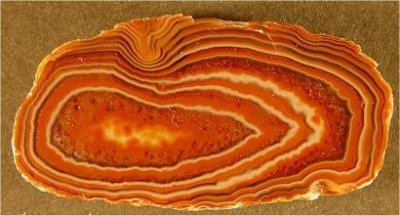
Lake Superior Agate
Drainage Basin: not yet assigned
Source: Glacial Deposits
Date: 2/7/2003
Description: Lake Superior Agate, from Glacial Deposits, Southeastern Nebraska.
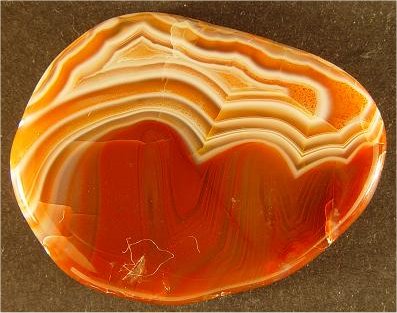
Lake Superior Agate
Drainage Basin: not yet assigned
Source: Glacial Deposits
Date: 2/7/2003
Description: Lake Superior Agate, from Glacial Deposits, Southeastern Nebraska.
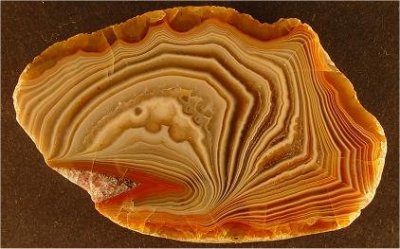
Lake Superior Agate
Drainage Basin: not yet assigned
Source: Glacial Deposits
Date: 2/7/2003
Description: Lake Superior Agate, from Glacial Deposits, Southeastern Nebraska.
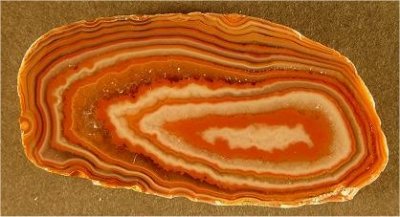
Lake Superior Agate
Drainage Basin: not yet assigned
Source: Glacial Deposits
Date: 2/7/2003
Description: Lake Superior Agate, from Glacial Deposits, Southeastern Nebraska.
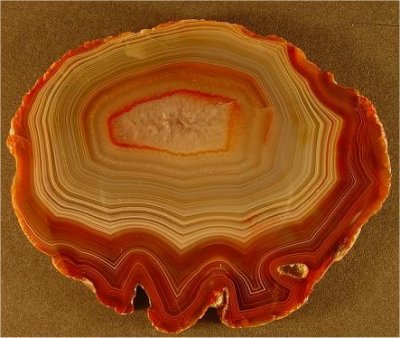
Lake Superior Agate
Drainage Basin: not yet assigned
Source: Glacial Deposits
Date: 2/7/2003
Description: Lake Superior Agate, from Glacial Deposits, Southeastern Nebraska.
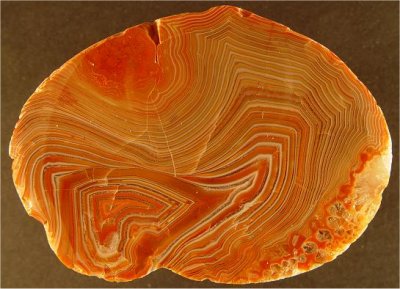
Lake Superior Agate
Drainage Basin: not yet assigned
Source: Glacial Deposits
Date: 2/7/2003
Description: Lake Superior Agate, from Glacial Deposits, Southeastern Nebraska.
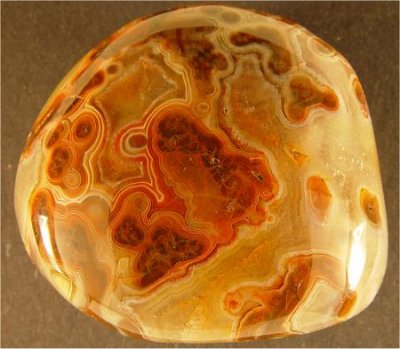
Lake Superior Agate
Drainage Basin: not yet assigned
Source: Glacial Deposits
Date: 2/7/2003
Description: Lake Superior Agate, from Glacial Deposits, Southeastern Nebraska.
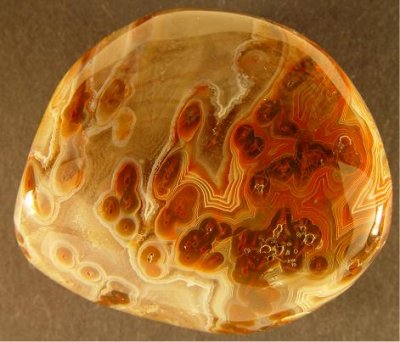
Lake Superior Agate
Drainage Basin: not yet assigned
Source: Glacial Deposits
Date: 2/7/2003
Description: Lake Superior Agate, from Glacial Deposits, Southeastern Nebraska.
Lake Superior Agate
Drainage Basin: not yet assigned
Source: Glacial Deposits
Date: 2/7/2003
Description: Lake Superior Agate, from Glacial Deposits, Southeastern Nebraska.
Lake Superior Eye Agate
Drainage Basin: not yet assigned
Source: Glacial Deposits
Date: 10/28/1998
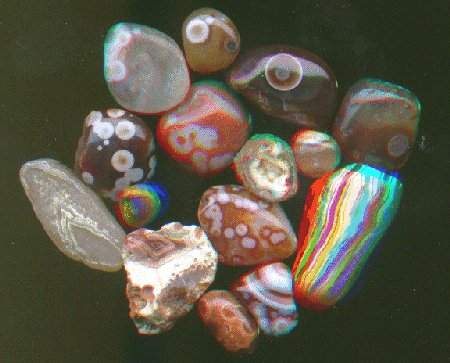
Description: Lake Superior Eye Agates, from Glacial Deposits, Southeastern Nebraska.
Sioux Quartzite
Drainage Basin: not yet assigned
Source: Glacial Deposits
Date: 3/7/2002
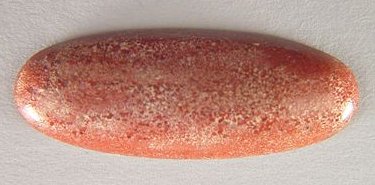
Description: Sioux Quartzite cabochon, 45 x 17 mm. This stone was collected by E, H. Barbour in 1918 from glacial till of Pleistocene age that is exposed about nine miles north of Lincoln on 14th Street, near Davey, in Lancaster County. Normally, quartzite is not suitable for gems because of it's very porous nature. This example has sand grains that have clay and silt between them, rendering the stone quite solid and able to take a polish.
Thunder Egg Core
Drainage Basin: not yet assigned
Source: Glacial Deposits
Date: 10/28/1998
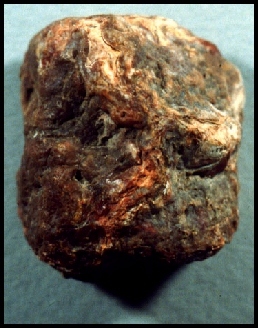
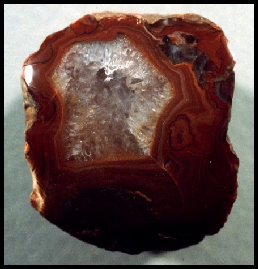
Description: Thunder eggs are agates that have formed in welded ash-flow tuffs, whereas amygdaloidal agates have formed in tholeitic basalts. Most of the Lake Superior Agates that have been found in Nebraska are the almond-shaped amygdaloidal agates, but occasional specimens are cores from thunder eggs which, are characterized by the squarish outline on the polished surface and raised ridges on the outer surface. This thunder egg may have originated near Grand Marais, Minnesota, where a bed of thunder eggs is known, and have been transported by Nebraska by glaciers of Pleistocene age.
Thunder Egg Core
Drainage Basin: not yet assigned
Source: Glacial Deposits
Date: 10/28/1998
Description: Thunder eggs are agates that have formed in welded ash-flow tuffs, whereas amygdaloidal agates have formed in tholeitic basalts. Most of the Lake Superior Agates that have been found in Nebraska are the almond-shaped amygdaloidal agates, but occasional specimens are cores from thunder eggs which, are characterized by the squarish outline on the polished surface and raised ridges on the outer surface. This thunder egg may have originated near Grand Marais, Minnesota, where a bed of thunder eggs is known, and have been transported by Nebraska by glaciers of Pleistocene age.
Wood-grained Chert
Drainage Basin: not yet assigned
Source: Glacial Deposits
Date: 2/12/2001
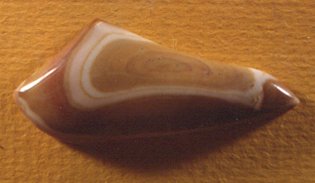
Description: Wood-grained Chert from Glacial Till of Pleistocene Age, Pawnee County. DeCelles and Gutschick (1983, p. 1175-1191) used the term wood-grained chert to describe chert from the Lodgepole, Desert and Great Blue limestone formations of Mississippian age that crop out in the western interior of the United States that superficially resembled petrified wood. They suggested that the silica (SiO2) that formed the chert was of biogenic origin and the wood-grained texture was caused by alternating dolomite and carbonaceous quartzose bands in a groundmass of silica. More examples of chert show the wood-grained texture regardless of source or age of its host rock.
Agatized Wood
Drainage Basin: Republican River
Source: Drainage Basin
Date: 3/7/2002
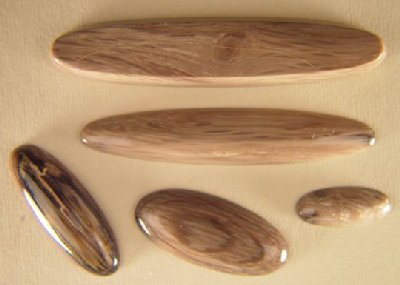
Description: Agatized wood cabochons, 80 x 16 mm, 71 x 14 mm, 38 x 17 mm, 28 x 14 mm, and 23 x 10 mm. These appear to have been fashioned out of at least two different pieces of rough material that C. W. Kaley collected from gravel deposits of Pleistocene or Recent age along the Republican River near Red Willow, Nebraska. Red Willow is situated about 6 miles east of McCook in Red Willow County. Note the small knot just to the right of center on the largest cabochon above. This kind of wood possibly originated in rocks of Cretaceous age that are along the Front Range of Colorado.
Jasper
Drainage Basin: Republican River
Source: Drainage Basin
Date: 3/7/2002
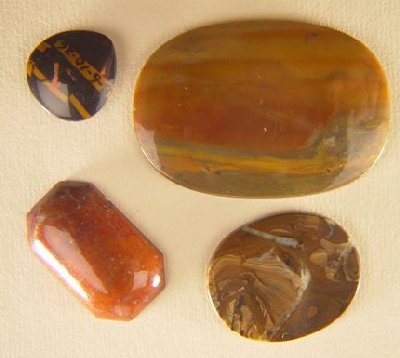
Description: Jasper cabochons, 50 x 35 mm, 30 x 25 mm (oval), 30 x 18 mm (cushion), and 18 x 17 mm (tear drop). These cabochons were fashioned from rough material that was collected in about 1926 by W. Kiener from gravel of either Pleistocene or Recent age that has been deposited along the Republican River. The variation in color, pattern and structure of the jasper suggests that each piece originated in a different area or environment. The red cushion cut stone contains membranous cristobalite that characterizes silica from volcanic terranes whereas the black tear drop stone appears to be torn up bed of silt to very fine sand that has subsequently become silicified. The smaller oval stone shows Liesegang Phenomena and it is very similar to material that is now sold as Biggs Jasper from Oregon.
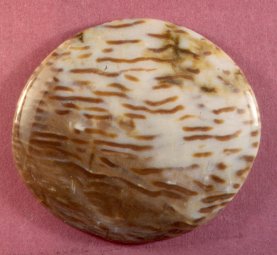
Agatized Palm Wood
Drainage Basin: South Platte River
Source: Drainage Basin
Date: 11/23/1999
Description: Agatized Palm Wood, Platte River Terrace Gravel, Deuel County.
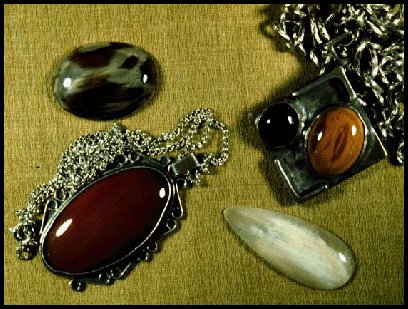
Agatized Wood
Drainage Basin: South Platte River
Source: Drainage Basin
Date: 10/29/1998
Description: Fine agatized wood has been found in the South Platte River drainage in Nebraska. It has been observed in gravel bars in the modern stream as well as in terrace gravels in the surrounding hills of Lincoln, Keith, and Deuel counties. The se woods probably originated in continental deposits of Cretaceous age that are exposed in the foothills of the Front Range.
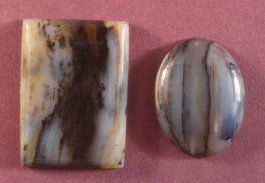
Agatized Wood
Drainage Basin: South Platte River
Source: Drainage Basin
Date: 11/23/1999
Description: Agatized Wood, Platte River Terrace Gravel, Deuel County
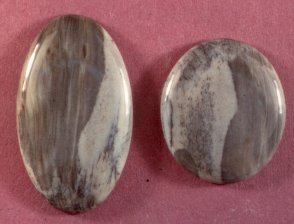
Agatized Wood
Drainage Basin: South Platte River
Source: Drainage Basin
Date: 11/23/1999
Description: Agatized Wood, Platte River Terrace Gravel, Deuel County.
Carnelian Agate
Drainage Basin: South Platte River
Source: Drainage Basin
Date: 11/23/1999
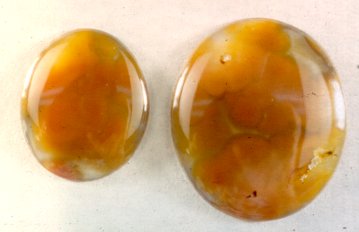
Description: Carnelian Agate, Platte River Terrace Gravel, Deuel County
Cloud Agates
Drainage Basin: South Platte River
Source: Drainage Basin
Date: 11/23/1999
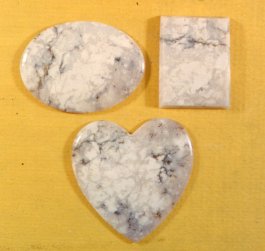
Description: Cloud Agates, Platte River Terrace Gravel, Deuel County.
Coarse Gravel
Drainage Basin: South Platte River
Source: Drainage Basin
Date: 10/29/1998
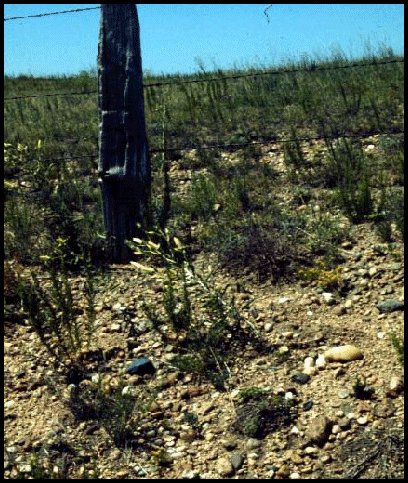
Description: Beginning in the Eocene and Oligocene Epochs of the Tertiary, streams drained such areas as the Front Ranges, The Hartville Uplift, and the Black Hills and carried with them loads of gravel that cover much of the area west of about Grand Island. The coarse gravel is often a deflation armor that is left behind when wind and water removed finer sedimentary particles but lacked the energy to transport larger ones.
Dendritic Agate
Drainage Basin: South Platte River
Source: Drainage Basin
Date: 11/23/1999
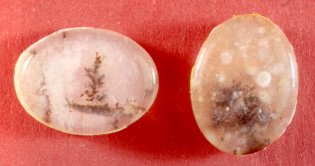
Description: Dendritic Agate, Platte River Terrace Gravel, Deuel County.
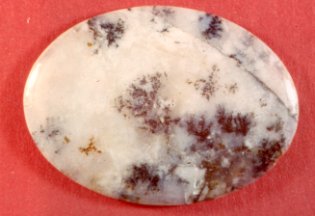
Dendritic Agate
Drainage Basin: South Platte River
Source: Drainage Basin
Date: 11/23/1999
Description: Dendritic Agate, Platte River Terrace Gravel, Deuel County.
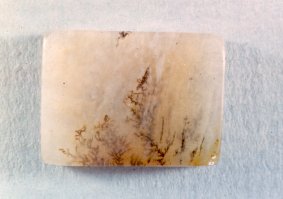
Dendritic Agate
Drainage Basin: South Platte River
Source: Drainage Basin
Date: 11/23/1999
Description: Dendritic Agate, Platte River Terrace Gravel, Deuel County.
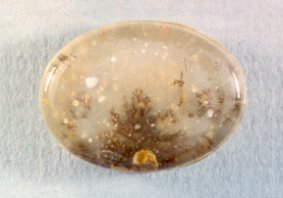
Dendritic Agate
Drainage Basin: South Platte River
Source: Drainage Basin
Date: 11/23/1999
Description: Dendritic Agate, Platte River Terrace Gravel, Deuel County.
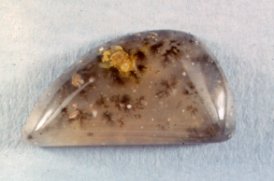
Dendritic Agate
Drainage Basin: South Platte River
Source: Drainage Basin
Date: 11/23/1999
Description: Dendritic Agate, Platte River Terrace Gravel, Deuel County.
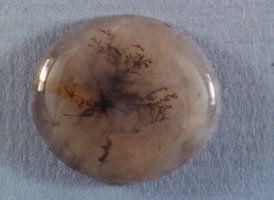
Dendritic Agate
Drainage Basin: South Platte River
Source: Drainage Basin
Date: 11/23/1999
Description: Dendritic Agate, Platte River Terrace Gravel, Deuel County.
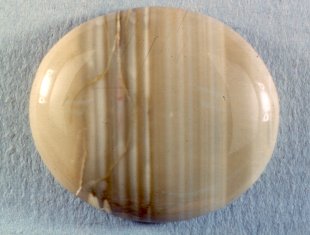
Jasper
Drainage Basin: South Platte River
Source: Drainage Basin
Date: 11/23/1999
Description: Jasper, Platte River Terrace Gravel, Deuel County.
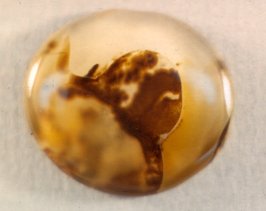
Moss Agate
Drainage Basin: South Platte River
Source: Drainage Basin
Date: 11/23/1999
Description: Moss Agate, Platte River Terrace Gravel, Deuel County.
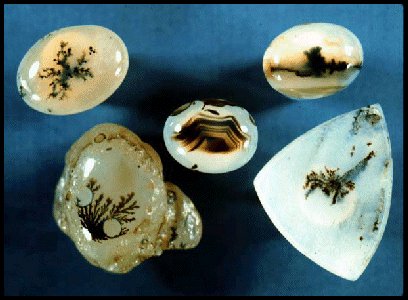
Moss Agates
Drainage Basin: South Platte River
Source: Drainage Basin
Date: 10/28/1998
Description: Moss agates or dendritic agates have been found in both the stream deposits originating in western areas and in glacial deposits that originated in northern sources. The "moss" is not moss but oxides of iron or manganese.
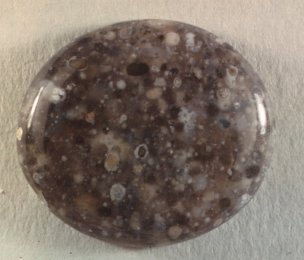
Orbicular Jasper
Drainage Basin: South Platte River
Source: Drainage Basin
Date: 11/23/1999
Description: Orbicular Jasper, Platte River Terrace Gravel, Deuel County.
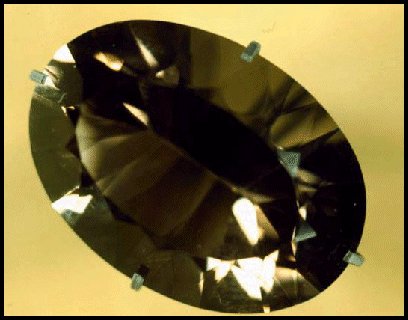
Smoky Quartz
Drainage Basin: South Platte River
Source: Drainage Basin
Date: 10/29/1998
Description: Smoky Quartz has been collected in the Lodgepole Creek, South Platte River, and Republican River drainages in Nebraska. Similar material has been observed in place in Precambrian plutonic rocks in the Pikes Peak area of Colorado. This fine 32 carat gem was fashioned by the late Ralph Ulrich.
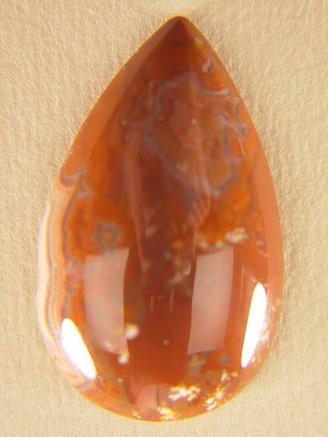
Fairburn Agate
Drainage Basin: White River/Hat Creek
Source: Drainage Basin
Date: 3/7/2002
Description: Fairburn Agate cabochon, 32 x 20 mm. The rough that produced this stone was collected by an unknown party in 1917 from gravel of the Chamberlain Pass Formation of Oligocene age. This kind of agate is of marine sedimentary origin and similar material has been found in rocks of the Wendover, Meek and Hayden groups of Pennsylvanian age that are exposed along the FrontRange and in the Hartville Uplift of Wyoming; and in rocks of the Minnelusa Formation of Pennsylvanian and Permian age that are exposed in the Black Hills of south Dakota. By the beginning of the Oligocene Epoch of the Tertiary Period, the first floods of sediments that originated from erosion of the above sources reached western Nebraska and adjoining areas and many of these agates arrived in Nebraska at that time. Similar agates have been found in younger sediments that have been derived from the Wyoming and South Dakota sources.
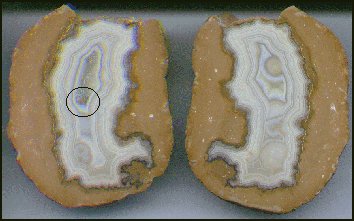
Fairburn (Fortification) Agate
Drainage Basin: White River/Hat Creek
Source: Drainage Basin
Date: 10/28/1999
Description: Note the gold flake (black circle), located within a quartz center.
Fortification Agate
Drainage Basin: White River/Hat Creek
Source: Drainage Basin
Date: 10/29/1999
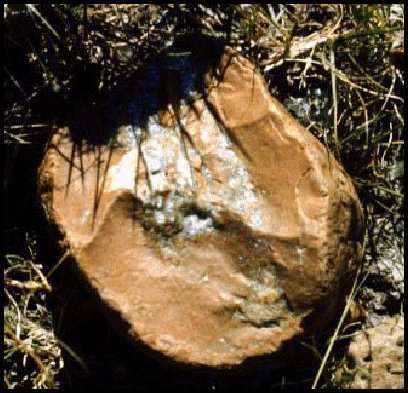
Description: This large fortification agate shows no outside indications of the fine banding that will be inside. It takes perseverance to find them in the field.
Prairie Agate
Drainage Basin: White River/Hat Creek
Source: Drainage Basin
Date: 10/29/1998
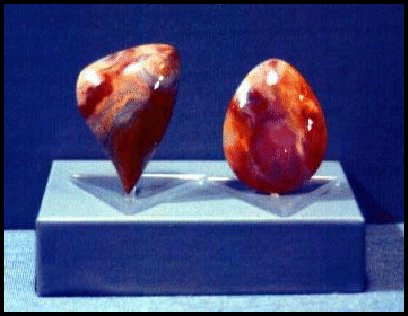
Description: Prairie Agate, the Nebraska State Rock, is found in about the same areas as Fairburn Agate. Prairie Agate does not have the fine banding that characterizes Fairburn Agates, but it can be transformed into very fine cabochons (an unfaceted cut gemstone of domed or convex form). These were fashioned by Bill White.